Most jewelry brands are obsessed with getting everyone into their loyalty program. They blast pop-ups, offer discounts, and celebrate when their enrollment numbers climb. What they're missing is that for jewelry—where the average order value sits well above other categories—a smaller, deeply engaged customer base often generates more revenue than a bloated list of inactive members.
Here's what I've observed working with ecommerce brands: the jewelry vertical is fundamentally different from cosmetics or apparel. Your customers are making high-consideration purchases. They're not buying $15 lipsticks on impulse. They're investing in pieces that hold emotional and sometimes financial significance. That changes everything about how loyalty should work.
The counterintuitive truth? Your participation rate might be lower than other industries, and that's not a problem—it's a feature.
The Sparkle of Loyalty: Understanding Participation in Shopify Jewelry
Before we talk about driving participation, you need to understand what you're actually measuring.
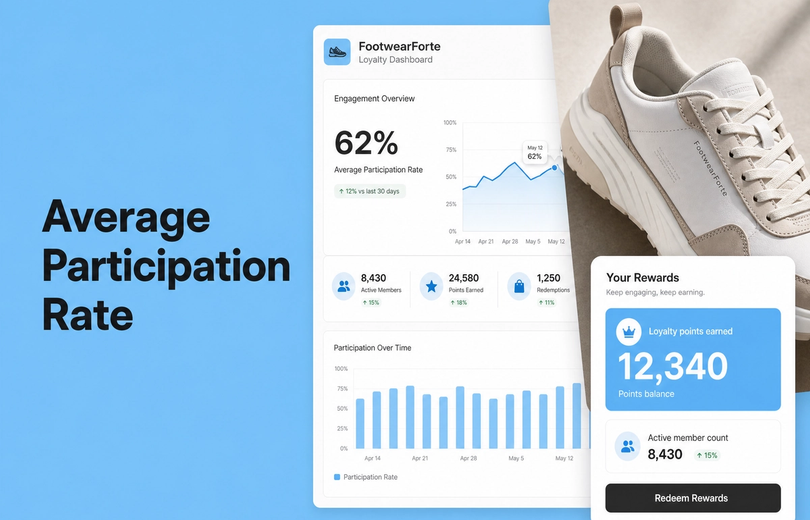
A loyalty program participation rate is the percentage of your total customers who are active members. The formula is straightforward: divide the number of enrolled members by your total customer count, then multiply by 100. The nuance lies in defining "active." Some brands count anyone who's ever signed up. Smarter operators track customers who've engaged at least once in the past 12 months—made a purchase, earned points, or redeemed a reward.
This distinction matters. A customer who joined two years ago but hasn't interacted with your program since? They're technically a member but functionally inactive. For jewelry brands, distinguishing between enrolled and active members gives you a much clearer picture of program health.
Why does participation rate matter for your jewelry store? Because it directly correlates with customer retention and lifetime value. Customers enrolled in loyalty programs make 67% more purchases, show 2.5x higher repeat rates, and generate 115% more revenue per customer. For jewelry, where margins are healthier but frequency is lower, that repeat revenue becomes your growth engine.
The metric also flags whether your program is actually working. High enrollment but low redemption means customers don't value your rewards. Low enrollment means your sign-up incentives or messaging isn't resonating. Neither problem is insurmountable, but you need to measure to diagnose.
Calculating Your Program's Engagement Score
The basic calculation is simple, but precision matters.
Start with your total customer count. This should include everyone who's made at least one purchase from your Shopify store. If you're pulling this from your Shopify admin, look for "Customers" in your Dashboard—that's your denominator.
Next, count your loyalty program members. It's the total enrolled members, whether they've engaged recently or not.
Divide enrolled members by total customers. Multiply by 100.
Example: Your Shopify store has 5,000 total customers. Your loyalty program has 1,200 enrolled members.
1,200 ÷ 5,000 = 0.24 × 100 = 24% participation rate.
But here's where most merchants stop and make a mistake. A 24% rate sounds low. They panic and launch an aggressive enrollment campaign. Instead, calculate your active participation rate. Of those 1,200 enrolled members, how many earned or redeemed points in the last 90 days?
Let's say 480 members were active in the last quarter.
480 ÷ 5,000 = 0.096 × 100 = 9.6% active participation rate.
This second number is the one that actually drives your business. A 24% enrollment rate with only 9.6% active engagement suggests your sign-up incentives are working, but your retention and engagement mechanics aren't. That's a very different problem than low enrollment.
For jewelry, I recommend tracking both metrics monthly. The enrolled rate shows your program's reach. The active rate shows its impact.
Benchmarking Your Shine: What to Expect for Shopify Jewelry
Here's the honest truth: there's no publicly available benchmark specifically for "average participation rate in Shopify jewelry stores." The research exists for beauty (often exceeding 50%), fashion (typically 40-50%), and general ecommerce (averaging around 30-40% for top performers). But jewelry? The data is fragmented.
What we can infer from the luxury segment is instructive. Luxury brands typically see lower enrollment participation rates than mainstream ecommerce. Why? Exclusivity. A person who buys a $2,000 engagement ring isn't looking for the same mass-market loyalty experience as someone buying skincare. They expect personalized service, not point-chasing.
Research on loyalty program statistics shows that top-performing ecommerce programs achieve 40%+ participation, while benchmarking data across Shopify brands suggests most merchants target 20-35% enrollment.
For jewelry specifically? Expect 15-30% enrollment participation to be normal. If you're at 25%, you're already outperforming many jewelry stores.
The active engagement rate—the metric that actually matters—tends to be 30-40% of your enrolled base for luxury categories. So if you have 1,000 enrolled members, expect 300-400 to be genuinely active in any given quarter. That's your core loyalty audience. That's where your leverage is.
The Pursuit of 100% Participation: Why a Lower, Engaged Rate Might Be Your Real Diamond
Here's the contrarian take: scaling enrollment aggressively might be the wrong priority for your jewelry brand.
Most loyalty program advice centers on maximizing participation. Get everyone in. Make enrollment friction-free. Offer sign-up bonuses that are hard to refuse. All of this is sound strategy for commodity categories where margins are tight and customer acquisition is expensive.
Jewelry is different.
Your profit margins are substantially healthier than apparel or beauty. Your customer acquisition cost is already high because jewelry is a high-consideration purchase. This means you have room—and reason—to be selective about how you spend loyalty resources.
Here's the data that matters: VIP members in loyalty programs spend 3.8x more over their lifetime than non-members. Customers within VIP tiers generate 73% higher average order value than non-tier customers. They also make 3.6x more purchases per customer.
Now consider the alternative. You blast enrollment incentives across your store. You get 1,000 new members. But only 150 of them ever redeem anything. You've diluted your program's perceived value. The reward pool that felt exclusive to 200 engaged members now feels cheaper because 1,000 people have access.
For luxury jewelry, this perceived value matters enormously. Your customers are investing in pieces that hold status and emotion. A loyalty program that feels like everyone gets access to the same rewards undermines the exclusivity proposition.
Instead, focus on conversion quality over enrollment volume. Invest your loyalty resources into:
- Making your program irresistible to the customers most likely to engage (recent purchasers, high-AOV buyers, repeat customers)
- Creating genuinely exclusive experiences and rewards that matter to people spending $500+ per transaction
- Building your VIP tier to be genuinely elite, not a participation trophy
A 20% participation rate with 50% active engagement beats a 60% participation rate with 10% active engagement. Every time. The math is simple: 20% × 50% = 10% of your customer base genuinely engaged. 60% × 10% = 6% genuinely engaged. But more importantly, those highly engaged 10% in the first scenario will spend 2-3x more because they feel the program is actually exclusive.
The Shopify loyalty program growing brands trust
See how Mage helps Shopify brands lift repeat purchase rate with loyalty, referrals and store credit.
Book a demoStep 1: Laying the Foundation – Crafting Your Shopify Jewelry Loyalty Program
Before you enroll a single customer, you need the right structure in place.
Choosing the Right Loyalty Structure for Precious Purchases
Three main models dominate ecommerce loyalty. Your job is matching the right model to your brand and customer expectations.
Points-based programs are the most straightforward. Customers earn X points per dollar spent. When they accumulate to a threshold (usually 100-500 points), they redeem for rewards. These work well for jewelry because you can set thresholds high enough that redemptions feel meaningful. A customer spending $1,000 on an engagement ring should feel like they've earned something substantial—not a $2 discount code.
Tiered or VIP programs segment customers into levels based on lifetime spending. Bronze, Silver, Gold tiers unlock escalating benefits. This aligns perfectly with jewelry because high-spenders naturally concentrate in upper tiers. You're not creating artificial status; you're recognizing actual purchasing power. This model typically drives the highest lifetime value because it creates clear progression goals.
Hybrid programs combine points and tiers. Customers earn points for purchases (which count toward tier status), plus they unlock tier-specific perks like free shipping, early collection access, or dedicated customer service. Hybrids tend to drive the highest engagement because they reward both transaction volume and loyalty signals.
For jewelry specifically, I'd recommend hybrid or pure tiered structures over points-only. Here's why: points-only programs incentivize maximizing spending, which works for categories where customers have many purchase occasions. Jewelry customers make fewer, bigger purchases. Tiered programs recognize that one customer spending $5,000 once annually is more valuable than someone spending $100 five times. You reward loyalty and customer lifetime value, not just transaction frequency.
Comparison Table: Loyalty Program Types for Jewelry
| Feature | Points-Based | Tiered/VIP | Hybrid (Points + Tiers) |
|---|---|---|---|
| Participation Barrier | Very Low | Moderate | Moderate |
| Earning Mechanism | Spend = Points | Lifetime Spend = Tier | Both volume + status |
| Best for AOV Recognition | Weak | Strong | Strong |
| Engagement Multiplier | Medium | High | High |
| Redemption Clarity | Simple | Exclusive perks | Both options |
| Jewelry Brand Fit | Moderate | Excellent | Excellent |
| Implementation Complexity | Easy | Moderate | Moderate |
| Typical Participation Rate | 25-40% | 18-28% | 20-32% |
The data suggests tiered models naturally result in slightly lower enrollment but dramatically higher engagement. That tracks with the jewelry thesis: you're attracting serious customers, not casual browsers.
Seamless Integration: Setting Up Your Program with Shopify's Best
Once you've chosen your structure, you need a platform that integrates cleanly with Shopify and won't slow down your store.
The decision matters because 68% of Shopify stores already have loyalty programs. You're not deciding whether to have one; you're deciding which one performs best for jewelry.
When integrating a loyalty program on Shopify, you have several quality options. Look for these non-negotiables:
- Shopify-native architecture. The app should live in your Shopify admin, not require you to manage a separate dashboard. Performance matters, especially for jewelry sites where trust is visual and load speed affects conversions.
- VIP tier support. Since jewelry benefits from tiered programs, your platform must support unlimited custom tiers with different benefits per tier.
- Email and SMS integration. You need to automatically notify customers when they're close to tier advancement, when points expire, or when new rewards are available. Integration with Klaviyo, Omnisend, or Postscript is non-negotiable.
- Detailed reporting. You'll want to measure participation, redemption, and incremental revenue attributed to the program.
Setup takes 30-60 minutes if you choose a platform designed for Shopify. You'll configure your tiers, set earning rates, define reward thresholds, and customize your branded loyalty page. Most platforms offer white-label options so customers never see the platform name—only your branding.
One practical note: activate your loyalty program on your homepage and product pages before launch. Don't put it only at checkout. You want existing customers and repeat buyers—your highest-value segment—to enroll first. Checkout is for new customers who haven't spent with you yet. Engagement-first sequencing biases your early membership toward quality over volume.
Crafting Irresistible Rewards: Beyond Basic Discounts
Here's where most jewelry brands fail their own programs.
They set up a system that says: "Spend $1,000, earn 100 points. Redeem 500 points for $25 off." That's a 2.5% discount on high-value purchases. A customer considering a $1,200 piece doesn't get excited about $30 off. They're already factoring in quality, craftsmanship, and brand reputation.
Generic discounts don't drive loyalty in jewelry. Exclusivity and experiences do.
Instead, design rewards around what your high-value customers actually want:
Early or exclusive access to collections. Jewelry customers love being first. Let VIP members see new pieces 48 hours before public launch. This costs you nothing but drives engagement because it makes customers feel special.
Personalized styling consultations. Partner with your best designer or offer video consultations with your team. A 30-minute styling call for a customer who just hit Gold tier membership? That's an experience they'll remember. And it deepens the relationship—they're more likely to ask your team about upcoming designs, increasing repeat purchase probability.
Charitable donations in their name. Some jewelry customers care deeply about impact. Let them direct loyalty rewards toward causes they support. A Gold tier member might choose to have you donate $100 to their favorite charity instead of applying a discount. This builds emotional connection beyond the transaction.
Complimentary alterations, cleaning, or insurance reviews. These are low-cost services you probably offer anyway. Frame them as loyalty perks and they suddenly feel premium.
Exclusive event access. Host virtual or in-person trunk shows for your top tier. Invite them to see new collections before anyone else, with champagne or wine. Even a virtual Zoom call feels like an event if you brand it right.
Product upgrades or gifts. For very high tiers, offer the ability to upgrade a purchase. Customer reaches Gold tier? Their next order includes complimentary upgraded packaging, a silk jewelry pouch upgrade, or a small accessory gift.
None of these cost significantly more than you're already spending on discounting—and they drive behavior far more effectively.
“I looked into so many different integrations for loyalty and referrals for our Shopify Store, but no one impressed me more than Mage on human connection, customer service, and value.”


Read the Reelie case study →
Step 2: Polishing Your Entry Points – Maximizing Initial Enrollment
You've built the program. Now you need customers to join it.
Making the Invitation Sparkle: Clear Sign-Up Incentives
Your first enrollment incentive is critical. It sets the tone for whether customers will take the program seriously or ignore it.
For jewelry, avoid aggressive point offers or big discounts. Instead, offer clarity and exclusivity:
"Join our VIP circle and get early access to new collections" resonates better than "Earn 200 bonus points on your first purchase." The first positions the program as exclusive. The second makes it sound transactional.
If you do offer an incentive, make it about access, not discount. Free shipping on your next order for joining, or a guaranteed spot in an exclusive event. These feel premium.
Also make joining truly free. Paid membership tiers exist (like luxury car clubs), but they don't work for jewelry ecommerce unless you're positioning your brand as ultra-premium and have the pricing to match. Free enrollment removes the objection. The value comes from the perks, not the membership fee.
Time your enrollment incentive carefully. New customers at checkout should see a simple invite: "Join our Jewelry Circle—get early access to pieces before public launch." Existing customers who've made purchases should get a more aggressive incentive in email: "We noticed you love [piece type]. Members get first look at similar designs." The incentive levels up with customer value.
Strategically Placed Prompts: Where to Encourage Enrollment
Placement determines visibility, which determines enrollment. Your goal is making it impossible to miss without being pushy.
Homepage hero section. Your most visible real estate. One sentence: "Members get early access to new collections and exclusive events." Link to your branded loyalty page. This hits new visitors and creates awareness.
Product pages (high-value items). For jewelry pieces over $500, add a small widget showing the value of joining. "VIP members get free shipping on orders over $1,000"—something that matters for that price point.
Checkout (new customers only). Show a subtle enrollment prompt, but don't make it blocking. New customers are already in a decision. Make it easy to join but not mandatory.
Post-purchase email. This is your highest-converting enrollment moment. Send it within 2 hours of purchase. "Thanks for your purchase. Join our Jewelry Circle to earn rewards and get early access to new designs."
Welcome series (email). Your first email to a new subscriber should mention the loyalty program. By email 3-4, if they've purchased, make enrollment the main focus.
The key principle: meet customers at every stage of their journey with a relevant invite. New browsers get the awareness play. Recent purchasers get the engagement play. The placement and messaging shift, but you're always creating enrollment opportunities.
Leveraging High-Value Actions: Turning Referrals into Loyalty
Jewelry referrals convert at 22%—significantly higher than most product categories. Why? Trust. When someone recommends a $2,000 engagement ring to a friend, they're putting social capital on the line. That trust is real.
Set up referral programs that reward both the referrer and the referred customer. Structure it so the incentives match jewelry customers' values:
Referrer rewards: Instead of a discount code, offer bonus points or tier advancement progress. Let a customer make a referral and move 25% of the way toward their next tier level. This feels more exclusive than "$30 off your next order."
New customer rewards: Offer something that makes sense for jewelry—early access to a collection, a branded gift, or loyalty program tier placement. A referred customer joining at Silver tier (rather than Bronze) makes them feel like the referrer actually did them a favor.
Tiered incentives: After 3 successful referrals, unlock special status. "Referral Ambassador" tier members get exclusive perks—maybe a 10% discount once per year, or priority access to limited pieces.
For jewelry, the referral mechanism often works best in private groups or communities. Create a private Facebook group or email list for members who've referred at least one customer. Give them exclusive access to limited drops or design previews. This turns referral into social proof and builds your advocate base.
Track referral performance obsessively. If 5% of your members are responsible for 60% of successful referrals, you've found your true advocates. Double down on rewarding them.
Step 3: Sustaining the Sparkle – Driving Active Engagement and Redemption
Enrollment is just the start. Keeping people engaged is where participation rates actually matter.
Beyond the Purchase: Rewarding All Interactions
Purchases drive loyalty programs, but they shouldn't be the only action that matters. Jewelry customers touch your brand in multiple ways. Reward them all.
Product reviews. Offer 25-50 points for written reviews, 50-75 points for reviews with photos. Customer-generated photos of jewelry on real people outperform professional shots for conversion. Reward that content.
Social shares. If a customer posts a piece they bought on Instagram and tags you, they've made a public endorsement. Give them 25-40 points. They've earned it and they've marketed for you.
Birthday recognition. Send a birthday email with a surprise: 50 bonus points or a special gift. This costs nothing and drives engagement around the moment they're most likely to treat themselves to jewelry.
Anniversary of first purchase. Use the first-purchase date as a loyalty milestone. Offer bonus points or a small gift on the anniversary. It's a moment you control, and it reminds them they've been with you for a year (or three, or five).
Wishlist additions. If you track product wishlists, reward the act of adding items to wishlists. They're signaling intent. Recognize it with small point bonuses.
Email opens and clicks. This might feel aggressive, but for luxury brands using SMS and email to build community, rewarding clicks to collections or events makes sense. 5-10 points per click. It's tiny but it reinforces that engagement is valued.
The principle: every meaningful interaction earns something. Jewelry is relationship-based. Show that you notice the relationship and reward it.
Personalized Glints: Tailoring Offers to Individual Tastes
Generic rewards don't work in jewelry because your customers aren't generic.
Someone who's bought three diamond engagement rings has very different interests than someone who buys delicate gold jewelry. Someone browsing vintage pieces should see vintage-focused rewards and collections. Someone who bought a men's ring once probably isn't interested in earring launches.
Use your loyalty platform and email integration to segment your members. Use that data to send hyper-personalized offers:
"You loved our vintage collection. Members get early access to our new vintage designs launching Friday." This is more powerful than "Check out our latest collection."
"Your favorite designer just released new pieces. Gold members see them first." This ties their tier status, their purchase history, and exclusive access together.
"You're 40 points away from Silver tier. Here's a design preview to celebrate." This creates urgency and acknowledges their progression toward tier advancement.
Personalization also applies to redemption. Offer choices. Instead of "Redeem 300 points for $25 off," say: "Redeem 300 points for $25 off OR free shipping on your next order OR early access to our holiday collection." Different customers value different things. Give them autonomy and they'll feel the program is truly for them.
Track which redemptions are used most. If 70% of your Gold tier members choose "early access to new collections" over discounts, you've learned what they actually want. Adjust your reward mix to match.
Unlocking VIP Privileges: Elevating the Customer Journey
VIP tiers are where jewelry loyalty becomes genuinely powerful.
Whether you're crucial for customer retention or purely for engagement, tiered structures recognize that not all customers are equal. Someone who's spent $20,000 with you should experience something different than someone who's spent $500.
Design your tiers to create genuine progression:
Bronze (entry level). Earn points on purchases. Redeem for small discounts or gifts. This is everyone who joins. No special requirements. The base experience.
Silver (mid-level). Requires $2,500+ lifetime spending or 5+ purchases. Unlock: free shipping on all orders, 10% bonus points earning rate, quarterly sneak previews of new designs, early access to sales.
Gold (elite). Requires $7,500+ lifetime spending or 15+ purchases. Unlock: complimentary jewelry consultations, invitations to exclusive events (virtual or in-person), 20% bonus points earning rate, priority customer service via dedicated email/phone, annual gift (limited piece or upgrade).
Platinum (ultra-premium). Requires $20,000+ lifetime spending. Unlock: everything Gold gets plus bespoke design consultations, first access to one-of-a-kind pieces, invitation to annual private event, annual high-value gift (significant jewelry or experience), direct contact with founder/lead designer.
The power here is psychological and practical. A customer moving from Bronze to Silver doesn't just get free shipping. They get recognition. They've invested enough that your brand is acknowledging them as important. That recognition drives disproportionate increases in lifetime value.
Make tier advancement visible and celebratory. When a customer hits Silver status, send an email with a subject line like "You're Now VIP" and list their new benefits. Include a badge they can see in their loyalty dashboard. Make progression feel like achievement, not algorithm.
Gamification Gemstones: Adding Fun and Exclusivity
Loyalty can feel transactional—spend, earn, redeem. Gamification adds psychological engagement.
Limited-time point multipliers. "Double points this weekend" creates urgency. Customer who's been considering a purchase suddenly has reason to pull the trigger now.
Challenges and badges. "Leave 3 product reviews this month and unlock the 'Collector' badge—get 50 bonus points." Engagement spiked through perceived achievement.
Leaderboards (for community). If you have an ambassador program or very engaged segment, show top referrers or reviewers on a leaderboard. Competition is subtle but effective.
Milestone celebrations. "You've earned 1,000 points! You're in our top 15% of members." This tells them they're valued compared to others.
Seasonal campaigns. "Holiday Challenge: Earn 200 points by December 15th and unlock an exclusive gift." Seasonal campaigns create time-bound excitement.
Gamification works because it taps into progress psychology. Humans want to advance, achieve, and be recognized. In jewelry—where the purchase cycle is long and infrequent—gamification keeps engagement alive between transactions.
Communicating the Luster: Promoting Your Program Across All Channels
The best program dies if members forget it exists.
Consistent communication across email, SMS, on-site, and social keeps your program top-of-mind. But consistency doesn't mean repetition.
Email (primary channel). Weekly or bi-weekly loyalty updates. Remind members of their point balance, show them how close they are to tier advancement, announce new rewards or challenges, celebrate recent purchases with point confirmations. Integrating with Klaviyo allows you to set up automated flows that trigger based on member activity.
SMS (high-urgency moments). SMS conversion rates far exceed email. Use SMS for time-sensitive moments: "Limited edition pieces dropped—members get first access" or "You're 1 purchase away from Silver tier."
On-site banners. Rotating banners showing current challenges, tier progress, or new rewards keep members engaged when they visit. Update these monthly so returning visitors see fresh information.
Social media. Share member wins. Post screenshots of recent referrals (anonymized), announce top referral ambassadors, celebrate member stories on Instagram Stories. Make loyalty feel like a community, not a transaction system.
In-package inserts. For physical jewelry orders, include a card showing the recipient's new point balance or reminding them of upcoming tier milestones. This touches the customer outside digital channels.
The communication schedule matters too. Send too much and you annoy. Send too little and people forget. Optimal cadence for jewelry is typically 1-2 emails per week plus 1-2 SMS messages per week, with on-site banners rotating monthly. Adjust based on your audience size and engagement metrics.
Step 4: Measuring Your Success – Tracking and Refining Your Jewelry Loyalty
You've built, enrolled, and engaged. Now you measure what's working.
Key Metrics Beyond Participation Rate: A Holistic View
Participation rate is your baseline metric. But it tells only part of the story.
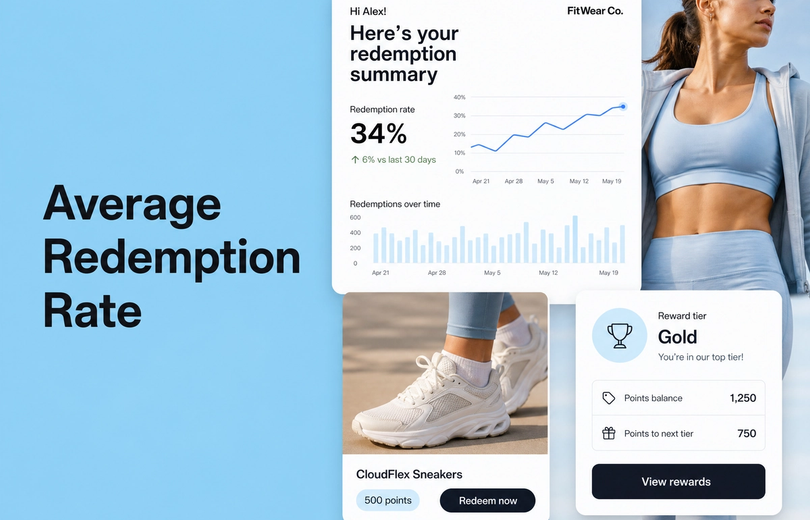
Redemption rate shows what percentage of your enrolled members have actually redeemed rewards. A 50% enrollment with 10% redemption means 90% of your program members aren't using it. That's a red flag. High-performing programs typically see 30-50% redemption rates.
Active engagement rate (AER) measures the percentage of members who earned or redeemed points in a specific timeframe (usually 30 or 90 days). This is arguably more important than enrollment. If 1,000 people join but only 200 engage monthly, your AER is 20%. That's lower than ideal.
Customer lifetime value (CLV) by tier shows where your money actually comes from. Loyalty members typically generate 12-18% incremental revenue annually compared to non-members, but the difference is dramatic across tiers. Gold tier members spend 3.8x more over their lifetime than non-members. That's where focus belongs.
Average order value (AOV) impact directly measures how much higher loyalty members spend per transaction. If your overall AOV is $850, but loyalty members average $1,100, that $250 difference is your loyalty premium.
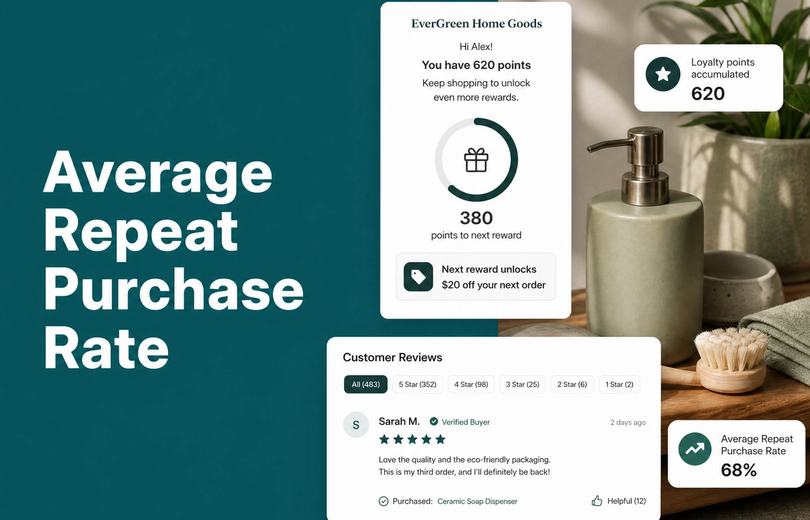
Repeat purchase rate. Loyalty members make more purchases. Track how many loyalty members make repeat purchases in 30, 60, and 90-day windows. Aim for 40%+ of your engaged members making repeat purchases within 90 days.
Point redemption velocity. How long does it take from earning points to redemption? If members sit on points for months before redeeming, your program isn't driving behavior. Aim for redemptions within 30-60 days of earning.
Revenue attributable to loyalty. This is the hardest metric to calculate but the most important. Use a loyalty app that tracks incremental revenue—comparing members' spending to non-members' spending, controlling for other variables. Most modern platforms offer this through UTM tracking or cohort analysis.
For jewelry specifically, focus on CLV by tier and AOV impact. If your Gold tier members spend 3.5x more than your Bronze tier, you know where to invest loyalty resources. If your overall AOV jumps 20% after launching VIP tiers, that's proof of concept.
Tools of the Trade: Using Shopify Analytics and Loyalty App Reports
Shopify's native analytics give you baseline customer data. Your loyalty app's reporting gives you engagement data. You need both.
From Shopify, pull:
- Total customer count (to calculate participation rate)
- Customer lifetime value distribution (to understand who your high-value customers are)
- Repeat purchase rate by cohort (to see if loyal program members repeat at higher rates)
- AOV trends (to measure if loyalty correlates with higher spending)
From your loyalty platform, pull:
- Enrollment count (obviously)
- Active member count (members engaged in last 30-90 days)
- Tier distribution (how many members are in each tier)
- Redemption metrics (percentage redeeming, most popular rewards)
- Points issued vs. redeemed (are you creating the right earning/redemption balance)
- Member acquisition source (which campaigns are enrolling whom)
Cross-reference these. If Shopify shows that repeat customer rate increased 15% since launching your loyalty program, and your loyalty app shows 40% of your members are repeat customers, you've correlated program participation with actual business impact.
Most platforms offer white-glove onboarding or setup support. Use it. Ask your platform provider specifically about CLV attribution and cohort analysis. These are the metrics that justify the program's existence to your leadership team.
Iterate and Innovate: Continuously Optimizing Your Program
Your first program design won't be perfect. Iteration matters.
A/B test reward structures. Split your audience. Half your new members see "Earn 1 point per $1 spent." Half see "Earn 5 points per $5 spent." Same earning value, different psychology. Measure which drives higher engagement.
Test tier advancement thresholds. If your Silver tier requires $2,500 lifetime spending but only 10% of members hit it, lower the threshold to $1,500. If 80% hit it instantly, raise it to $4,000. The goal is making tier advancement feel achievable but meaningful.
Run seasonal campaigns. Summer might be engagement time for certain jewelry (lightweight pieces). Winter for heavier statement pieces or gifts. Run targeted double-points campaigns aligned to your seasonal peaks. Measure which campaigns drive highest engagement.
Survey your members. Ask what rewards they actually want. What tier perks matter most? Would they prefer early access or free shipping? Qualitative data from your actual customers beats general best practices.
Monitor competitor programs. Look at what other luxury jewelry brands are doing with loyalty. You don't copy—you learn. If a competitor is offering complimentary jewelry consultations and that seems to drive engagement, consider whether that makes sense for your team.
Measure cohort performance. Customers who join because of a $50 welcome bonus might behave very differently from those who join for early access to collections. Track them separately and measure engagement, redemption, and CLV by cohort. This shows you which enrollment incentives attract quality customers.
The best jewelry loyalty programs treat themselves as ongoing experiments. You have data. Use it. Update your program quarterly based on what you've learned.
Jewelry-Specific Case Studies: Shining Examples of Loyalty Success
Theory matters less than proof. Here's a real example of how a jewelry brand built serious loyalty.
By Invite Only is a fine jewelry brand that built its loyalty program specifically around exclusivity—which aligns perfectly with our earlier thesis.
Rather than trying to enroll everyone, they created a tiered "Crystal Club" program that rewarded high-value customers differently. New customers earned points for purchases and reviews. But once customers hit $3,000 in lifetime spending, they moved to a "Crystal Circle" tier that unlocked entirely different benefits: invitations to private design sessions, early access to limited pieces, and discount vouchers on specific collections (not generic discounts).
The result? Higher engagement in the upper tier because the benefits were genuinely exclusive. Members at that level felt the program was built for them specifically, not a mass-market gimmick. And their repeat purchase rate in the upper tier moved from typical 1.2x to 2.8x—a dramatic difference.
The lesson: don't try to create one loyalty experience for everyone. For jewelry, segmentation is everything.
Another angle: many successful jewelry brands created community through loyalty. They didn't just reward purchases—they rewarded advocacy. Instagram features, referral bonuses, and invitations to exclusive events turned customers into brand ambassadors. When a customer feels like an insider, they defend the brand in ways paid marketing can't replicate.
Conclusion: Polishing Your Customer Relationships
The average jewelry brand thinks participation rate is about getting big numbers. It's not.
Your participation rate is fundamentally about relationship depth. A 20% participation rate with 60% active

Graeme is the co-founder at Mage Loyalty. He heads product development, from complex loyalty migrations and large-scale data handling to building the features shaping the future of loyalty on Shopify.