Acquiring new customers costs five to seven times more than retaining existing ones, yet most ecommerce merchants spend their budgets chasing first-time buyers instead of deepening relationships with people who've already proven they'll buy. This backward approach leaves revenue on the table and creates dependency on expensive ad spend.
The real opportunity in 2026 lies in building authentic customer engagement—not as a nice-to-have retention tactic, but as your core growth engine. Engaged customers represent 23% more revenue on average than non-engaged ones, and increasing repeat customers by just 5% can boost profits between 25% and 95%. Those aren't vanity metrics. They're the difference between thriving and merely surviving.
This guide walks you through building a winning customer engagement strategy from first principles. Whether you're running a Shopify store with $100K annual revenue or a multi-seven-figure DTC brand, the frameworks here apply to your situation. You'll learn which engagement tactics actually move the needle, how to implement them without becoming a data scientist, and why your competitor's points-based loyalty program is already obsolete.
Understanding the Landscape: What is Customer Engagement and Why It Matters
Customer engagement is fundamentally different from customer experience, though the terms get conflated constantly. Customer experience is what happens to your customer—the usability of your checkout, the speed of your site, the quality of your packaging. Customer engagement is what your customer does in relationship with you. It's the emotional investment they bring, how often they return, whether they recommend you to friends, and how deeply they care about your brand's success.
Think of experience as the stage and lighting. Engagement is whether they stand up and applaud or check their phone halfway through.
This distinction matters because you can have a perfect experience and zero engagement. A slick website with fast checkout and beautiful product photography means nothing if customers never return. Conversely, engaged customers tolerate friction because they're emotionally invested. They forgive occasional site slowdowns because they trust your brand and want to support it.
Why Engagement Matters Right Now
Rising customer acquisition costs have changed the math entirely. CAC has climbed 40-60% over the past two years, while the average ecommerce store spends between $68 and $84 to acquire a single customer. At those prices, you need customers to return multiple times just to break even on acquisition spend.
But the financial case is only part of it. Engaged customers deliver value beyond repeat purchases:
Increased Customer Lifetime Value (CLV). A customer who buys once every three months for five years is worth roughly 20 times more than a customer who buys once and disappears. Loyalty program members generate 12-18% more incremental revenue annually than non-members. Loyal customers convert at 60-70% compared to just 5-20% for first-time visitors. This isn't linear growth—it's exponential.
Reduced Churn and Acquisition Dependence. When you're not constantly replacing churned customers, your payback period shortens dramatically. You spend less on ads, more on product and team. You build momentum instead of running on a treadmill.
Brand Advocacy and Organic Growth. Approximately 70% of brand preference decisions are based on emotional factors, not rational ones. An engaged customer doesn't just buy—they recommend you to friends, leave glowing reviews, and create word-of-mouth momentum that no ad spend can match. User-generated content from these customers provides proof that works where traditional marketing fails.
Better Data and Feedback. Engaged customers tell you what works and what doesn't. They respond to surveys, test new products, and give you unfiltered feedback that shapes your roadmap.
Step 1: Deeply Understand Your Audience Through Data-Driven Insights
You can't engage an audience you don't understand. This step sounds obvious, but most merchants skip it or do it superficially.
Start by moving beyond basic demographic data. Yes, you know your customer is a 28-year-old woman in Austin. But does she buy products for herself or gifts for others? Is she price-sensitive or willing to pay premium prices for quality? Did she discover you through social media, a Google search, or a recommendation? Does she check email obsessively or ignore it unless something's truly urgent?
Leverage first- and zero-party data. Third-party cookies are dead. Your competitive advantage now comes from data customers willingly share with you. Ask directly through post-purchase surveys, preference centers, and customer profile pages. "What's your primary skin concern?" "How often do you work out?" "Which colors do you prefer?" This data is more accurate than anything you'd buy anyway, and customers generally don't mind sharing when they see how it personalizes their experience.
Implement behavioral segmentation. Track not just what customers buy, but how they shop. Do they impulse-purchase or deliberate for weeks? Do they buy complementary products or always the same thing? Do they respond to discounts or are they price-insensitive? Do they engage with email, SMS, or only social media? This behavioral layer reveals patterns that demographics alone miss.
Map the customer journey with specificity. Most merchants have a vague awareness of their customer journey. Discovery, consideration, purchase, post-purchase. That's not specific enough. Where exactly do customers discover you? Instagram ads, TikTok, Google, word-of-mouth? At what point do most drop off? Is it after seeing shipping costs, during checkout, or days later while comparing you to a competitor? Which product categories have the highest return rate?
Use your analytics platform, email service, and CRM to build a real timeline. Identify the moments where engagement drops and where it spikes. These become your intervention points.
Step 2: Implement Hyper-Personalization Across Every Touchpoint
Generic engagement doesn't work. Customers see right through it.
The era of "Hi {first_name}" emails is over. True personalization means understanding what each customer needs at each moment and delivering it proactively, not just reactively. It means anticipating that a customer who bought running shoes three months ago might need fresh socks or a moisture-wicking shirt soon. It means knowing that a customer who's browsed your site three times without purchasing is probably dealing with decision paralysis and needs a confidence boost—maybe a review from someone with a similar body type or concern.
Tailor recommendations and content to the individual. Product recommendations should reflect browsing history, purchase history, and customers similar to them. When 61% of executives prioritize personalized experiences to drive growth, you're already falling behind if you're not doing this. Emails should feature products picked specifically for each person, not blasted recommendations for your top-selling items.
Personalize the on-site experience dynamically. If a customer has visited five times without buying, show them different messaging than a first-time visitor. If they're viewing a product they wishlisted months ago, give them a gentle nudge about a current discount. If they're in a VIP tier, show them exclusive products or early-access sections.
The data backs this up: 71% of customers expect personalized experiences, but only 33% actually receive them. That gap is an opportunity. And 76% of customers get frustrated when personalization disappears—meaning once they experience it, they expect it everywhere.
Create dynamic content based on lifecycle stage. A new customer needs product education. A repeat customer needs loyalty recognition. A customer at risk of churn needs a win-back offer or reason to reengage. Your messaging should evolve as they move through these stages.
The Shopify loyalty program growing brands trust
See how Mage helps Shopify brands lift repeat purchase rate with loyalty, referrals and store credit.
Book a demoStep 3: Orchestrate a Seamless Omnichannel Customer Experience
Seamless means the customer experiences one continuous conversation with your brand, regardless of which touchpoint they're using at any given moment.
A customer shouldn't have to retell their story when moving from email to your website to SMS. They shouldn't see irrelevant recommendations on Instagram because their Shopify account shows something different. They shouldn't feel like different departments are managing different channels.
Consistency across channels requires infrastructure. Your CRM needs to feed data to your email platform, SMS platform, and website personalization engine in real-time. Your loyalty program needs to sync so customers earn points whether they shop online or in-store.
Integrate physical and digital—the "phygital" experience. If you operate a physical store or pop-ups alongside your Shopify shop, customers shouldn't experience a split system. Someone who earns points in your store should see that balance reflected online. A customer who browses in-store should receive personalized follow-up emails about products they looked at. You can enhance customer account features to enable this cross-channel visibility.
Transfer context across channels. If a customer abandons a cart on mobile, your SMS platform should know that. If they call your support line, your agent should see their browsing history and purchase history. If they've been eyeing a specific product for weeks, your email platform should know that when they open their next newsletter.
This sounds complex, but modern tools make it manageable.
“Great app! User friendly and straightforward. The customer service team has been great and so helpful.”


Read the SKYNBIO case study →
Step 4: Evolve Loyalty Programs Beyond Traditional Points
Here's where I need to push back against conventional wisdom.
Points-based loyalty programs dominated ecommerce for years, and they still work. But they're increasingly becoming the minimum viable loyalty program rather than a differentiator. Here's why: points feel transactional and interchangeable. A customer earning 1 point per dollar spent might earn the same 1 point from your competitor. There's no emotional connection, no reason to feel special, no barrier to switching. It's a race to the bottom—constantly raising point values and lowering redemption thresholds until your program barely moves the needle on your economics.
Young customers, especially Gen Z, see through transactional loyalty. They want authentic experiences and value alignment. They want to feel like members of a community, not participants in a rewards math equation. Points don't deliver this. Emotional connection does.
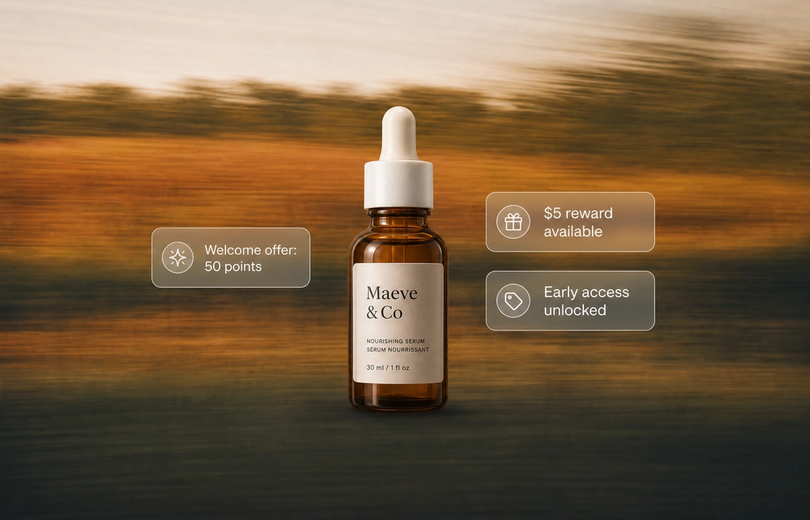
Shift from transactional to emotional loyalty. Instead of rewarding customers purely for spending, reward them for behaviors aligned with your brand values. If you're a sustainability-focused brand, reward customers for buying refillable products or recycling packaging. If you're a community-driven brand, reward customers for referring friends or sharing content. These actions reinforce your values while making customers feel like they're part of something bigger than a transaction.
Introduce gamification elements that feel authentic, not gimmicky. Visual progress bars work—81% of consumers are interested in them. Streaks create habit loops. Milestone rewards feel exciting. Badge systems let customers signal their status. But these only work if they feel earned and meaningful. A "badge" that 95% of customers get is worthless. A level system with genuine progression is powerful.
Tiered loyalty taps into the psychological principle that people want status. Bronze, Silver, Gold, Platinum—each tier unlocks increasingly valuable benefits. But the benefits shouldn't just be discounts. Think exclusive product access, early sale notifications, free shipping thresholds, invites to private sales, direct line to customer support. These create perceived value that scales costs efficiently.
Make loyalty about belonging, not just rewards. The strongest loyalty programs create community. Patagonia's loyalty program connects customers around environmental activism. Lululemon's creates fitness communities. Your program should connect customers to each other and your brand's purpose, not just dangle discounts.
Step 5: Harness AI and Automation Strategically
AI isn't a replacement for human judgment. It's a force multiplier for decisions you'd make anyway—but faster and at scale.
Use AI for real-time personalization and segmentation. Machine learning algorithms can analyze customer data and identify patterns humans would miss. They can predict which product a customer wants before that customer knows they want it. They can identify the exact moment when a customer is most likely to respond to an offer. They can segment your audience into dozens of micro-segments based on behavior, not just demographics. This enables hyper-targeted campaigns that convert significantly better than blasted messages to your entire list.
Deploy AI chatbots and virtual assistants for 24/7 support. 73% of customers expect more interactions with AI in their daily life. They're not turned off by AI support—they're expecting it. A good AI chatbot answers FAQs instantly, routes complex issues to humans, and remembers customer history so people don't repeat themselves. It reduces support costs while improving response time and first-contact resolution. The key is knowing where to draw the line—AI handles routine issues, humans handle situations requiring empathy or judgment.
Implement predictive analytics to identify churn risk and engage proactively. Machine learning can flag customers at risk of churning before they disappear. A customer who used to buy every month but hasn't in three months and is no longer opening emails is flashing a warning signal. An automated re-engagement campaign targeted at these customers (different messaging, different offers, different channels) costs a fraction of acquiring a replacement customer and often works.
But be transparent about AI and respectful of privacy. Customers don't mind AI when it feels helpful. They hate it when it feels invasive or manipulative. Be honest when AI is involved. Store their data securely. Give them control over how you use their information. Don't pretend AI-generated content is human-written. The trust you build through transparency pays back in engagement and loyalty.
Step 6: Cultivate Authentic Brand Voice and Community
Engagement starts with a reason to care. And the reason people care about brands isn't features or prices—it's connection to something larger.
Create content that educates and entertains, not just sells. Your blog, videos, podcasts, and social media should deliver value independent of whether they drive a sale. A running brand should publish training plans. A skincare brand should explain ingredient science. A home goods brand should offer decorating tips. This content builds trust, positions you as an authority, and gives customers reasons to engage with your brand beyond shopping.
Tell the story behind your brand. Every brand has a story—why you started, what problem you solved, what you believe. Share it. Not once in a founding narrative page, but consistently in how you communicate. This narrative creates emotional resonance that features never can. People buy from brands they believe in, not just brands with good products.
Build communities where customers interact with each other and your brand. Online forums, Facebook groups, Discord servers, or even in-person events create spaces where engaged customers congregate. These communities become self-sustaining. Customers help each other. They hold you accountable. They provide product feedback and beta test new features. Most importantly, they create belonging—a reason to stay even when a competitor offers a discount.
The strongest community brands—think Patagonia, Lululemon, Apple—don't compete on price. They compete on belonging. You can build a thriving brand community through consistent engagement and value creation.
Step 7: Provide Proactive and Empathetic Customer Support
Most customer support is reactive. A customer has a problem, they reach out, you solve it. That's table stakes.
Proactive support anticipates problems. If you know a product has a 3-week lead time and customers often wonder if it's in stock, send them proactive updates. If shipping to a particular region consistently takes longer than expected, notify customers before they panic. If a product is commonly used incorrectly based on customer feedback, include usage guidance in packaging and follow-up emails.
This small shift—from responding to problems to preventing them—dramatically improves customer sentiment and reduces support volume.
Empower your support team with knowledge and tools. Your support team is your brand ambassadors. They interact with your most engaged (and most frustrated) customers. Equip them with product knowledge, authority to make decisions, and tools to resolve issues quickly. A support agent who can issue a refund instantly without manager approval builds far more loyalty than one who needs to escalate everything.
Augment human support with AI for efficiency. AI handles the routine, humans handle the nuanced. A chatbot answers "Where's my order?" and "What's your return policy?" instantly. A human agent handles "This product doesn't work for my specific use case and I'm frustrated" with empathy and creativity.
The result is faster resolution, lower costs, and happier customers. Everybody wins.
Measuring the Impact: Key Metrics and ROI for Customer Engagement
You can't improve what you don't measure. But choosing the right metrics matters.
Vanity metrics feel good but don't drive decisions. Email open rates, social media followers, and website traffic are nice, but they don't tell you whether engagement is actually converting to revenue.
Focus on metrics that tie directly to business outcomes:
Customer Retention Rate. The percentage of customers from one period who return in the next. A 50% month-over-month retention rate means you're keeping half your customers. A 70% rate means your engagement is working. Track this by cohort (customers acquired in a specific month) to see whether new engagement tactics improve retention.
Customer Lifetime Value (CLV). Total revenue from a single customer account, minus acquisition and service costs. This is your north star. If CLV is increasing, your engagement strategy is working. If it's flat or declining, something needs to change.
Repeat Purchase Rate. Percentage of customers making more than one purchase. Loyal customers convert at 60-70%, compared to 5-20% for first-time visitors. This metric shows whether engaged customers are actually returning.
Net Promoter Score (NPS) and Customer Satisfaction (CSAT). Ask customers "How likely are you to recommend us to a friend?" (NPS) or "How satisfied are you?" (CSAT). These measure emotional engagement and predict churn. A customer with high NPS is more likely to return and refer.
Engagement Rate by Channel. Open rates for email, click-through rates, time spent on-site, social media interactions. These show whether your content and messaging actually resonate. If email open rates are 15% but SMS rates are 35%, you know where to invest.
To calculate loyalty program ROI specifically, track revenue from program members versus non-members, and subtract program costs (platform fees, rewards given away, marketing to promote it). A program where members generate 20% higher CLV than non-members, but costs 5% more to operate, is a net win. You can calculate loyalty program ROI with specific methodologies and A/B testing to isolate impact.
Implementing Your Strategy on Shopify: Practical Tips for Merchants
Shopify gives you a solid foundation to build engagement on. Native features like customer accounts and order history let customers track purchases and manage their profile. Apps extend this foundation.
Key categories to consider:
Loyalty and rewards apps. Each offers points systems, tiered rewards, and referral mechanics. Choose one that integrates cleanly with your email and SMS platforms. Look for white-label customization so your program feels native to your brand, not like a bolted-on third party.
Personalization engines. Nosto, Kenshoo, and Bloomreach deliver dynamic product recommendations and personalized on-site content. These integrate with Shopify and track customer behavior across visits.
Email and SMS platforms. Klaviyo and Omnisend excel here. Both offer segmentation, automation, and analytics. Both integrate with loyalty apps to sync points and tier status.
Review and UGC apps. Judge.me and Loox collect reviews with photos, critical social proof at conversion time. Integrate these with loyalty apps to reward reviews with points.
CRM systems. HubSpot and Klaviyo (which includes CRM features) help you manage customer relationships across channels. Sync your CRM with your loyalty platform to ensure engagement efforts are coordinated.
For small budgets, start with essentials: a loyalty app to reward repeat behavior, Klaviyo for email automation, and one review app. Build from there as revenue grows.
For budget-conscious merchants, focus on high-leverage tactics that cost nothing or minimal amounts. Email sequences nurturing customers cost nothing beyond your email platform fee. Social media engagement costs nothing but time. Building a community forum or Facebook group costs nothing. Personal follow-ups to high-value customers, handwritten thank-you notes, surprise gifts to loyal customers—these create engagement on a shoestring.
Scale sophisticated personalization and AI tools as you grow. The fundamentals work whether you're spending $100 or $100,000 on engagement tech.
The Future of Engagement: Trends and Challenges Ahead
Emerging technologies like augmented reality (AR) and livestream commerce will create new engagement opportunities. Customers who can virtually try on products or watch live shopping events experience deeper engagement. These aren't mainstream yet, but they're coming.
The broader trend is toward "total experience"—viewing customer, employee, and user experience as one integrated system. Engaged customers become brand advocates. Empowered employees deliver better service. Good design creates seamless experiences. These aren't separate initiatives. They reinforce each other.
Data privacy remains a challenge. Privacy regulations tighten. Third-party cookies disappear. Customers expect transparency. Building engagement in this environment means being honest about how you collect and use data, giving customers control over their information, and delivering value that justifies the data you ask for.
Implementing Your Strategy: Next Steps
You don't need to implement everything simultaneously. Prioritize based on your current state.
If you're starting from scratch: Begin with audience understanding (surveys, analytics review) and a simple loyalty program rewarding purchases and referrals. Add email automation to communicate about rewards.
If you have a basic loyalty program: Layer in personalization (product recommendations, segmented email) and move beyond points toward tiered rewards and community building.
If you're sophisticated: Focus on AI-driven predictive analytics, advanced omnichannel orchestration, and building communities around your brand values.
The constant across all stages is continuous optimization. Set metrics, measure them monthly, and adjust. The best engagement strategies are living systems, not set-and-forget initiatives.
Frequently Asked Questions About Customer Engagement
What's the difference between customer engagement and customer experience?
Customer experience is the quality and usability of every interaction—your website speed, checkout flow, packaging, and support responsiveness. Customer engagement is the emotional investment and behavioral response—how often they return, whether they recommend you, how deeply they care about your brand. You can have great experience and low engagement (customers visit once and disappear). You can have adequate experience and high engagement (customers tolerate friction because they're emotionally invested). Both matter, but engagement drives repeat revenue.
How can I measure whether my engagement strategy is actually working?
Focus on metrics tied to business outcomes: customer retention rate (what percentage return?), repeat purchase rate (are customers buying again?), and customer lifetime value (are engaged customers worth more?). These show real impact. Vanity metrics like email open rates or social followers feel good but don't prove engagement works. Track retention and CLV month over month and by customer cohort to see whether your engagement investments move the needle.
What are some cost-effective engagement strategies for small businesses with limited budgets?
Start with foundational work that costs nothing: understand your audience through surveys and analytics, write helpful content on your blog, engage authentically on social media, build email automation sequences, and ask for reviews. Create a Facebook group or forum for your community. Personal touchpoints like handwritten thank-you notes or surprise gifts to loyal customers cost little but build disproportionate loyalty. Scale sophisticated tools like advanced personalization engines or AI chatbots as revenue grows.
How often should I communicate with engaged customers?
It depends on their preference and channel. Email fatigue is real—more than one promotional email weekly typically decreases engagement. SMS is higher intensity, so once weekly is usually the max. In-app messaging and social media can be more frequent because customers control the timing. The best approach: let customers choose their frequency and channels in a preference center. Some want daily SMS, others want weekly email only. Give them control and respect their choices.
Is AI necessary to build strong customer engagement?
No. AI is a tool that accelerates what you'd already do—predict churn, personalize recommendations, automate routine support. Strong fundamentals (understanding your audience, authentic brand voice, responsive support) work without AI. AI multiplies the impact and efficiency of these fundamentals. Start with the basics. Add AI as you scale and want to improve efficiency or precision.

Graeme is the co-founder at Mage Loyalty. He heads product development, from complex loyalty migrations and large-scale data handling to building the features shaping the future of loyalty on Shopify.