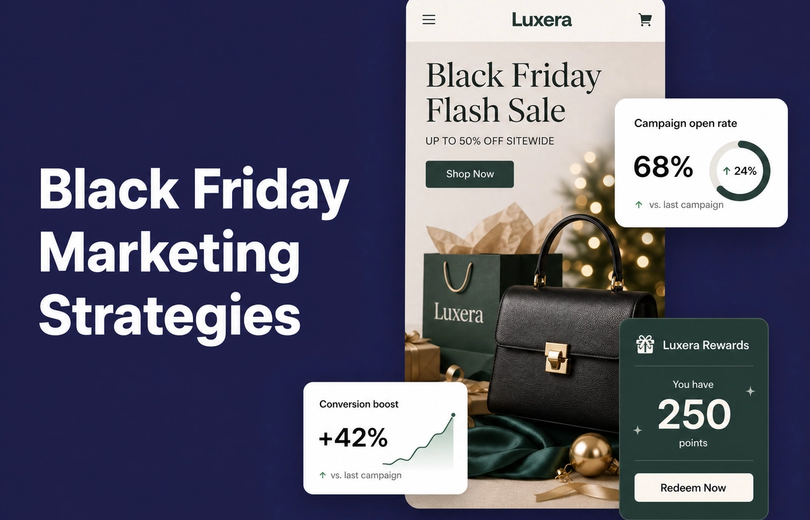
Most Shopify merchants send the same email to their entire customer list. It's why open rates have flatlined at 21% while sophisticated competitors are hitting 35-40%.
The difference isn't better copywriting or flashier designs. It's segmentation.
Segmentation transforms your email list from a broadcast channel into a precision instrument. Instead of generic promotions that land in spam folders, you're sending exactly what each customer wants to hear at the moment they're most receptive. The data backs this up: personalized emails boost revenue by 760% compared to generic blasts, and 77% of email ROI comes from segmented, targeted, and triggered campaigns.
But here's what most Shopify store owners miss: loyalty programs aren't just rewards systems. They're segmentation goldmines. When you combine your Shopify customer data with loyalty program insights, you unlock behavioral patterns invisible to traditional analytics. A customer might look like an average buyer in your main database. But in your loyalty program, they're a VIP earning points at double the normal rate and engaging with exclusive challenges.
This guide reveals exactly how to layer segmentation across your Shopify store, email marketing, and loyalty program to drive measurable ROI. You'll discover which customer segments matter most, how to build them without technical headaches, and how to automate campaigns that convert.
The Unignorable ROI of Personalized Engagement
The email marketing ROI is deceptive in its simplicity. For every $1 spent on email, the average return is $36. That's higher than paid search, social media, or organic traffic combined. But that's the average—and averages hide winners and losers.
Here's what I've seen working with ecommerce brands: stores doing generic email blasts achieve 1.5-2x ROI. Stores using basic segmentation hit 3-4x. But stores combining behavioral segmentation with loyalty program data? They're hitting 5-7x ROI on email campaigns.
The mechanism is straightforward. Generic emails have low relevance. Segmented emails have context. Context creates connection. Connection drives conversions.
Consider this: a customer who abandoned their cart 2 hours ago needs a different email than someone who abandoned it 2 weeks ago. A VIP customer in your loyalty program shouldn't see the same 20% off offer as a first-time buyer. A customer who keeps buying the same product category probably wants product recommendations in that vertical, not random cross-sells.
When you segment, you're not just personalizing—you're respecting your customer's attention. And they respond by opening more emails, clicking more links, and buying more frequently.
The real ROI comes from combining segmentation with your Shopify customer retention strategy. Retention is cheaper than acquisition. A 5% improvement in retention can boost profits by 25-95%, depending on your margin structure. Segmentation is the mechanism that drives that retention lift, because customers who receive relevant messages feel understood. They stay.
Understanding the Blueprint of Your Buyers
Customer segmentation is grouping your audience into smaller cohorts based on shared characteristics, behaviors, or values. It sounds simple. The execution determines whether it drives measurable revenue or wastes your team's time.
The most important principle: effective segmentation is the bedrock of both high-performing email campaigns and robust loyalty programs. These aren't separate strategies. They're the same strategy expressed through different channels.
A poorly segmented loyalty program feels like spam with points. A poorly segmented email list feels like a store that doesn't know you. But when both systems share the same segmentation logic, customers experience a brand that truly understands them across every touchpoint.
Behavioral Segmentation: Actions Speak Louder Than Words
Behavioral segmentation groups customers by what they actually do, not who they are. It's the most predictive segmentation type for ecommerce because actions reveal intent better than any survey.
The key data points you should track:
Purchase History: How recently did they buy? How often? What categories? A customer who bought athletic gear twice in the last 30 days is a different segment than someone who bought it once, 6 months ago.
Website Browsing: Which product pages do they visit? What search queries do they use? How long do they spend on certain categories? This reveals interest without requiring a purchase.
Abandoned Carts: A customer with an abandoned cart is warmer than a cold prospect. They've decided to buy—they just haven't completed checkout yet.
Email Engagement: Who opens your emails? Who clicks? Who ignores every message? High-engagement subscribers deserve more frequent messaging. Low-engagement subscribers might need a win-back campaign or a pause.
Search Behavior: What terms do they search for in your store? If a customer repeatedly searches for "waterproof jacket," that's a buying signal worth acting on.
The implementation is where most stores stumble. Here's the practical approach:
Step 1: Connect Shopify to an email service provider like Klaviyo or Omnisend. These platforms automatically sync purchase history, cart abandonment, and browsing behavior from your Shopify store.
Step 2: Set up tracking for key actions. Define what "engaged" means for your brand. Is it opening an email? Clicking a link? Viewing a product page? Spending X minutes on your site?
Step 3: Build segments in your ESP based on these actions. In Klaviyo, this looks like: "Customers who viewed products in the 'Jackets' category in the last 7 days but haven't purchased."
Step 4: Trigger automated emails based on these segments. When someone enters the segment (they browse jackets), they automatically receive a relevant email (waterproof jacket recommendations with customer reviews).
Demographic Segmentation: The Foundational Layer
Demographics are the traditional segmentation layer: age, gender, income, location, language. They're less predictive than behavioral data for ecommerce, but they're useful as secondary filters.
A customer in New York in winter needs snow boots. The same customer in Phoenix in summer needs breathable clothing. Location matters. Age helps you understand communication preferences—a 65-year-old might prefer email and phone support, while a 25-year-old might prefer text and TikTok.
How to Implement: Collect demographic data at checkout and during account creation. Use Shopify's built-in fields (billing address, shipping address) to capture location. Create optional survey fields to capture age, gender, or income brackets. Be thoughtful here—asking for excessive demographic data increases cart abandonment. Ask only what directly impacts your product recommendations.
Over time, you can enrich this data. If a customer buys maternity clothing, you've learned something about their life stage. If they buy high-end products consistently, you know their price sensitivity. Let behavior fill the gaps that surveys can't.
Psychographic Segmentation: Connecting on a Deeper Level
Psychographics are the values, interests, and lifestyle preferences that drive purchasing decisions. They're harder to measure than demographics, but they're far more predictive of long-term loyalty.
A customer who buys sustainable products cares about the environment. A customer who buys luxury minimalist goods values simplicity and quality over quantity. A customer who buys trending fast fashion wants novelty and social validation.
These psychographic profiles shape messaging. A sustainable-focused customer responds to emails highlighting your carbon offset program or plastic-free packaging. A luxury minimalist customer responds to emails about craftsmanship and timeless design. A trend-chaser responds to "New This Week" messaging and scarcity signals.
How to Implement: Use surveys and quizzes to gather psychographic data. Ask customers why they chose your brand. What values matter most? What lifestyle do they aspire to? These conversations often happen in post-purchase follow-up emails, where response rates are higher.
Watch product category patterns. If a customer consistently buys from your "Eco-Friendly" section, tag them accordingly in Shopify. Use that tag to create segments for eco-focused campaigns.
Geographic and Location-Based Segmentation
Location determines relevance in tangible ways. Shipping costs vary. Tax implications vary. Seasonal needs vary. A customer in Minnesota buys snow gear in September. A customer in Florida buys cooling products in May.
How to Implement: Shopify captures shipping addresses automatically. Use this for geographic segmentation. Group customers by region or state, then tailor promotions accordingly. A "Free Shipping Over $75" offer lands differently in a high-shipping-cost region versus a low-cost region.
For international stores, language preferences matter. A customer who set their account language to Spanish should receive emails in Spanish, even if they're in the US.
RFM Analysis: Identifying Your Most Valuable Customers
RFM stands for Recency, Frequency, Monetary. It's a simple but powerful framework for identifying which customers matter most to your business right now.
Recency: How recently did they purchase? A customer who bought yesterday is more engaged than someone who bought 6 months ago.
Frequency: How often do they buy? A customer who buys monthly is more valuable than someone who buys once a year.
Monetary: How much do they spend? A $500 customer is more valuable than a $50 customer, all else equal.
Score each customer on these three dimensions (usually 1-5 on each). Then combine the scores to identify key segments:
Champions (High R, F, M): Your best customers. Buy often, buy recently, spend big. Reward them relentlessly. Early access to sales, VIP tiers, exclusive products. These customers are your growth engine.
Loyal Customers (Medium-High across all): Consistent buyers, but not your absolute top tier. Push them toward champion status with personalized recommendations and tiered loyalty rewards.
New Customers (High R, Low F and M): Just bought for the first time. Critical moment. A strong onboarding experience and early loyalty program enrollment can turn them into regulars. Welcome series, loyalty program introduction, early incentives.
At-Risk Customers (Low R, High F and M): Used to buy a lot but haven't recently. They're slipping away. Win-back campaigns with urgency, exclusive discounts, or loyalty program reactivation.
Lost Customers (Low across all): Haven't bought in 6+ months. Low-priority for email. But test one final win-back campaign annually. If they don't respond, remove them.
How to Implement: Most modern ESPs include RFM-style segmentation. Klaviyo, Omnisend, and similar platforms can calculate these scores automatically and create segments based on them. Many powerful Shopify loyalty program platforms can also layer RFM insights on top of loyalty engagement metrics.
Customer Lifecycle Stage Segmentation
Customers move through predictable stages in their relationship with your brand. Each stage requires different messaging, different offers, different cadence.
Prospect Stage: Not yet a customer. They're aware of your brand but haven't committed. Messaging focuses on trust and credibility. Customer reviews, brand story, value proposition clarity.
First-Time Buyer: Just made their first purchase. Vulnerable moment. They might be happy, or they might regret it. Onboarding email should confirm purchase, set expectations for delivery, and offer loyalty program enrollment.
Repeat Buyer: Made 2+ purchases. They like what you're selling. Messaging shifts toward building routine. Recommend complementary products. Encourage loyalty program engagement.
VIP: High-value customer based on spend and engagement. Messaging becomes exclusive. Early access, special pricing, personalized attention.
Lapsed Customer: Used to buy but hasn't in 60-180 days depending on your business cycle. Reactivation focused. "We miss you" messaging, special incentive to return, request for feedback on why they've stopped.
How to Implement: Set up automated lifecycle stage tags in Shopify. Tag customers when they make their first purchase (tag: "First-Time Buyer"). Tag them again when they reach repeat status. Move them to "VIP" when they hit certain RFM thresholds. Use these tags to trigger different email flows.
The Shopify loyalty program growing brands trust
See how Mage helps Shopify brands lift repeat purchase rate with loyalty, referrals and store credit.
Book a demoHarnessing Shopify's Native Data for Segmentation
Shopify stores contain more customer intelligence than most merchants realize. You don't need external tools to start segmenting. Shopify's native features—customer data, customer tags, and the segments tool—can handle 70% of use cases.
Customer Data: Every customer profile in Shopify contains rich data: order history, total spent, email, location, phone, tags, custom fields. This data alone enables basic behavioral and demographic segmentation.
Customer Tags: These are your segmentation workhorses. Tag customers manually or automatically based on actions. When a customer spends over $500, auto-tag them "High-Value." When they view a specific product, add a tag. Tags flow through your system and into your ESP, unlocking email segmentation.
Built-In Segments: Shopify's native segments tool lets you build groups without leaving Shopify. You can segment by:
- First purchase date
- Total lifetime spend
- Location
- Custom tags
- Email marketing status
These segments can then be exported or synced to your ESP for email campaigns.
How to Implement: Start with tags. Decide 3-5 important segments you want to track (e.g., "VIP," "Abandoner," "Repeat Buyer," "Review Request"). Set up automation rules in Shopify Apps (or through your ESP) to tag customers when they meet criteria. For example:
- Customer total spend > $500? Tag "VIP"
- Customer hasn't purchased in 90 days? Tag "Lapsed"
- Customer bought our bestseller product? Tag "Product-X-Buyer"
Once tags are in place, use Shopify's native segments to group tagged customers. Export these segments to your email platform weekly or set up automatic sync if your ESP supports it.
The beauty of Shopify-native segmentation is simplicity. You don't need ShopifyQL or custom code. You just need to know who matters and label them accordingly.
In the customer journey masterclass Kris shows how tier tags feed Shopify segments and the storefront at the same time; this is that chapter.
Segments built from tier tags
The most useful tags are the ones your loyalty program writes for you. When each customer carries a tier tag (tier 1, tier 2, tier 3) that updates automatically, Shopify segments built from those tags become the distribution list for points drops, bonus point campaigns and store credit drops, and the same tags drive what the storefront shows. The storefront personalisation chapter covers the logic: logged in or not, member or not, then which tier, each linked to a different experience and a different early access window.
Because the segment and the storefront read the same tag, a tier 3 points drop can land in the inbox while the account page and the sale collection change for the same customer. We show the Liquid side in how to personalise your Shopify storefront by VIP tier. Tagging and segmenting are automatic in Mage; if your program is not auto-tagging, the segments above are manual work that goes stale.
“I looked into so many different integrations for loyalty and referrals for our Shopify Store, but no one impressed me more than Mage on human connection, customer service, and value.”


Read the Reelie case study →
Integrating with Email Service Providers (ESPs) for Advanced Control
Shopify's native tools are powerful, but ESPs like Klaviyo integration works deeply with Shopify to unlock dynamic segmentation. These platforms sync Shopify data in real-time and create segments that update automatically as customer behavior changes.
Here's what makes ESPs essential:
Real-Time Data Sync: When a customer places an order, that data flows instantly to your ESP. Your ESP recognizes them as a "Recent Purchaser" segment automatically. You can trigger emails within minutes of their action.
Dynamic Segments: Segments that automatically add and remove customers as they meet criteria. A customer enters your "Abandoner" segment the moment they add a cart item without purchasing. They exit that segment when they complete the purchase. All automatic.
Advanced Behavioral Tracking: ESPs track interactions beyond Shopify. They see email opens, clicks, website visits, checkout page views. This richer picture enables hyper-targeted segmentation.
Multi-Channel Coordination: ESPs sync data across email, SMS, push notifications, and sometimes paid ads. A customer marked as "High-Value" in your ESP will see you as "VIP" across all channels, not just email.
How to Implement: Connect Shopify to your chosen ESP (Klaviyo, Omnisend, Klaviyo, Postscript, or others). The connection is usually one-click and two-way. Your shop data flows to the ESP. Customer interactions in the ESP flow back to Shopify.
Once connected, build segments in your ESP using data from both platforms. For example:
- Customers who purchased in the last 30 days AND have opened an email in the last 7 days AND are tagged "High-Value" in Shopify = "Warm VIPs" segment
- Customers who have never purchased but have visited your store 3+ times AND have filled out a preference quiz = "Hot Prospects"
These dynamic segments are the backbone of email ROI. They ensure you're always talking to the right person at the right moment.
Kris covers the Klaviyo segments loyalty data unlocks in the retention masterclass; the short version is that output equals input.
The Klaviyo segments loyalty data unlocks
Most brands use Klaviyo at surface level: standard campaigns, a standard win-back flow, offers based on purchase history. Without loyalty data you know the customer made a purchase. With it you know they purchased three times, moved up a tier, then dropped off, and that they respond every time they receive a reward. The Klaviyo segments chapter of the retention masterclass lists the segments that become possible:
- Going inactive: activity dropping against the customer's own cadence, before the 90 day flag.
- Unspent points: a balance worth reminding them about, especially near expiry.
- Almost at the next tier: a progress message rather than an offer.
- About to be downgraded: a warning before the tier is lost.
- Reward-responsive vs perk-responsive: message A for customers who act on rewards, message B for those who act on early access and exclusivity.
Every customer in the loop should not receive the same message, and that needs loyalty properties in the Klaviyo profile. The step-by-step guide to integrating your Shopify loyalty program with Klaviyo shows which properties to sync, and how to spot at-risk customers before they churn covers the going-inactive segment in more depth.
The Power of Loyalty Apps: Enriching Customer Profiles for Deeper Segmentation
This is where segmentation gets sophisticated. When this loyalty data flows to your email platform, you can create segments that drive 2-3x the engagement of standard segmentation.
Here's why: loyalty program engagement reveals customer intent in ways purchase history alone cannot. A customer might be a one-time buyer in your main database. But in your loyalty program, they're actively earning points, engaging with challenges, and climbing toward VIP status. That's a fundamentally different customer than they appear to be in Shopify.
Loyalty apps capture:
- Points earned and redeemed (and for what rewards)
- VIP tier status and tier progression
- Loyalty challenge participation and completion
- Referral activity (who they've referred, who referred them)
- Engagement metrics (logins, page views within the loyalty widget)
- Custom actions (social shares, review submissions, birthday signups)
This data syncs to your ESP, creating opportunities for segmentation that baseline platforms miss entirely.
Beyond VIP Tiers: Unlocking Granular Loyalty Insights
Standard loyalty segmentation divides customers into tiers: Bronze, Silver, Gold, Platinum. It's simple and works. But it's also surface-level.
The brands hitting highest ROI are segmenting by much more granular loyalty behaviors. Here are overlooked opportunities:
Segmenting by Points Earning and Redemption Patterns
Some customers earn points consistently but never redeem them. They've accumulated 500 points and don't even know it. These are prime reactivation targets. They're clearly engaged (they're earning), but they haven't experienced the reward payoff.
Segment: Customers with 300+ unredeemed points
Campaign: "You have points waiting! Here's what you can get..." Show them the tangible rewards available. Often, these customers just didn't realize the value. One email can unlock redemptions.
Other customers redeem points obsessively. Every time new rewards launch, they're cashing in. These customers are reward-driven and motivated by exclusivity. They respond well to limited-time rewards and scarcity messaging.
Segment: Customers who redeem points within 48 hours of earning them
Campaign: "Exclusive 24-Hour Reward Window"—give them early access to special redemptions that expire quickly.
Watch which reward categories get redeemed most. If loyalists are consistently redeeming points for free shipping, they're cost-conscious. If they're redeeming for exclusive products, they want status and novelty.
Segment: Customers who redeem points for product category X more than other categories
Campaign: Promote products in that category exclusively to this segment. They've already told you what they want.
Loyalty Challenge Participation and Completion
Loyalty challenges—"Refer 3 friends, earn 200 bonus points" or "Share a photo using our product, get 100 points"—reveal engagement that regular purchases don't capture.
Customers who start a challenge but don't complete it are mid-funnel. They're interested but hit a friction point. Maybe they forgot. Maybe they found it too difficult. Maybe they weren't sure what to do.
Segment: Customers who started a challenge 7+ days ago but didn't complete it
Campaign: Gentle reminder with clearer instructions. Remove friction. This segment is already motivated—they just need a nudge.
Customers who complete challenges are your most engaged loyalists. They take action beyond buying. They advocate, they share, they engage. These customers are candidate for ambassador programs.
Segment: Customers with 3+ completed challenges
Campaign: "We're looking for brand ambassadors. You're clearly part of our community—want official status?" Offer exclusive ambassador benefits: early product access, featured placement, special commission on referrals.
Referral History and Influencer Potential
Your referral system is a hidden segmentation goldmine. Some customers refer multiple friends organically. Others never refer. The high-referrers are your informal influencers.
Segment: Customers who've made 2+ successful referrals
Campaign: Thank you with bonus points. Ask them to continue. Offer to feature them on your site or social media. These customers are already advocates—they're marketing for you because they believe in your brand.
Segment: Customers who've referred 1 friend but haven't referred again in 60 days
Campaign: "Your referral earned a reward. You can keep earning—here's how to share with more friends." Make the referral mechanism more visible. Some of these customers just forgot the program existed.
Segment: Customers who've never referred
Campaign: Don't target with aggressive referral messaging. Instead, test educational emails about how the referral program works. Maybe they don't know it exists, or don't understand the benefit.
Tier Movement and Status
Loyalty tiers create natural moment for engagement. When a customer moves from Silver to Gold, they're crossing a milestone. That moment deserves recognition.
Segment: Customers who just advanced to a higher tier (in the last 3 days)
Campaign: Celebration email. Acknowledge their loyalty. Highlight new tier benefits. This is an emotional high—capitalize on it.
Segment: Customers within 50 points of reaching the next tier
Campaign: "You're 50 points away from Gold status. Here's how to get there in the next 30 days." Urgency and clarity. Some customers need a nudge to push them over the edge.
Segment: Customers whose tier status is declining (they earned fewer points this month than last month)
Campaign: "We notice you've been quieter. Miss you. Here's a bonus point offer to help you stay in your current tier." Prevent downgrade demotions.
How to Integrate and Automate These Segments
The key is API connectivity or native integrations between your loyalty app and your ESP. Most modern platforms support this. Here's the workflow:
- Connect it to your ESP via native integration or webhook. Data flows both directions.
- In your ESP, build segments using loyalty-specific data fields:
- Points balance (unredeemed > 300)
- Tier status (Gold)
- Challenges completed (>= 3)
- Referrals made (>= 2)
- Days since tier advancement (< 3)
- Create email workflows triggered by segment entry.
- Test and refine based on engagement and conversion metrics.
Setting Clear Goals for Your Segmentation Efforts
Segmentation without goals is busy work. Start by defining what you want to achieve. Your goals should be specific, measurable, and tied to business outcomes.
Common segmentation goals for Shopify merchants:
Increase Repeat Purchase Rate: Move one-time buyers toward repeat status. Goal: 40% of first-time buyers make a second purchase within 60 days. Segmentation supports this by creating targeted nurture campaigns for first-time buyers, delivering product recommendations, loyalty program incentives.
Reduce Customer Churn: Identify at-risk customers and win them back before they truly leave. Goal: Extend the average customer lifecycle from 18 to 24 months. Segmentation enables early detection of declining engagement (low recency, low frequency) and targeted reactivation campaigns.
Increase Customer Lifetime Value (CLV): Grow the total revenue each customer generates over their lifetime. Goal: Grow average CLV from $200 to $300. Segmentation helps by identifying high-value customers and giving them premium treatment, identifying upsell opportunities for specific segments, and personalizing offers to each tier.
Improve Email ROI: Make each email dollar generate more revenue. Goal: Improve email ROAS from 3:1 to 5:1. Segmentation directly drives this by increasing relevance, reducing unsubscribes and spam complaints, improving open and click rates.
Boost Average Order Value (AOV): Increase the average amount spent per transaction. Goal: Grow AOV from $45 to $60. Segmentation enables targeted bundle offers, personalized product recommendations based on purchase history, and tier-based incentives that encourage larger purchases.
Pick 1-3 goals as your starting point. You can't optimize for everything simultaneously. Focus on the metrics that matter most to your business right now.
Identify Your Key Segments: Who Do You Want to Talk To?
Now get tactical. What are the 5-7 segments you need to reach your goals?
Start with the segments that will have the highest ROI:
- First-Time Buyers (Critical for repeat purchase rate goal)
- VIPs/High-Value Customers (Critical for CLTV and AOV goals)
- Abandoners (High-intent, immediate revenue)
- Lapsed/At-Risk (Prevent churn, reactivation ROI)
- Loyal Repeat Buyers (Cross-sell and upsell opportunities)
- Product-Category Enthusiasts (Specific interests, high relevance)
- Loyalty Program Engaged (Extra layer on top of the above)
For each segment, define:
- Who: The exact criteria (e.g., "purchased in last 30 days AND total lifetime spend > $200 AND tagged 'VIP' in Shopify")
- Why: Why they matter (e.g., "VIPs drive 40% of revenue despite being 8% of customer base")
- What they need: What messaging or offer makes sense (e.g., "exclusive early access, premium support, tiered rewards")
- Measurement: How you'll know if campaigns to this segment work (e.g., "repeat purchase rate > 50% within 90 days")
Here's a comparison of segmentation approaches:
| Segmentation Type | Primary Data Source | Key Benefit for Shopify | Example Campaign |
|---|---|---|---|
| Behavioral | Purchase history, browsing, engagement | Captures real intent signals | Welcome series for first-time buyers |
| RFM | Purchase recency, frequency, amount | Identifies highest-value cohorts | Early-access sale for Champions |
| Customer Lifecycle | Purchase count, days since purchase | Aligns messaging to customer maturity | Win-back for lapsed customers |
| Loyalty Engagement | Points, tier status, challenges completed | Reveals emotional investment beyond transactions | Ambassador recruitment for active members |
| Demographic | Age, location, gender | Contextual relevance (seasonal, regional) | Geo-specific shipping promos |
Construct Your Segments: Practical Steps
Step 1: Map Your Data Points
Where does each piece of segmentation data live?
- Purchase history: Shopify customer profiles, your ESP (Klaviyo, Omnisend, etc.)
- Browsing behavior: Your ESP, Google Analytics
- Cart abandonment: Shopify, your ESP
- Email engagement (opens, clicks): Your ESP
- Customer tags: Shopify
- Custom attributes: Wherever you're collecting them (surveys, preference centers, etc.)
Document this for your team. Creating a simple spreadsheet mapping "Segment" → "Required Data" → "Where It Lives" → "How Often It Updates" prevents confusion and ensures your team knows where to look.
Step 2: Define Conditions
For each segment, write out the exact conditions in plain English first.
Bad: "New customers"
Good: "Customers who made their first purchase between Jan 1 and Jan 31, 2025, and have not made a second purchase"
This clarity ensures you and your team are on the same page before you build in software.
Step 3: Build in Your Platform
Now translate those conditions into segment logic in your chosen platform (Shopify, ESP, loyalty app).
In Klaviyo, it looks like:
- Segment Name: "First-Time Buyers (Unengaged)"
- Condition: First purchase date is within last 30 days AND number of purchases = 1 AND has not opened an email in 7 days
In Shopify native segments:
- Segment Name: "VIP Spenders"
- Condition: Total spent > $500 AND tag contains "VIP"
The exact interface varies by platform, but the logic is the same: you're telling the system "show me customers where X condition is true."
Craft Targeted Campaigns: Message Personalization
Now you have your segments. The real ROI comes from what you say to each segment.
Generic segmentation creates generic results. Personalized segmentation creates loyalty.
Here's how to craft messages that convert:
For First-Time Buyers:
- Subject line: Use their name. Keep it warm, not salesy. "Welcome! Here's what makes us different" beats "FIRST-TIME BUYER SPECIAL: 20% OFF"
- Content: Tell the story of why you exist. What problem do you solve? First-time buyers are still evaluating whether they made the right choice. Reinforce the decision.
- Offer: An exclusive loyalty program membership offer, not just a discount. "Join our community for exclusive perks" creates better long-term value than "20% off your next order."
- Timing: Send within 4-6 hours of purchase, while the purchase high is still present.
For VIPs:
- Subject line: "Exclusive for you" or "Early access inside" signals premium treatment. VIPs don't need discounts—they need to feel chosen.
- Content: Feature their story if possible ("Since 2020, you've chosen us X times"). Make them feel known.
- Offer: Early product access before general launch. Free upgrades. Exclusive events or consultations. These signal status better than price discounts.
- Timing: VIPs should get emails before general population. Give them 48-hour early access to sales.
For Abandoners:
- Subject line: Create urgency without desperation. "These items aren't reserved" is better than "DON'T MISS OUT!!"
- Content: Show the exact items in their cart. Include customer reviews of those specific items (social proof). Address common objections ("Free returns within 30 days").
- Offer: Small incentive (5-10% off is usually sufficient given they're already this close to purchase). For loyalty members, offer bonus points instead of discounts.
- Timing: Send first reminder within 24 hours. Second reminder at 48 hours if they haven't purchased. Stop after that.
For Lapsed Customers:
- Subject line: "We miss you" or "What we've been up to" works better than "Come back for 30% off." The former is authentic; the latter is generic.
- Content: Show what's new since they left. New product launches, brand evolution, customer stories. Give them a reason to return.
- Offer: Significant incentive here (20-30% off) because you're fighting inertia. For loyalty members, offer tier-restart bonuses.
- Timing: Don't email too frequently. Once every 30 days for 3 months, then pause. You don't want to appear desperate.
Automate Your Flows: Set It and Forget It (Mostly)
Manual segmentation and campaign sending doesn't scale. The key to ecommerce email ROI is automation. Build your segments once, then let your ESP automatically move customers in and out of segments, triggering appropriate campaigns.
Example Automated Flows:
- New Customer Onboarding
- Trigger: Customer makes first purchase
- Segment entry: Automatically tagged "First-Time Buyer"
- Flow: Welcome email (immediately) → Product care tips (day 2) → Loyalty program introduction (day 4) → Exclusive offer for second purchase (day 7)
- Segment exit: Customer makes second purchase (moved to "Repeat Buyer")
- Abandoned Cart
- Trigger: Customer adds items to cart but doesn't check out for 2 hours
- Segment entry: Automatically enter "Abandoner" segment
- Flow: Reminder email with cart items (2 hours after abandon) → Second reminder with customer review (24 hours) → Final reminder with discount code (48 hours)
- Segment exit: Customer completes purchase or 72 hours pass
- VIP Reactivation
- Trigger: VIP customer has low recent activity
- Segment entry: Customer meets "VIP + Low Recency" criteria
- Flow: Personal email from founder/team leader (Day 1) → Exclusive offer (Day 5) → Survey to gather feedback on why they're quiet (Day 10)
- Segment exit: Customer engages or manually removed
- Loyalty Tier Advancement
- Trigger: Customer's points reach Silver tier threshold
- Segment entry: "Approaching Silver Tier"
- Flow: Email showing progress ("You're 20 points away!") with actionable ways to earn
- Segment exit: Customer reaches Silver tier (moved to "Silver Member") or points decay
The beauty of automation: these flows run 24/7 with zero manual work after setup. They move customers in and out of segments in real time. They ensure every customer gets the right message at the right moment.
Test, Analyze, and Optimize: The Iterative Process
Segmentation isn't a set-and-forget strategy. Markets change. Customer preferences evolve. You need continuous refinement.
What to Test:
A/B test messaging within each segment. For your first-time buyer segment, try two subject lines:
- Variant A: "Welcome to [Brand], [Name]"
- Variant B: "Here's what makes [Brand] different"
Send each variant to 50% of the segment. Measure open rate. The winner becomes your control. Test a new variant next week.
Test segment criteria. Maybe your definition of "VIP" is customers with $500+ lifetime spend. But what if you tested $600

Graeme is the co-founder at Mage Loyalty. He heads product development, from complex loyalty migrations and large-scale data handling to building the features shaping the future of loyalty on Shopify.