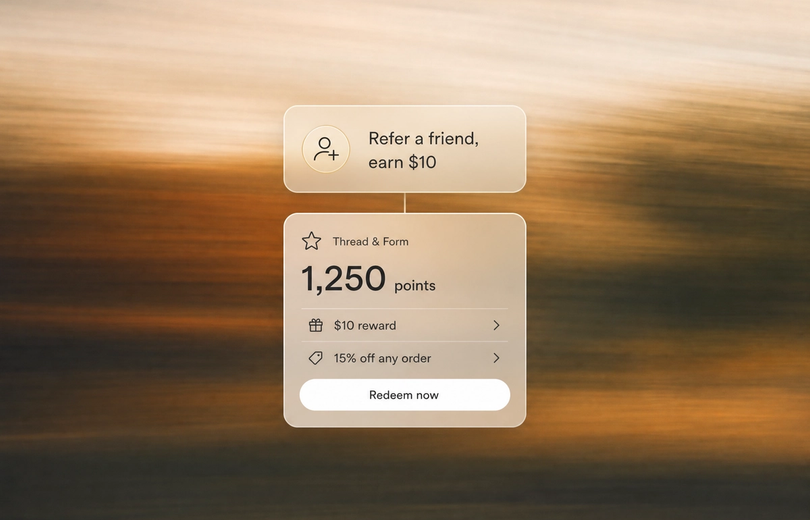
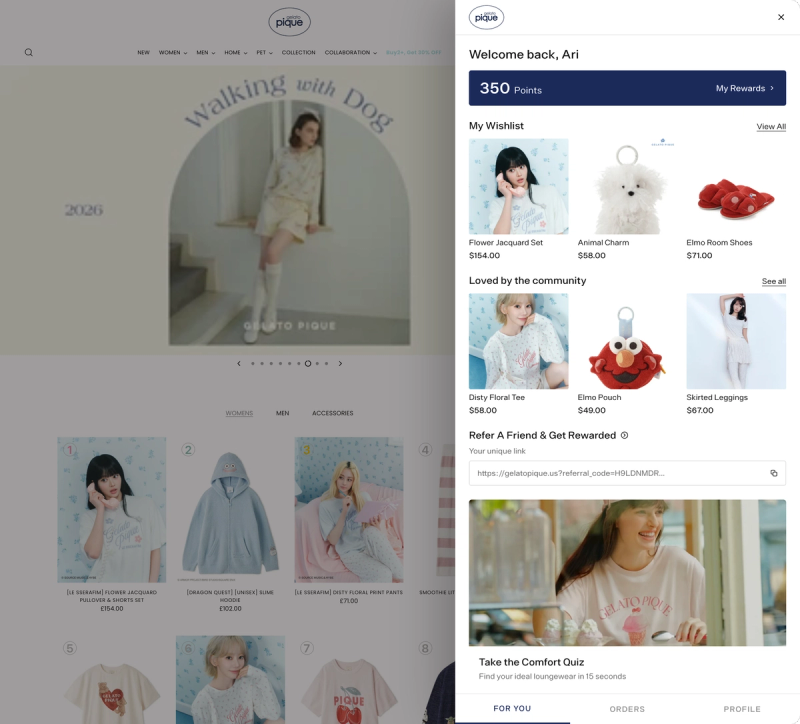
Gelato Pique combines points, three VIP tiers, gift reminders, branded accounts, referrals, and wishlists in one program. That is Shopify customer retention in practice: connected reasons for a customer to return after the first order.
Short answer: Shopify customer retention is the system you use to turn first-time buyers into repeat customers by improving the next purchase experience. The strongest approach combines cohort analysis, segmentation, relevant post-purchase messaging, customer accounts, loyalty, referrals, subscriptions, and ongoing measurement instead of blanket discounts.
What Shopify customer retention actually means
Retention is a behavior, not a campaign
Shopify customer retention is the process of increasing repeat purchases from existing customers over a defined period. It is observable behavior: a customer comes back, buys again, renews a subscription, refers a friend, or returns to browse saved products.
A campaign can contribute to that outcome. It cannot substitute for the rest of the experience. If customers cannot find order information, do not understand a product, have no reason to return, or face friction at checkout, another promotional email will only cover the problem temporarily.
Retention versus loyalty, repeat purchase rate, churn and CLV
Retention is the broad outcome. Loyalty is one input, covering rewards, status, advocacy, and the customer’s reason to choose you again.
Repeat customer rate measures how many customers have purchased more than once. Churn or lapse rate tracks customers who fail to return within a relevant window. Purchase frequency measures how often customers buy. Average order value measures what they spend per order. Customer lifetime value combines value across the relationship.
A rising AOV does not prove customers are returning. High loyalty enrollment does not prove the program is changing purchase behavior.
Why the right retention window depends on your product's buying cycle
A replenishable product may have a short reorder window. Fine jewelry may have one or two purchase occasions a year. Subscription products have renewal behavior to watch alongside one-off orders.
Set your retention window around the expected next meaningful purchase. A universal 30-day benchmark will hide more than it reveals.
Myth: bigger discounts and basic points are a retention strategy
Why blanket discounts train customers to wait
A larger discount can create a short-term conversion spike. It can also teach customers that waiting is rewarded, especially when the same offer reaches every customer regardless of intent or value.
Discounts are useful when they solve a specific problem, such as clearing a first-purchase barrier or helping a lapsed customer make a relevant return. They are weak when used as the default answer to every retention problem.
The margin question matters too. Read more about discounts versus points before increasing offer depth across the whole database.
Why a points balance alone does not create a reason to return
Points influence behavior only when customers understand how they earn, can see progress, and can reach a useful reward without unnecessary friction.
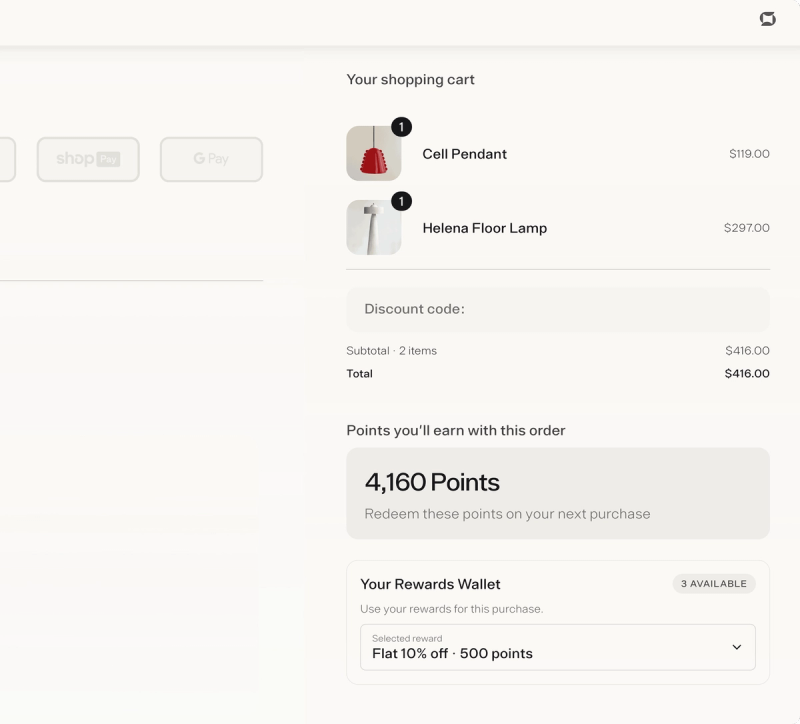
A visible balance, tier progress, clear earning actions, and redemption at checkout give customers a reason to act. Mage rewards can apply at Shopify checkout, so there is no code for the customer to copy.
The better model: match the next touchpoint to customer intent
Match the incentive to the customer’s current job. A first-time buyer may need product education and a signup reward. A repeat buyer nearing VIP status may care about progress and early access. A customer whose reorder window has passed may need a targeted reminder or a one-time points award.
For high-AOV jewelry, spend-based tiers, anniversary rewards, early access, shipping perks, or store credit may fit better than repeated low-value discounts. Mage’s loyalty store-credit mode is a Mage ledger, not Shopify-native store credit.
“I looked into so many different integrations for loyalty and referrals for our Shopify Store, but no one impressed me more than Mage on human connection, customer service, and value.”


Read the Reelie case study →
Why retention compounds on Shopify
The economics of repeat purchases
Acquisition cost has already been incurred for a returning customer. That does not make every retention offer profitable, but it changes the economics of improving the second and third purchase experience.
Shopify cites research showing that repeat customers can represent 21% of customers while generating 44% of revenue and 46% of orders. Examine where existing customers are dropping away rather than assuming a generic benchmark applies to your store.
How retention affects AOV, purchase frequency and CLV
A working retention system can affect several connected outcomes. A customer may buy more often because replenishment is easier. They may add items because a reward threshold is clear. They may stay subscribed because milestones recognize continuity.
Track second-purchase conversion first for many stores. Then track the next purchase that matters for your category, whether that is a replenishment, a seasonal purchase, a subscription renewal, or a high-consideration upgrade.
Why customer experience can matter more than incentive size
Customers return when the next purchase is easy and relevant. Order tracking, clear returns, saved products, remembered details, useful product education, and a visible loyalty balance all reduce friction.
Shopify warns that retention benchmarks vary by industry, product type, purchase frequency, and business model. Compare current cohorts with earlier cohorts before declaring a program successful or unsuccessful.
Build the retention engine around Shopify customer data
| Signal | Likely problem | Next action | Metric to watch |
|---|---|---|---|
| First orders do not become second orders | Weak post-purchase journey | Add education and reorder messaging | Second-purchase rate |
| Reorder window has passed | Customer has lapsed | Run a targeted win-back journey | Reactivation rate |
| High spend with low engagement | Status is invisible | Show VIP progress and relevant perks | Tier progression |
| Saves do not convert | Product interest is cooling | Send a relevant wishlist reminder | Wishlist conversion |
| Referral clicks do not convert | Offer or landing experience is unclear | Review friend reward and destination | Referral conversion |
Start with Shopify Analytics and customer cohort analysis
Start in Shopify Admin under Analytics and Reports. The Customer cohort analysis report groups customers by the date of their first order and shows how retention and repeat-purchase behavior develops across later periods.
Look for the shape of the drop-off. Do customers fail to place a second order? Do they return once, then disappear? Are particular first-order months stronger than others?
Investigate what was different for stronger cohorts: acquisition source, first product purchased, season, offer, or customer experience.
Turn cohort findings into dynamic customer segments
Shopify customer segments are dynamic, rule-based lists that update as customers meet or stop meeting the criteria. Build segments from a retention question, not from a desire to send more campaigns.
Useful starting segments include first-order customers awaiting a second purchase, high-value repeat customers, customers past an expected reorder window, VIP customers, subscription customers, and customers at risk of churn.
A first-time skincare buyer may need usage education. A customer who has saved an out-of-stock item may need a back-in-stock alert. A VIP customer may need early access rather than another discount.
Create a retention map from first order to second order and beyond
Map the customer journey around moments that change intent:
- First order: confirmation, education, support, account activation.
- Product-use period: relevant content and service.
- Reorder window: replenishment reminder, loyalty progress, or saved-product prompt.
- Repeat purchase: VIP progress, referral invitation, or subscription option.
- Lapse risk: targeted win-back message and a measured incentive.
A Shopify loyalty program can connect earning rules, rewards, VIP tiers, and checkout redemption to these moments. The program should reinforce profitable behaviors rather than subsidize every order.
Use coordinated touchpoints instead of isolated retention tactics
| Touchpoint | Customer behavior | Retention role | Measurement |
|---|---|---|---|
| Post-purchase journey | Product use and support contact | Builds confidence after purchase | Second-purchase rate |
| Customer account | Order tracking and saved-product browsing | Reduces return-visit friction | Logged-in repeat visits |
| Loyalty | Earning and redeeming rewards | Encourages valuable actions | Redemption and repeat purchase |
| VIP tiers | Progress toward status | Rewards high-value behavior | Tier progression |
| Referrals | Sharing with friends | Converts satisfaction into advocacy | Referral conversion |
| Subscriptions | Ongoing renewals | Supports purchase continuity | Renewal rate |
Post-purchase: remove uncertainty before asking for another sale
The post-purchase period is where customers decide whether the first order was worth repeating. Give them order updates, product education, clear support routes, and understandable returns information before asking for another sale.
Shopify can create marketing automations for post-purchase, customer appreciation, win-back, and VIP-related messages. Your retention platform can supply useful loyalty events and properties to the email or SMS tools you already use.
Customer accounts: give every return visit a job to do
A customer account should be a repeat-shopping hub, not a static order-history page. Customers should be able to check orders, track returns, update saved details, revisit products, and see what they have earned.
Mage Accounts is an on-site branded drawer that sits on top of Shopify customer accounts. When configured, it can show order history, returns, wishlist, Saved for Later, recently viewed products, points balance, VIP progress, and referral actions.
Loyalty: reward behaviors that predict another purchase
Loyalty works best as behavior design. Mage can award points for purchases, account creation, birthdays, anniversaries, reviews, social actions, receipt submissions, wishlists, subscription milestones, and custom actions where configured.
The emails that surface those balances matter as much as the earning rules. Our free set of 11 loyalty email templates covers every flow from points awarded to points expiring, with the reasoning behind each layout.
VIP tiers add progress and recognition. Mage tiers can be based on spend, points earned, or number of orders, with perks such as faster earning, early access, shipping benefits, birthday rewards, automatic discounts, and custom perks.
Use Mage Canvas to make the loyalty page, Rewards Widget, account drawer, referral campaign, and wishlist surfaces feel consistent with the storefront.
Referrals and community: turn satisfaction into acquisition
A referral should follow a positive customer moment. Each participant gets a unique link or code, and both the referring customer and friend can receive a reward when the chosen conversion condition is met.
Mage can issue referral rewards immediately or delay them until after a return window. Its controls can block self-referrals, aliases, duplicate accounts, shared IP patterns, repeat devices, and suspicious referral activity.
Subscriptions: make repeat purchasing easier, not just cheaper
Subscriptions support retention when they fit a customer’s replenishment pattern. They should reduce reorder effort and give customers a clear reason to continue.
Mage can award points once per subscription contract after a configured renewal threshold. The capability requires a supported subscription integration. See the subscription milestones setup guide for the supported configuration and contract-level behavior.
A Klaviyo loyalty integration can use loyalty properties and events in lifecycle messaging.
Apply the system with a 30-day Shopify retention launch plan
| Area | Required decision | Evidence it is ready |
|---|---|---|
| Baseline | Choose cohort and purchase window | Starting metrics recorded |
| Segments | Define first-order, repeat, and lapse-risk groups | Dynamic segments created |
| Journey | Assign one next action per segment | Messages and destinations mapped |
| Incentives | Choose behaviors and rewards | Earning and redemption rules reviewed |
| Storefront | Decide where progress appears | Account and loyalty surfaces published |
| Measurement | Set review cadence and success metrics | Dashboard and cohort comparison ready |
Days 1 to 7: establish the baseline
Record cohort retention, repeat customer rate, purchase frequency, AOV, CLV, lapse indicators, and the time between first and second purchase.
Do not start by changing five incentives. First identify the largest break in the journey.
Days 8 to 14: design the customer journey
Create dynamic Shopify customer segments. Map post-purchase, reorder, VIP, referral, subscription, and win-back moments. Decide what customers should see when they return to their account or loyalty page.
Education may be the right action for a new customer. A saved-product reminder may be right for a shopper showing purchase intent.
Days 15 to 21: launch behavior-based incentives
Configure earning rules, rewards, VIP tiers, referral rewards, and subscription milestones that fit the journey. Brand the loyalty page, Rewards Widget, and account sidebar in Mage Canvas.
Use a Bonus Points Campaign when you want to increase the points rate for a normal action, such as purchases during a seasonal period. Use a Points Drop when you want to add a flat, one-time points award to a Shopify segment, VIP tier, or loyalty audience without requiring an action.
For lapse-risk customers, a targeted drop paired with a relevant win-back message may be more disciplined than a permanent storewide offer. Learn how to reactivate lapsed loyalty members before expanding the audience.
Days 22 to 30: test, measure and refine
Review participation, redemption, second-purchase conversion, referral conversion, subscription renewal behavior, and cohort movement. Test one variable at a time, such as reward value, audience, timing, or message.
A busy campaign is not evidence that retention improved.
Measure Shopify customer retention without fooling yourself
The minimum retention dashboard
Track retention rate by cohort, repeat customer rate, second-purchase rate, purchase frequency, AOV, CLV, churn or lapse rate, subscription renewal rate, referral conversion, and cost per retained customer.
Mage analytics can report across overview, loyalty, VIP tiers, referrals, memberships, wishlist, and Saved for Later where those features are enabled. Validate commercial movement against Shopify cohorts.
How to interpret loyalty participation and redemption
Enrollment is not the goal. A program can attract many members while producing low redemption, weak tier progression, and no movement in repeat purchase behavior.
Check whether customers understand the reward path. Look at the time from enrollment to first earning action, points earned versus redeemed, redemption by reward type, and repeat behavior after redemption.
When to use a cohort comparison instead of a blended average
Use cohorts whenever you are assessing a change to the customer journey. Compare customers by first-order period, source, product category, or subscription status where available.
A blended average can improve because you acquired more high-intent customers, not because your retention system worked.
Frequently asked questions
What is Shopify customer retention?
Shopify customer retention is the process of increasing repeat purchases from existing customers over a relevant period. It measures whether customers return after a first order, while loyalty, satisfaction, AOV, and CLV each measure related but different parts of the customer relationship.
How do you calculate customer retention rate on Shopify?
Customer retention rate is calculated by subtracting new customers acquired during a period from ending customers, dividing by starting customers, then multiplying by 100. Use Shopify Customer cohort analysis alongside that storewide figure because cohorts show how customers from the same first-order period behave over time.
What is a good customer retention rate for a Shopify store?
A good customer retention rate for a Shopify store depends on its product category, buying cycle, industry, and business model. Compare your own cohorts over matching time windows first, then investigate changes in second-purchase behavior, purchase frequency, and lapse rate before chasing an external benchmark.
Are discounts or loyalty points better for customer retention?
Discounts and loyalty points can both support customer retention when they fit the customer’s intent and your margin model. Blanket discounts can encourage customers to wait for offers, while points work when customers can see progress, earn through meaningful actions, and redeem rewards without checkout friction.
How do customer accounts improve Shopify retention?
Customer accounts improve Shopify retention by making order tracking, reordering, returns, saved information, and personalized shopping easier on later visits. Mage Accounts adds an on-site drawer over Shopify customer accounts, with configurable areas for loyalty progress, saved products, referrals, orders, and returns.
How do you build a Shopify customer retention strategy?
A Shopify customer retention strategy begins with a cohort baseline, then uses dynamic segments to map post-purchase, reorder, VIP, referral, subscription, and lapse-risk moments. Configure relevant incentives and lifecycle messages, then measure cohort movement and commercial outcomes at intervals that match your buying cycle.
Ready to see Mage in action? Book a demo.

Kris is the co-founder of Mage Loyalty. I spend most days talking to merchants, and making sure our customers get real results. If you run a Shopify store or Agency we should chat!