Most ecommerce brands never take the time to choose the right loyalty structure, so they default to whatever their competitor is using. That's a costly mistake. The architecture of your loyalty program fundamentally shapes how customers engage with your brand—and whether they'll ever return.
The difference between a points-based program and a tiered one isn't just semantic. One rewards transaction frequency; the other rewards emotional investment. One scales with simplicity; the other scales with exclusivity. One feels transactional; the other feels like belonging to something.
Choosing the wrong structure for your business is like building a house on the wrong foundation. You might make it work short-term, but structural problems emerge when you try to grow.
Introduction
Loyalty programs have become table stakes in ecommerce. Customer acquisition costs have climbed past the point where one-time transactions make financial sense. It's now 5 to 7 times more expensive to acquire a new customer than to retain an existing one. That brutal math forces a reckoning: if you're not actively building loyalty, your competitors are capturing it instead.
But loyalty isn't abstract. It's built on a specific system—a chosen architecture that either aligns with how your customers think or works against them. Powerful tools for fostering customer engagement come in two dominant flavors: points-based programs and tiered loyalty structures. Both work. Both can drive measurable results. Neither is universally "correct."
The real question is: which one converts your specific customers into repeat buyers?
Most brand leaders I've worked with face this exact decision at a critical moment—usually after their first year of growth, when they've accumulated enough customer data to notice patterns. They ask the same question every time: "Should we do points or tiers?" The answer matters because the wrong choice wastes budget, confuses customers, and leaves money on the table.
This guide dissects both models in practical terms. You'll see how each one works, where each excels, and where each falls short. More importantly, you'll walk through a five-step framework to determine which structure aligns with your brand, your customers, and your business goals. By the end, you'll have clarity.
Dissecting Points-Based Loyalty Programs
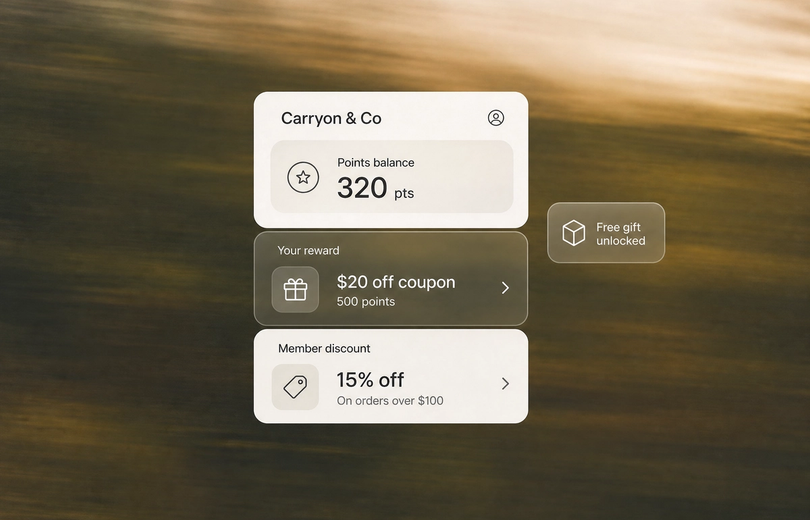
A points-based loyalty program is straightforward in concept. Customers earn points for specified actions—typically purchases, but also reviews, referrals, social shares, or account signups. These accumulated points function as a currency they can "burn" by redeeming them for discounts, exclusive products, or perks.
Think of it as a psychological extension of how humans naturally keep score. Earn a point here. Spend it there. The psychology is almost frictionless because everyone understands currency.
Key Advantages for Your Brand
Simplicity is your first win. Customers instantly grasp the concept. There's no complex tier ladder to climb, no fear they'll be overlooked at the bottom. Join, earn, redeem. The barrier to entry is so low that you see broader participation right out of the gate. This matters more than most brands realize—a confusing loyalty program has worse engagement than no program at all.
Flexibility in rewards is the second advantage. Points-based systems allow you to offer a broad menu of redemption options. One customer redeems 100 points for a $10 discount. Another uses 250 points for a free product. A third saves up for an exclusive merch item. This flexibility lets different customer segments find value according to their own preferences, rather than forcing everyone into the same tier-based value hierarchy.
Behavioral incentives extend beyond pure spending. You can reward a customer for leaving a review with 25 points just as easily as you reward a $50 purchase with 50 points. This flexibility means you can drive specific behaviors you care about—referrals, social sharing, user-generated content—without restructuring your entire program. For brands trying to build community or social proof, this is powerful.
The data supports this. Businesses with well-structured loyalty programs see a 20–40% increase in repeat purchase rate. Points programs capture much of that lift because they're low-friction and reward frequency.
Potential Disadvantages and Challenges
But simplicity has a shadow side. Points-based programs can feel purely transactional. Customers come to perceive your program as a mechanical discount engine rather than recognition of their loyalty. They're optimizing for points, not connecting with your brand. The emotional distance grows. This matters because emotional connection is the difference between a repeat customer and a true advocate.
Apathy is a real risk. If customers earn points slowly, or if the rewards feel trivial once redeemed, engagement flatlines. A customer earning 1 point per $1 spent needs to spend $100 just to get a $10 discount. That's a low-value proposition if your AOV is $40. Worse, if rewards are poorly curated—items customers don't actually want—points accumulate uselessly and customers abandon the program entirely.
Financial complexity sneaks in at scale. Points create a liability on your balance sheet. You've essentially issued a currency. When should you recognize revenue? How do you account for points breakage (points earned but never redeemed)? Accountants get involved. It's manageable but adds administrative friction, especially for growing brands.
Replicability kills differentiation. Because points-based programs are so simple, competitors copy them instantly. Sephora does points. Target does points. Your DTC skincare competitor does points. The program itself doesn't make you stand out. It becomes table stakes instead of a moat.
This is where the first crack in the "points are always better" narrative appears. They're not better—they're just easier. And easier sometimes means invisible.
Unpacking Tiered Loyalty Programs
A tiered program segments customers into status levels. Bronze, Silver, Gold. Or Starter, Insider, VIP. Customers earn their way up by spending money, making purchases frequently, or engaging with your brand across multiple touchpoints.
Here's where the psychology shifts. Instead of seeing points as currency, customers see themselves as progressing through a hierarchy. The next tier isn't just a reward—it's a status marker. It answers a fundamental human question: "Am I important to this brand?"
Key Advantages for Your Brand
Long-term engagement is the primary superpower of tiered programs. Once a customer reaches Silver tier, they now have something to protect. Dropping below the threshold means losing their status. This creates inherent stickiness that points programs struggle to match. A customer with 50 points might not care if they abandon you. But a customer in Silver tier who's three weeks away from dropping to Bronze? They'll make another purchase to stay put.
Driving sustained loyalty and retention becomes almost structural rather than relying on constant incentive engineering.
Status and exclusivity tap into deep human needs. We're tribal creatures. We want to belong to groups we perceive as better than average. Tiered programs manufacture this feeling deliberately. Your Gold-tier customers get a special badge on their account, exclusive access to new products, priority customer service, or invitations to private sales. The financial value of these perks matters less than the psychological signal: You are special to us.
This shows in the numbers. Tier members spend 50% more annually than non-members. Top-tier VIP customers in luxury brands spend four times more than before program enrollment. That's not just increased spending—that's emotional commitment translating into revenue.
Customer Lifetime Value increases structurally. Tiered programs naturally identify and reward your best customers. They get preferential treatment, which makes them more likely to stay. They refer more (because they're more invested). They spend higher AOVs (because higher tiers unlock bigger rewards). The compounding effect over time is substantial.
Discount dependency decreases. Instead of constantly offering 10% off to drive repeat purchases, you offer VIP-exclusive experiences. Early access to limited drops. Personalized styling sessions. Invitations to exclusive events. These perks cost less than permanent discounts and feel more valuable to customers. You're building prestige rather than eroding margins.
Data richness enables personalization at scale. Tier tracking gives you a second data dimension beyond transactional history. You know not just what customers bought, but why they matter. This enables hyper-targeted campaigns. Your VIP segment gets different email messaging, different product recommendations, different promotional calendars. The segmentation happens naturally.
Potential Disadvantages and Complexities
The trade-off is complexity. Designing a tiered program requires serious thinking. What are your tier thresholds? Annual spending? Frequency? Engagement score? How do you weight different actions? What exactly are the benefits at each tier? How do you prevent tier inflation—where benefits get cheaper over time, eroding perceived exclusivity?
Implementation is harder too. You need stronger technology integration. You're updating customer records, tracking tier status, automating tier transitions, managing different email flows for different tiers. This isn't impossible—platforms like Shopify Flow and customer data systems make it manageable—but it's more complex than a points button.
Alienation is a real risk if you're not thoughtful. Imagine you're a Bronze-tier customer. You see that Silver gets free shipping and you're still paying for it. You see that Gold gets 20% off everything and you're getting 5%. If the gap feels too wide, you feel forgotten. Worse, if you perceive the path to Silver as impossibly long, you give up trying. Tiered programs can accidentally demoralize the customers you're trying to move upward.
Costs compound for top tiers. When your Gold-tier customers get 20% off everything, your margins take a hit. When you send them exclusive products as gifts, you're eating inventory cost. Premium tiers require premium investment. If you structure them too generously, profitability suffers. If you structure them too stingily, they feel worthless.
Status fatigue is a subtle risk. If not managed carefully, tiered programs can start to feel manipulative. Customers realize they're being segmented, ranked, and incentivized to spend more to move up. Some reject this framing entirely. Transparency and authentic value are essential to avoid this perception.
Communication demands rise. A points program is easy to explain in one sentence. A tiered program requires explanation of tier thresholds, tier benefits, progression paths, tier maintenance rules. If your communication is unclear, customers get frustrated and disengage.
The Shopify loyalty program growing brands trust
See how Mage helps Shopify brands lift repeat purchase rate with loyalty, referrals and store credit.
Book a demoPoints vs. Tiers: A Side-by-Side Comparison
| Dimension | Points-Based Programs | Tiered Loyalty Programs |
|---|---|---|
| Primary Customer Motivation | Immediate rewards & instant gratification | Status, exclusivity, and aspirational achievement |
| Ease of Customer Understanding | Very high (simple earn-and-burn model) | Medium-to-high (requires explanation of tiers & benefits) |
| Implementation & Management Complexity | Low (minimal technical requirements) | High (requires robust technology & ongoing management) |
| Type of Rewards | Primarily transactional (discounts, free items) | Mix of transactional and experiential (exclusive access, events) |
| Impact on Customer Lifetime Value | Moderate (drives repeat purchase frequency) | High (drives higher AOV, frequency, and retention) |
| Best Fit for Business Models | High-frequency, low-AOV purchases (c-store, snacks, apparel basics) | Higher-AOV, less-frequent purchases (luxury goods, appliances, subscriptions) |
| Data Insights & Personalization Potential | Basic (spending history, redemption patterns) | Rich (tier status, behavior progression, segmentation opportunities) |
| Overall Cost Implications | Lower (simpler infrastructure, standard reward fulfillment) | Higher (complex tech, premium tier rewards, exclusive fulfillment) |
“I looked into so many different integrations for loyalty and referrals for our Shopify Store, but no one impressed me more than Mage on human connection, customer service, and value.”


Read the Reelie case study →
Crafting Your Loyalty Strategy: A Step-by-Step Decision Guide
The optimal loyalty structure isn't universal. It's contextual. Your brand's product category, customer base, business goals, and operational capacity all shape which architecture will actually drive results.
Here's how to navigate that decision systematically.
Step 1: Clearly Define Your Core Business Goals
Before you choose a structure, articulate what loyalty is actually supposed to do for your business. Be specific. Are you trying to increase purchase frequency among existing customers? Raise average order value? Reduce churn? Build community? Different goals point toward different structures.
If you're selling consumables—skincare, supplements, coffee—your goal is probably frequency. You want customers repurchasing every 4-6 weeks. Points-based programs excel here because they reward and track repeat purchases effortlessly.
If you're selling higher-value goods—jewelry, furniture, fitness equipment—your goal is different. You want higher spending per customer and longer retention windows (because purchases are infrequent). Tiered programs work better because they motivate bigger spend to reach tier thresholds.
Be explicit about this. Write it down. Our loyalty program exists to increase repeat purchase rate from 22% to 35% within 18 months. Or: Our loyalty program exists to increase CLV from $450 to $700 by rewarding our top 20% of customers with exclusive benefits. The clarity cascades down to every decision you make next.
Step 2: Deeply Understand Your Target Customer Demographics and Motivations
Who are you actually trying to build loyalty with? Age, income level, shopping behaviors, and brand consciousness all influence what motivates them.
Gen Z shoppers, for example, increasingly value experiences and exclusivity over pure discounts. They've grown up in a points-based world (Starbucks, airline programs, gaming rewards). Points feel ordinary to them. Tiered programs with experiential perks—early product access, community belonging, limited drops—resonate more authentically.
Higher-income customers often view points programs as beneath them. They perceive the value as too low. Tiered programs with premium positioning ("VIP") appeal more because they signal that the brand recognizes their importance.
Bargain hunters and deal seekers respond strongly to visible accumulation. Points-based programs let them watch the counter tick up. That's satisfying to them. Tier programs can feel less concrete.
The data reinforces this. Nearly 60% of consumers are willing to modify their spending to maximize loyalty benefits. But that doesn't mean all consumers find points and tiers equally motivating. Nearly 70% of shoppers are motivated when they chase a meaningful goal—which tiered programs provide more naturally than pure point accumulation.
Talk to your customers. Ask them directly. What would make them want to come back? What would feel rewarding? Their answers matter more than best practices.
Step 3: Evaluate Your Product Portfolio and Average Order Value (AOV)
Product economics often dictate program structure more than anything else.
A coffee brand with $5 average orders lives in a different world than a luxury handbag brand with $300 average orders. The coffee brand benefits from high-frequency, low-value points. Customers buy weekly. Points accumulate fast. Redemptions happen often. Engagement stays high.
The handbag brand can't use the same math. Customers buy twice a year. If you offer 1 point per $1, a $300 purchase yields 300 points. If 500 points redeem for a $50 discount, that customer now feels like they got $50 off a $300 item. That's ineffective. Better to tier them: spend $1,000 annually, become Silver, get access to private sales and new-drop previews.
Point programs yield about $2 to $4 in value for every $100 customers spend in c-store environments (high frequency, low AOV). Apply that to a $40 purchase and you're offering less than $2 in value. It works at scale because frequency compensates. But for lower-frequency categories, tiers preserve perceived value.
Step 4: Assess Your Operational Resources and Scalability Needs
Be honest about your constraints. Tiered programs require more infrastructure. You need technology that tracks tier status, automates tier transitions, triggers different customer journeys based on tier, and reports on tier performance. You need processes for managing exclusive rewards fulfillment. You need team members who understand the system well enough to troubleshoot when customers have questions.
Points programs need less of this. A basic points system requires a loyalty app, point allocation rules, and a redemption catalog. Management is lighter.
If you're a five-person team bootstrapping your brand, points-based is probably smarter. You can launch faster, manage it with less overhead, and move on to other growth levers.
If you have a dedicated retention manager or marketing operations person, tiered becomes feasible. You have someone to own the complexity.
Also consider technology infrastructure. Selecting loyalty platforms that integrate deeply with your existing tools—email platform (Klaviyo, Omnisend), customer data system, POS if you're omnichannel—matters enormously. Some platforms are built for simplicity (points-first). Others are built for sophistication (tiered-first). Choose technology aligned with your program design, not the other way around.
Step 5: Explore the Synergy of a Hybrid Loyalty Model
Here's where many brands unlock their real advantage: combining both.
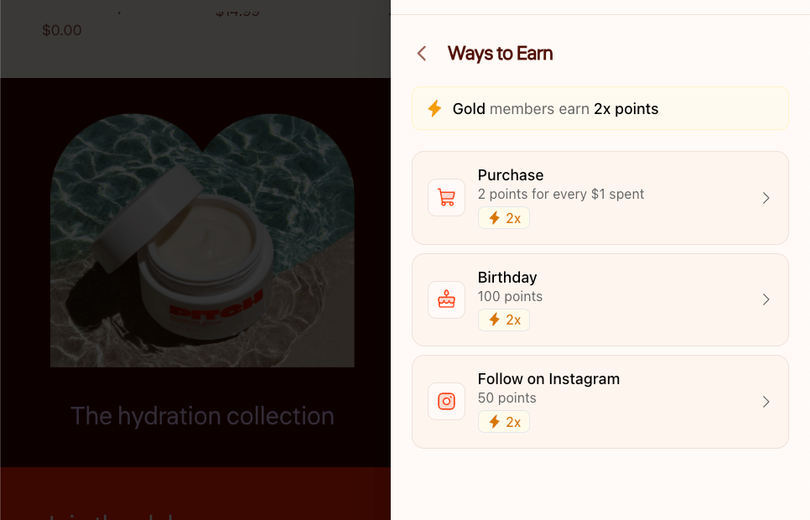
A hybrid program uses points for transactional engagement (purchase rewards, specific behavior incentives) and tiers for aspirational status and exclusive perks. Customers accumulate points for all purchases. Those points contribute to an annual spending threshold that determines tier. When they hit Silver tier, they unlock new benefits on top of their points earning.
This isn't new. Sephora's Beauty Insider program is the textbook example. You earn points on every purchase (transactional). Points accumulate. At certain spending thresholds, you reach VIB and Rouge tiers (aspirational status). At those tiers, you get exclusive perks beyond points redemption.
The hybrid approach captures the best of both: the engagement and simplicity of points, plus the stickiness and status of tiers. The downside is increased complexity. You're managing two systems at once. But the payoff—combining high engagement with high retention—often justifies it.
Consider this: if your budget allows only one system, choose based on what will drive more revenue in your specific context. If your budget allows both, a hybrid solves the false binary.
The Unpopular Opinion: Why Relying Solely on Transactional Points is Becoming a Diminishing Strategy
Here's the uncomfortable truth that most loyalty vendors won't tell you because it conflicts with their points-based business model: pure, transactional points-based programs are losing their magic with modern consumers.
This isn't because points don't work. They do. The data is clear. But the data is also aged. It reflects a market where loyalty programs were scarce enough to be novel. Now, the average North American consumer belongs to 15+ loyalty programs. Commonness breeds invisibility.
A points-based program makes you look like everyone else. Starbucks, Target, Best Buy, your competitor down the street—all points. The structure itself doesn't differentiate. It doesn't make customers feel special. It makes them feel like they're optimizing a discount engine.
Younger cohorts especially are rejecting pure transactional loyalty. Premium loyalty programs, which typically incorporate tiered or exclusive elements, see 60% higher propensity to spend more on the brand according to McKinsey research. Free, basic loyalty programs only increase that likelihood by 30%. That's a 2x difference driven almost entirely by perceived exclusivity and premium positioning.
Modern consumers—particularly Gen Z and younger millennials—chase meaningful goals. Over 70% of shoppers are motivated when they pursue a goal with real status or achievement attached. They don't just want discounts. They want to be recognized. They want access others don't have. They want belonging.
Points-based programs can't offer this. They're inherently egalitarian. Everyone in the program earns the same points-per-dollar. Everyone redeems the same way. There's no hierarchy, no status, no specialness.
The counterargument is valid: for high-frequency, low-AOV categories, points still work brilliantly. Your customer is buying $20 of groceries weekly and doesn't care about status—they care about tangible rewards. Points deliver that. The disaggregation happens by category and customer mindset, not universally.
But for brands selling higher-value goods, building community, or targeting status-conscious customers, relying solely on points is leaving equity on the table. You're competing with one tool when the market has evolved to demand two.
Advanced Strategies for Maximizing Loyalty Program Impact
Regardless of which structure you choose—points, tiers, or hybrid—implementation and ongoing optimization separate successful programs from forgettable ones.
Unlocking Deeper Personalization with Data and AI
Both points and tiered structures generate data. Points-based programs track spending and redemption patterns. Tiered programs add status progression and demographic segmentation. The opportunity is in turning that data into action.
Use customer tier or points velocity (how fast they're accumulating) to predict churn risk. A customer who was Silver last year but is stalling at Bronze this year is at risk. Intervene with targeted communications. Offer a bonus-point promotion. Remind them of upcoming tier benefits. Prevent the defection.
Machine learning can optimize reward recommendations. If a customer frequently redeems points for skincare products but you're promoting apparel in your loyalty communications, you're missing. A predictive model watches purchase history and shows customers the redemptions they're most likely to pursue. Engagement rises.
Segment customers not just by tier, but by progress toward the next tier. A customer at 80% of Silver threshold is different from one at 30%. The 80% customer is close—offer them a bonus point promotion to push them over. The 30% customer is discouraged—offer them a smaller milestone reward to build momentum.
AI can also help you dynamically optimize tier thresholds. If Bronze tier is too easy to reach, you lose the status signal. If it's too hard, you alienate prospects. Monitor where most customers land and adjust thresholds accordingly to maintain the exclusivity gradient.
Measuring True ROI and Managing Costs
Loyalty program ROI isn't just "did repeat purchase rate go up?" That's one measure, but incomplete.
Track incremental revenue—the revenue you wouldn't have captured without the program. A repeat customer might have purchased anyway. The program probably didn't create that customer; it accelerated or increased their spending. Measuring incremental impact requires a control group (if possible) or sophisticated attribution modeling.
Calculate Customer Lifetime Value (CLV) before and after. Program members should have higher CLVs than non-members. If they don't, your program isn't working—even if repeat rate increased.
Monitor cost per point earned. If you're offering too many bonus-point promotions, your costs inflate. Monitor the cost-to-fulfill ratio. How much does it cost to reward each redemption? As your program scales, these costs change.
Calculating program costs comprehensively means including software fees, reward fulfillment costs (buying discount codes or free products), staff time managing the program, and marketing spend promoting it. Total all that against incremental revenue generated. That's your real ROI.
Most brands discover that loyalty programs have positive ROI when done right. But many also discover they're not maximizing it because they're not investing in optimization. You can't set it and forget it. The programs that deliver 40%+ ROAS invest in continuous improvement.
Seamless Implementation for E-commerce Success
For Shopify merchants specifically, platform choice matters. Some loyalty apps integrate so deeply with Shopify that tier tracking, automatic tag assignment, and Shopify Flow automation become native. Others bolt on more loosely.
Deep integration means that when a customer hits Silver tier, their Shopify customer record updates automatically. Shopify Flow then triggers actions: send a welcome email, apply a discount code, add them to a VIP email segment in Klaviyo. All without manual intervention.
This automation scales. With 50 customers transitioning tiers per month, automation is the difference between feasible and impossible.
Platforms such as Mage Loyalty, Rivo, and Growave offer different integration depths. Evaluate based on your tech stack and automation appetite. You want loyalty data flowing into your email, SMS, and CRM platforms so that tier information shapes every customer touchpoint.
Clear communication is the final technical lever. Your loyalty page should explain the program simply. Your checkout should highlight loyalty enrollment. Your post-purchase emails should celebrate first points or tier milestones. The program's value should be obvious, not hidden.
Conclusion
Points-based and tiered loyalty programs represent two different bets on what motivates your customers. Points bet on simplicity and frequent engagement. Tiers bet on status and emotional investment. Hybrid approaches capture both.
Neither is universally correct. The right choice depends on your products, your customers, your resources, and your growth goals. A coffee brand making that choice would likely choose points. A luxury brand would likely choose tiers. A direct-to-consumer appliance brand might choose hybrid to drive both engagement and high-value repeat purchases.
The decision-making framework in this guide—defining goals, understanding customer motivation, evaluating AOV, assessing resources, and exploring hybrid possibilities—gives you the structure to make a deliberate choice rather than defaulting to what competitors do.
Loyalty programs aren't optional anymore. Customer acquisition costs guarantee that. But they're not all equally effective. The brands building real competitive advantage are the ones who invested in the structure that actually resonates with their specific customers. Not generic loyalty. Intentional loyalty.
Your next step is to apply that framework. Define your business goal. Talk to your customers. Look at your AOV distribution. Be honest about your team's capacity. Then build the program that's right for your brand, not the one that's easiest or trendiest.
The results will compound over time. Better retention. Higher CLV. Customers who don't just return—they advocate. That's what loyalty, structured correctly, actually delivers.
Frequently Asked Questions
Can I evolve from a points-based program to a tiered program later, or vice versa?
Yes, with caveats. Migrating from points to tiers requires careful customer communication and a transition period. You'll need to clarify how existing points map to tier status (does their accumulated point balance count toward tier qualification?). Some customers will perceive the transition as a reduction in value if tier benefits feel weaker than their points purchasing power felt. Reverse migration (tiers to points) is easier because you're simplifying. Either direction requires planning and transparent messaging.
Do customers generally prefer earning points or progressing through tiers for rewards?
This splits along customer demographics and product categories. High-frequency, price-sensitive shoppers prefer points—the counter ticking up satisfies them immediately. Status-conscious, higher-income, or younger customers often prefer tiers because they signal recognition and belonging. In hybrid programs, most customers engage with both elements: they chase tier status while also redeeming points. Rather than guess, ask your actual customer base directly in a survey.
How can I effectively determine if my loyalty program's rewards are genuinely attractive to my target audience?
Track redemption rates. If your points-per-redemption ratio shows that customers rarely cash out (unless forced by expiration), your rewards aren't attractive enough. If tier benefits go unused (e.g., free shipping codes never applied), those benefits lack perceived value. Survey defectors: ask customers who left your loyalty program why. Their feedback often reveals whether the problem is the reward structure or something else (poor program discovery, unclear rules, better competitor program). A/B test different rewards with subsets of your audience and measure engagement lift.
What are the most common pitfalls brands encounter when launching a new loyalty program?
The three biggest: (1) Complexity without clarity—brands design intricate tiered systems but communicate them poorly, so customers don't understand the value. (2) Inadequate rewards—offering points that accumulate too slowly or rewards that feel cheap erodes credibility fast. (3) Abandonment after launch—brands launch programs but don't actively promote them, leaving adoption rates low. Loyalty programs need consistent promotion, clear communication, and attractive reward economics from day one.
TLDR
Loyalty program success depends on choosing the right structure for your business, not the most popular one. Points-based programs excel for high-frequency, low-AOV categories by rewarding purchase frequency with simple accumulation and redemption. Tiered programs drive higher lifetime value and retention in higher-AOV categories by creating status and exclusivity. Hybrid approaches combining both unlock engagement and stickiness together. Use the five-step decision framework—define goals, understand customer motivation, evaluate AOV, assess resources, and explore hybrid possibilities—to make a deliberate choice aligned with your specific brand context. Implement with deep tech integration, clear communication, and continuous optimization.

Graeme is the co-founder at Mage Loyalty. He heads product development, from complex loyalty migrations and large-scale data handling to building the features shaping the future of loyalty on Shopify.