The online beverage market is booming. Sales are projected to hit $140.42 billion by 2027, growing at a compound annual rate of 19.1%. Yet here's the uncomfortable truth: most Shopify beverage merchants have no idea what a healthy loyalty program participation rate actually looks like for their niche.
You're sitting on a goldmine of repeat purchase potential, but without a benchmark, you're flying blind. Should your participation rate be 15%? 35%? 50%? Better yet, does participation rate even matter if your engaged members aren't actually buying?
This guide cuts through the noise and gives you exactly what you need: practical strategies to understand and boost loyalty participation for beverage brands on Shopify, grounded in real industry data and tactics that work across coffee, tea, spirits, and wellness drinks.
Understanding Loyalty Program Participation in the Beverage Niche
What Is Loyalty Program Participation?
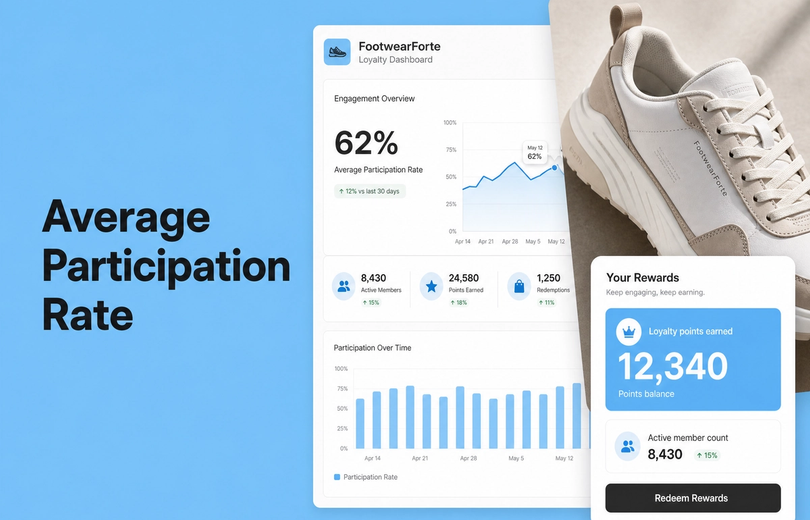
Loyalty program participation is straightforward in definition but often misunderstood in execution. It's the percentage of your total customers who have enrolled in your loyalty program.
The calculation is simple: divide total active loyalty program members by your total number of customers, then multiply by 100.
```
Participation Rate = (Total Loyalty Program Members / Total Customers) × 100
```
For example, if you have 10,000 customers and 2,500 are enrolled in your loyalty program, your participation rate is 25%.
But here's where most merchants stumble: they stop counting there. They celebrate the enrollment number without asking whether those members actually engage. This is where the gap between theory and reality opens up.
Why Participation Matters for Shopify Beverage Brands
For beverage brands, participation matters because of the consumption model. Unlike clothing or electronics, beverages are replenished regularly. A coffee drinker buys weekly. A wine enthusiast restocks monthly. A wellness drink devotee orders monthly subscriptions.
This frequent purchase cycle means loyalty program members generate measurable impact fast. Loyalty members make 67% more purchases than non-participants, show 2.5x higher repeat purchase rates, and generate 115% more revenue per customer.
For beverage brands specifically, this translates to a customer who might spend $50 annually becoming a customer worth $175 annually. That's not incremental growth—that's structural revenue transformation.
Beyond revenue, engaged loyalty members become advocates. They leave reviews, share products on social media, and refer friends. Starbucks' Rewards program drove nearly 60% of US company-operated revenue in fiscal 2025, demonstrating the scale loyalty can achieve in beverages.
The Elusive "Average": Why Specific Shopify Beverage Participation Rates Are Hard to Pin Down
Here's where the research gets honest: there is no universally cited "average participation rate" specifically for Shopify beverage brands. Industry reports discuss e-commerce loyalty in general terms, but granular data for this niche remains fragmented.
Why? Several factors make a single benchmark misleading:
Diverse Business Models: A subscription coffee roaster has fundamentally different participation dynamics than a one-time wine purchase brand. Subscription customers have higher inherent stickiness; their loyalty participation overlaps with renewal cycles.
Product Category Variation: Premium spirits attract different customer behaviors than mass-market sodas. Craft beverages command higher margins and justify deeper engagement incentives. Health drinks appeal to habit-formation audiences more than indulgent drinks.
Loyalty Program Design Variance: A brand offering a simple 1-point-per-dollar system behaves differently from one running tiered VIP tiers with exclusive tastings. The program's appeal shapes participation directly.
Premium vs. Accessible Positioning: Luxury beverage brands (rare whiskeys, artisanal kombucha) typically see lower participation rates (15-25%) but higher customer lifetime value per member. Mass-market beverages (craft beer, ready-to-drink coffee) often see higher participation (30-45%) with lower individual spending.
Here's what we know from broader ecommerce data: 68% of Shopify stores have implemented loyalty programs. Of those, active participation among enrolled members typically ranges from 20-40%, depending on program design and industry.
For beverages, a realistic target participation rate sits between 20-35%, assuming you're counting all customers. However, this number alone is misleading.
Why Chasing the Highest Participation Rate Isn't Always Your Only Goal
This is where conventional wisdom fails beverage merchants. Everyone talks about maximizing participation, but I've seen brands with 45% enrollment rates and 10% active engagement rates—and they're struggling more than brands with 25% enrollment and 55% active engagement.
Enrollment without engagement is a vanity metric. A customer who joins your loyalty program but never earns or redeems points isn't generating value—they're just bloating your member count.
The data supports this shift in thinking. While 72% of consumers say a loyalty program makes them more likely to spend, 56% report actually increasing spending. That gap—16 percentage points—represents enrolled members who don't convert to repeat purchases.
For beverage brands specifically, a engaged segment of 200 customers who each spend $300 annually generates more value than 1,000 enrolled members who each spend $30. You want profitable participation, not just high participation.
This means your real north star isn't the enrollment number. It's active engagement: the percentage of loyalty members actively earning or redeeming points within a 90-day window. That metric tells you whether your program is actually driving behavior change.
The Shopify loyalty program growing brands trust
See how Mage helps Shopify brands lift repeat purchase rate with loyalty, referrals and store credit.
Book a demoKey Metrics Beyond Just Participation for Beverage Brands
Active Engagement Rate: The True North
Active engagement rate measures the percentage of loyalty program members who've earned or redeemed points within a specific period—typically the last 90 days. This is the metric that separates thriving programs from dormant ones.
A healthy active engagement rate for most Shopify loyalty programs sits between 35-50%. Below 25%, your program is likely struggling to motivate repeated actions. Above 60%, you're in elite territory.
For beverage brands, this matters acutely. A customer who earns points weekly (buying coffee) versus monthly (buying wine) will show different engagement patterns. But the threshold remains: is this member actively participating, or are they a ghost enrollment?
To calculate: (Members who earned or redeemed points in the past 90 days / Total members) × 100.
If you have 1,000 loyalty members and 450 of them have earned points in the last 90 days, your active engagement rate is 45%—solid territory.
Redemption Rate: Ensuring Your Rewards Matter
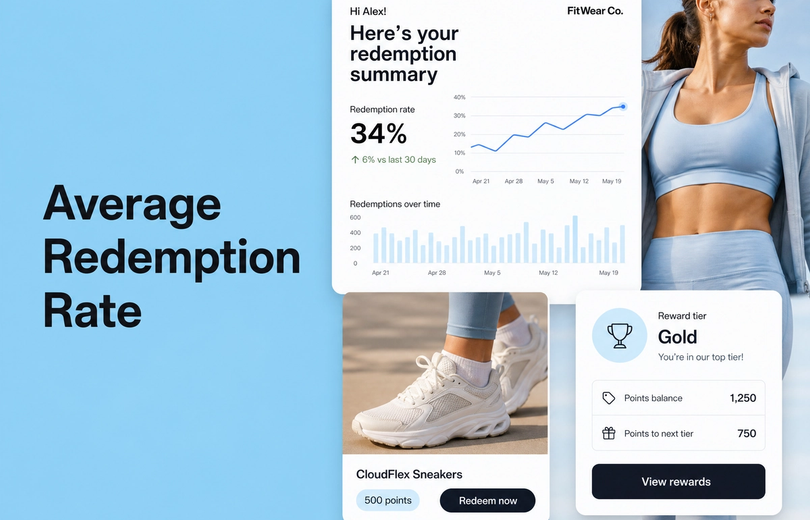
Redemption rate tracks what percentage of earned rewards members actually use. This is critical. If customers earn points but never redeem them, your program is costing you money in point liability without driving purchase behavior.
A healthy redemption rate for Shopify loyalty programs sits between 20-60%. Below 20%, your rewards are either too difficult to reach or misaligned with what customers actually want. Between 20-40% is healthy. Above 60% indicates you're being generous with rewards, which can compress margins.
For beverages, redemption often reflects reward attractiveness. If your beverage brand offers "free shipping on orders over $75," that might resonate with case-lot wine buyers but feel out of reach for daily coffee shoppers. Alternatively, offering a free bag of coffee for 100 points creates immediate gratification and redemption.
The mechanics matter here. Prominent placement of redemption options, one-click redemption processes, and timely reminders about available points all influence redemption behavior. Many merchants set points to expire after 12 months—a forcing function that drives redemptions.
Customer Lifetime Value & Repeat Purchase Rate: The Long-Term Wins
These metrics bridge loyalty program performance to actual business impact.
Customer Lifetime Value (CLV) measures the total revenue a customer generates throughout their relationship with your brand. For loyalty members, CLV typically increases 2-3x compared to non-members, depending on your product category and program design.
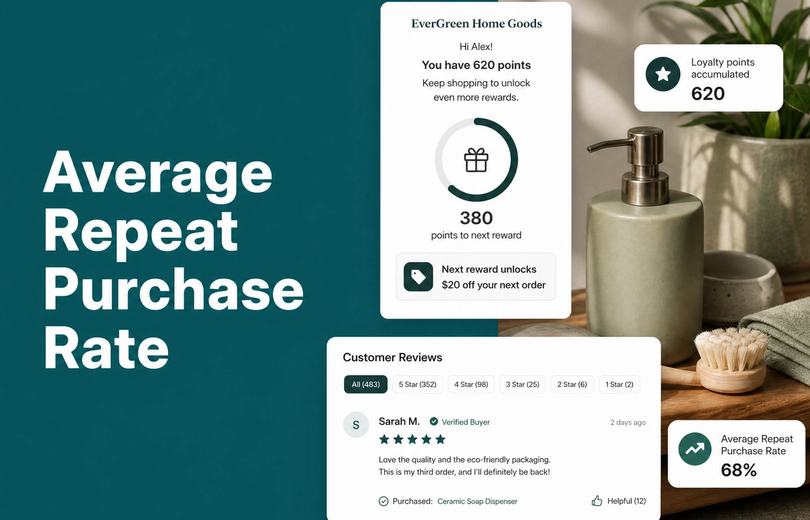
Repeat Purchase Rate (RPR) measures the percentage of customers who buy again within a defined period (typically 12 months). Loyalty members show significantly higher RPR.
The research is clear: loyalty program members generate substantially higher long-term revenue. For beverage brands operating on narrow margins (typically 20-35% for many drink categories), this uplift often determines profitability.
A beverage brand with an average order value of $40 and a 15% non-member repeat purchase rate might see loyal members with a 38% repeat purchase rate. That's a 2.5x multiplier on purchase frequency.
“Cannot say enough good things about the team at Mage Loyalty, one of the absolute best organizations we have ever worked with, full stop! So glad we connected with them, completely redid our loyalty program, new concepts, use of loyalty, increasing user engagement, showing us where we were not valuing our best customers, just WOW, amazing team!”

Read the West Coast Goalkeeping case study →
Phase 1: Laying the Foundation – Setting Up Your Shopify Beverage Loyalty Program for Success
Choosing the Right Loyalty Platform for Shopify Beverage
You need a platform built for Shopify. Here's what matters:
Seamless Shopify Integration: The loyalty app should sync directly with your Shopify admin, pulling customer data, product information, and order history automatically. No manual data entry. No separate databases.
Tiered Reward Options: For beverage brands, being able to offer simple points-for-purchases alongside VIP tiers with exclusive perks matters. You're capturing both mass-market and premium segments.
Email & SMS Integration: Loyalty programs live and die by communication. Your platform needs native or deep integration with email tools (Klaviyo, Omnisend) and SMS (Postscript) so you can remind customers about points, encourage redemptions, and celebrate milestones.
Subscription-Ready: If you're running a coffee subscription or beverage box model, your loyalty platform should support integrating points with recurring orders, rewarding subscription renewals, and handling subscription-customer progression through tiers.
Age Verification Capabilities (if selling alcohol): Alcoholic beverage brands need built-in age gating or easy integration with age verification services. Your loyalty program can't enroll or reward minors.
Flexible Redemption: Being able to offer free products, discounts, percentage-off rewards, and exclusive experiences matters. Different customer segments redeem differently.
Each has different pricing and feature emphasis.
For beverage brands specifically, prioritize platforms that have worked with consumables or subscription brands. They understand the replenishment cycle.
Crafting an Irresistible Value Proposition
Your program's value proposition is what convinces customers to enroll. For beverage brands, this can't be generic.
A wine brand might say: "Join Cellar Rewards and earn points toward exclusive small-batch bottles before they sell out."
A coffee roaster might say: "Members get first access to single-origin drops and earn free bags twice as fast."
A wellness drink brand might say: "Every purchase gets you closer to a free subscription month and exclusive health content from our nutritionists."
The key: make the benefit clear within three seconds. No jargon. No assumption that customers understand "points." Just tell them what they get.
Immediate Value Matters: Offer a welcome bonus (50 points, or a $10 credit) just for signing up. This removes friction. A customer who gets an instant reward has positive association with your program before they even make a purchase.
Seamless Enrollment: Making it Effortless
Enrollment should happen in seconds, not minutes.
At Checkout: Add loyalty enrollment as a one-click option at the Shopify checkout. Default it to "opted in" but allow opt-out. A customer who sees "Join Rewards and earn 2% back" at checkout will enroll at 3-5x the rate of customers who never see it.
On Product Pages: Show the earn rate prominently. "Earn 5 points on this order" when hovering over the buy button. Make the math visible.
Post-Purchase: Include enrollment invitations in order confirmation emails. By then, the customer has already bought—they're in a positive headspace. Showing them the program they just missed joining, with a direct link to enroll, captures stragglers.
Account Creation: If your store allows account signups without purchase, pre-populate them with loyalty enrollment options. Customers creating accounts are showing intent.
The goal: get 10-15% of new customers enrolled on their first interaction, before they even purchase.
Phase 2: Driving Initial Participation – Getting Beverage Customers to Join
Visibility Across the Customer Journey
Your loyalty program must be impossible to miss.
Product Pages: Display the earn rate for every product. "Earn 8 points on this 12-pack." Make it specific to the item, not generic to the brand. Customers mentally calculate: 8 points × 3 purchases per month × 4 months = 96 points toward a free case. Concrete math drives enrollment.
Homepage Banner: A prominent, rotating banner saying "Join our Rewards Club—earn on every sip" should be visible above the fold on desktop and immediately on mobile.
Blog Content: If you publish beverage content (brewing tips, tasting notes, recipes), mention your loyalty program once per article. Link to enrollment. Customers reading content are engaged and likely to convert.
Checkout Page: This is critical. Your checkout should show "You'll earn X points with this order" before payment, and offer enrollment as part of checkout flow. A two-second decision to enroll shouldn't delay checkout.
Email Footer: Every promotional email should have a small "Join Our Rewards" link in the footer.
Beverage-Specific Angles:
- For coffee brands: "Earn rewards for every bean."
- For wine: "Join our Tasting Club and unlock exclusive vintages."
- For spirits: "Members get early access to limited releases."
Make the language match your product category's culture.
Incentivizing the First Interaction
A welcome bonus removes enrollment friction. Offer one of these:
- 50 points (worth ~$5) for signing up, redeemable immediately
- $10 off your first order after enrollment
- Free shipping on orders over $25 for 30 days after enrollment
For beverage brands, a free product works better than a discount. "Get a free sample kit" for enrolling beats a percentage off. Samples introduce customers to product breadth and increase average order value on the next purchase.
Second-purchase incentives also work: "Earn 2x points on your first order after joining." This accelerates the path to a first redemption, proving the program works.
Leveraging Marketing Channels for Enrollment
Email Marketing: Dedicate two emails per month to loyalty program promotion. Segment by customer type:
- New customers who haven't enrolled
- Customers enrolled but inactive (no points earned in 60 days)
- Active members (reminder of points balance and redemption opportunities)
SMS Campaigns: Send one SMS per month to opted-in customers with a link to enroll or a reminder of available rewards. SMS has 98% open rate. Use it sparingly but effectively.
Social Media: Post quarterly about loyalty. Show member wins: "Sarah earned enough points for a free 6-pack this month—you can too." User-generated content matters. Repost customer photos using your products with a "This member earns rewards for sharing their sips" caption.
Paid Ads: Retargeting campaigns on Facebook and Instagram to website visitors who didn't enroll will recapture 8-12% at a reasonable CAC (customer acquisition cost). Show the dollar value of rewards: "$50 in free products last year for our members."
In-Store (if applicable): If you operate a tasting room, café, or partner with physical retailers, QR codes at point-of-sale linking to enrollment, signage highlighting perks, and staff incentives to mention the program (a free drink for referring 5 customers to enroll) all work.
Phase 3: Cultivating Active Engagement & Long-Term Loyalty
Beyond Purchases: Diverse Earning Opportunities for Beverage Enthusiasts
Points for purchases are table stakes. To drive active engagement, you need multiple earning paths.
Product Reviews: Award 25-50 points for a product review. For beverage brands, reviews are social proof that converts. A customer reviewing your cold brew is telling peers it's worth $30. Reward that.
Social Sharing: Offer 15-30 points for sharing a product on Instagram or tagging your brand. Make the mechanics easy: include a shareable link in order confirmation emails.
Referrals: Award 100-200 points when a referred customer makes their first purchase. For beverages with loyal customers, referral programs drive 20-30% of new customer acquisition at low cost.
User-Generated Content: If customers post photos of your products with a branded hashtag, award 50 points. This is gold for beverage brands—visual content drives conversion.
Loyalty Milestones: Celebrate when customers hit 100, 500, and 1,000 points with bonus point awards. Psychological wins matter. "You've reached Platinum status!" comes with 50 bonus points.
Seasonal Challenges: "Try 3 new seasonal flavors this quarter and earn 75 points." Gamification encourages exploration and repeat purchases.
Birthday Rewards: Offer 25 points on a customer's birthday month, redeemable once. It's personal and costs you the equivalent of a discount you'd likely offer anyway.
The math: an active engagement member should be able to reach a meaningful redemption (a free product, worth $15-30) every 2-3 months through a mix of these activities, not just purchases.
Tiered Rewards: Building Status and Exclusivity
VIP tiers create aspirational goals and segment your customer base for targeted marketing.
A simple three-tier structure works for most beverage brands:
Bronze (0-199 lifetime points): Standard earning rate. Benefit: monthly bonus points notification.
Silver (200-499 lifetime points): 1.25x points earning on all purchases. Benefit: early access to seasonal releases.
Gold (500+ lifetime points): 1.5x points earning. Exclusive benefit: quarterly virtual tasting with your founder or head blender, or a curated "VIP Box" quarterly.
The average engagement rate in tiered loyalty programs is 48% versus 35% for non-tiered programs—a 13% improvement. That's significant.
For beverage brands, the exclusivity piece matters as much as the economic benefit. Wine enthusiasts don't just want points; they want to feel like insiders. A Gold member getting a private email about a small-batch release before public announcement drives engagement at low cost.
Personalization: Tailoring Offers to Sip Preferences
Loyalty programs should feel personal, not automated.
Purchase History Segmentation: If a customer has spent 70% of their loyalty budget on red wine, don't send them equal offers for white wine. Send 60% wine offers and 40% other beverages.
Flavor Preference Tracking: For specialty beverages, track flavor preferences. A customer who's bought three citrus-forward drinks should receive citrus-forward redemption options first.
Timing Personalization: Send point reminders and redemption nudges based on when a customer typically purchases. If they order weekly on Sundays, send reminders Friday. If they order monthly on the 15th, send reminders on the 10th.
Birthday & Anniversary Rewards: Customized rewards on purchase anniversaries. "You've been a member for one year—here's 100 bonus points."
Personalization drives a 6-10% lift in redemption rates versus generic campaigns. For beverage brands operating on tight margins, that's material.
Omnichannel Experience: Unifying Online and Offline Sips
Many beverage brands operate multiple channels: a Shopify store, a Shopify POS location (tasting room, cafe, pop-up), or wholesale partnerships.
A customer earning points on your Shopify store should be able to redeem them in-store. A customer buying at your physical location should earn toward online redemptions.
This requires a loyalty platform that supports integrate POS loyalty programs natively or through integration. The technical complexity is worth the engagement lift.
Omnichannel loyalty programs increase repeat purchase rates by 15-25% versus single-channel programs, because customers engage through whichever touchpoint is convenient.
Phase 4: Measuring, Analyzing, and Optimizing Your Beverage Loyalty Program
Tracking Key Performance Indicators
Set up a dashboard tracking these monthly:
| Metric | Target | Why It Matters |
|---|---|---|
| Participation Rate | 20-35% of total customers | Foundation metric; shows adoption |
| Active Engagement Rate | 35-50% of enrolled members | Identifies truly engaged segment |
| Redemption Rate | 25-45% of earned points | Shows reward attractiveness |
| Average Points Per Member Per Month | 50-150 points | Indicates purchase frequency |
| Customer Lifetime Value (Members vs. Non) | 2-3x higher for members | Proves program ROI |
| Repeat Purchase Rate (Members vs. Non) | 35-50% for members | Shows retention impact |
Leveraging Shopify Analytics & Loyalty App Insights
Your loyalty app dashboard should show:
- Enrollment trends over time
- Which marketing channels drive the most enrollments
- Earning patterns (which activities drive points accumulation)
- Redemption patterns (which rewards are most popular)
- Tier progression velocity (how quickly members advance)
- Engagement cohorts (members enrolled in Month 1 vs. Month 6—which cohorts are stickier)
Cross-reference this with Shopify's reports: customer lifetime value, repeat purchase rate, average order value for loyalty members versus non-members.
The gap between these groups is your program's incremental impact.
A/B Testing Your Loyalty Program
Run small experiments quarterly:
Test 1: Compare 1-point-per-dollar earning to 2-points-per-dollar earning. Measure redemption rate. Higher earning rate typically drives higher engagement but lower margins. Find the sweet spot for your margin profile.
Test 2: Compare percentage-off rewards (10% off) to free-product rewards. For beverage brands, free products typically outperform. Customers perceive a free specialty coffee or wine bottle as higher value than a 10% discount on their next purchase.
Test 3: Test point expiration policies. 12-month expiration typically drives higher redemption (35-40%) than 24-month expiration (20-25%). But 12-month expiration also drives some customer churn. Test the tradeoff.
Test 4: Email frequency. Test monthly point reminders versus weekly. Weekly typically drives 15-20% higher engagement but risks higher unsubscribe rates.
Document results quarterly and adjust your program accordingly.
Key Loyalty Program Strategies and Their Impact
| Strategy | Ease of Participation | Impact on Active Engagement | Suitability for Beverage | Potential ROI |
|---|---|---|---|---|
| Points-Based Simple | High | Medium (35-40%) | Good for mass-market | 4-6x |
| Tiered VIP | Medium | High (48-55%) | Excellent for premium | 5-8x |
| Referral-Focused | Medium | High (if rewards are generous) | Good for word-of-mouth | 6-10x |
| Subscription-Integrated | Low (requires habit) | Very High (55-70%) | Excellent for coffee/tea | 7-12x |
| Social-First (reviews, shares) | High | Medium (40-45%) | Good for discovery-driven | 3-5x |
Choose a primary strategy (tiered works well for most beverage brands) and layer on secondary strategies (referrals, social sharing) to compound engagement.
Unique Challenges and Opportunities for Shopify Beverage Brands
Managing Age Verification and Compliance
If you're selling alcohol, your loyalty program must integrate with age verification. Customers should only be eligible for enrollment after verifying they're 21+ (or relevant age in their jurisdiction).
Most loyalty apps don't handle age gating natively. You'll need Shopify apps like Jackpot (age verification on checkout) paired with a loyalty app, or a platform like Mage Loyalty that supports custom enrollment conditions.
Never enroll or reward a customer without verified age. The liability isn't worth it.
Subscription Models & Recurring Purchases
Coffee subscriptions, tea boxes, and wellness drink memberships are growing channels for beverage brands. Your loyalty program should enhance, not compete with, subscriptions.
Award bonus points for subscription renewals. A customer who renews their monthly coffee subscription should earn 25% more points that month, encouraging continuity.
Offer tiered subscription tiers within loyalty: "Subscribe + join Gold tier and get 50% off your subscription fee."
Integrate subscription churn prevention: if a subscriber hasn't renewed in 30 days (technically overdue), send them a "You're one renewal away from 200 bonus points" email. Small incentives prevent churn.
Seasonal & Limited Edition Releases
Limited releases create scarcity and urgency—two drivers of participation.
Offer early-access windows to loyalty members for new seasonal beverages. "Gold members get 48-hour early access to our Fall Harvest blend before public launch."
Create limited-edition loyalty rewards: "Earn 250 points and redeem for our exclusive limited-edition bottle." This drives concentrated point accumulation during limited windows.
Seasonal bonus point campaigns ("2x points on fall flavors in September and October") align program incentives with product momentum.
Handling Perishables & Delivery Logistics
Beverages are perishable. Shipping costs are high relative to margins, especially for heavy products like bottled water or wine.
Use loyalty rewards to incentivize larger basket sizes: "Earn 1.5x points on orders over $75." Larger orders spread shipping costs across more units, improving margins.
Reward local pickup or in-store redemption: "Get 25 bonus points if you pick up your order at our cafe instead of shipping." This reduces fulfillment costs and drives foot traffic.
Subscription integration solves perishability issues by establishing predictable delivery cadences.
Real-World Inspiration: Shopify Beverage Loyalty in Action
Case Study Archetype 1: The Craft Coffee Roaster
A specialty coffee roaster with a 2,000-customer base implemented a tiered loyalty program integrated with their subscription offering.
Strategy: Tiered ("Bean Baron," "Master Roaster," "Espresso Elite") with subscription discounts and early access to limited roasts.
Results: 28% participation rate (560 customers enrolled). Active engagement rate of 52% (292 actively earning points). These 292 members represented 64% of revenue, up from 38% pre-program.
Key Tactic: Bonus points for subscription renewals (25 points per month subscription = 300 annual points per subscriber = one free 1-pound bag). This drove subscription churn down from 8% monthly to 4.2% monthly.
Lesson: For frequency-purchase beverage categories, loyalty works best when integrated with the subscription or delivery model, not adjacent to it.
Case Study Archetype 2: The Premium Wine & Spirits Retailer
A luxury wine and craft spirits brand with a 5,000-customer base launched a VIP tier program with exclusive tastings.
Strategy: Three tiers with purchasing thresholds. Gold tier (members spending $500+ annually) received quarterly virtual tastings with the winemaker, first access to allocations, and a 10% points earning multiplier.
Results: 22% participation (1,100 enrolled). 41% active engagement. Gold tier members (180 customers) generated 51% of annual revenue.
Key Tactic: Virtual tasting experiences (low-cost to execute, high perceived value) drove Gold tier advancement more effectively than discounts. Members felt like insiders.
Lesson: For premium beverage categories, exclusivity and experience matter more than points multipliers. Perceived VIP status justifies loyalty far better than marginal discounts.
Case Study Archetype 3: The Health & Wellness Drink Brand
A ready-to-drink wellness beverage brand with 3,500 customers launched a habit-formation loyalty program focused on challenge-based rewards.
Strategy: Gamified challenges ("30-Day Energy Challenge," "Complete Your Wellness Week") with points and leaderboards. Referral bonuses for bringing friends into challenges.
Results: 35% participation (1,225 enrolled). 58% active engagement (713 members actively completing challenges). Referred customers showed 3.2x higher lifetime value than paid-acquisition customers.
Key Tactic: Community leaderboards and monthly "Champion" recognition (featuring a customer on Instagram) drove engagement without additional costs.
Lesson: For wellness and health-focused beverages, loyalty programs that align with customer values (health, community, progress) outperform transactional programs significantly.
Raising a Glass to Higher Loyalty Participation
Boosting participation for your Shopify beverage brand isn't about hitting arbitrary percentage targets. It's about building a system where customers want to engage repeatedly because the program genuinely enhances their experience.
The metrics that matter: start with participation (gets you baseline adoption), move to active engagement (proves the program works), then optimize redemption (ensures sustainability). Active engagement rate and repeat purchase rate are your true north stars.
The strategy that works: layered earning opportunities beyond purchases, tiered tiers that create aspirational status, personalization that feels human, and omnichannel integration that rewards customers however they prefer to buy.
The future: as 75% of F&B customers increasingly prefer brands with loyalty programs, beverage merchants who implement these tactics now will own their customer relationships through 2026 and beyond.
Start with one phase: nail foundation (choose the right platform, enroll 20% of customers). Then move to driving engagement (diverse earning paths, tiered tiers). Measure everything. Adjust quarterly. The compounding effect of 2-3% annual participation growth plus 8-12% annual engagement rate growth creates material business impact.
Frequently Asked Questions
What is a good participation rate for a loyalty program?
For Shopify beverage brands, a good participation rate sits between 20-35% of your total customer base, depending on business model. Mass-market beverage brands with broad appeal often hit 30-40%. Premium, niche beverages typically see 15-25%. However, participation rate alone is misleading. An active engagement rate of 40%+ (members earning or redeeming points within 90 days) matters far more than high enrollment with low activity. A 25% participation rate with 50% active engagement is healthier than 40% participation with 20% active engagement.
How do I calculate my loyalty program's participation rate?
Divide your total loyalty program members by your total number of customers, then multiply by 100. Example: 2,500 loyalty members ÷ 10,000 total customers × 100 = 25% participation rate. For more granular insights, calculate active engagement rate: (Members who earned or redeemed points in the past 90 days ÷ Total members) × 100. This reveals how many enrolled members actually engage with the program versus ghost enrollments.
What are the best loyalty apps for Shopify beverage stores?
Top options include compare Shopify loyalty apps across features, pricing, and beverage-specific functionality. For beverage brands with subscriptions, prioritize apps supporting subscription-loyalty integration. For alcohol brands, ensure age-gating capabilities or easy third-party integration.
How can I get more customers to join my loyalty program?
Make enrollment unavoidable and rewarding. Display earning rates on product pages ("Earn 8 points on this purchase"). Offer a welcome bonus (50 points or $10 off) just for signing up. Add enrollment to checkout flow with a one-click option. Send post-purchase enrollment emails within 24 hours. Promote via email, SMS, and social media. Use paid retargeting ads to non-enrollees. For beverage brands specifically, highlight category-specific benefits: "Coffee members earn 2x points on roasts" or "Wine members get early access to limited vintages." Test which channel drives the highest enrollment rate and double down.

Graeme is the co-founder at Mage Loyalty. He heads product development, from complex loyalty migrations and large-scale data handling to building the features shaping the future of loyalty on Shopify.