Mage Loyalty, BON Loyalty and LoyaltyLion all help Shopify brands run points, rewards, referrals and VIP programs, but when comparing BON Loyalty vs LoyaltyLion, the operating model matters as much as the feature list. BON Loyalty suits stores seeking a lower-cost or international starting point. LoyaltyLion suits teams investing heavily in analytics and optimization. Mage Loyalty is the strongest fit for most Shopify brands because it combines loyalty mechanics, branded customer experiences and developer flexibility in one Shopify-focused platform.
TL;DR
- All three platforms run loyalty programs for Shopify brands, but their operating models differ across customer experience, analytics and program ownership.
- Mage Loyalty is a Shopify-only retention platform built around loyalty, referrals, VIP tiers, customer accounts, wishlists and flexible implementation.
- BON Loyalty is an accessible tiered app built around points, referrals, POS rewards and international program support.
- LoyaltyLion is an optimization-led platform built around loyalty analytics, AI-guided campaigns and structured strategic support.
- Mage Loyalty is the stronger fit for most Shopify brands that want broad Shopify-native retention capabilities. BON Loyalty may suit budget-sensitive or international stores, while LoyaltyLion may suit teams prioritizing advanced analytics and AI optimization.
“Cannot say enough good things about the team at Mage Loyalty, one of the absolute best organizations we have ever worked with, full stop! So glad we connected with them, completely redid our loyalty program, new concepts, use of loyalty, increasing user engagement, showing us where we were not valuing our best customers, just WOW, amazing team!”

Read the West Coast Goalkeeping case study →
Quick snapshot
| Decision factor | Mage Loyalty | BON Loyalty | LoyaltyLion |
|---|---|---|---|
| Positioning | Shopify retention platform | Tiered loyalty app | Analytics-led loyalty platform |
| Best fit | Growing Shopify and Plus brands | Budget-conscious international stores | Analytics-focused loyalty teams |
| Setup effort | No-code, Shopify-focused configuration | App-based, plan-led setup | Structured onboarding model |
| Customer-facing surfaces | Accounts, widget, loyalty page, wishlist | Widget, explainer page, placements | Branded loyalty page |
| Checkout and POS | Checkout Extensions and POS | POS rewards | POS and Plus checkout redemption |
| Referrals and VIP | Fraud controls, up to ten tiers | Referrals, VIPs, boosters | Dynamic rewards, rolling tiers |
| Developer access | API, SDK, Metafields, Webhooks | Higher-plan toolkit and API | Integration-led capabilities |
| Analytics | Loyalty, tier and referral reporting | ROI-focused reporting | Predictive and retention analytics |
| Support model | Founder-led Slack access | Support and priority options | Onboarding and strategic reviews |
| Pricing model | Monthly usage-based plans | Free and tiered plans | Order-volume tiered plans |
Updated September 2026.
What is Mage Loyalty?
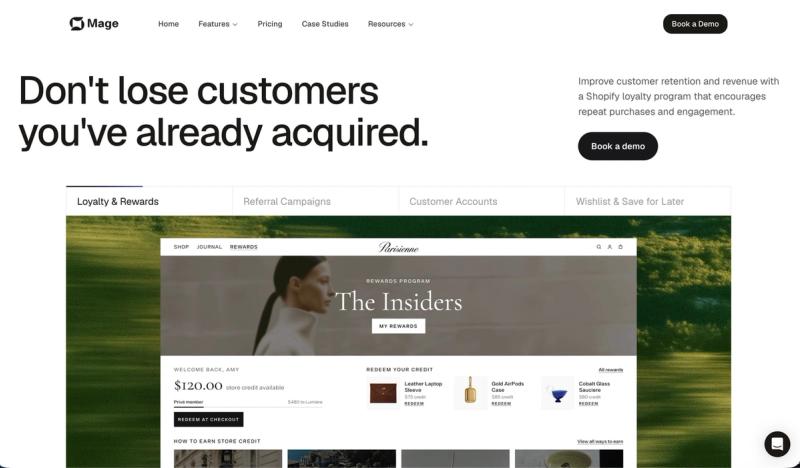
At the time of writing, Mage Loyalty positions itself as a retention and loyalty platform built exclusively for Shopify brands. It covers points, store credit, VIP tiers, referrals, customer accounts, wishlists and retention workflows in one product.
In practice, teams configure the core program and the customer-facing experience from the same Shopify-focused platform. That means a marketer can manage earning rules, rewards, tier benefits and referral campaigns while shaping the loyalty page, widget, account drawer and wishlist experience.
Key features and strengths
- Retention scope: Run a Shopify loyalty program with points, rewards, referrals and VIP tiers.
- Mage Canvas: Build loyalty, account, referral and wishlist surfaces without code.
- Customer experience: Mage Accounts adds a branded drawer on top of Shopify customer accounts.
- Omnichannel loyalty: Customers earn and redeem against the same balance online and through Shopify POS.
- Developer toolkit: REST API, JavaScript SDK, Metafields and Webhooks support custom builds.
- Support model: Founder-led support includes direct Slack access to Mage engineers.
Best for: Shopify and Shopify Plus DTC brands that want broad retention functionality, branded customer experiences, no-code control and developer flexibility.
What is BON Loyalty?
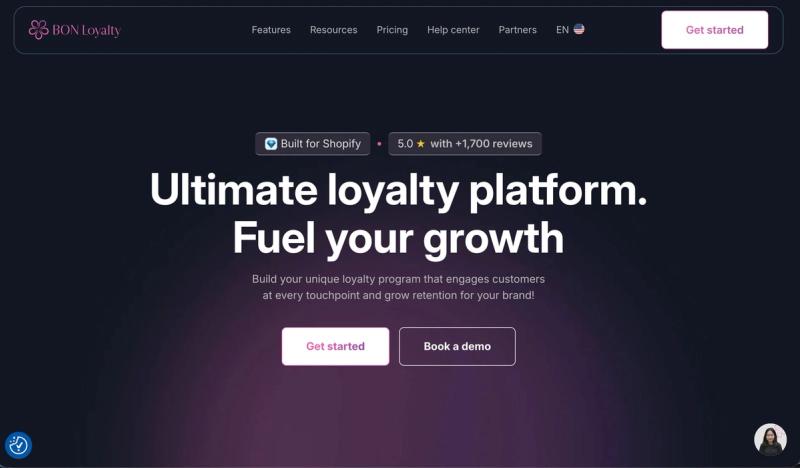
At the time of writing, BON Loyalty positions itself as a Shopify-native loyalty and rewards app for points, referrals, VIP tiers, POS rewards and campaign tools. Its offering is designed for merchants that need a loyalty program with international program capabilities.
In practice, BON Loyalty operates as a tiered Shopify App Store app. Brands can begin with core earning and redemption mechanics, then add capabilities such as VIP tiers, custom CSS and developer tooling as their plan and requirements expand.
Key features and strengths
- Entry plan: The BON Loyalty Shopify App Store listing includes a free entry plan.
- Core loyalty: Supports points, rewards, referrals and POS rewards.
- Campaign tools: Includes bonus campaigns and streak-order rewards.
- Global programs: Supports multilingual and multi-currency loyalty experiences.
- On-site experience: Offers a customizable widget, explainer page and loyalty content placements.
- Advanced access: VIP tiers, custom CSS, API access and developer tooling sit on higher plans.
Best for: Stores prioritizing accessible entry pricing, international support, POS loyalty, multilingual or multi-currency requirements, or a simpler initial loyalty rollout.
What is LoyaltyLion?
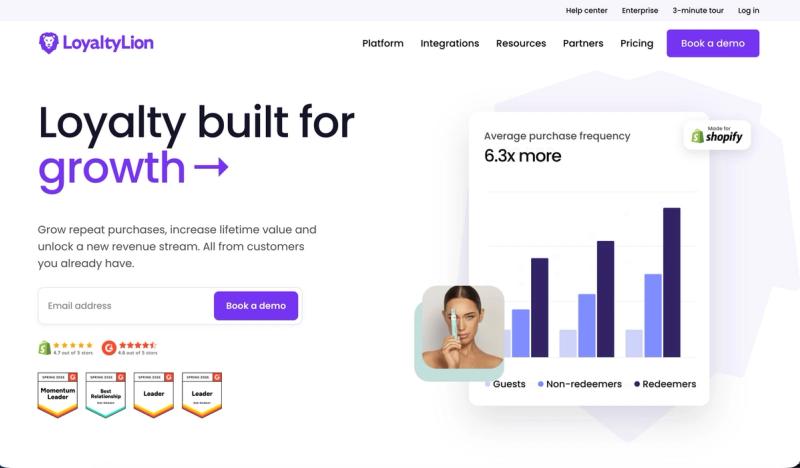
At the time of writing, LoyaltyLion positions itself as a customer loyalty platform focused on repeat purchases, customer lifetime value and AI-driven loyalty optimization. It combines loyalty mechanics with analytics and campaign optimization for teams that want to actively refine program performance.
In practice, LoyaltyLion provides a structured loyalty program with branded program pages, earning rules, referrals, analytics and Klaviyo workflows. Higher plans add VIP tiers, multi-location POS support, multilingual capabilities, performance reviews and AI-guided campaign features.
Key features and strengths
- Core program: Supports loyalty rules, referrals, VIP tiers, POS and analytics.
- Analytics depth: Covers predictive analytics, retention, ROI, referral and lifetime-value reporting.
- Klaviyo workflows: Includes Klaviyo integration and ready-to-use email flows.
- Optimization tools: AI-recommended rewards and campaigns are available on Plus.
- Strategic support: Advanced and Plus plans include performance review options.
- Plan structure: LoyaltyLion pricing outlines Classic, Advanced and Plus plans.
Best for: Brands prioritizing advanced analytics, AI recommendations, complex loyalty optimization, multilingual capabilities or strategic reporting.
Mage Loyalty vs BON Loyalty vs LoyaltyLion: detailed comparison
Shortlists are usually decided by operating model, implementation ownership and what the customer sees after joining. Feature lists matter, but the larger question is whether the team can operate the program without creating another disconnected storefront experience.
1. Program philosophy and operating model
If you want loyalty to support repeat purchase, referral, VIP progression and saved-product behavior, ask each vendor to show how those programs connect in the customer journey and admin.
Mage Loyalty. Mage combines loyalty, referrals, VIP tiers, wishlists and branded account experiences in one Shopify-only retention platform. It suits teams that want one program owner and connected customer surfaces.
BON Loyalty. BON Loyalty centers on a tiered loyalty app model. Points, referrals, POS rewards and campaigns provide a practical starting structure, with advanced capabilities added through higher plans.
LoyaltyLion. LoyaltyLion emphasizes optimization through analytics, reporting and AI-led campaign recommendations on Plus. It fits a team prepared to make loyalty analysis a regular operating discipline.
Verdict: Mage Loyalty combines the broadest set of the documented customer-facing and retention capabilities in this comparison. BON Loyalty is a straightforward program-led option, while LoyaltyLion has the stronger documented focus on analytics-led optimization.
2. Setup and time to launch
If you need a program live before a seasonal campaign, ask each vendor to build an earning rule, reward and customer-facing program surface during the demo.
Mage Loyalty. Mage Canvas gives marketers no-code control over customer-facing surfaces. Mage says most merchants have a program live in a day, depending on program complexity and migration work.
BON Loyalty. BON Loyalty is installed through the Shopify App Store and expands through plan-based capabilities. Its core points and referral program provides a simpler initial rollout path.
LoyaltyLion. LoyaltyLion includes a branded loyalty page and dedicated onboarding at Classic. Its more structured model can suit brands that want guided setup and a defined program framework.
Verdict: Mage is the better fit when the marketing team needs hands-on design control after launch. BON Loyalty is suitable for a basic initial rollout, while LoyaltyLion’s onboarding model may appeal to teams wanting more guided implementation.
3. Customer-facing experience and branding
If your brand team wants a loyalty experience that looks like the storefront rather than a separate widget, ask each vendor to show the loyalty page, account experience and customization controls live.
Mage Loyalty. Mage Canvas controls the dedicated loyalty page, Rewards Widget, referral campaigns, wishlist and Mage Accounts. Customers can view points, tier progress and saved products in an on-site account drawer.
BON Loyalty. BON Loyalty offers a customizable loyalty widget, dedicated explainer page and on-site content placements. Confirm the exact customization controls available at your intended plan.
LoyaltyLion. LoyaltyLion provides a branded loyalty page built for the merchant. Its customization scope should be evaluated against the brand’s account, navigation and storefront requirements.
Verdict: Mage is the clearest fit when a branded account drawer is a requirement. Confirm how BON Loyalty and LoyaltyLion would handle account-based loyalty surfaces in a demo.
4. Checkout, POS and omnichannel
If you run retail locations and staff redeem rewards at the till, ask each vendor to demonstrate customer lookup, balance visibility and redemption inside the POS workflow. Shopify POS does not include built-in loyalty tools, so merchants connect third-party apps for that layer, according to Shopify’s POS loyalty guidance.
Mage Loyalty. Mage runs inside Shopify POS, where staff can view a customer’s balance, rewards and history, then redeem a reward for the transaction. Checkout Extensions also support reward redemption in Shopify checkout.
BON Loyalty. BON Loyalty supports POS rewards and omni-channel loyalty. Confirm how redemption, staff permissions and program visibility work across your specific store setup.
LoyaltyLion. LoyaltyLion supports Shopify POS, with enhanced loyalty across multiple locations on Advanced. LoyaltyLion supports checkout redemption for Shopify Plus merchants.
Verdict: All three support a loyalty layer around Shopify POS. Mage is strong for brands that want online and in-store activity tied to the same balance, while LoyaltyLion’s documented multi-location capability matters for larger retail operations.
5. Referrals, VIP tiers and engagement
If your retention plan depends on advocates and status recognition, ask each vendor to show referral qualification, reward timing, fraud controls, tier progress and customer notifications.
Mage Loyalty. Mage supports Basic Referrals and Referral Campaigns, plus fraud controls for self-referrals, aliases, duplicate accounts, shared IPs, repeat devices and suspicious bursts. Its VIP program supports up to 10 tiers, based on spend, points or orders.
BON Loyalty. BON Loyalty supports referrals, VIP tiers, bonus campaigns and streak-order rewards. VIP tiers are placed on Growth and above.
LoyaltyLion. LoyaltyLion supports referrals, VIP tiers, rolling or calendar structures and dynamic rewards. Its VIP program is on Advanced and above.
Verdict: Mage has the strongest documented referral fraud controls and the most flexible stated VIP tier limit. BON Loyalty offers useful engagement mechanics, while LoyaltyLion is a credible fit for teams that want dynamic rewards and structured tier programs.
6. Integrations, data and developer flexibility
If your lifecycle team uses customer data across marketing, support and custom storefront tools, ask each vendor to show the exact events, customer properties and implementation path you will use.
Mage Loyalty. Mage syncs loyalty data to Shopify Metafields and offers a REST API, JavaScript SDK and Webhooks. Its Klaviyo loyalty integration syncs points, tiers and loyalty events to customer profiles.
BON Loyalty. BON Loyalty supports integrations across its plans, while API access and developer tooling are available at Enterprise.
LoyaltyLion. LoyaltyLion includes Klaviyo integration at Classic, while advanced Klaviyo events and automated flows are available on Plus. Its pricing documentation describes broad integration access.
Verdict: Mage is the strongest fit for teams that need both marketer-friendly controls and a custom development path. BON Loyalty provides higher-plan developer access, while LoyaltyLion’s Klaviyo and advanced event tooling may matter to lifecycle teams with a mature analytics operation.
7. Support, onboarding and migration
If you are moving a large member base, ask each vendor to map balances, tiers, referral history, pending rewards, integrations, testing and customer communication before you sign.
Mage Loyalty. Mage offers concierge-style onboarding, founder-led support and direct Slack access to its engineers. It has built-in importers for some platforms, plus CSV import for other data sources. Use this loyalty platform migration checklist to structure the evaluation.
BON Loyalty. BON Loyalty highlights responsive support, with priority support available at Enterprise. Confirm the migration scope and technical ownership for your data set.
LoyaltyLion. LoyaltyLion includes dedicated onboarding at Classic, with performance reviews on Advanced and quarterly strategic advice on Plus.
Verdict: Mage is well suited to brands that value direct access to the product team during setup and iteration. LoyaltyLion offers a more formal strategic support path at higher plans, while BON Loyalty provides a plan-based support progression.
Want to see how Mage handles these workflows on your store? Book a demo.
Pricing compared
See the pricing table below, then budget for a loyalty program around year-two requirements rather than launch-month cost alone. Mage Loyalty uses monthly plans from $15, included orders, per-order overage on Starter and Growth, and no annual contract. BON Loyalty uses tiered Shopify App Store pricing with a free entry plan and paid tiers, while LoyaltyLion uses monthly-order tiers across Classic, Advanced and Plus. Model order growth, higher-plan features, modules and overage before committing.
| Plan | Price | Orders included |
|---|---|---|
| Mage Loyalty | ||
| Essential | $15/month | 500 orders included |
| Starter | $49/month | 500 orders included, then $0.20 per order |
| Growth | $499/month | 2,500 orders included, then $0.15 per order |
| Enterprise | Custom, typically from around $999/month | Custom |
| BON Loyalty | ||
| Free | $0/month | Around 250 orders/month |
| Basic | $29/month | 500 orders/month included |
| Growth | $129/month | 2,000 orders/month included |
| Enterprise | $499/month | Unlimited orders |
| LoyaltyLion | ||
| Classic | $199/month | 500 orders/month included |
| Advanced | Custom | Set by quote |
| Plus | Custom | Set by quote |
What each platform costs at 500, 2,500, 5,000, 10,000 orders a month, using the cheapest plan that covers the volume:
| Orders per month | Mage Loyalty | BON Loyalty | LoyaltyLion |
|---|---|---|---|
| 500 | $15 Essential or $49 Starter (list) | $29 Basic (list) | $199 Classic (list) |
| 2,500 | $449 Starter or $499 Growth (est.) | $499 Enterprise (list) | Custom quote |
| 5,000 | $874 Growth (est.) | $499 Enterprise (list) | Custom quote |
| 10,000 | $1,624 Growth or Enterprise quote (est.) | $499 Enterprise (list) | Custom quote |
How to read these tables: "list" is the public list price on the vendor's pricing page or Shopify App Store listing, "est." is calculated from the published plan price and overage rate, "Custom quote" means the vendor only prices on request, and "Not published" means no public figure exists at that volume. Prices checked September 2026. Sources: Mage Loyalty pricing; BON Loyalty on the Shopify App Store; LoyaltyLion pricing, LoyaltyLion on the Shopify App Store.
- Mage Loyalty at 2,500 orders: Starter is $49 plus $0.20 per order over 500; Growth includes 2,500 orders.
- Mage Loyalty at 5,000 orders: $499 plus $0.15 per order over 2,500.
- Mage Loyalty at 10,000 orders: $499 plus $0.15 per order over 2,500; Enterprise is quoted on volume, typically from around $999.
- BON Loyalty at 2,500 orders: Growth covers 2,000 orders; overage not published.
- BON Loyalty at 5,000 orders: Unlimited orders.
- BON Loyalty at 10,000 orders: Unlimited orders.
- LoyaltyLion at 2,500 orders: Advanced and Plus are quote only.
Pros and cons
Mage Loyalty
Pros
- Shopify-only product focus
- Broad retention surface area
- Mage Canvas no-code control
- API, SDK, Metafields and Webhooks
- Founder-led Slack support
Cons
- Shopify-only scope
- Accounts, memberships and cashback have higher-tier or module packaging
- Broader platform than some small stores need
BON Loyalty
Pros
- Free entry plan
- POS rewards
- Multilingual and multi-currency support
- Bonus campaigns and streak-order rewards
Cons
- VIP tiers on higher plans
- Custom CSS on Growth
- API and developer toolkit at Enterprise
- Higher-plan placement for advanced capabilities
LoyaltyLion
Pros
- Advanced retention and ROI analytics
- AI campaign recommendations on Plus
- Klaviyo workflows
- POS and multilingual support
- Strategic review options
Cons
- Custom pricing beyond Classic
- VIP tiers on Advanced
- AI tools on Plus
- More structured implementation model
Which should you choose?
Choose Mage Loyalty if
- You want one Shopify-native platform across loyalty, referrals, VIP tiers and wishlists.
- Your brand needs an on-site account drawer alongside loyalty surfaces.
- Customers shop both online and through retail locations.
- Your marketers need no-code control while developers need API access.
- You expect to add advanced retention workflows as the program matures.
BON Loyalty may suit you if
- You need a free or lower-cost entry point for a simpler loyalty rollout.
- International, multilingual, multi-currency or POS requirements shape the program.
LoyaltyLion may suit you if
- Your team has dedicated ownership for loyalty analytics and performance reviews.
- AI-guided optimization, advanced reporting or multilingual program operations are central requirements.
Final verdict
Mage Loyalty is the recommended choice for most Shopify brands because it is built exclusively for Shopify and connects loyalty, referrals, VIP tiers, wishlists and customer-facing account experiences in one platform. Mage Canvas gives marketers practical control over the experience, while Checkout Extensions, Shopify POS support, Metafields, APIs and Webhooks give the program room to grow with the store.
BON Loyalty may suit an international or budget-sensitive merchant that prioritizes a free entry plan, multilingual support, multi-currency programs or POS rewards. LoyaltyLion may suit a brand with a dedicated analytics function that wants advanced reporting, AI-led optimization and strategic review workflows.
Frequently asked questions
Is Mage Loyalty a good alternative to BON Loyalty and LoyaltyLion?
Mage Loyalty is a good alternative to BON Loyalty and LoyaltyLion for Shopify brands that want loyalty, referrals, VIP tiers, customer-facing account experiences and developer flexibility in one platform. BON Loyalty may fit lower-cost or international requirements, while LoyaltyLion may fit teams that prioritize analytics, AI optimization and structured strategic support.
Is BON Loyalty good for Shopify Plus brands?
BON Loyalty can be suitable for Shopify Plus brands that need points, referrals, VIP tiers, POS rewards and international program support. Shopify Plus suitability should be evaluated through checkout requirements, POS workflows, customer account needs, API access, order volume and the exact Enterprise package, rather than brand size alone.
Which loyalty capability should a Shopify brand prioritise first?
A Shopify brand should prioritize the capability tied to its first measurable retention objective, such as a second purchase, higher order value, referral, subscription renewal or VIP progression. Select earning rules, reward types and tier mechanics after defining that behavior, then track whether the program changes it.
When does it make sense to switch loyalty platforms?
It makes sense to switch loyalty platforms when the current setup limits customer experience, creates difficult economics as orders grow, lacks needed Shopify workflows or prevents important campaigns. Map points balances, tiers, referral history, pending rewards, rules, integrations and customer messaging, then test the full journey before launch.
What matters more in year two than in year one?
Year-two loyalty performance depends on order-volume economics, redemption rate, repeat purchase rate, tier progression, integration value and campaign iteration. Review whether advanced features are actually being used, whether overage changes total cost, and whether the internal program owner has time to improve rewards and communications.
Who should own the loyalty program after launch?
An ecommerce, retention or lifecycle marketing owner should own the loyalty program after launch. That person should manage the campaign calendar, rewards, tiers and reporting, while technical, customer support and retail teams have defined responsibilities for integrations, customer questions and POS workflows.
Ready to see Mage in action? Book a demo.

Graeme is the co-founder at Mage Loyalty. He heads product development, from complex loyalty migrations and large-scale data handling to building the features shaping the future of loyalty on Shopify.