Loyalty programs and customer retention form the backbone of sustainable e-commerce growth. Your Shopify store faces intense competition, and acquiring new customers costs 5–25 times more than retaining existing ones. That's why choosing the right loyalty platform matters so much. Mage Loyalty, Joy Loyalty, and Stamped.io each represent established, feature-rich solutions in the Shopify ecosystem. Each takes a distinct approach to helping merchants build repeat business and deepen customer relationships. This guide evaluates all three platforms on their own merits, giving you the clarity you need to select the solution that fits your brand's strategy, support expectations, and budget.
Key Takeaways
- Mage Loyalty specializes in white-glove migration and founder-led partnership, offering deep customization and predictable flat-rate pricing with no per-order fees.
- Joy Loyalty excels in flexible rule engines, multi-currency support, and advanced gamification features like Mixed Milestone Gamification for sophisticated customer journeys.
- Stamped.io combines reviews, loyalty, and lifecycle automation in a single unified platform, emphasizing social proof alongside retention.
- All three platforms support VIP tiers, referral programs, and diverse earning/redemption options tailored to different loyalty program designs.
- The ideal choice depends on your priorities: dedicated partnership support (Mage), deep customization with multi-market scaling (Joy), or integrated reviews + loyalty + automation (Stamped).
Mage Loyalty
Mage Loyalty is purpose-built for growth-oriented Shopify brands that want a partner, not just a software vendor. It combines a flexible points engine with concierge-level support and transparent, flat-rate pricing. The platform is built on the principle that loyal customers are the most valuable customers, and Mage helps you systematically transform transactional relationships into lasting ones.
Crafting Engaging Loyalty Programs with Advanced Features
Mage Loyalty empowers merchants with a flexible points engine that captures value across dozens of customer interactions. Members earn points not just for purchases, but for social follows (Instagram, TikTok, Facebook), product reviews, birthdays, and custom events you define. Redemption options span percentage discounts, fixed discounts, free shipping, free products, gifts, store credit, early access, and custom rewards you design yourself. The platform includes fully branded loyalty pages that match your store's look and feel, customizable point expiry rules to drive urgency, and a no-code builder so you don't need a developer. Beyond that, Mage offers robust referral programs with double-sided rewards and dedicated referral pages (Growth plan and above), letting customers naturally drive new acquisition while you maintain control over incentive structure.
Cultivating Customer Tiers and Milestone Recognition
A powerful VIP tier structure is core to Mage. You segment customers into exclusive loyalty levels based on spend, points accumulated, or specific actions—Bronze, Silver, Gold, or any custom tier names you choose. Each tier unlocks tiered earning multipliers, exclusive perks, and milestone rewards that celebrate customer achievements. When a customer reaches a new tier, they feel recognized. That emotional connection drives higher lifetime value. The platform automatically upgrades members as they hit tier criteria, so you focus on strategy while Mage handles the mechanics. This kind of segmentation opens doors to hyper-personalized email campaigns, exclusive offers, and VIP-only experiences that resonate with your most loyal buyers.
Seamless Integrations and Concierge-Level Support
Mage integrates natively with email and SMS marketing platforms like Klaviyo, Omnisend, and Postscript. When a customer earns points, that event fires directly into Klaviyo so your post-purchase flow triggers in real time. Judge.me reviews sync seamlessly, and Shopify POS support means in-store and online loyalty work as one system. Mage offers a white-glove migration service that handles the technical lift if you're moving from another platform. The 99.9% uptime guarantee means your loyalty program is always live. What truly sets Mage apart is its concierge-level support model—you get direct access to loyalty strategists and technical experts who don't just fix problems, they optimize your program for growth. Flat-rate pricing ($49/month Starter, $499/month Growth) with no per-order fees means your costs stay predictable even as revenue scales. Ready to see it in action? Book a demo.
Joy Loyalty
Joy Loyalty positions itself as a deeply integrated, highly flexible platform built for mid-market Shopify merchants who demand extensive customization and advanced engagement features. It focuses on creating dynamic customer journeys powered by sophisticated rule engines and innovative gamification mechanics.
Dynamic Earning and Rewarding Experiences
Joy's loyalty rule engine enables merchants to configure elaborate earning rules for a wide range of customer actions. Beyond purchases, customers earn points for social media engagement, product reviews, custom events, and interactions defined by your brand strategy. The platform supports diverse redemption options including percentage and fixed-amount discounts, free products, and gift cards, allowing for creative reward structures that align with your margins and brand positioning. Joy has invested heavily in storefront enhancements, including a rebuilt floating widget and loyalty pages leveraging Lit Web Components (V4) for superior theming capabilities. These enhancements are designed to blend seamlessly with your brand's aesthetic without requiring custom development.
Advanced Customer Segmentation and Gamification
Joy excels at creating sequential loyalty journeys. Its "Mixed Milestone Gamification" feature allows merchants to combine various action types—orders, reviews, and referrals—into a single, compelling progression path. This approach encourages customers to engage across multiple channels and behaviors. Joy also offers Instagram Story Mention Rewards and dedicated Shopify Flow Triggers for social interactions, turning social sharing into a loyalty driver. Integration with Shopify New Customer Accounts via a dedicated "Loyalty Hub" eliminates friction by making loyalty a native part of the customer experience. Multi-currency support lets merchants set different point earning rates per currency and specify referral reward values by market, crucial for global brands.
Global Reach and Integration Ecosystem
Joy Loyalty maintains integrations with essential Shopify ecosystem tools, facilitating cohesive retention strategies across your tech stack. Notable features include a "Submit Receipt Program" for offline loyalty integration and direct Apple/Google Wallet pass integration via Shopify POS for in-store enrollment. User sentiment often praises Joy's responsive 24/7 support, intuitive merchant interface, and extensive customization options. At the time of writing, Joy's plans reportedly range from approximately $29/month to $499/month, with various tiers including a specified number of free monthly orders before additional order-based fees apply, though pricing may vary.
Stamped.io
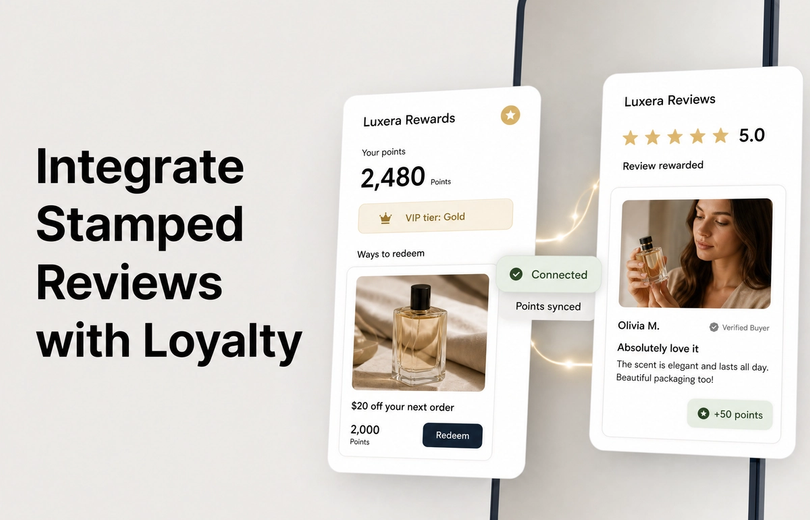
Stamped.io positions itself as a unified retention platform that brings together reviews, loyalty, and lifecycle automation under one roof. Its philosophy centers on leveraging customer "Moments" (intent peaks) and orchestrating "Plays" (brand actions) to drive comprehensive retention strategies from a single dashboard.
Integrated Loyalty, Reviews, and Lifecycle Automation
Stamped.io's strength lies in its all-in-one approach. The platform excels at collecting and showcasing high-impact product reviews, including customer photos and videos, which build essential social proof. Its loyalty programs include customizable points systems, diverse reward options, and structured VIP tiers designed to incentivize repeat purchases. Beyond loyalty, Stamped.io offers robust lifecycle automation features—post-purchase flows, replenishment journeys, and win-back campaigns—powered by customer data and purchase behavior insights. This integrated approach allows merchants to leverage review feedback and customer insights to inform and activate loyalty initiatives, creating a feedback loop where social proof directly powers retention.
Flexible Loyalty Programs with Data-Driven Engagement
The loyalty features within Stamped.io are designed to be flexible and customizable. Merchants configure points-based systems, set diverse reward options from discounts to free products, and implement VIP tiers to segment customers and provide exclusive perks. Stamped.io emphasizes a strategic approach to retention by triggering loyalty incentives and marketing communications at optimal customer moments. The platform helps brands turn insights gleaned from customer interactions and feedback into actionable loyalty initiatives, ensuring that retention efforts are grounded in real customer behavior and preferences.
Extensive Integrations and Scalable Architecture
Stamped.io boasts broad integration capabilities across the Shopify ecosystem, including email marketing platforms like Klaviyo and Omnisend, SMS solutions like Attentive, and helpdesk tools like Gorgias. The platform offers advanced review collection through in-email requests and maintains a notable partnership with Bazaarvoice for review syndication to major retail channels like Walmart and Target. Based on publicly available information, users often praise Stamped.io for ease of use, highly customizable review widgets, and seamless Shopify integration. At the time of writing, Stamped.io's combined Reviews & Loyalty product reportedly offers Basic plans starting around $23/month for up to 200 orders, with Premium plans ranging from approximately $39–$99/month for up to 500 orders, though pricing and features may vary.
Comparison at a Glance
| Mage Loyalty | Joy Loyalty | Stamped.io | |
|---|---|---|---|
| Primary Focus | Founder-led loyalty partnership with white-glove support, flat-rate pricing, and deep customization for growth-stage Shopify brands | Highly flexible rule engine, multi-currency support, and advanced gamification for mid-market Shopify merchants | Unified platform combining reviews, loyalty, and lifecycle automation for comprehensive social proof and retention |
| Best For | Shopify brands seeking dedicated partnership, extensive customization, predictable costs, and concierge-level strategic support | Mid-market merchants needing flexible program design, multi-market scaling, and advanced customer engagement mechanics | Shopify brands wanting integrated reviews plus loyalty plus automated marketing flows in a single platform |
| Starting Price | Starter $49/month (flat-rate, no per-order fees) | Reportedly from $29/month at time of writing | Reportedly from $23/month at time of writing |
The Shopify loyalty program growing brands trust
See how Mage helps Shopify brands lift repeat purchase rate with loyalty, referrals and store credit.
Book a demoChoosing the Right Loyalty Platform
Selecting the optimal loyalty platform for your Shopify store ultimately depends on your brand's unique needs, strategic priorities, and growth stage. Each of these solutions brings distinct strengths—from unparalleled personalized support and customization to deep integration and unified retention orchestration. By carefully evaluating their features, support models, and pricing structures against your specific objectives, you can empower your brand to build stronger customer relationships and foster lasting loyalty. Referred customers are 4 times more likely to make a purchase and exhibit a 16% higher lifetime value, underscoring the long-term impact of a well-chosen loyalty partner.
“We are really happy with working with the Mage team and getting this program up and running. They are very responsible and professional. Very seamless and the upsell features seem to already be helping with adoption!”


Read the Tea Drops case study →
Frequently Asked Questions
What's the main difference between points-based and tiered loyalty programs?
Points-based programs reward customers for purchases and actions with transferable points redeemable for rewards. Tiered programs segment customers into exclusive levels (Bronze, Silver, Gold) based on spend or engagement, with each tier unlocking exclusive perks and earning multipliers. Many modern platforms like Mage, Joy, and Stamped support hybrid models combining both mechanics.
Can I switch loyalty platforms without losing my customer data?
Yes, most platforms including Mage offer migration support to help you transition customer data, points balances, and program history from your previous platform. Mage specifically offers white-glove migration service to ensure a smooth transition. Always confirm data portability and migration support before selecting your platform.
How do loyalty integrations with email marketing platforms work?
When a customer earns points or advances tiers, that event automatically triggers in your email platform (like Klaviyo). This allows you to send triggered emails celebrating milestones, reminding customers of available points, or prompting specific behaviors. Real-time integration ensures your loyalty and email efforts work in sync.
What's the typical ROI on a Shopify loyalty program?
According to industry data, loyalty programs deliver an average ROI of 4.8x, with 90% of programs reporting positive returns. Returning customers spend 67% more than new customers, and a mere 5% increase in retention can boost profits by 25–95%. The exact ROI depends on your program design, customer base, and execution quality.
How important is Shopify POS integration for loyalty?
Shopify POS integration is critical if you operate physical retail locations or pop-up shops. It allows in-store customers to earn and redeem loyalty rewards seamlessly, creating a unified experience across online and offline channels. Mage, Joy, and Stamped all support POS integration, though implementation details vary.
Should I prioritize reviews integration or standalone loyalty?
That depends on your brand and customer base. Stamped.io bundles reviews and loyalty, which is valuable if you need both and want a single dashboard. Mage and Joy focus on loyalty but integrate with review apps like Judge.me. Consider whether you need reviews as a core retention driver or as a supporting element.
How do multi-currency and multi-market features work?
Joy Loyalty excels here, allowing you to set different point earning rates per Shopify market currency and specify referral rewards by market. If you sell globally across multiple currencies, this feature ensures fair and localized reward structures for all customers.
What level of customer support should I expect?
Mage offers concierge-level support with direct access to loyalty strategists. Joy provides responsive 24/7 support. Stamped offers support tailored to its feature set. Consider your technical expertise and need for strategic guidance when evaluating support models.
TLDR
Mage Loyalty, Joy Loyalty, and Stamped.io are three established Shopify loyalty platforms, each with distinct strengths. Mage prioritizes founder-led partnership, white-glove migration, and flat-rate pricing for brands seeking dedicated support and deep customization. Joy excels in flexible rule engines, multi-currency support, and advanced gamification for mid-market merchants scaling globally. Stamped.io combines reviews, loyalty, and lifecycle automation in one unified platform for brands seeking integrated social proof and retention. All three support VIP tiers, referral programs, and diverse earning/redemption options. The right choice depends on whether you prioritize personalized partnership (Mage), advanced customization with global scaling (Joy), or integrated reviews plus loyalty plus automation (Stamped).
All information presented in this article is based on publicly available data as of May 2026. Features, pricing, and offerings may have changed since publication. Please visit each platform's official website for the most current information.

Graeme is the co-founder at Mage Loyalty. He heads product development, from complex loyalty migrations and large-scale data handling to building the features shaping the future of loyalty on Shopify.