Home goods & fragrance brand repeat purchase benchmarks for 2026 can prevent a candle reorder problem from being hidden inside a furniture-heavy store average. They are useful only when you separate replenishable products from durable purchases and measure each against its own buying cycle.
Short answer: There is no single healthy repeat purchase rate for home goods. Use a rolling 12-month view as your operating baseline, then compare product-level cohorts to see which first purchases lead to a second order. Candles, fragrance, refills, and diffusers need shorter reorder windows than furniture or large decor.
Home goods & fragrance brand repeat purchase benchmarks for 2026
| Segment | Published or observed benchmark | Measurement window | How to use it | Source status |
|---|---|---|---|---|
| Furniture | [Approximately 14.7%](https://www.sender.net/marketing-glossary/repeat-purchase-rate/statistics/) | Not clearly defined | Treat cautiously. This is a furniture estimate, not a universal home decor average. | Secondary source |
| Shopify merchants | Mage observes 20% to 30%. Most brands sit around 23% to 25%. Exceptional performers reach about 40%. | Store-specific | Operating reference, not an industry study | First-hand Mage observation |
Use benchmarks as a range, not a verdict
The Commerce Catalyst range is useful context, but it is not a universal home goods benchmark. Its category combines products with very different replacement cycles.
The furniture estimate also needs caution. Its category definition and measurement window are not strong enough to treat it as the average for every home decor brand.
Separate candles and fragrance from furniture and decor
A customer who buys a candle, diffuser refill, or room fragrance may have a credible reason to return within months. A customer who buys a dining table may be delighted and still have no reason to purchase the same category again that year.
Measure replenishment and durable purchases separately. A blended store-wide number can make a healthy replenishment category look weak, or make durable decor appear to have a retention problem when the real opportunity is cross-category purchasing.
The Mage range to use as an operating reference
Across Mage merchants, the observed repeat purchase rate is typically 20% to 30%, with most brands around 23% to 25%. Exceptional category leaders reach about 40%, but that is a rare ceiling rather than a planning target.
This is an internal, first-hand operating reference, not a published industry study. Use it to identify which product category produces the strongest second-purchase rate, how long that second order takes, and which first-order customers are worth bringing back.
Step 1: Define the metric before you compare your store
| Metric | Formula or definition | Best use | Common mistake |
|---|---|---|---|
| Repeat purchase rate | Customers with two or more purchases divided by purchasing customers | Measuring customer repeat behavior | Mixing time periods |
| Returning customer rate | Customers or orders linked to prior order history | Tracking returning activity | Treating it as cohort retention |
| Purchase frequency | Average orders per customer | Measuring cadence | Ignoring customer tenure |
| CLV | Revenue per customer over a defined period | Comparing customer value | Using incomplete cohorts |
Repeat purchase rate versus returning customer rate
Repeat purchase rate means the percentage of customers who make at least one additional purchase during a defined period:
Customers with at least two purchases ÷ unique purchasing customers × 100
Shopify’s New vs returning customers report distinguishes first-time and returning customers using order history. Cohort analysis groups customers by first-order date and shows what those cohorts do later.
In Mage Analytics, Returning Customer Rate is the percentage of orders in the selected period placed by customers who made two or more orders in that same period. Keep that distinction in your reporting document so Shopify and loyalty reporting are not compared as if they are identical.
Choose a measurement window
Use a rolling 12-month store-wide view for the main operating benchmark. Then add cohorts at 30, 60, 90, 180, and 365 days.
For candles, fragrance, and diffusers, the 60-to-180-day view may reveal the first realistic reorder opportunity. For furniture and large decor, use 12-month and 24-month cohorts, then measure whether customers return through another category.
Track time to second purchase
Repeat rate alone hides timing. Two stores can both have a 25% repeat rate, while one gets the second order in 45 days and the other in 11 months.
Track median days to second purchase by first-order product group. That shows when to solve the second-purchase problem, and when an early reminder is simply arriving before the customer needs anything.
“Cannot say enough good things about the team at Mage Loyalty, one of the absolute best organizations we have ever worked with, full stop! So glad we connected with them, completely redid our loyalty program, new concepts, use of loyalty, increasing user engagement, showing us where we were not valuing our best customers, just WOW, amazing team!”


Read the West Coast Goalkeeping case study →
Step 2: Build a Shopify benchmark by product type and first-order cohort
| Product segment | Suggested cohort window | Primary KPI | Secondary KPI |
|---|---|---|---|
| Candles and refills | 30 to 180 days | Second purchase rate | Days to second order |
| Fragrance and diffusers | 60 to 180 days | Second purchase rate | Second-order AOV |
| Small decor and accessories | 90 to 365 days | Cross-category rate | Revenue per customer |
| Large or durable decor | 12 to 24 months | Cross-category rate | Customer lifetime revenue |
Start with Shopify customer reports
In Shopify admin, open Analytics, then Reports, then Customers. Review New vs returning customers, Returning customers, One-time customers, and Customer cohort analysis.
Shopify cohort analysis can be filtered by first-order product, sales channel, marketing channel, subscription, and customer attributes. Start with four cuts:
- Candles and refills
- Fragrance and diffusers
- Small decor and accessories
- Large or durable decor
Create product-level cohorts
For each group, compare first-order SKU or collection against second-order rate, median days to second purchase, second-order AOV, and 12-month revenue per customer.
A candle customer who returns for another scent is a different retention pattern from a decor customer who later buys a throw, tray, or gift item. Separate gift-led orders where possible using order notes, gift-specific products, shipping details, customer tags, or campaign sources.
Step 3: Diagnose whether your gap is cadence, product, or retention execution
Low rate with short purchase cycle
If a replenishable product has a short expected use cycle and customers are not returning, inspect the post-purchase journey. Check whether customers know when to reorder, understand adjacent products, and receive the next offer at a sensible time.
Use Shopify RFM analysis to group customers by recency, frequency, and monetary value. New, active, loyal, at-risk, and dormant groups need different messages.
Low rate with long purchase cycle
A low 90-day repeat rate for durable decor is not enough evidence to call customers churned. Check 12-month and 24-month cohorts, then measure cross-category purchases.
A customer who bought a mirror may later buy candles, accessories, or seasonal decor. Make that next category easy to discover rather than pushing a premature discount on another mirror.
High rate with weak economics
A healthy repeat rate can still produce weak economics if repeat AOV or contribution margin is low. Improve bundles, merchandising, and reward thresholds before increasing the discount.
Mage Analytics can compare Returning Customer Revenue, Member CLV, and Member Purchase Frequency. If you use VIP tiers, compare revenue, AOV, repeat purchase rate, and purchase frequency by tier.
Step 4: Choose the retention mechanic that matches the buying cycle

For candles and fragrance: reward the next purchase
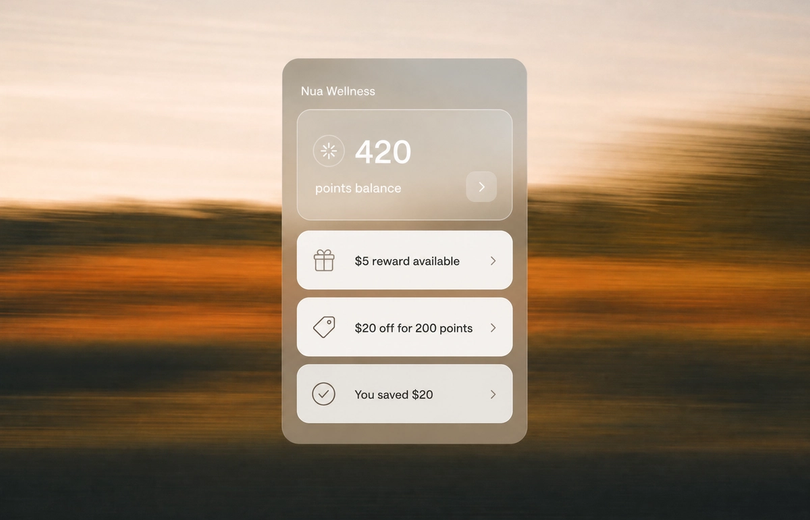
For replenishable products, give customers a reason to make the next purchase visible before they need it. That might be a purchase reward, review reward, birthday reward, or store-credit balance they can understand immediately.
Mage supports points and store credit. Mage loyalty store credit is an internal Mage ledger, not Shopify native store credit. It can work well when customers respond better to a visible cash-equivalent value than an abstract points balance.
For home decor: reward category expansion
Durable products call for category expansion. Reward customers for moving from a large decor purchase into smaller home goods, seasonal collections, accessories, or gifting.
A Shopify loyalty program can support product or collection-specific earning rates, rewards, and VIP progress. Wishlists also matter for considered purchases because a saved item is a future purchase signal before the order happens.
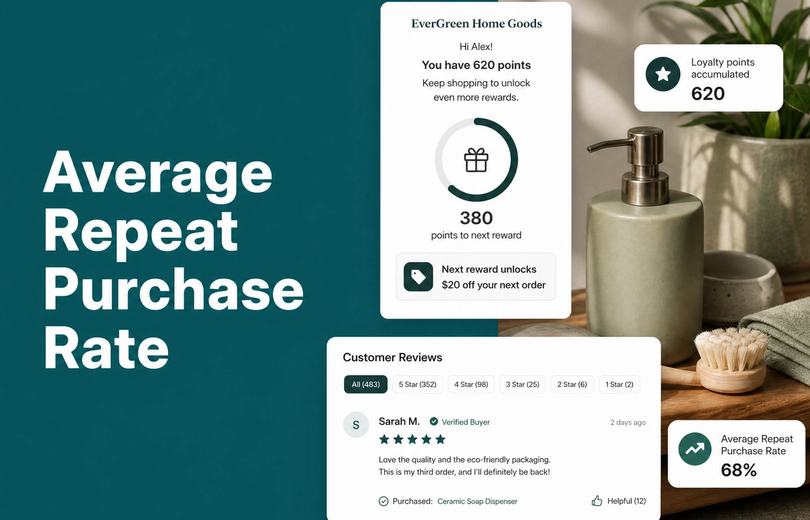
Mage Accounts and the account sidebar can surface saved products, points balance, VIP progress, and rewards in one place. That gives customers a reason to return even when they are not ready to purchase immediately.
Why points should not be your default
Points are not automatically the best retention mechanic for home goods. They add friction when customers buy infrequently, cannot see the value, or have no near-term reason to return.
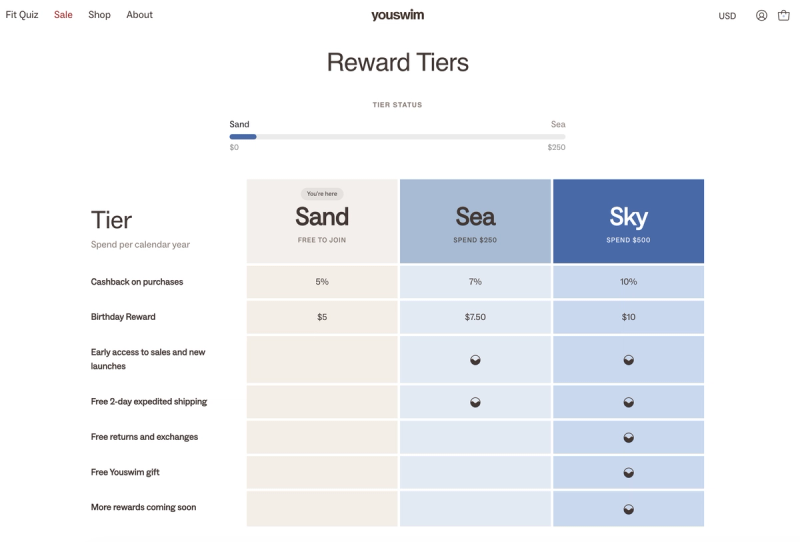
Use VIP tiers when spend, order count, and access matter more than a balance. Mage supports up to 10 tiers, though most stores do better with three or four. Use punch cards only where repeat cadence is credible.
Read more about points versus store credit before choosing the currency.
Step 5: Configure the retention mechanics without distorting the benchmark
Set the purchase earning rule
In Mage Loyalty, select Loyalty, find Earning Points, then open Purchase to set the amount earned and the spend needed. The full setup detail is in the Purchase earning rule guide.
You can exclude discounted products, set an Approval Time, and set custom purchase earning rates by VIP tier. Use product or collection-specific rates to steer customers toward the category you want them to discover next.
Protect margins around returns
Set Approval Time to match your returns window when you do not want rewards available before the order has settled. Purchase earnings are awarded when an order is paid, but remain pending until the approval period ends.
Refunds reverse earnings proportionally where applicable. Guest checkouts do not earn purchase rewards, so make account creation and sign-in easy to find before treating low participation as a loyalty issue.
Add non-purchase earning actions carefully
Signup, birthday, and account anniversary rules can support the relationship between orders. Configure them under Loyalty, then Add Earning Rule. The event-based earning rules guide covers the available triggers.
For candles and fragrance, review rewards and higher awards for photo or video reviews can create useful engagement. Use the Klaviyo loyalty integration to sync points, VIP tier, and related customer activity into an existing email program.
Step 6: Measure the test with Mage Analytics and Shopify cohorts
Set one primary KPI
Choose repeat purchase rate or time to second purchase as the primary KPI. Use AOV, purchase frequency, CLV, redemption rate, and contribution margin as guardrails.
Mage Analytics includes Returning Customer Revenue, Returning Customer Rate, Member CLV, and Member Purchase Frequency. Member CLV and Member Purchase Frequency use a trailing 12-month window.
Use a 30-day test cycle
Run one material change at a time for 30 days where order volume allows. Test a collection-specific earning rate, store-credit offer, birthday reward, or punch card separately.
Compare exposed customers with the equivalent prior cohort. Do not compare a holiday promotion against an ordinary month and call the difference a loyalty result.
Read the result by cohort, not only in aggregate
In Mage Loyalty analytics, review Loyalty Attributed Revenue, Retention Revenue, Redeemer Repeat Purchase Revenue, points earned, points redeemed, redemption rate, and order behavior.
Loyalty-attributed revenue is revenue tied to loyalty activity, not total store revenue. Use it to understand contribution, then return to Shopify cohorts to determine whether customer behavior actually improved.
Home goods repeat purchase benchmark checklist for 2026
| Check | Required action | Evidence to save |
|---|---|---|
| Benchmark definition | Record date range and customer definition | Reporting document |
| Product segmentation | Separate replenishable and durable categories | Cohort export |
| Gift orders | Label or isolate gift-led orders | Customer segment |
| Retention test | Choose one mechanic and one KPI | Test brief |
| Reward protection | Match approval time to returns policy | Rule settings |
| Review | Compare cohorts before changing rules | Dashboard snapshot |
Before you launch a retention test
Choose one mechanic tied to the natural buying cycle. Add median days to second purchase and second-order AOV to the scorecard. Check whether the reward is visible on the loyalty page, Rewards Widget, account sidebar, and checkout where relevant.
Frequently asked questions
What is a good repeat purchase rate for a home goods brand?
A good repeat purchase rate depends on product durability, gifting, and purchase cadence. Across Mage merchants, the observed range is typically 20% to 30%, with most brands around 23% to 25%. Exceptional category leaders can reach about 40%, but that is not a target most stores should expect.
What is the average repeat purchase rate for home decor in 2026?
There is no reliable universal average for home decor. A secondary source reports approximately 14.7% for furniture, but its category definition and measurement window are unclear. Treat the furniture figure as a directional estimate, not a home decor average.
How do you calculate repeat purchase rate in Shopify?
Divide customers with at least two purchases by unique purchasing customers in the chosen period, then multiply by 100. Use Shopify Analytics customer reports and cohort analysis to group customers by first-order date, product, channel, and customer attributes before comparing results.
What is the best measurement window for candles and fragrance?
Use a rolling 12-month benchmark supported by 30, 60, 90, 180, and 365-day cohorts. The correct window depends on product usage and observed customer behavior. Use median days to second purchase to determine when a replenishment message should appear.
How can a candle or fragrance brand increase repeat purchases?
Improve product education, reorder timing, cross-scent discovery, visible rewards, reviews, VIP benefits, and relevant post-purchase messages. Focus on the next plausible purchase. A refill buyer may need a reminder, while a first-time scent buyer may need a discovery path.
Should home goods brands use points or store credit?
Choose points or store credit based on purchase frequency, margin, AOV, and customer comprehension. Points suit brands with frequent engagement, while visible store credit may better fit a replenishment or cashback model. Durable decor brands may get more value from VIP status, wishlists, and cross-category incentives.
Ready to see Mage in action? Book a demo.

Graeme is the co-founder at Mage Loyalty. He heads product development, from complex loyalty migrations and large-scale data handling to building the features shaping the future of loyalty on Shopify.