Candle And Fragrance Loyalty Programs For Shopify: Complete Launch Guide

Scent is memory. A single whiff of vanilla can transport a customer back to their grandmother's kitchen. That emotional trigger is precisely why candle and fragrance brands have an unfair advantage when building loyalty. Yet most candle merchants are leaving money on the table by treating their loyalty programs like generic retail operations, offering generic point-for-discount exchanges that completely miss what makes their customers tick.
The real opportunity lies in building a loyalty program that speaks the language of scent, seasonality, and the sensory journey your customers crave. This guide walks you through designing a fragrance-forward loyalty program on Shopify that transforms casual browsers into devoted collectors who return again and again, not for discounts, but for belonging.
Why a Loyalty Program is Your Candle Brand's Secret Sauce
Acquiring a new customer costs five to twenty-five times more than retaining an existing one. For candle brands operating on thinner margins than you might think, this math is brutal. Every dollar you spend acquiring first-time buyers leaves less for creating the exceptional products and experiences that make loyalty possible in the first place.
A properly designed loyalty program flips this equation. Your existing customers become your most efficient acquisition channel. They spend more frequently. They spend more per order. They generate reviews, photos, and word-of-mouth recommendations that compound over time. Most critically, they provide the data you need to understand exactly what draws them in, whether it's woodsy scents, seasonal collections, or the ritual of replenishment.
Consider this concrete example. A candle brand we've worked with increased their average customer lifetime value from $180 to $420 within eight months of launching a scent-preference-based loyalty program. Not through aggressive discounting. Through understanding that their customers wanted recognition for their evolving taste in fragrance, early access to new releases matching their preferences, and a sense of belonging to a community of fellow scent enthusiasts.
Building customer loyalty means moving beyond transactional relationships. It means acknowledging that your customer who's purchased nine lavender candles is fundamentally different from the one building a gourmand collection. They deserve different rewards, different recommendations, and different opportunities.
The economics work. Loyalty program members typically purchase 20% to 40% more frequently than non-members. They're less price-sensitive. They drive higher average order values through bundle purchases and seasonal collection completions. And they become your storytellers, the people who tag you on Instagram and turn their homes into galleries of your work.
Beyond the numbers, a loyalty program gives you something invaluable: zero-party data. Customers explicitly tell you their favorite scent profiles, their preferred burn times, their fragrance sensitivities. This intelligence drives everything from personalized email campaigns to product development decisions that actually reflect what your audience wants.
Understanding Loyalty Program Types for Fragrance Brands
Before customizing, you need to understand your options. Most candle brands choose from three core structures, though the best approach combines elements of all three.
Points-Based Systems are the traditional workhorse. Customers earn points for every dollar spent, social shares, referrals, and reviews. Accumulate 100 points, redeem for a $10 discount or free product. The advantage is simplicity and flexibility. The disadvantage is that points feel transactional. We've watched countless candle store owners report that their enrollment rates hit 25% and plateau hard, with actual redemption rates limping along at single digits. Customers join out of obligation, then ghost.
Tiered or VIP Programs reward customers based on spending levels or engagement. Bronze members spending under $250 annually get baseline perks. Silver members ($250-$500) unlock free shipping and early sale access. Gold members ($500+) get exclusive scents and VIP customer service. This structure works brilliantly for candle brands because it creates aspiration. Customers see the Gold tier and adjust their behavior to reach it. They're motivated by status and belonging, not just discounts.
Referral Programs are the third pillar, where your most enthusiastic customers recruit friends in exchange for rewards. For candle brands, this is underutilized. Your existing customers are your best marketing. Reward them for it.
Here's where we diverge from standard advice: pure points-based loyalty is actually struggling, particularly with younger, more affluent customers drawn to artisanal and luxury products. Why? Because a 10% discount on a $35 candle doesn't move the needle emotionally. These customers have disposable income. They don't need to collect points like they're saving up for a car. They need belonging, discovery, and experiences. Generic points feel old-school, like they're shopping at a big-box retailer rather than supporting a passionate small brand.
The data supports this. A 2024 loyalty program study found that Gen Z participants in traditional points programs had redemption rates below 15%, while gamified and experiential loyalty initiatives saw engagement above 60%. The shift is profound. Today's customers want more than discounts. They want VIP status, exclusive access, community recognition, and experiences they can't buy elsewhere.
For fragrance brands specifically, the sensory and emotional nature of your product demands a different approach. Combine a modest points structure with deeply personalized, scent-preference-based rewards. Add experiential elements like early access to seasonal collections, voting rights on new scent development, or exclusive workshops. That's what moves the needle.
Points vs. tiers both have merit, but hybrid approaches work best for candle brands. Use points as the foundation. Use tiers to create aspiration and status. Use referrals to turn customers into advocates.
Step 1: Define Your Loyalty Program Goals and Audience
Before installing any app or configuring reward rules, be brutally clear about what you're trying to accomplish. Vague goals produce vague results.
Write down your specific targets. Are you trying to increase repeat purchase frequency by 30%? Boost average order value to $65? Grow your email list by 40%? Increase product review submission from 8% to 25%? Different goals require different reward structures and mechanics.
Next, define your ideal loyalty member with precision. Are they existing customers you want to deepen relationships with? New customers you want to convert into regulars? Gift-givers who buy annually in specific seasons? Eco-conscious consumers specifically interested in sustainable candle practices and refill programs? Scent enthusiasts who identify as collectors? These are not interchangeable audiences.
A customer who's bought four times in the past year has completely different needs than someone who's purchased once in two years. Your most valuable segment might be customers who are one repeat purchase away from hitting a higher loyalty tier, where their behavior changes. Target them specifically with bonus-point offers and early access campaigns.
Research what competitors are doing. Visit the loyalty pages of premium candle brands, luxury home fragrance companies, and adjacent lifestyle brands like plant-based beauty or sustainable home goods. Note what rewards they emphasize. Do they offer discounts? Early access? Community features? Exclusive products? This isn't about copying. It's about understanding what your specific market segment expects and finding ways to exceed those expectations.
The goal is a crystal-clear mission statement for your program. Something like: "Create an exclusive community where passionate scent enthusiasts discover new fragrances aligned with their preferences, earn recognition for loyalty, and access limited-edition collections before general release."
Step 2: Design Your Fragrance-Forward Reward System
Here's where generic loyalty programs fail and where fragrance-focused ones shine. Your reward structure should speak directly to how customers relate to candles.
Start with the foundation: baseline earning mechanisms that every loyalty program needs. Award 1 point per $1 spent. Give 50 bonus points for account creation. Offer 25 bonus points on birthdays. Reward 10 points for each product review, social media share, or referral that converts. These create habitual engagement and lay the groundwork for your program.
But that's just the table stakes. The magic happens when you layer in rewards designed specifically for fragrance brands.
Scent Profile Rewards are transformative. When customers first join your loyalty program, ask them directly: "Which fragrance families speak to you?" Present options like floral, woody, fresh, gourmand, spicy, or herbal. As they purchase, tag each order with the scent profiles they choose. Over time, your data becomes powerful.
Now you can segment your email list and offer targeted rewards. A customer who's purchased five floral candles sees bonus-point offers when you launch new florals in their preferred sub-category. A customer building a gourmand collection gets early access 48 hours before general release on new gourmand scents. This isn't generic points. This is recognition that you understand their taste and you're offering something genuinely valuable to them.
Collect zero-party data through explicit preference questions in your loyalty dashboard. "What's your favorite scent profile?" "Do you prefer soy or paraffin?" "How long do you like your candles to burn?" This information becomes the foundation for personalized marketing and product recommendations that feel thoughtful rather than spammy.
Seasonal Collection Integration works beautifully for candle brands because seasons structure your releases naturally. Offer loyalty members 48-hour early access before general launch on new seasonal collections. Award bonus points (50-100) for purchasing entire seasonal sets rather than individual candles. Create loyalty-member-exclusive limited-edition scents that never hit the general store. It creates urgency and belonging simultaneously.
Consider "Collector" badges or achievements. Complete a full seasonal collection and unlock a badge on your loyalty profile, displayed on your website or in their loyalty dashboard. It's gamification at its finest, and it works because it plays to the collector mentality many of your customers already have.
Replenishment Mechanics address a gap we see in most candle loyalty programs. Your customers aren't buying art. They're buying consumable products with finite burn times. Encourage replenishment systematically.
Create a points bonus for customers who set up recurring candle subscriptions (50-75 bonus points on first recurring order). Send automated reminders suggesting re-ordering based on their purchase history and estimated burn times. Some of our most successful candle clients send an email 60 days after a large purchase saying, "Your [Lavender Dream] candle is probably getting low. Reorder now and get 25 bonus points."
Implement an "Empty Jar" recycling program. Offer loyalty points (50-75) when customers return empty candle vessels. This builds retention through a physical, repeated touchpoint and aligns with eco-conscious values many fragrance customers hold. The jar comes back, you inspect it, and you offer a refill or credit toward a new candle.
Ask customers for reviews aggressively within your loyalty program. Allocate 40-50 points per review submitted, with bonus points (20-25 additional) if they include photos. For subjective products like candles where scent preference is deeply personal, reviews are gold. A detailed review saying "I love this for evening wind-downs but not for morning energy" helps future customers find their match and builds trust more effectively than any marketing copy you could write.
Experiential and Community Rewards complete the picture. These are the non-discount rewards that deepen emotional connection. Feature behind-the-scenes content on your scent development process exclusively for loyalty members. Host virtual scent masterclasses or fragrance history workshops. Let top-tier members vote on upcoming scent launches or even help name a new limited-edition candle.
Create curated mystery scent boxes for VIP members monthly. Include three new or seasonal scents they haven't tried, with a handwritten note explaining why you picked each one for them specifically based on their scent profile history. The cost to you is minimal. The perceived value to them is massive.
Step 3: Choose the Right Shopify Loyalty App
The right app is invisible infrastructure. It handles point allocation, redemption, tier tracking, and integration without requiring you to manually manage spreadsheets or email reminders. The wrong app creates friction that kills adoption.
Look for apps with genuine customization options that allow you to implement the scent-profile-based rewards we just outlined. Some apps are limited to basic point-for-discount structures and won't support your more sophisticated mechanics.
Integration capability matters enormously. Your loyalty program should talk to your email service provider (Klaviyo, Omnisend, Postscript). It should track customer behavior and feed that data back into your email automation so a customer earning points for a specific scent profile triggers personalized email sequences.
Mobile responsiveness is non-negotiable. Your loyalty dashboard needs to work flawlessly on phones because most customers will check their points balance while browsing on mobile.
The best loyalty apps for candle brands offer flexibility, solid analytics, and seamless Shopify integration. Smile.io is reliable and widely used. Yotpo integrates reviews with loyalty. Growave offers an all-in-one platform combining loyalty, reviews, and wishlists. Mage provides white-glove setup, deep Shopify POS integration, and transparent analytics dashboards.
Don't get seduced by the lowest price. Get the app that makes implementing your strategy easiest. The difference in monthly cost between a $50 plan and a $150 plan vanishes immediately if the expensive option saves your team five hours per month in manual work.
Step 4: Configure and Brand Your Loyalty Program
Once you've chosen your app, the technical setup is straightforward. Install from the Shopify App Store. Connect your Shopify account. Configure earning rules (points per dollar, points per review, etc.). Set up tier structures if you're using them. Most apps provide step-by-step wizards that make this feel less like software configuration and more like filling out a form.
The work that actually matters is customization and branding. Your loyalty program should feel like an extension of your brand, not a generic tool bolted onto your store.
If your brand uses specific fonts, colors, and imagery, reflect that in your loyalty dashboard. If your brand voice is warm and community-focused, write your loyalty program copy to match. If you call your customers "Scent Explorers" or "Fragrance Collectors," build that language into your program.
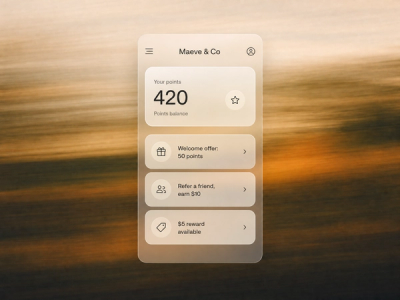
Create a dedicated loyalty landing page on your Shopify store. Don't bury your program in your footer. Give it real estate. Call it something that resonates with your audience. "The Scent Society." "Candle Lovers Club." "Inner Circle." Design this page beautifully with clear explanations of how to earn and redeem, images of your products, and social proof (testimonials from existing members).
Write FAQs that address fragrance-specific questions. "What if I don't like the scent I earned as a reward?" (Answer: We offer a scent swap option with a 25-point fee, no questions asked). "How are my scent preferences tracked?" (Answer: You choose them when joining and can update anytime). "Can I use points offline?" (Answer: Yes, if you have a physical location, points work at checkout).
Step 5: Launch and Promote Your Loyalty Program
Announcing your program is as important as building it. A brilliant program nobody knows about generates zero value.
Start with your existing customer base. Send a dedicated email campaign to your entire list announcing the program with a clear call to action and the top three benefits for joining. Make enrollment frictionless. Five fields maximum. Email, name, scent preference, birthday, done. Frame it as a special VIP status, not a generic rewards thing.
Add prominent website presence. Put a banner above your hero image. Include a pop-up (but make it timed and pleasant, not aggressive). Link to your loyalty page from your navigation menu. Add a loyalty widget to product pages showing how customers earn points with each purchase.
Create social media buzz. Post carousel images showing tier benefits, video testimonials from early members, and countdowns to launch. Run a limited-time bonus-points offer for the first 100 sign-ups to create urgency.
Include physical flyers in every order during your launch period. Design something beautiful that matches your aesthetic. "Join The Scent Society and unlock early access to new seasonal collections."
Train your customer service team so they can discuss the program knowledgeably and guide confused customers through enrollment during support conversations.
Make joining so easy and appealing that it feels like a gift, not an obligation. Your goal is 60%+ of customers enrolled within your first two months.
Step 6: Measure Success and Optimize
Data without action is meaningless. Data driving decision-making transforms your program from nice-to-have to revenue engine.
Track these loyalty program metrics ruthlessly. Enrollment rate shows if your launch messaging resonated. Redemption rate reveals if your rewards are actually valuable. Compare members' repeat purchase rates and average order values to non-members. These gaps show your program's actual impact. Measure customer lifetime value for members versus non-members. That's your true ROI.
Set up weekly monitoring. Every Monday morning, check how many new enrollments you got, redemption activity, and tier progression. This isn't micro-management. It's early warning system. If enrollment stalled, your messaging needs adjustment. If redemption is below 30%, your rewards aren't compelling.
Quarterly, run customer surveys. Ask members what rewards resonate most. What they wish you offered. What made them join. This feedback prevents you from optimizing toward data that doesn't match your actual customer sentiment.
Test aggressively. Try offering 25 bonus points for review submissions for one month, then 50 points for the next month. Measure which drives higher review submissions. A/B test your loyalty page copy. Compare tier benefit offers. Let data, not intuition, guide your decisions.
Adjust quarterly based on learnings. If scent-profile-based rewards are driving 60% higher engagement than standard points, double down there. If your "Empty Jar" recycling program has 12% participation, it's not resonating. Try a different sustainability-focused reward instead.
Beyond the Basics: Advanced Strategies
Once your program is running smoothly, layer in sophistication.
Segmented email campaigns based on scent preference become exponentially more powerful. Your email tool probably lets you tag customers by loyalty tier and point balance. If your loyalty app integrates with email, you can also tag by scent profile. Now you send "New Floral Arrivals Just For You" to floral enthusiasts, while gourmand lovers get their own exclusive messaging. Open rates and click-through rates climb when content feels personally relevant.
Gamification elements keep engagement high long-term. Badges and achievements feel silly until you watch customers work toward them. "Master Perfumer" for trying all scent families. "Seasonal Collector" for completing full seasonal sets. "Brand Ambassador" for five successful referrals. These cost you nothing and drive disproportionate engagement.
Partner strategically with complementary brands. A luxury candle brand might partner with a high-end home fragrance diffuser company or an eco-friendly home goods brand. Offer exclusive cross-promotional rewards to your loyalty members. "Shop $50 of partner products using your candle points." This expands perceived value without increasing your costs.
Handle fragrance preference mismatches gracefully. Acknowledge that scent is subjective. Offer a "Scent Swap Guarantee" where members can exchange an earned candle for a different scent family with a 25-point fee. Or offer bonus points (50-75) for trying a new profile they haven't purchased before. Frame it as discovery, not disappointment.
Frequently Asked Questions
How much does a loyalty program typically cost to run for a Shopify store?
Most Shopify loyalty apps range from free plans with basic features up to $200-300 monthly for advanced customization and integrations. For a candle brand with 1,000-5,000 monthly customers, expect to budget $50-150 monthly. The ROI typically justifies this within the first quarter as repeat purchase rates climb.
Can I migrate my existing customer data into a new loyalty program app?
Yes. Most loyalty apps allow you to import existing customer lists with purchase history. You can backdate points to existing customers based on their historical purchases, essentially onboarding them into the system with earned points already waiting. This incentivizes immediate participation.
What if a customer earns a reward candle they don't like?
This happens. Build a scent-swap policy into your program terms. Allow one free swap per quarter for loyalty members, or charge a small point fee (25 points) for additional swaps. Some brands offer mystery candle swap boxes where you choose a replacement from the customer's preferred profiles. Turn it into a positive experience.
How long does it take to set up a basic loyalty program on Shopify?
The technical setup takes 2-4 hours. You install the app, configure earning rules, set pricing and tiers if using them, and customize branding. The strategic setup (defining goals, designing reward structures, planning launch messaging) takes 1-2 weeks. Full launch with promotion takes another week. Budget 3-4 weeks total from decision to going live.
Can loyalty programs work for both online and in-person candle sales?
Absolutely. If you have retail locations, look for apps with Shopify POS integration. Customers earn points whether they buy online or in-store. They can redeem anywhere. This omnichannel approach is particularly powerful for candle brands because customers often discover you online and want to visit in-person to smell candles before buying.
TLDR
Candle and fragrance brands thrive with loyalty programs that move beyond generic points-for-discounts to embrace scent-preference-based rewards, seasonal collection exclusivity, and experiential benefits. Define clear goals, choose an app supporting sophisticated customization, layer in replenishment mechanics and community elements, and launch with multi-channel promotion. Track enrollment, redemption, and customer lifetime value religiously. Success means transforming casual buyers into loyal collectors who return repeatedly for curated discoveries aligned with their evolving scent preferences, not just discounts. The investment in setup pays immediate dividends as repeat purchase rates climb and customer acquisition costs fall.