Jewelry has a peculiar power over human emotion. A simple band of gold becomes a marriage proposal. A delicate bracelet transforms into a mother's legacy. A pair of earrings marks a milestone achievement. Yet for jewelry brands, this emotional weight creates a paradox: the very occasions that make jewelry gifting so meaningful also stretch purchase cycles to years apart. Most customers disappear after one purchase, leaving brands scrambling to rebuild relationships from scratch each time.
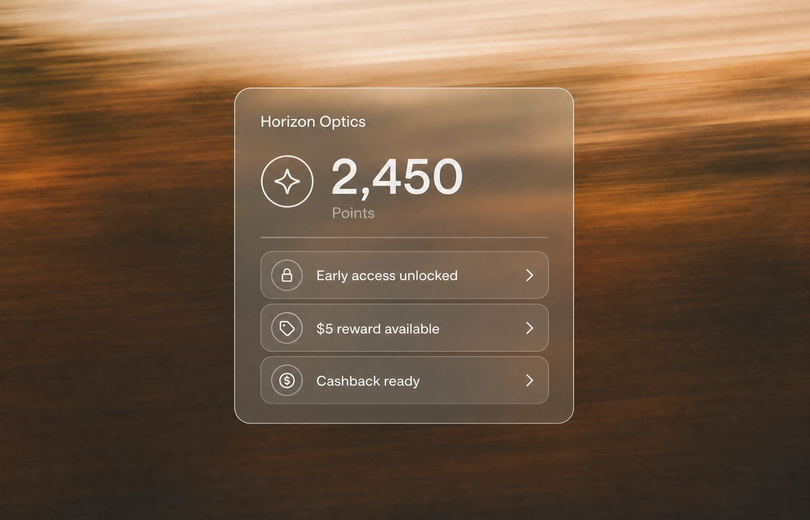
Here's the counterintuitive insight most jewelry retailers miss: traditional points-based loyalty programs fundamentally misalign with how people actually buy jewelry. When a customer buys an engagement ring, handing them 150 points doesn't acknowledge the magnitude of that moment. It treats a purchase tied to deep emotion like a routine transaction. This disconnect explains why generic loyalty approaches underperform in jewelry.
A gifting-centric loyalty strategy fixes this broken model entirely. Instead of waiting passively for customers to return, you actively engage them around the occasions that matter most: anniversaries, birthdays, holidays, and life milestones. You shift from rewarding a single transaction to building a relationship framework that acknowledges every significant moment in your customer's life.
The Irresistible Allure of Jewelry: Why Gifting is Your Golden Opportunity
Jewelry occupies a unique space in consumer behavior.
Jewelry is often bought for special, high-value, and deeply emotional milestones, leading to long gaps between transactions. An engagement ring might be purchased once. An anniversary gift, once yearly. A birthday present, annually. But each of these occasions represents an opportunity to earn revenue from an existing customer at moments when they're already thinking about jewelry.
The challenge is real.
Many customers disappear after a single, significant purchase, becoming what the industry calls "one-and-done" buyers. Traditional loyalty programs fail because they're designed around frequent, low-value purchases like coffee or fast fashion. They assume customers return every two weeks and accumulate rewards gradually. But when someone buys a $3,000 necklace once every four years, those small point accumulations feel meaningless.
A gifting-focused strategy directly addresses this gap. By identifying upcoming gifting occasions in your customers' lives and delivering personalized, relevant reminders and rewards, you transform long purchase cycles into predictable revenue streams.
Loyalty programs boost retention and customer lifetime value, increase average order value, foster emotional connections, and drive valuable referrals. Research consistently shows
jewelry loyalty members spend 12-18% more annually than non-members, and repeat customers spend up to 67% more per transaction compared to first-time buyers.
The real magic happens when you recognize that gifting occasions aren't isolated events. They're anchor points. A customer who buys an anniversary gift today is likely buying another next year. That birthday present for a partner? There's a birthday for you, too. This pattern creates a predictable cadence of gifting opportunities that loyalty programs can systematically activate.
Laying the Foundation: Core Elements of a Gifting-Focused Loyalty Program
Building an effective gifting loyalty program starts with understanding what data matters. Most brands capture basic information: email, purchase history, maybe a birthday. That's table stakes. What separates high-performing programs is the depth of gifting-specific data you collect.
Personalization Beyond the Basics: Collecting Rich Gifting Data
Start with a simple question: Who is your customer buying for? Is this a gift for a spouse, a parent, a child? Understanding the recipient matters enormously because it changes everything about the gift selection process. A customer buying for their 25-year-old daughter has completely different preferences than someone buying for a 60-year-old mother.
Progressive profiling is your tool here. Don't ask for everything at signup. Instead, build customer profiles gradually across multiple touchpoints. After a purchase, send a post-purchase survey asking: "Who did you buy this for?" Include optional fields for the recipient's name, relationship to the customer, and birth date. This data transforms your ability to deliver relevant communications.
For example, if a customer buys a sapphire necklace in February and indicates it's for their partner's birthday, you now know their partner's birthday is in February. Next year, your system automatically reminds them 30 days in advance: "We noticed you gave [Partner's name] this gorgeous sapphire piece last year. Explore new blue stone options for their upcoming birthday." That's not a generic discount. That's meaningful personalization.
Consider adding a preference center where customers can voluntarily share important dates beyond just their own birthday. Anniversaries, spouse birthdays, children's birthdays, even graduation dates. Make it optional but make it easy. Customers who willingly share this information are signaling they want these reminders.
The Power of Tiered Rewards: Elevating the Gifting Experience
Generic loyalty programs with a single tier feel transactional. Tiered programs feel aspirational. When a customer sees they're an "Insider" but could reach "Silver" status with just a few more purchases, they're motivated to act.
Tiered loyalty programs create a sense of progression and status, and four-tier structures can be more effective than three-tier for high-value products.
Structure your tiers around spending milestones relevant to jewelry. Here's a practical framework:
Insider Level (Entry): $0-$2,000 lifetime spend. Benefits include birthday rewards and 10% point earn rate on all purchases.
Silver Level (Emerging): $2,001-$10,000 lifetime spend. Add early access to holiday collections two weeks before general launch.
Gold Level (Established): $10,001-$25,000 lifetime spend. Include free cleaning and inspection services twice yearly, plus exclusive VIP shopping events.
Diamond Level (Premier): $25,000+ lifetime spend. Offer a dedicated concierge for gift selection, complimentary custom engraving, and first access to one-of-a-kind pieces before any public release.
The psychological shift here is important. Instead of "Spend more, get discounts," you're saying "Achieve status, unlock exclusive experiences." This aligns perfectly with how luxury jewelry customers think. They're not primarily motivated by saving money. They're motivated by exclusivity, service, and recognition.
Earning Mechanisms That Encourage Gifting Behavior
Points-for-purchases is the baseline. But for gifting-focused programs, you need additional earning paths that reinforce the gifting narrative.
Referrals are powerful here. A satisfied customer who gave a meaningful gift is primed to recommend your brand to friends also seeking gifts. Consider offering 50 bonus points when they refer someone, plus another 50 points when their referred friend makes a first purchase.
Customers referred by loyalty members are 4x more likely to purchase.
Photo and video reviews shouldn't be overlooked. When customers share images of gifts they've given, you're collecting powerful social proof and helping other gift-givers see real-world applications. Reward this heavily: 100 points for a photo review showing the jewelry as a gift, 200 points for a video. These aren't just nice-to-haves. They're converting other customers in your store right now.
Create a "Milestone Maker" earning mechanism specifically for gifting behavior. When a customer records an upcoming recipient's birthday in their profile and then makes a purchase within 30 days of that date, they earn bonus points. This reinforces the connection between tracking occasions and purchasing.
Redemption Options Designed for the Ultimate Gifting Experience
Here's what most jewelry brands get wrong about redemption. They offer a 10% discount, and customers feel... underwhelmed. Because a $3,000 necklace with 10% off is still a significant purchase. The discount doesn't change the decision-making fundamentals.
Instead, pivot to redemption options that enhance the gifting experience itself.
Gift cards and store credit are often preferred over percentage discounts for future gift purchases. A customer with 500 points redeemable for a $50 gift card sees clear value. They're already thinking about their next gift purchase. A $50 credit removes friction from that decision.
Go further. Offer points redemption for premium services that make gifting easier: complimentary custom engraving (normally $45), priority gift wrapping with luxury packaging (normally $25), free expedited shipping for last-minute gifts, or a one-hour consultation with a gemologist to select the perfect piece for a specific recipient.
These redemptions accomplish something discounts can't. They position your brand as a full service. You're not just selling jewelry. You're solving the gifting problem. That emotional resonance drives loyalty more reliably than any discount.
The Art of Timely and Thoughtful Gifting: Advanced Strategies for Occasions
Even the most beautiful loyalty program fails if customers forget to use it. This is where sophisticated reminder campaigns become essential.
Sophisticated Reminder Campaigns: More Than Just a Discount
Timing matters obsessively. A reminder sent 30 days before an occasion gives customers time to browse, consult, and decide without rushing. Send it the day before? Too late. Send it 60 days early? It feels premature.
A multi-channel sequence works best. Here's a proven template you can adapt:
Day 1 (30 days before occasion): Email subject line emphasizing the emotional moment, not the discount. "Coming up: Make [Partner's name]'s birthday unforgettable." The email body tells a mini-story. Maybe it features an image of a previous purchase they made for this person (if data allows) and suggests similar pieces. Mention they have 30 days to select something perfect. Include a direct link to filtered collection pages.
Day 7: SMS reminder for engaged customers who opted in. Something simple: "[Partner's name]'s birthday is 3 weeks away. Browse our new collection [LINK]." SMS works because it's high-urgency without being intrusive.
Day 14: Email with social proof. Show customer testimonials or photos of people wearing the piece you're suggesting. Frame it as "Loved by gift-givers like you."
Day 21: Push notification for app users. "You have until [DATE] to ensure delivery for [Partner's name]'s birthday. Shop now [LINK]." This creates a sense of time scarcity without being manipulative.
Day 27: Final email with urgency. "Last few days to get delivery by [DATE]." Include shipping cutoff dates explicitly.
The messaging throughout focuses on reducing stress and enabling thoughtful choices. You're not pushing a discount. You're saying, "We know this matters. We're here to help you get this right."
Targeting the Gifter: Gifting-Specific Segmentation
Not all customers are equal gifters. Some buy gifts frequently (birthdays, anniversaries, holidays). Others rarely. Some buy gifts only for one person. Others buy for children, parents, friends, colleagues.
Create segments in your email platform:
Frequent Gifters (3+ gifts per year): These customers should receive four-week advance notifications for every major gifting occasion. They're your VIPs for gifting campaigns. Offer them exclusive early access to new collections.
Occasional Gifters (1-2 gifts per year): Send notifications 60 days before their recorded occasions. They need more lead time to decide.
Self-Purchasers (buy only for themselves): These aren't bad customers. They're just different. Segment them separately and serve them with announcements about new collections, sale events, and personal milestones rather than gifting occasions.
Gift Recipients (have received gifts from others): If you can identify this segment (maybe they have a recorded birthday in your system but haven't made purchases), serve them messaging about self-reward. "Treat yourself." These customers might be gift recipients waiting for occasions to buy for others.
This segmentation prevents generic messaging. Each segment receives campaigns tailored to their actual behavior.
Beyond the Expected: Capturing Niche Gifting Occasions
Most brands focus on major holidays and obvious milestones. But there are dozens of gifting occasions most brands completely ignore.
New baby and birth events create opportunities for personalized charms, birthstone pendants, custom engravings, or "Welcome to the World" collections. Launch a campaign specifically for this: "Someone just became a mom. Celebrate with a birthstone pendant featuring baby's birth date." These are high-emotion, high-engagement moments.
Graduations and promotions are significant achievements ideal for targeted campaigns to simplify gift choices. Partner with your email marketing platform to send triggered campaigns to customers within your age-demographic database when graduations happen in their region (many platforms have partnership data).
Anniversaries deserve special attention because they're repeatable.
Utilize past engagement or wedding ring purchase data to send perfectly timed and relevant anniversary reminders for subsequent years. If someone bought a diamond solitaire in June 2019, you know they likely got married around that time. In June of every following year, send anniversary gift suggestions.
Anniversary strategies can include curated gift selections by year, such as gold for 1st anniversary or diamonds for 10th, leveraging traditional anniversary gift rules to guide customers toward purchases that feel significant.
Rethinking the Rewards: Why Points-Based Loyalty Can Fall Short for Jewelry Gifting
Here's the contrarian truth that most loyalty consultants won't admit: purely points-based systems often sabotage luxury jewelry brands.
The logic seems sound on paper. Customer spends $2,000. They earn 200 points. With enough purchases, they accumulate enough points for a reward. It works beautifully for low-cost, high-frequency purchases. A coffee shop. A fast-fashion retailer. A subscription service.
But jewelry is different. When someone spends $2,000 on jewelry, 200 points feels trivial. They're not thinking, "Great, I'm 200 points closer to my goal." They're thinking, "This better be perfect because I just made a major decision." Offering them points in that moment actually diminishes the significance of what just happened.
There's a deeper problem.
71% of consumers now expect personalized interactions, and generic points fail to deliver that. Personalization requires understanding context, emotion, and intent. A points system treats every purchase identically, stripping away the richness of what makes jewelry gifting special.
Additionally, luxury customers often have the means to buy without discounts. They're not price-hunting. They're seeking exclusivity, exceptional service, and recognition. Offering them point-based discounts can inadvertently cheapen the brand and redirect customer focus toward deal-seeking rather than genuine appreciation.
The better approach: prioritize experiential and relationship-driven benefits. Tiered programs. Concierge services. Early access to collections. Complimentary services. These create perceived value without devaluing the product through discounts. A Diamond-tier customer who receives a personal call from a gemologist before a new sapphire collection launches feels recognized in a way points never achieve.
Measuring Your Sparkle: Tracking ROI for Gifting Loyalty Initiatives
You can't improve what you don't measure. Create a dashboard tracking metrics specific to gifting behavior.
Gift-Giver Repeat Purchase Rate: What percentage of customers who made a gift purchase return within 12 months for another gift purchase? For jewelry, a 35-40% repeat rate within 12 months is excellent. Track this separately from overall repeat rate because gifters have different patterns than self-purchasers.
Average Order Value (AOV) for Gift Purchases: Are customers spending more on gifts than on personal purchases? If gifts average $1,850 and personal purchases average $900, this tells you to weight your gifting campaigns more heavily.
Conversion Rate from Gifting Reminder Campaigns: Of all reminder emails sent for upcoming occasions, what percentage result in a purchase? A 3-5% conversion rate is solid for jewelry. Track this by season and occasion type to identify which occasions drive highest response.
Recipient Onboarding Rate: How many gift recipients eventually create their own loyalty account? If 15% of people who receive jewelry gifts from members later become members themselves, that's a valuable acquisition channel you've essentially created for free.
Customer Lifetime Value of Gift-Givers vs. Self-Purchasers:
Calculate and compare customer lifetime value between these segments to understand which behavior creates more long-term revenue. You'll likely find gift-givers have higher CLTV because they create recurring occasions.
Implementing Your Gifting Loyalty Strategy: Tools and Tips
Choosing the Right Platform
The platform you select determines what's possible. You need something that integrates deeply with your Shopify store, connects with your email marketing tool (Klaviyo, Omnisend), and supports the sophistication of tiered programs with occasion-based automation.
best loyalty apps will help you compare options. Look specifically for platforms offering conditional logic in automation (if customer recorded date X, send message Y), custom tier benefits, and detailed segmentation capabilities.
Practical Tips for Smaller Brands
You don't need enterprise software to execute a sophisticated gifting strategy. Some of the most successful small jewelry brands operate with remarkably simple infrastructure.
Use a Google Sheet to manually track important customer dates if your loyalty platform doesn't have built-in occasion tracking. It's not elegant, but it works. Every Friday, review upcoming occasions and manually send personalized emails to relevant customers. This personal touch often outperforms automated campaigns anyway.
Create three email templates (30-day reminder, 14-day reminder, final-week reminder) and manually customize the product recommendations based on each customer's purchase history. Yes, it's manual. But for a brand with 5,000 active customers, this is maybe 2-3 hours weekly and generates disproportionate revenue.
Partner with complementary businesses. A jewelry brand partnering with a florist, gift-wrapping service, or event planner can cross-promote gifting packages. You gain credibility and offer customers an expanded gifting solution.
Inspiring Examples: Brands Mastering Gifting Loyalty
Look at how established brands handle this. Tiffany & Co. doesn't emphasize points. They emphasize the unboxing experience, the Blue Box, the lifetime relationship. When someone buys a Tiffany piece, they're buying into a legacy and status. Their loyalty strategy revolves around exclusive events, concierge service, and heritage narrative.
Pandora's approach differs but aligns with gifting philosophy. Their Pandora Club rewards members with exclusive charms perfect for incremental gifting. The strategy acknowledges that charm collectors return repeatedly to add to their collection. Each return is a new gifting occasion, either for themselves or for the person who will inherit the bracelet.
Swarovski's Crystal Society uses a paid membership model, directly valuing exclusivity. Members pay an annual fee for access to limited-edition pieces unavailable elsewhere. This creates a psychological dynamic where belonging to the society becomes the reward, not points or discounts.
Conclusion: Capture Every Gifting Moment, Forge Lifelong Loyalty
A gifting-centric loyalty program doesn't just increase revenue from existing customers. It fundamentally shifts how you think about customer relationships. Instead of waiting for customers to return, you actively anticipate moments when they'll be thinking about jewelry. You meet them there with personalized reminders, curated recommendations, and rewarding experiences.
The brands that dominate jewelry retail over the next five years won't be those offering the biggest discounts. They'll be the ones who understand that jewelry purchases are emotional anchors in people's lives. They'll design loyalty programs that honor that emotion, celebrate those occasions, and make gifting frictionless.
Your next step is evaluating your current approach. If you're using a generic points system without occasion-based personalization, you're leaving enormous revenue on the table. Start with the basics: capture recipient information, identify your customer's gifting occasions, and build reminder campaigns around those dates.
Frequently Asked Questions
How often should I send gifting reminders without overwhelming customers?
Space reminders around key milestones: 30 days before, 14 days before, and 7 days before an occasion. If your platform supports it, only send reminders to customers who've actually recorded that date. This prevents irrelevant messaging and keeps your audience engaged rather than frustrated.
What's the best way to collect recipient data without being intrusive?
Use progressive profiling. Ask for one or two details per email or post-purchase survey rather than a lengthy form. After a purchase, simply ask, "Who did you buy this for?" and "Would you like us to remind you next year?" Respecting customer comfort builds trust and encourages participation.
Can a small jewelry brand effectively implement a tiered loyalty program?
Absolutely. You don't need 10,000 customers to make tiers work. Even a 500-customer brand can structure tiers around spending ($500-$2,000, $2,000-$5,000, etc.). The psychology of progression works regardless of absolute customer size. The key is clearly communicating what benefits unlock at each tier.
How do I balance luxury branding with loyalty discounts?
Shift from discounts toward experiences and services. Instead of "10% off," offer "Free custom engraving on your next purchase" or "Priority access to new collection launches." These feel luxurious rather than cheap. You're enhancing the customer experience, not devaluing your product.

Kris is the co-founder of Mage Loyalty. I spend most days talking to merchants, and making sure our customers get real results. If you run a Shopify store or Agency we should chat!