How do accessories loyalty programs move a customer from a first jewelry, bag, or eyewear purchase to a third order? Accessories loyalty programs work when the reward gives customers a timely reason to return, rather than simply recording that they enrolled.
Short answer: Build the program around the next valuable behavior. Measure the gaps between first, second, and third orders, then match the reward to the category: timely redemption for faster-repeat products, store credit or access for high-AOV products, and VIP status for customers with clear long-term value.
Why accessories loyalty programs should target the third purchase
The first repeat order is not the whole retention problem
A second order matters, but it can be situational. A customer may return for another color, a gift, or a promotion. The third order is a stronger signal that the brand has earned a place in that customer's buying routine.
The operating goal is simple: increase the share of first-order buyers who make a second purchase within a defined period, then increase the share of second-order buyers who make a third. Read more about why the third purchase matters more than the second before treating enrollment as proof of retention.
Use purchase frequency as the outcome
Track first-to-second order rate, second-to-third order rate, median days to the next order, and repeat revenue after reward cost.
If second-to-third conversion does not improve, review the reward, its visibility, and the timing of your return message. A clear store-credit promise, a VIP benefit, or a product-specific trigger may persuade more effectively than an abstract points balance.
Step 1: Diagnose the repeat-purchase path before choosing rewards
Build cohorts by order count and time to next order
Start with three cohorts: customers with one order, customers with two orders, and customers with three or more. For each, measure conversion to the next order, median days to purchase again, average order value, and margin after reward cost.
Use the previous 12 months as a baseline where possible. Keep member and non-member behavior separate, but compare customers with similar first-order dates and similar time to purchase again.
Build Shopify customer segments for first-time buyers, customers approaching a likely reorder window, customers with a reward ready, and customers one purchase away from a VIP tier.
Separate replenishment from considered purchases
Do not give every accessory category the same program.
Replenishable items need a reason to reorder on schedule. Seasonal or collectible products need a reason to revisit during launches. High-AOV jewelry, bags, and eyewear need confidence, status, and a visible path to a future benefit.
Choose one launch target: reduce days between first and second purchase, raise second-to-third order rate, or increase reward redemption among new members.
Step 2: Choose the reward currency for your accessories category
Use a simple decision framework
Use points when you want to reward multiple behaviors and create visible progression. Mage can reward purchases, signups, birthdays, reviews, referrals, social actions, wishlist saves, subscription milestones, and supported custom actions.
Use Mage's store-credit loyalty mode when customers need to understand the value immediately. This can suit high-AOV purchases where a visible future balance is clearer than a points conversion.
Mage supports points or a Mage-internal store-credit loyalty mode. That loyalty store-credit balance is not Shopify-native store credit. It is a Mage ledger shown as currency and redeemed through Mage rewards and checkout extensions. For a deeper comparison, see points versus store credit.
Use status and access when discounting would erode margin. Early access, free shipping, anniversary rewards, exclusive products, and priority support can give higher-value customers a reason to return without reducing every order's contribution margin.
A jewelry loyalty program should usually put more weight on spend-based VIP status and access than rapid, low-value redemptions. Replenishable accessories can use lower redemption thresholds because customers have more natural opportunities to return.
“Cannot say enough good things about the team at Mage Loyalty, one of the absolute best organizations we have ever worked with, full stop! So glad we connected with them, completely redid our loyalty program, new concepts, use of loyalty, increasing user engagement, showing us where we were not valuing our best customers, just WOW, amazing team!”


Read the West Coast Goalkeeping case study →
Step 3: Design earning rules and rewards around buying cycles
| Accessory buying pattern | Primary repeat trigger | Reward style | Margin safeguard | KPI to watch |
|---|---|---|---|---|
| Replenishable accessories | Timely reorder or subscription milestone | Accessible points or store credit reward | Approval time matching returns policy | Days to next order |
| Seasonal accessories | New collection or promotional window | Multiplier campaign or early access | Limit bonus activity to selected products | Repeat orders during campaign |
| Collectible accessories | Status progression and launches | VIP perks and collection access | Avoid blanket discounts | Tier progression rate |
| High-AOV jewelry or bags | Future purchase planning | Store credit, anniversary reward, shipping perk | Spend-based qualification | Second-to-third order rate |
| Gift-led accessories | Upcoming occasion | Gift Reminders | Reward only the first saved entry | Return rate around occasions |
Reward the behavior that closes the next order
The purchase rule is the starting point. In Mage Loyalty, go to Loyalty, then edit the Purchase rule in Earning Points. The Purchase earning rule supports an earning rate, approval time, discounted-product exclusions, custom descriptions, and per-VIP-tier earning rates.
For replenishable accessories, reward paid purchases and use subscription milestones where the product has a recurring purchase cycle. For seasonal products, use limited-time multiplier campaigns, points drops, or collection-specific earning rates around launches.
For gifts, use Gift Reminders to let customers save important birthdays or anniversaries. Mage awards points for saving the first entry, and Gift Reminders require Klaviyo.
Set purchase approval time to match your returns window if rewards should be held until the purchase is less likely to be refunded. Exclude discounted products when promotion stacking would erode margin, and explain that rule clearly in your program terms.
Use VIP tiers to increase progression
VIP tiers give customers a reason to consolidate purchases with your brand. Mage supports tiers based on spend, points earned, or number of orders, and higher tiers can receive better purchase earning rates.
Use status where it fits the buying cycle. A collectible-accessory customer may care about first access to a limited drop. A high-AOV jewelry buyer may care more about upgraded shipping, anniversary recognition, or a future store-credit benefit.
Start with three or four tiers. More tiers create more explanation and more customers who cannot see a realistic path upward. For threshold and benefit design, read how to design Shopify VIP tiers that drive repeat purchases.
Step 4: Build the customer-facing loop from order to next purchase
Show value where customers shop
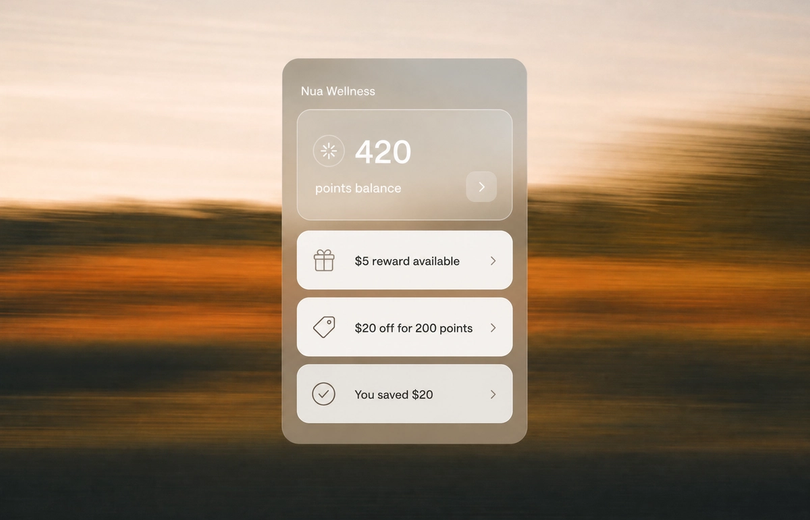
Show the balance, available reward, and next VIP milestone in the loyalty page, Rewards Widget, customer account sidebar, and checkout. On eligible Wallet Pass setups, customers can also see live points and VIP status.
Mage rewards apply at Shopify checkout, so customers do not need to copy a discount code. The customer should understand what they earned, what it is worth, and where they can use it.
Use accounts and wishlists for considered purchases
Considered purchases need a path back to the product. Mage Accounts sits on top of Shopify accounts and provides an on-site account drawer with loyalty progress, rewards, wishlist items, and saved products.
Use one operating workflow:
- Identify a saved product in the wishlist.
- Send a provider-based back-in-stock, price-drop, or abandoned-wishlist message.
- Show the available reward in the account drawer and at checkout.
- Measure whether that saved product or message leads to a repeat order.
Mage supports guest wishlists held in the browser, then merged into the account after sign-in. Back-in-stock, price-drop, and abandoned-wishlist reminders can send through Mage email templates or an integrated email or SMS provider. Mage does not send SMS itself.
A Shopify loyalty program should make the path from earning to redemption obvious. Keep the reward catalog short at launch. If customers claim rewards but do not use them, simplify the choices before adding more earning rules.
Step 5: Add referrals, VIP status and omnichannel triggers
Use referrals after the customer has a reason to advocate
Ask for a referral after a successful purchase, review, or repeat order. Mage referrals support separate advocate and friend rewards, configurable minimum spend, configurable timing, and fraud protection.
Set reward timing to match your returns policy where needed. A referral reward should follow a qualifying purchase, not merely a shared link.
Connect online and in-person purchases
If you sell through pop-ups, events, or retail, identify the customer at checkout. Mage supports Shopify POS for balance lookup, reward visibility, and redemption during an in-person transaction.
One customer balance across online and POS works only when staff attach the correct customer to the sale. Train staff to ask before payment, not after the transaction has closed.
Automate segments without losing control
Mage automatically tags customers with their current VIP tier. Use those tags in Shopify filters, customer segments, and Flow workflows.
Create controlled prompts for customers nearing a tier, customers with a pending reward, or customers who saved a product but have not returned. Review the segment logic before turning on a broad campaign.
Step 6: Measure whether the program increases purchase frequency
| Metric | What it tells you | Warning sign | Next action |
|---|---|---|---|
| First-to-second order rate | Early repeat behavior | Enrollment rises without repeat orders | Review first reward and message timing |
| Second-to-third order rate | Developing purchase habit | Second order does not lead to a third | Add progression or a category trigger |
| Days between orders | Return timing | Gap remains unchanged | Adjust reminder timing |
| Redemption rate | Reward usefulness | Rewards are claimed but unused | Simplify redemption |
| VIP progression | Status value | Customers stall in entry tier | Revisit thresholds or perks |
Track behavior before revenue attribution
Start with first-to-second order rate, second-to-third order rate, average days between orders, repeat purchase rate, and average purchase frequency.
Then review member AOV, redemption rate, reward usage by type, VIP progression, and referral conversion. Monitor outstanding points balances as a future engagement opportunity and a reward liability.
Mage Analytics includes loyalty-attributed revenue, repeat purchase rate, member purchase frequency, redemption rate, and VIP-tier performance. The analytics guide explains the available loyalty, VIP Tiers, Referrals, Wishlist, and Saved for Later views.
Compare pre-launch and post-launch cohorts with similar customer age and purchase opportunity. Change one major variable at a time, such as reward currency, redemption threshold, a VIP perk, or a reminder sequence.
FAQs
What is an accessories loyalty program?
An accessories loyalty program is a structured set of rewards and benefits that encourages customers to return after buying products such as jewelry, bags, eyewear, or fashion accessories. It should reflect purchase frequency, margin, product consideration, and the reason customers return.
How do accessories loyalty programs increase purchase frequency?
Accessories loyalty programs increase purchase frequency by giving customers a visible reason to make the next relevant purchase. A usable balance, VIP milestone, wishlist reminder, referral reward, or early-access benefit can reduce hesitation when the message arrives at the right time.
What rewards work best for accessories brands?
The best rewards for accessories brands include points, store credit, free shipping, free products, early access, anniversary rewards, and VIP perks. Faster-repeat products often need rewards customers can use within a few orders, while high-AOV products may benefit more from status, access, and future-purchase credit.
Should an accessories brand use points or store credit?
Use points when you want to reward multiple actions and create visible progression. Store credit can work better when customers need to understand the value immediately, especially for higher-AOV purchases. Mage's loyalty store-credit mode is a Mage-internal ledger, not Shopify-native store credit.
How many VIP tiers should an accessories brand create?
An accessories brand should usually begin with three or four VIP tiers, even though Mage supports up to 10. Each tier needs a meaningful benefit and a realistic progression path. Tiers can be based on spend, points earned, or order count.
How do I measure whether an accessories loyalty program is working?
Track first-to-second and second-to-third order rates, days to next purchase, repeat purchase rate, purchase frequency, AOV, redemption rate, and reward cost. Measure comparable cohorts before and after launch to determine whether the program changed profitable repeat behavior.
Ready to see Mage in action? Book a demo.

Graeme is the co-founder at Mage Loyalty. He heads product development, from complex loyalty migrations and large-scale data handling to building the features shaping the future of loyalty on Shopify.