Here's the uncomfortable truth most fashion brands won't admit: their loyalty programs are designed backwards. They start with discounts, add points, sprinkle in tier names, and call it a day. The result? Price-obsessed customers who jump ship the moment a competitor offers a better deal. Meanwhile, your margins erode and customer acquisition costs keep climbing.
The real problem isn't your rewards structure. It's the belief that discounts drive loyalty at all.
Research shows something most brands miss: 75% of customer engagement stems from emotional perks, not transactional incentives. Yet the fashion industry continues discounting like its survival depends on it. Sixty-one percent of shoppers now report being less loyal to fashion brands than ever before, despite loyalty program enrollment hitting 55%. The disconnect is real.
VIP tiers, when designed strategically, flip this dynamic entirely. They move customers beyond price sensitivity into something far more valuable: genuine brand advocacy. This guide shows you exactly how to structure tiers that feel exclusive and aspirational, not arbitrary. You'll learn the psychological mechanisms that drive progression, discover what rewards actually resonate with high-value customers, and understand why 91% of top apparel loyalty programs succeed because of early access, not discounts.
Understanding VIP Tiers for Clothing Brands
What Are VIP Tiers, Really?
VIP tiers are structured membership levels within a loyalty program where customers unlock progressively more exclusive and personalized benefits as their engagement and spending increase. Unlike flat-rate points systems, tiers create a clear progression path. Customers know exactly what they're working toward.
Think of it like a video game: you're not just collecting currency (points). You're advancing through levels that unlock new capabilities, exclusive areas, and special powers. The progression itself becomes part of the appeal.
In fashion specifically, tiers might look like:
- Entry Level (Bronze/Insider): Basic points, birthday gifts, standard shipping discounts
- Mid Level (Silver/VIP): Early access to drops, 2x points multipliers, priority customer service
- Top Level (Gold/Elite): Private shopping events, personalized styling sessions, exclusive collections
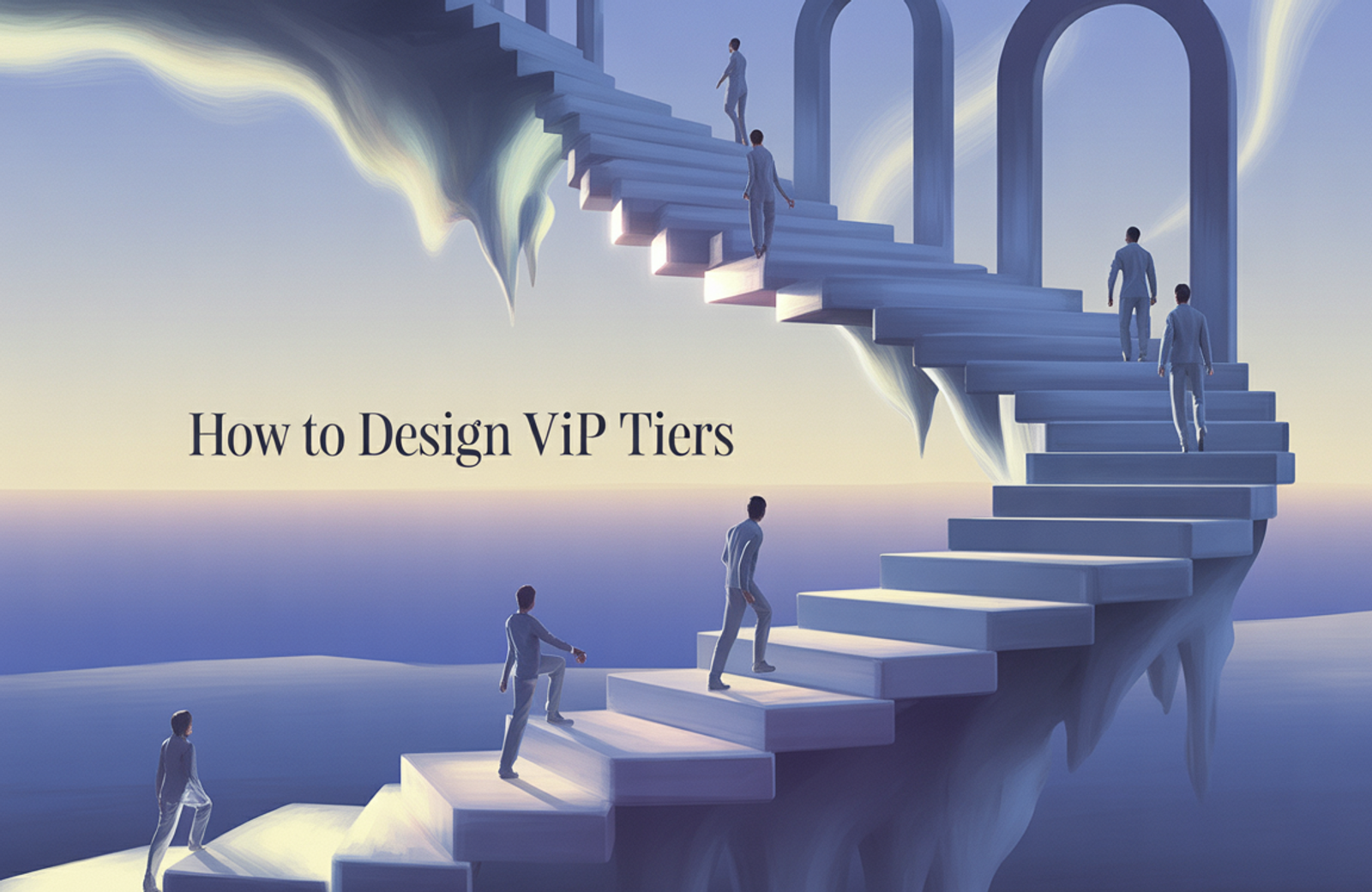
The structure creates aspiration. Customers at the Bronze level see what Silver offers and feel motivated to spend more. Silver members want what Gold members get. This psychological progression drives significantly higher lifetime value than simple point accumulation.
Why Tiers Beat Basic Points Systems
The difference between a points program and a tiered program comes down to one thing: momentum. Points systems feel transactional. Customers earn 1 point per dollar, accumulate 100 points, redeem for $10 off. They've received a discount. Nothing more.
Tiered programs feel like achievement. Customers progress from member to VIP to Elite. Benefits meaningfully improve at each level. They're no longer just getting rewards; they're gaining status and belonging to something exclusive.
Loyal customers spend 220% more annually, and a substantial portion of that comes from emotional investment, not rational point math.
It costs 5 to 7 times more to acquire a new customer than to retain an existing one. For fashion brands facing CAC averaging $129 in 2025, this math is brutal. A customer you acquire through paid ads might generate $150 in revenue. A retained customer through a strategic VIP program can generate $1,200 or more in lifetime value. The economics force a choice: compete on price or build loyalty.
Why Fashion Brands Need VIP Tiers Now
The fashion industry faces a unique crisis most retailers don't discuss: 76% of consumers perceive no meaningful difference between brands. When 61% of loyal customers report switching brands more frequently than they used to, something fundamental has broken. Discounting doesn't fix this. Neither does adding one more email campaign.
VIP tiers address this by doing what discounts cannot: they build identity and community. When a customer feels like they're part of an exclusive club, when they receive early access to products their friends can't get, when they're invited to private events—that's not a discount. That's status. That's belonging.
Fashion is inherently about identity expression. Your customers wear your clothes to signal who they are or who they want to become. A well-designed VIP tier program lets you reward that identity investment, making customers feel seen and valued beyond their wallet.
The Mechanism of Aspiration: How Tiered Loyalty Programs Work
The Psychology Behind Tier Progression
The human brain responds to visible progress. When you can see yourself moving toward a goal, dopamine hits differently than when you're just accumulating anonymous points. This is why fitness apps show progress bars. Why video games celebrate level-ups with animations. Why tier programs work.
In practical terms, this means your tier thresholds must be transparent and achievable. A customer should understand exactly how much they need to spend or what actions they need to take to reach the next level. Hidden requirements kill engagement. Unachievable targets create resentment.
Consider this: if your Bronze tier requires $500 annual spend to reach Silver, make that crystal clear. Better yet, show customers their progress in real time. "You're $187 away from your next tier benefit" is infinitely more motivating than "You have 4,250 points." One number motivates action. The other is abstract.
The escalation of benefits is equally critical. Moving from Bronze to Silver should feel meaningfully different. Not just 10% more points. Different kinds of rewards. New experiences. Better access. This signals to customers that they've genuinely achieved something.
Crafting Rewards That Actually Resonate
Here's where most fashion brands stumble: they confuse discounting with rewards. Deep discounts feel cheap. They erode margins and train customers to wait for sales. Real rewards—the ones that build loyalty—feel exclusive and aspirational.
Early Access to Drops and Collections remains the most coveted benefit in fashion loyalty. When KITH releases limited sneaker collaborations or Nike launches exclusive AirMax colorways, the first notification goes to VIP members. This creates FOMO for non-members and genuine gratitude from VIPs. It's not a discount. It's privilege.
Exclusive Products and Members-Only Collections tap into something primal: scarcity. When Gap Inc. offers exclusive merchandise available only to program members, or when Alo Yoga creates designs exclusively for their highest tier, members feel like insiders. They own something others can't access at any price.
Experiential Rewards—private shopping events, fashion show invitations, styling consultations with experts—create memories. These can't be replicated by competitors. A customer invited to a brand's private spring preview with complimentary styling creates an emotional bond far deeper than any discount could. Brands like Nordstrom and FARFETCH have mastered this, understanding that experiences scale a brand's exclusivity in ways products never can.
Personalized Styling Services deserve special attention in fashion. This is where data becomes humanized. When your platform tracks that a customer consistently purchases from the sustainable collection, or gravitates toward a specific color palette, you can offer curated recommendations. The highest tier might include quarterly virtual styling sessions with an expert. This feels like having a personal stylist—because for that moment, you do.
Convenience and Service Enhancements matter too. Extended return windows (60 days instead of 30) make customers feel trusted. Free express shipping removes friction. Priority customer service means they never wait on hold. For busy, affluent customers, these benefits often outweigh additional discounts.
Consider reading about loyalty program rewards to understand different reward categories and their specific applications.
Designing Your VIP Tier Program: A Strategic Blueprint
Setting the Right Number of Tiers
How many is too many? The sweet spot is typically 2-4 tiers. Two tiers feels too simple. Three is the Goldilocks zone for most brands. Four works if you have genuinely different customer segments with distinct value levels.
Too many tiers create confusion. Customers lose sight of achievable goals. Your operations team drowns in complexity managing different benefit packages. Stick to clarity.
Naming and Brand Alignment
Tier names matter more than you'd think. Generic names like Bronze, Silver, Gold work fine. But names aligned with your brand create emotional resonance.
Alo Yoga's structure (VIP, A-List, All Access) plays into aspirational terminology. Never Fully Dressed uses Something Sassy, Strikingly Sassy, Supremely Sassy—playful names that reinforce brand personality. KITH uses three straightforward tiers but makes the entire experience feel exclusive through limited drops and insider language.
Choose names that answer this question: what would your best customers say when describing membership? If they'd say "I'm part of the VIP club," use that language. If they'd say "I'm elite," use that. Brand personality should flow through naming.
Strategic Threshold Setting
Determining spending requirements requires understanding your customer distribution. If your average customer lifetime value is $1,200 and your median transaction is $150, you might structure tiers like:
- Entry (Free): All customers
- Mid ($750 annual spend): Top 25% of customers
- Top ($2,000 annual spend): Top 5-10% of customers
These numbers aren't arbitrary. They ensure mid-tier is achievable but exclusive. Top tier feels genuinely elite. Entry tier means everyone qualifies, lowering barrier to initial program join.
But here's the advanced move: don't base tiers purely on spend.
70% of customers are willing to leave a review for points and 61% will make a referral. Build tier progression that rewards engagement beyond purchases. A customer who refers 5 friends might qualify for mid-tier benefits. Someone who consistently writes detailed reviews might unlock perks. This diversifies how customers can progress and makes the program feel less purely transactional.
Aligning Rewards with Real Customer Behavior
This is where the fashion loyalty guide becomes essential reference material. The core principle: rewards must align with why your customers shop with you.
If you're a sustainable fashion brand, mid-tier benefits might include bonus points for purchasing from your eco-conscious collection. High tier might offer exclusive access to recycled material previews or bonus rewards for garment recycling. Sustainability values become baked into tier progression.
If you're streetwear-focused, mid-tier gets early drops. High tier gets exclusive collaborations. If you're luxury-focused, everyone gets exceptional service, but high tier gets white-glove personal shopper attention.
The apparel customer retention guide explores how different apparel brands maximize retention through strategic reward alignment. The pattern across successful programs: rewards should feel inevitable, not surprising. They should deepen the relationship customers already have with your brand.
Personalization becomes the cornerstone. Your platform should track not just purchase value but purchase patterns. When you know a customer buys exclusively from your outerwear line, early access to new parkas feels targeted and valuable. When you know they engage with your UGC campaigns, inviting them to be featured creates moments of genuine delight.
Building Community Around VIP Status
The most underutilized aspect of VIP tiers is community. Brands obsess over individual rewards and miss the power of collective belonging.
Creating members-only spaces (private Discord communities, Facebook groups, or dedicated app sections) transforms VIP status from individual benefit into shared identity. Members see each other's styling choices, share recommendations, ask questions about products. They feel like insiders.
Private events amplify this further. When you invite 50 top-tier members to a product launch event, 49 of them will photograph it and share. Their friends see exclusivity. That's organic marketing worth far more than paid ads.
Technology as the Enabling Infrastructure
You cannot run a sophisticated VIP tier program without the right platform. Manual spreadsheets invite errors. Simple loyalty apps lack the flexibility needed for tiered complexity.
Best Shopify loyalty apps for 2025 need specific capabilities: real-time tier tracking, automated reward delivery, seamless POS integration for omnichannel brands, and robust analytics. The platform should update tier status immediately upon purchase, so customers see their progress in real time.
Integration with your email and SMS tools matters critically. When a customer reaches mid-tier status, their marketing automation should trigger onboarding to exclusive benefits. When they're close to advancing, promotional messages should acknowledge this (not guilt-trip). Technology should feel invisible—the tier progression should feel native to their shopping experience.
Measuring Success and Evolving Your Program
Key Performance Indicators That Matter
Track customer lifetime value (CLV) increases and average order value (AOV), where loyal existing customers often have 67% higher average order value
than new customers. These metrics show whether tier customers are truly more valuable.
Monitor repeat purchase rate specifically for tiered members versus non-members. Repeat customers are your program's best evidence of success.
Engagement metrics matter more than most brands realize: tier progression rates, reward redemption rates, participation in exclusive events. If 80% of your mid-tier members redeem rewards, your tier structure is working. If only 20% do, your rewards don't resonate.
Reduced customer acquisition costs follow naturally from retention excellence. If your program successfully moves 15% more customers to repeat purchase status, your CAC effectively drops because you're spending the same on acquisition but keeping customers longer.
For deeper guidance on measuring loyalty program effectiveness, consult resources on how to measure customer loyalty metrics specific to 2026 data.
Evolving Your Program Based on Reality
Data should inform constant iteration. If you notice that mid-tier customers rarely progress to high tier despite meeting spending thresholds, the tier benefits might not feel aspirational enough. Survey them. Understand friction.
If early access to products becomes your most redemmed benefit, expand it. Create more early access opportunities. Consider tiering early access itself—basic early access at mid-tier, extended windows at high tier.
Seasonal adjustments matter. Holiday seasons typically see increased spending. Adjust tier thresholds slightly lower during slow seasons to maintain momentum. Birthday month bonuses (2x points) drive engagement without significant cost.
The program should evolve with your brand. If you launch a new product category, incorporate it into the tier structure. New partnerships? Feature them in exclusive benefits. This keeps the program fresh and signals to customers that membership continues delivering new value.
Elevate Beyond Transactions
The shift from discounting to tiered loyalty represents a fundamental change in how fashion brands compete. Prices converge. Products become commodities. But experience, status, and belonging cannot be replicated by competitors.
When you design VIP tiers strategically—with clear progression, aspirational rewards, personalized experiences, and genuine community—you transform customers from price-sensitive shoppers into brand advocates. They don't just buy more. They defend your brand. They refer friends. They wait for drops instead of shopping competitors.
This is the power of VIP tiers done right. Not as another discount program. But as a strategic framework for building lasting relationships that compound in value over years, not quarters.
Frequently Asked Questions
How many VIP tiers should I actually have?
Three tiers is optimal for most fashion brands. It's simple enough to manage and explain, yet complex enough to create meaningful progression. Two feels too basic. Four or more create operational complexity and diluted focus. Start with three and add complexity only if you have genuinely distinct customer segments.
What's the real difference between points programs and tiered programs?
Points programs are transactional. Customers accumulate currency toward purchases. Tier programs are psychological. Customers progress toward status. The best programs hybrid both, but the tier structure and status progression are what create emotional investment and lasting loyalty.
How should a new or small fashion brand start with VIP tiers?
Start simple. One entry tier (free to all customers) and one paid tier. Focus on one or two benefits—early access and a points multiplier. Launch this, measure engagement, then expand. You don't need complex software immediately. Spreadsheets work at 500 members. At 2,000 members, invest in proper platform. Growth should precede infrastructure, not follow it.
What rewards actually work for fashion customers?
In order of impact: early access to new products, exclusive member-only items, experiential benefits (events, styling), convenience perks (extended returns, free shipping), and finally discounts. Most brands weight this backwards, overemphasizing discounts while underutilizing access and experience.
How do I balance exclusivity with accessibility?
Exclusivity comes from benefits, not barrier to entry. Everyone can join your free tier. That's accessible. High-value benefits remain exclusive, locked to top tier. The psychological trick: show what's possible at each level. This creates aspiration without gatekeeping.

Graeme is the co-founder at Mage Loyalty. He heads product development, from complex loyalty migrations and large-scale data handling to building the features shaping the future of loyalty on Shopify.