How to Build a Referral Program That Grows Your Pet Brand Through Word of Mouth

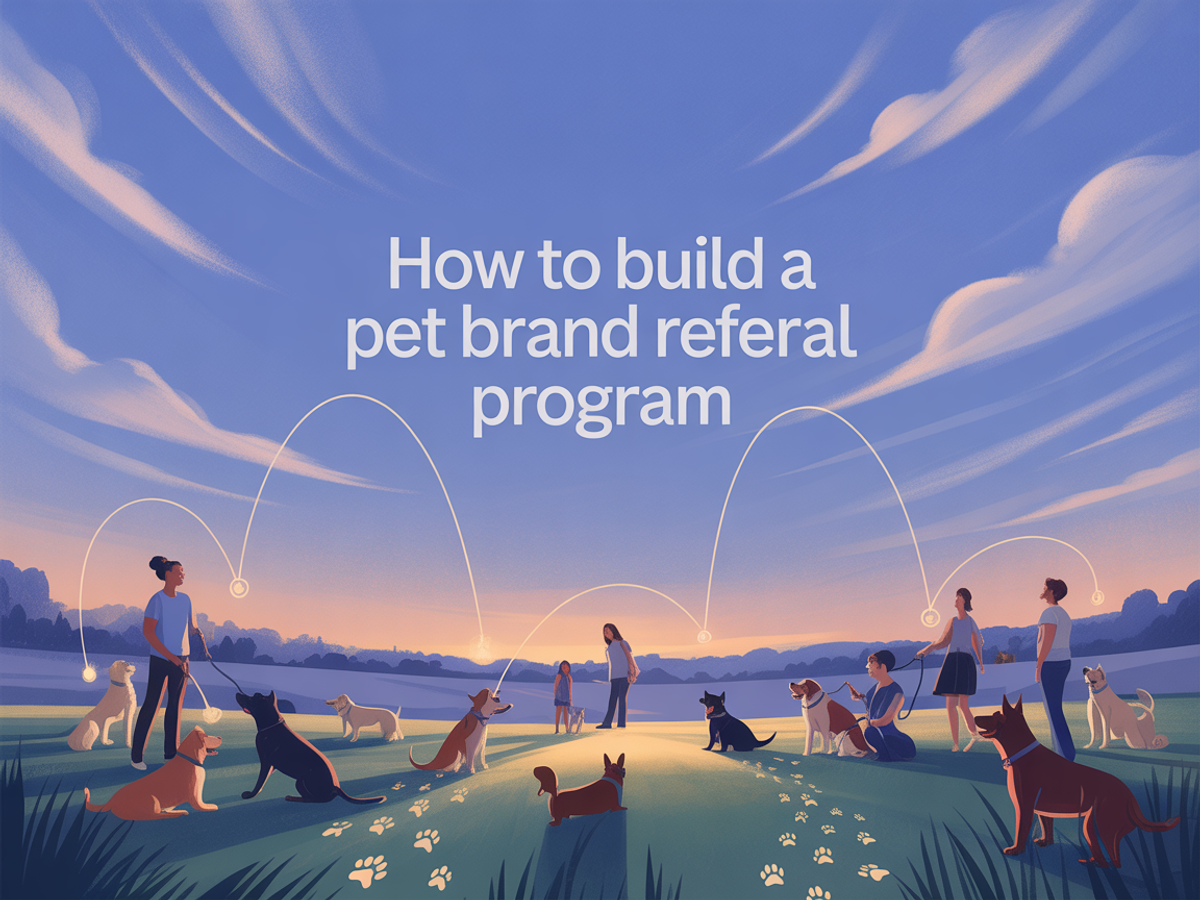
Pet parents don't just buy products for their animals. They invest emotionally in their pets' wellbeing, happiness, and lifestyle. This emotional connection creates something extraordinary for brands: the most powerful form of marketing known to exist. Word of mouth.
Yet most pet brands haven't figured out how to systematically activate this force.
The pet industry is booming. The U.S. pet e-commerce market is projected to reach $157 billion by 2025, with 86% of consumers shopping for pet products online. That explosive growth means incredible opportunity, but also fierce competition from giants like Chewy and Amazon. Standing out requires something these massive retailers can't easily replicate: authentic community.
That's where referral programs come in.
A well-designed referral program transforms your most satisfied customers into your most effective sales force. Not through complicated point systems or transactional mechanics, but by tapping into something primal: pet parents' desire to share their favorite discoveries with friends and fellow animal lovers.
This guide walks you through building a referral program that actually works for pet brands, from strategy and structure through community activation and optimization. You'll discover how to create rewards that resonate emotionally, activate your program in real pet parent spaces (not just online), and measure results that matter.
Why Your Pet Brand Needs a Referral Program Right Now
The Unbreakable Bond: Pets as Family Members
Here's what people often miss about pet commerce: it's not really about the products. It's about love.
Pet owners spend an average of $1,480 annually on their dogs and $902 on their cats. More significantly, 85.4% of pet owners consider their pets to be family members. This isn't casual consumer behavior. It's the deepest kind of brand loyalty, rooted in emotion rather than habit.
This emotional foundation makes pet parents uniquely powerful advocates. When someone loves their dog, they don't just want the best products for that dog. They want to share those discoveries with other dog lovers. They want their friends' pets to be happy too. They want to belong to a community of people who understand.
This is the psychological core of an effective pet brand referral program. You're not bribing customers to sell for you. You're giving them permission and incentive to do something they already want to do.
Cut Through the Clutter: Differentiation in a Crowded Market
The pet industry landscape has shifted dramatically. Over a quarter of all pet care sales now occur online. Major retailers have optimized their supply chains. Prices have compressed. Traditional advertising costs continue rising.
In this environment, differentiation through product alone becomes nearly impossible. But building community? That remains difficult for large, impersonal retailers to achieve at scale.
Pet parents are tired of faceless transactions. They're searching for brands that understand their pets as more than consumption objects. Referral programs create this differentiation by saying something simple: "We trust your judgment. We value your community."
This trust translates directly to competitive advantage. When a pet parent recommends a brand to a friend, that recommendation carries more weight than any paid ad campaign. It comes wrapped in personal experience and genuine care for the recipient's pet.
Beyond Acquisition: Driving Customer Lifetime Value and Retention
Referred customers are different. They arrive with higher expectations (because they were told the product is good), stronger intent (because they trust the referrer), and deeper commitment (because they're part of a recommendation relationship).
Pet loyalty programs lead to 42% higher retention rates within six months. But referral programs amplify this effect. Referred customers consistently show higher lifetime value because they enter your ecosystem through trust rather than price discovery.
Consider this: a customer acquired through a discount code might use the discount and leave. A customer referred by a trusted friend arrives expecting quality and planning to return. The second customer represents significantly more long-term revenue.
The Authenticity Advantage: Why Word-of-Mouth Outperforms Ads
Traditional advertising works by building awareness and triggering interest. It's efficient at scale but weak at conversion. Word of mouth works differently. It builds trust first, then drives action.
This isn't opinion.
The power of word-of-mouth marketing creates authentic connections that drive repeat purchases and transforms casual buyers into passionate brand champions. A recommendation from another pet parent carries credibility that no brand message ever will.
For pet brands, this advantage becomes magnified. Pet parents form intense communities around their interests (breed-specific groups, training philosophies, wellness approaches). Activate the right recommenders within these communities, and your growth becomes exponential.
Understanding the Landscape: Referral vs. Affiliate Programs for Pet Brands
Before building, clarity matters. Many brands confuse referral programs with affiliate programs. They're fundamentally different.
Defining Customer Referral Programs
A customer referral program empowers your existing happy customers to become brand advocates by sharing with their personal networks. The referrer is rewarded. The referred customer often receives an incentive. Both benefit.
These programs work best when structured simply. A unique code or link. Clear instructions. Meaningful rewards. Pet parent shares with friend. Both parties win.
The beauty of customer referrals lies in their organic nature. You're not recruiting professional marketers. You're enabling enthusiasts to do what they'd naturally do anyway: talk about products they love.
Distinguishing from Affiliate Programs
Affiliate programs operate differently. They involve partner relationships, often with influencers, bloggers, or professional marketers who earn commission on sales they drive. The affiliate is typically a business entity or professional content creator.
While affiliate programs have value, they're less suited to organic community growth. They require active recruitment, contract negotiation, and ongoing management. More importantly, they often feel less authentic to pet parent communities than peer-to-peer recommendations.
Why Customer Referrals Are Key for Organic Growth
Customer referrals create self-sustaining growth loops. One happy customer tells a friend. That friend becomes a customer. That new customer tells their friends. The cycle compounds.
This organic expansion proves more sustainable than paid acquisition because it's rooted in genuine satisfaction rather than ad spend. It also builds community as a side effect. Your customers aren't just buying from you. They're becoming part of a network of fellow enthusiasts.
For pet brands competing against larger retailers, this community advantage becomes decisive.
Designing Your Pet Brand's Referral Program: Structure and Rewards
Setting Clear Goals and Target Audience
Before launching any referral program, define what success looks like. Are you optimizing for new customer acquisition? Driving sales of specific products? Building email list growth? Expanding into new geographic markets?
Different goals require different program mechanics. A brand focused purely on customer acquisition might emphasize the easiest possible sharing mechanism. A brand focused on community might prioritize rewards that encourage deeper engagement.
Next, identify your ideal referrer. Who in your customer base would make the best advocate? Often it's not your highest-spending customers. It's your most enthusiastic customers. The ones who already talk about your products unprompted.
Understanding your ideal referrer helps you design rewards and messaging that resonate most powerfully.
Crafting an Irresistible Offer: What Motivates Pet Parents
The Power of Dual-Sided Rewards
The most effective referral programs reward both parties. "Give $10, Get $10" remains one of the most proven structures across industries.
For pet brands, this clarity works exceptionally well. Both the referrer and the new customer know exactly what they receive. No confusion. No disappointment.
Pets Purest demonstrates this principle. They offer a £5 discount to both the referrer and the referred customer. Simple. Clear. Mutually beneficial. The program succeeds because everyone understands the deal.
Emotional and Experiential Rewards
But here's where pet brands can differentiate: going beyond discounts.
Pet parents respond powerfully to rewards that reinforce their bond with their animals. Birthday treats for pets. Adoption anniversary gifts. Free samples of new products. Exclusive access to community events. These rewards acknowledge the emotional reality of pet ownership.
DOGHOUSE understands this. They've achieved a redemption rate of 21%, significantly higher than the 15% industry average. Part of their success comes from offering rewards that feel emotionally resonant rather than purely transactional.
The Contrarian Take: Why Complex Points Systems Backfire
Most loyalty program advice recommends points-based systems. PetSmart Treats uses this model. Points accumulate. Customers earn tiered benefits. It sounds sophisticated.
But for authentic pet parent referrals, overly complex points systems often backfire. Here's why: Pet parents referral motivations are emotional and straightforward. They want to help friends find great products. Complex point accrual and redemption mechanics feel transactional. They obscure the genuine desire to share.
Worse, complexity creates friction. If a pet parent has to explain your points system to a friend, the referral dies. Simplicity fosters trust. It makes sharing easy. It allows the emotional motivation to remain central rather than getting buried in point mechanics.
The referral programs that win with pet parents are the ones that feel simple, direct, and emotionally resonant. They reinforce the connection to the pet and the brand, not the accumulation of arbitrary points.
Practical Rewards That Work
Beyond emotional rewards, practical options include:
- Fixed-value discounts ($10 off, $15 off)
- Free shipping on the first order
- Free products (a toy, a treat sample, a new product trial)
- Store credit
- Exclusive access to new product launches
- Special birthday month discounts
The key is ensuring rewards feel valuable without devaluing your margins. Test different options and let data guide refinement.
Referral Mechanics: How Will It Work
Online Mechanics:
Each customer receives a unique shareable link or code. They share this link directly or manually give the code to friends. The referred customer enters the code at checkout. Both parties receive their rewards automatically.
This mechanism should work across devices, work reliably, and complete instantly. Nothing kills referral momentum like a broken code.
Offline Mechanics:
For dog parks, events, and local communities, physical referral cards work better than digital links. Create memorable, easy-to-remember codes. "BARKFRIENDS" works better than "REF47829XK" for someone trying to remember something they heard at a park.
Consider QR codes paired with memorable codes. A pet parent can photograph the code or manually enter it when they get home.
Clear instructions matter enormously. Include something like: "Share BARKFRIENDS with a friend. They get $10 off their first order. You get $10 in store credit."
Program Name: Make It Memorable and Pet-Themed
Don't call your program "Referral Program." That's boring.
Consider options like "Paws & Friends," "Pack Referral," "Tail Wagging Rewards," or brand-specific variations. The name should feel fun and aligned with pet parent culture.
A good program name becomes something customers want to share. It communicates brand personality. It makes word of mouth feel less like a transaction and more like being part of a community.
Building Community-Driven Referrals: Activating Your Program in Key Pet Parent Spaces
Online Activation: Beyond a Simple Share Button
Leveraging Existing Social Communities
Pet parents congregate in specific online spaces. Breed-specific Facebook groups. Reddit communities like r/dogs. Instagram hashtag communities. Local Nextdoor groups focused on pets.
These aren't generic social media spaces. They're communities built on shared identity and genuine expertise.
Rather than simply adding a "Share" button to your website, actively encourage participation in these communities. Ask happy customers: "Have you shared this with your favorite dog group? Your adoption community?"
Consider creating exclusive codes for specific communities. "SHIBAOWNERS" for Shiba Inu enthusiast groups. "RESCUEPACK" for dog rescue communities. This specificity makes communities feel seen and valued.
User-Generated Content Initiatives
Tie referrals to content creation. Ask pet parents to share photos or videos of their pets enjoying your products. Tag the post with your brand name. Both actions (content creation and referral) earn rewards.
Doglyness rewards social media interaction alongside referrals. This combination works because it serves multiple purposes simultaneously: you get content, the customer feels valued, and their friends see authentic product demonstrations.
The most powerful content is genuine pet parents sharing authentic moments. Encourage this by rewarding it.
Email Marketing and In-App Prompts
Your existing customers are your best referral source. Remind them actively.
Send personalized emails highlighting their referral code and explaining the rewards. Include testimonials from customers who've successfully referred others. Make it easy by including pre-written messages they can copy and share.
In-app prompts (on your website) should appear at strategic moments: after a purchase confirmation, on the account dashboard, when browsing products.
Offline Activation: Tapping Into Real-World Pet Parent Hubs
Dog Parks and Walking Trails
Dog parks are where pet parents naturally congregate. They're discussing products, asking for recommendations, and building relationships.
Create referral cards specifically designed for dog park distribution. These should be attractive, include your brand logo, communicate the offer clearly, and feature memorable codes.
Partner with local dog park communities if possible. Some parks have management committees or social groups. Offer to sponsor monthly dog meetups in exchange for mentioning your referral program.
Consider event-based activation. Host a "Referral Day" at popular local dog parks. Set up a small branded booth. Answer questions. Give away samples. Make the referral program impossible to ignore.
Local Pet Stores, Groomers, and Vets
Strategic partnerships amplify reach. If you have a complementary relationship with local groomers or pet stores, explore co-promotion opportunities.
A groomer might display your referral cards. A local pet store might mention your program. A vet's office could recommend your products to clients with specific needs.
Ensure partnerships feel mutual. You're not asking for free promotion. You're creating relationships that benefit both parties. Maybe referred customers from the groomer receive an extra discount. Maybe you promote the groomer in your referral materials.
Pet Events and Fairs
Local pet expos, adoption events, and breed-specific shows gather concentrated pet parent audiences.
Set up a booth that does more than display products. Make the referral program the central feature. Have an easy sign-up process. Let people leave with a branded referral card they understand completely.
Host a small raffle with a valuable prize. Entry requirement: sign up for the referral program. This creates excitement and builds your active referrer base.
Community Boards and Local Flyers
Don't ignore low-tech tactics. Local community bulletin boards, veterinary office waiting rooms, and pet supply store bulletin boards remain valuable.
Create visually appealing flyers that communicate your offer with stunning pet photography. Include tear-off referral code cards at the bottom. Make it so engaging that people tear off a card even if they don't immediately buy.
Seamless Integration: Tools and Technology for Pet Referral Success
A Shopify referral guide provides a comprehensive overview of setting up a referral program on Shopify, offering a deeper dive for readers.
Choosing the Right Platform
Several Shopify apps handle referral programs effectively. Referral Candy, Rivo Loyalty & Referrals, Smile.io, and LoyaltyLion all offer robust functionality.
Look for platforms that offer both simplicity and power. You want administrators (you and your team) to find the program easy to manage. You want customers to find it effortless to share and redeem.
Key Features to Prioritize
Ease of Use: Can a customer generate and share their code in fewer than five clicks? Can they understand the program without reading detailed instructions?
Customization: Can you brand the referral experience with your logo, colors, and messaging? Can you customize reward structures?
Tracking and Analytics: Does the platform provide real-time reporting on referrals, conversions, and customer acquisition cost? Can you track which channels drive the most referrals?
Marketing Stack Integration: Can the platform integrate with Klaviyo, Omnisend, or your other marketing tools? Can it sync data automatically?
Fraud Prevention: Does the platform include mechanisms to prevent abuse? Can you set rules to prevent multiple sign-ups from the same address or suspicious patterns?
Simplifying the Customer Journey
The referral experience should feel frictionless. From code generation through reward redemption, every step should be obvious.
Test your referral process with people unfamiliar with it. Can they complete a referral in under two minutes? Can they understand what happens next?
This simplicity becomes even more critical for offline referrals. A physical code should be memorable. Instructions should be clear. Redemption online should be quick.
Measuring Success and Optimizing Your Pet Referral Program
You can't improve what you don't measure. But you also can't improve what you measure incorrectly.
Key Metrics to Track
Referral Conversion Rate: What percentage of people who receive a referral code actually make a purchase? (Target: 10-20%)
New Referred Customers: How many new customers arrive monthly through referrals?
Customer Lifetime Value of Referred vs. Non-Referred: Do referred customers spend more over time? How much more?
Redemption Rates: DOGHOUSE achieved 21% redemption, significantly above the 15% average. What percentage of your referred customers actually claim their reward?
Cost Per Acquisition: How much does each referred customer cost you, including reward expenses? Compare this to other acquisition channels.
Referrer Repeat Rate: What percentage of customers who refer once refer again?
Creative Solutions for Tracking Offline Referrals
Offline referrals present tracking challenges. Here are practical solutions.
Unique Short Codes and QR Codes: Assign specific, memorable codes to different offline channels. "DOGPARK2025" for dog park cards. "GROOMERS_FRIEND" for groomer partnerships. Track which codes generate the most conversions.
Event-Specific Landing Pages: Create dedicated landing pages for specific events or locations. "Visit petbrand.com/dogpark-summit" links to a landing page pre-filled with that event's referral code.
Customer Surveys: During checkout or account creation, ask "How did you hear about us?" A "Friend recommended me" option gets tied to referral tracking.
Staff Training: Train your team to ask how people heard about you. Record referrals in your CRM even if the code didn't get entered.
QR Code Analytics: If using QR codes, ensure your platform tracks which specific codes get scanned and from where.
A/B Testing and Iteration
Run small experiments. Test different reward amounts. Try various messaging approaches. Experiment with activation channels.
For instance, test whether "Give $10, Get $10" outperforms "$15 off first order" for referrer acquisition. Which incentive structure brings more active referrers?
Test messaging. Does "Help a friend discover quality pet products" outperform "Earn $10 when friends shop"? The framing affects who participates.
Test timing. When should you ask customers to refer? Immediately after purchase? After they've used the product and written a review? Different timing captures different motivation levels.
Track everything. Calculate the profitability of each test. Scale what works.
Gathering Feedback
Beyond quantitative metrics, talk directly with customers.
Why do referrers choose to participate? What motivated them?
Why do some referred customers convert while others don't? What convinced them?
What stops customers from referring more frequently? Is it forgotten? Unclear? Misaligned rewards?
This qualitative insight often reveals optimization opportunities that numbers alone miss.
Common Pitfalls to Avoid in Pet Brand Referral Programs
Overly Complex Rules: Pet parents don't want to decode your program. Keep it simple. One simple rule beats three complicated ones.
Insufficient Rewards: If the reward doesn't feel valuable, participation collapses. Test with friends. Would they refer for this reward?
Poor Communication: Awareness matters. A great program nobody knows about succeeds at nothing. Budget 30% of your effort on promotion.
Neglecting the Customer Experience: A broken code. A reward that never arrives. A redemption process that's confusing. Any of these destroy trust and stop referrals cold.
Failing to Track and Optimize: Launch, then ignore. This guarantees mediocre results. Commit to weekly reviews for the first month, then monthly reviews.
Asking for Referrals Too Aggressively: A gentle reminder works. A constant barrage of "refer friends" requests creates resentment. Balance promotion with patience.
Building Community-Centric Loyalty Into Your Strategy
Referral programs don't exist in isolation. They work best when integrated with broader loyalty efforts.
Pet store loyalty setup provides context on how a broader loyalty program with integrated referral features serves pet brands, helping show integration possibilities.
When your entire customer experience emphasizes community and appreciation, referrals become natural. Customers who feel valued refer more. Customers rewarded for engagement and purchases refer more. Customers who perceive your brand as part of their pet parent identity refer most aggressively.
This means your referral program should complement, not replace, other loyalty initiatives. It should feel like one element of a larger strategy centered on understanding and celebrating pet parents.
Measuring Program Analytics Effectively
Loyalty program analytics articles detail key metrics and analytics for loyalty programs, which directly apply to measuring the success and optimizing referral programs.
Beyond the basic metrics, dig deeper. Which customer segments refer most? Are your female customers more likely to refer than male customers? Do customers with multiple pets refer differently than single-pet owners?
Analyze geographic patterns. Do urban customers refer more or less than rural customers? Which cities generate the best referred customers?
Understanding these patterns allows hyper-targeted program optimization. If customers acquired through Instagram dog accounts refer at 3x the rate of Facebook referrers, invest more in Instagram.
Real-World Pet Brand Success Stories
Real-world examples of successful loyalty programs within the pet industry can inspire creative reward structures and program design for referrals.
Looking at how successful pet brands build loyalty provides templates for your own program. Raw Paws features a gamified loyalty program with multiple earning rules. Doodle Dogs employs a punch card loyalty approach. Farm To Pet runs a "Treat Ambassador" program providing unique discount codes.
Each of these brands recognized that pet parents aren't motivated purely by points. They're motivated by community, recognition, and alignment with their values.
As you build your referral program, study what works in your space. Adapt proven concepts to your brand. Develop original approaches that feel uniquely yours.
Final Implementation Steps
- Define your goals (new customers, revenue, community growth)
- Choose your app platform (Smile.io, Referral Candy, or similar)
- Design your rewards (simple, valuable, emotionally resonant)
- Create your launch plan (online and offline channels)
- Train your team (customer service, retail staff, marketing)
- Set up tracking (unique codes, QR codes, surveys)
- Promote actively (email, website, social media, communities)
- Measure weekly (conversions, costs, feedback)
- Optimize monthly (adjust rewards, test messaging, scale successes)
- Celebrate early wins (share customer stories, reinforce the program)
Frequently Asked Questions
How do I choose the right rewards for my pet brand's referral program?
Start with simplicity. A dual-sided reward (both referrer and referee benefit) works best for pet brands. Consider both practical rewards (discounts, free shipping) and emotional rewards (birthday treats for pets, new product access). Test different amounts. What reward would motivate you to recommend to a friend? That's typically what works.
What's the difference between a referral program and an affiliate program?
Customer referral programs empower existing customers to recommend your brand to friends and family, usually for modest rewards. Affiliate programs are partnerships with influencers or content creators who earn commissions on sales they drive. Referrals feel more organic and community-driven. Affiliates are more structured business relationships. For sustainable pet brand growth, customer referrals typically outperform affiliate programs because they tap into authentic peer recommendations rather than professional marketing.
How can I promote my referral program to pet parents effectively?
Use multiple channels. Email existing customers their unique codes. Add banners and prompts on your website and checkout. Activate in pet parent communities (Facebook groups, breed-specific forums, Reddit). Create physical referral cards for dog parks, pet events, and local partnerships. Partner with local groomers and vets. Host dog park events. The most successful programs combine online digital promotion with offline community engagement. Don't rely on any single channel.
Is it possible to track referrals that happen offline, like at a dog park?
Yes, but it requires intentional systems. Create unique, memorable codes for different offline channels (DOGPARK, GROOMER, VETFRIEND). Use QR codes alongside memorable codes. Ask during checkout "How did you hear about us?" Implement customer surveys. Train your team to ask referral sources. Set up event-specific landing pages. None of these methods are perfect, but together they capture most offline referrals.
What are the typical results pet brands see from a successful referral program?
Successful pet brand referral programs typically achieve 10-20% referral conversion rates (people who receive a code and purchase). DOGHOUSE saw 1,214 customer sign-ups in its first month with a 21% redemption rate, well above the 15% industry average. Referred customers typically show 20-30% higher lifetime value than customers acquired through other channels. They also have 5-10% lower churn rates. The exact results depend on your program structure, rewards, and promotion strategy.
TLDR
Pet brands have a unique advantage: the deep emotional bond pet parents share with their animals creates powerful word-of-mouth potential. A well-designed referral program systematizes this organic growth by rewarding customers who recommend your brand to friends and family. Success requires simple, memorable rewards (both practical and emotionally resonant), activation across both online communities and offline pet spaces (dog parks, events, local partnerships), and rigorous tracking of metrics that matter. The brands seeing the best results combine clear dual-sided rewards, easy sharing mechanics, authentic community engagement, and consistent optimization based on data. Pet parents don't want complicated point systems; they want simple, genuine ways to share products they love with fellow pet enthusiasts, making straightforward referral mechanics more effective than complex loyalty points for driving sustainable growth.