Customer acquisition costs keep climbing. A single new customer might cost you $50, $100, or more depending on your industry. Yet retaining an existing customer? That costs a fraction of acquisition—sometimes 5 to 25 times less. This is the uncomfortable truth most Shopify store owners eventually discover: growing profitably means keeping the customers you already have.
That's where loyalty programs come in. But here's the catch: most merchants assume they need to drop thousands monthly on a premium platform to see results. They don't.
Free loyalty programs have evolved dramatically since 2024. The apps available today pack features that rival paid competitors from five years ago. More importantly, they work. A loyalty app can boost repeat purchases by roughly 40% and trim customer acquisition costs by nearly 20%. For stores operating on thin margins, that difference is survival.
This guide walks you through the best free Shopify loyalty programs for 2026, how to choose one that fits your store, and strategies for squeezing maximum value from the free tier before you ever consider upgrading.
Why Customer Loyalty Programs Are Essential for Shopify Stores
The math is brutal but clear. It costs you five to twenty-five times more to acquire a new customer than to retain an existing one. Every dollar you spend chasing fresh traffic could be redirected toward customers who already know and trust you.
Loyalty programs flip this dynamic. They transform one-time buyers into repeat purchasers. They increase average order value—customers who enroll in loyalty typically spend more per transaction. They reduce churn. And they create a compounding effect: loyal customers refer friends, leave reviews, and become brand advocates without you asking.
Beyond Acquisition: The Power of Retention
Most Shopify merchants fixate on acquisition. They optimize ads, chase viral moments, and test new traffic sources. These efforts matter, but they're expensive and exhausting. Retention is quieter and more profitable.
A customer who buys twice spends more lifetime value than one who buys once. A customer who buys ten times? That's not a customer anymore—that's a business asset. Loyalty programs transform your best customers from anonymous transactions into relationships.
Here's what complete customer retention strategy looks like in practice: automated touchpoints, personalized rewards, and clear incentives to return. Free loyalty apps now offer all three.
Boosting Key Metrics: CLTV, AOV, and CAC
Customer Lifetime Value increases when customers buy more frequently and spend more per order. Loyalty programs do both. You reward repeat purchases, so customers return. You offer tiered rewards, so they spend more to unlock better perks.
Average Order Value jumps when you create spending thresholds. "Earn double points on orders over $75" nudges customers toward larger carts. Simple psychology. Powerful results.
Customer Acquisition Cost naturally declines when retention improves. If your loyalty program drives 40% more repeat purchases, you need 40% fewer new customer campaigns to hit the same revenue target.
Turning Customers Into Brand Advocates
The best marketing is word-of-mouth. Loyal customers refer friends. They leave reviews. They post on social media. They become your unpaid sales team.
Free loyalty programs now include referral mechanics. Customers earn points for bringing in friends. This turns your customer base into an acquisition channel, dramatically lowering your true CAC while improving the quality of referrals (friends trust friends more than ads).
Rethinking Loyalty: Why Simple Points Aren't Always Enough
This is where conventional wisdom fails most merchants.
Points-based systems dominate the loyalty conversation. Earn points, redeem for discounts, repeat. They're straightforward, measurable, and proven to work. But they're not the only loyalty lever, and for certain audiences, they're weaker than alternatives.
Consider Gen Z shoppers and younger millennials. They grew up with points systems. They're numb to them. A standard points program doesn't make them feel special—it makes them feel like they're part of an algorithm.
These customers respond to different incentives: early access to sales, exclusive community features, personalized acknowledgment, tiered status that confers social value. A $10 discount might move them. Recognition and belonging might move them more.
The Limitation: Free Tier Constraints
Free loyalty apps impose restrictions. You often get basic points for purchases. You might get referral mechanics. Customization is limited. Advanced segmentation? Usually locked behind paid plans.
But here's the counterintuitive move: those limitations force focus. Instead of building an overcomplicated program, you build something stripped to essentials. And essentials, when executed well, convert better than complexity.
Complementary Non-Monetary Rewards
If points budgets are tight or customer psychology demands something different, think beyond discounts.
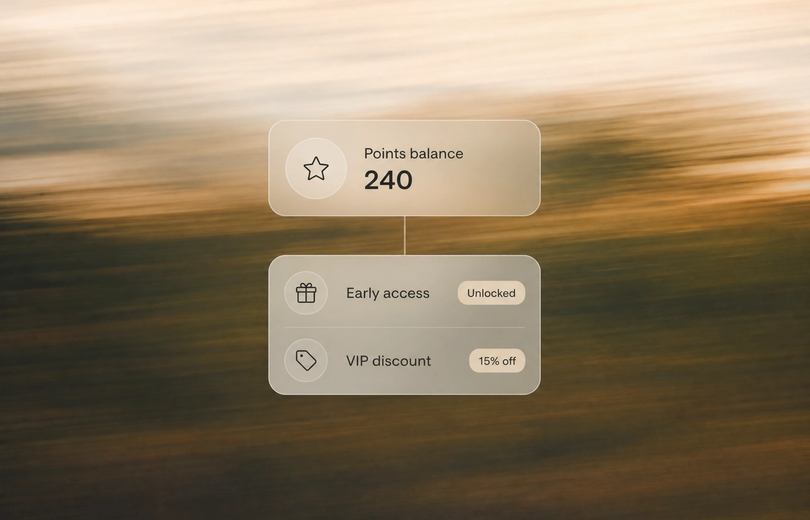
Early access to new products or sales. Exclusive content (styling guides, tutorials, product stories). Community features like forums or member-only groups. Birthday acknowledgments or surprise gifts on milestone purchases. Public recognition of top referrers.
These don't dilute margins. They cost you almost nothing to deliver. Yet they build emotional connection—the kind that drives lifetime value more reliably than a one-time 10% off coupon.
Free loyalty apps now support a mix of rewards. You're not locked into points and discounts alone. The best merchants layer in these complementary mechanics, especially during the free-tier phase when budget is constrained.
The Shopify loyalty program growing brands trust
See how Mage helps Shopify brands lift repeat purchase rate with loyalty, referrals and store credit.
Book a demoHow to Choose the Best Free Shopify Loyalty App for Your Store
The landscape of free loyalty apps is crowded. Mage, Smile.io, BON Loyalty, Rivo, Joy, Growave—each solves the problem differently. How do you pick?
Start with clarity about your own constraints and goals.
Step 1: Define Your Loyalty Goals
What problem are you actually solving? Are you losing repeat customers to competitors? Do you want more referrals? Is your AOV stagnant? Are you building community?
A points-for-purchase program solves repeat purchase problems. A referral-heavy program targets acquisition. Tiered programs address AOV. Community-focused features build long-term retention.
You can't optimize for everything with a free tier. Pick your primary goal. Then evaluate apps against that goal first.
Step 2: Understand Essential Free Features
Every decent free loyalty app includes these:
Points and Rewards: Customers earn points for purchases, account creation, social actions, or referrals. They redeem points for discounts, store credit, or free products. This is table stakes.
Referral Program: A way for customers to earn points by referring friends. Critically important for acquisition on a budget.
Customization: Can you brand your loyalty page and widgets to match your store? Limited customization is fine initially, but total white-label removal is a red flag.
Ease of Setup: How long to go live? Is configuration intuitive? Can your team manage ongoing changes without developer help?
Shopify Integration: Does it sync customer data, purchase history, and segments? Poor integration means work-arounds and manual processes.
Basic Analytics: Can you see enrollment, redemption rates, and program ROI? Even limited dashboards tell you if the program is working.
Not every app excels at all six. Decide which matter most to you. A store focused on referrals might tolerate weaker analytics if referral mechanics are exceptional.
Step 3: Evaluate Free Plan Limitations
Every free tier has boundaries. Common ones:
Order limits (program stops tracking after X orders monthly). Member caps (only Y active members allowed). App branding (your loyalty page displays the vendor's logo). Feature restrictions (points work, but tiers or referral bonuses don't). Analytics restrictions (you see raw numbers but not cohort analysis or lifetime value breakdowns).
None of these are dealbreakers if they fit your current stage. A startup with 50 monthly orders won't hit an order limit. A brand with 100 loyalists can thrive under a 500-member cap.
The risk is growth. If you're scaling fast, a low cap becomes a ceiling. Understand the upgrade path before committing. Some apps charge reasonably as you scale. Others become prohibitively expensive.
Step 4: Read Reviews and Check Support
User-generated reviews on the Shopify App Store are brutally honest. Look for patterns. Do customers complain about customer service? Bugs? Confusing setups? Those issues compound over time.
Free plans shouldn't get second-class support. If you see reviews saying "I can't reach support for basic questions," move on. A loyalty program is only valuable if you can troubleshoot when it breaks.
Step 5: Consider Your Future Growth
Pick an app whose free tier fits today but whose paid tiers make sense for tomorrow. If the free tier costs $0 but upgrading to the next plan costs $500/month, you're setting yourself up for sticker shock later.
The best platforms scale gradually: free, then $49/month, then $99/month, then custom pricing. Avoid platforms with wide pricing gaps.
“Great app! User friendly and straightforward. The customer service team has been great and so helpful.”


Read the SKYNBIO case study →
Top Free Shopify Loyalty Programs for 2026: A Detailed Guide
Mage Loyalty: Your Foundation for Growth
Mage Loyalty program is a Shopify-native platform built specifically for stores that want a balance between power and simplicity. The free tier covers core functionality: points for purchases, account creation, social actions, and a referral program. Customization is strong even in the free version—you control colors, fonts, and page layout to match your brand.
Setup is fast. Most merchants go live in under 30 minutes. The dashboard shows you real-time activity: points earned, redemptions, referral performance, VIP tier progression.
The customer experience is smooth. Your buyers see a loyalty widget on the product page and cart. Earning points feels immediate and tangible. Redemption is frictionless—points convert to discounts and apply automatically at checkout.
Free tier limitations are modest. You get basic analytics. Advanced segmentation (if you want to reward customers differently based on purchase history) requires upgrading. VIP tiers and points expiry rules are available at paid tiers.
Best for: Small to mid-sized Shopify stores looking for comprehensive free functionality with room to upgrade as you grow.
Smile.io: Popular and Versatile
Smile.io has been the loyalty default for many Shopify stores since the mid-2010s. It's recognizable, trusted, and available on the free tier with points, referrals, and VIP levels.
The free version is genuinely limited compared to Mage. You get basic points. You get a simple referral program. But customization is restricted—Smile.io branding appears on your loyalty page by default. Advanced features like tiered rewards or complex earning rules are locked behind paid plans.
The interface is clean. Setup is straightforward. Customer experience is adequate, though not exceptional.
Free tier limitations are significant. Member caps. Order limits. Heavy app branding. Analytics are surface-level. If you outgrow the free plan, stepping up to their Growth plan ($49/month) unlocks more functionality, but the jump is steep.
Best for: Merchants comfortable with a recognizable platform and willing to upgrade quickly if the free tier becomes constraining. Popular in beauty and fashion.
BON Loyalty: Global Reach and Core Features
BON Loyalty differentiates on one critical feature: multi-language support. Over 250 languages out of the box. If you sell internationally or have a geographically diverse customer base, this is a massive advantage.
The free tier offers points for purchases and a basic referral program. Customization is limited. Analytics are minimal. But the platform is simple to use, and it handles currency conversion smoothly.
You're paying for international capability, not advanced features. If that's your need, BON is excellent value.
Free tier limitations: No VIP tiers on free. No advanced segmentation. Basic analytics only. Branding is present.
Best for: International stores or multi-language brands prioritizing accessibility over feature depth.
Rivo: Streamlined and Effective
Rivo takes the opposite approach to Mage. Instead of trying to pack features into the free tier, Rivo keeps it deliberately simple. You get points for purchases. You get a referral program. That's it. No VIP tiers. No complex earning rules.
This simplicity is the strength. For stores that don't want to overthink loyalty, Rivo is frictionless. Setup takes 10 minutes. Customers understand it immediately. It works.
The free tier is genuinely free—no crushing limitations. You can run a full loyalty program with hundreds or thousands of members. Analytics are basic but sufficient.
When you upgrade ($49/month typically), you unlock VIP tiers, tiered rewards, and deeper customization. The upgrade path is reasonable.
Best for: Merchants who value simplicity and prefer a clean, minimal interface over feature richness.
Joy Loyalty: Simplicity for Startups
Joy is purpose-built for new Shopify stores and micro-businesses. The free tier is extremely limited by design—you get basic points and a simple rewards structure. No referrals on free. No VIP. Just points in, discounts out.
But the simplicity is the appeal. If you're just starting and want to dip your toe into loyalty without complexity, Joy is there.
Free tier limitations are severe if you want referrals or advanced mechanics. But if you just want a points counter, it's good.
Best for: Brand new Shopify stores testing loyalty for the first time, with minimal transaction volume.
Growave: All-in-One Engagement
Growave bundles loyalty with reviews, wishlists, and referrals into one app. The free tier includes basic loyalty mechanics plus review collection and a wishlist widget. The idea is that by consolidating tools, you reduce app bloat and manage customer engagement in one place.
This works well if you want to collect social proof (reviews) and drive loyalty simultaneously. The reviews app alone is valuable for conversion optimization.
Loyalty features specifically are competitive with other free tiers. Customization is moderate. Analytics are basic.
Free tier limitations: Advanced features locked behind paid. Review automation limited on free. Single-language support.
Best for: Stores wanting to bundle loyalty with review collection and simplify their app ecosystem.
Other Notable Apps
TrustWILL Loyalty & Referrals, Bloop, and Froonze also offer free tiers. Each is simpler than the platforms listed above, with fewer features but lower overhead. They work best for very small stores with minimal transaction volume.
Comparison of free features across platforms:
| Platform | Points | Referrals | VIP Tiers | Customization | Multi-Language | Best For |
|---|---|---|---|---|---|---|
| Mage Loyalty | Yes | Yes | Paid | Strong | Yes | Comprehensive free tier |
| Smile.io | Yes | Yes | Yes | Limited | Limited | Recognizable platform |
| BON Loyalty | Yes | Yes | No | Limited | 250+ languages | International stores |
| Rivo | Yes | Yes | No | Moderate | Limited | Simplicity-focused |
| Joy | Yes | No | No | Limited | Limited | Brand new stores |
| Growave | Yes | Yes | No | Moderate | Limited | All-in-one engagement |
Unlocking Full Potential: Strategies for Maximizing Free Loyalty Programs
You've chosen your app. Now you need to actually use it to move the needle.
Most merchants set up a loyalty program and then neglect it. They assume it runs itself. It doesn't. The free tier especially requires active management and strategy to perform.
Tailoring to Ultra-Small Businesses
If you're running on a tight budget with limited staff, focus ruthlessly on what drives ROI.
The referral program is your superpower. Referrals cost you almost nothing. A customer who brings in three friends is worth ten times the discount you gave them. Make referral mechanics visible, easy, and rewarding. Promote the referral offer in your post-purchase email, on your homepage, and in the loyalty widget.
Hyper-personalization doesn't require advanced segmentation. Manual tracking works. Identify your top 20 customers. Send them personalized notes thanking them for their loyalty. Early-access them to new products. These touches compound.
Maximize basic earning actions. Not every action needs to be a purchase. Award points for account creation, email signup, social media follows, birthdays, or review submissions. These low-friction actions build engagement momentum.
Creative Customization on a Budget
Limited customization options don't mean you're stuck with a generic look.
Write compelling loyalty page copy. "Join our rewards club" is forgettable. "Every purchase brings you closer to exclusive access and insider perks" creates aspiration. Spend 30 minutes refining your program description. It moves the needle.
Use available design elements strategically. Even limited color and font options can match your brand if you're intentional. Pick your primary color. Pick one accent. Stick to it. Consistency builds brand recognition even within a constrained design.
Showcase your loyalty program prominently. Place the widget above the fold on your homepage. Add a dedicated loyalty page. Mention the program in your navigation menu. Most customers don't enroll because they don't know it exists. Visibility is half the battle.
Ensuring a Seamless Customer Experience with Free Apps
Clarity matters more than features. If customers don't understand your program, they won't use it.
Explain the earning math clearly. "Earn 1 point per dollar spent" is transparent. Hidden point multipliers or confusing tiers create confusion and resentment.
Streamline the redemption path. How many clicks from points balance to discount application? The fewer, the better. Friction kills redemption rates. If redemption is hard, customers leave points on the table and never return.
Make the loyalty program easy to find. A hidden widget buried below the fold won't convert. Place it on every product page, in your header, in your email signature. Remove friction by making enrollment a single-click process where possible.
Common Challenges with Free Loyalty Apps and How to Overcome Them
The free tier isn't perfect. Understand the challenges upfront and plan for them.
Challenge 1: Limited Features & Functionality
The free tier won't have every bell and whistle. You might not get VIP tiers, points expiry rules, or advanced segmentation.
Solution: Focus on what you do have. A points-for-purchase + referral program is actually sufficient for most small stores. Master these before craving advanced features. Many merchants upgrade unnecessarily because they think complexity equals effectiveness. It doesn't.
Challenge 2: App Branding on Your Loyalty Page
Some free tiers display the app vendor's logo or link on your loyalty page. This feels like giving them real estate in your storefront.
Solution: Frame it as partnership, not compromise. Or migrate to a platform without branding requirements if this bothers you. Mage, Rivo, and a few others don't add branding to free tiers.
Challenge 3: Hitting Member or Order Limits
Your store grows. You hit the free plan's member cap or monthly order limit. The program stops functioning.
Solution: Monitor your metrics monthly. As you approach limits, budget for an upgrade. Most platforms charge reasonably for scaling. Know the exact costs before hitting the wall so you're not surprised.
Challenge 4: Basic Analytics and Reporting
You can't slice data by cohort. You don't see customer lifetime value impact. You just see raw enrollment and redemption numbers.
Solution: Supplement with Shopify's built-in analytics. Compare repeat purchase rates before and after launching loyalty. Even crude measurement tells you if the program works. This is enough to justify upgrading later if needed.
Challenge 5: Integration Hurdles
The free loyalty app might not integrate with Klaviyo, Omnisend, or your SMS platform. This limits your ability to automate loyalty communications.
Solution: Prioritize apps with essential integrations. Email marketing integration is critical. SMS integration is nice-to-have. Most free tiers support basic email sync. Verify this before choosing.
Challenge 6: Security and Data Privacy Concerns
You're trusting a vendor with customer data. Even free apps have responsibilities.
Solution: Review the vendor's privacy policy and security certifications before installing. Check their data retention practices. Understand where customer data is stored. This matters more than the price you're paying. A breach costs far more than any loyalty software subscription.
The "When and Why" to Upgrade Your Loyalty Program
The free tier is a foundation. At some point, scaling requires upgrading. Knowing when saves frustration and prevents revenue leakage.
Signs It's Time to Scale
You're hitting member caps or order limits regularly. You're losing functionality because the app branding bothers your customers. You want VIP tiers or tiered rewards but the free tier doesn't support them. You need advanced segmentation to personalize by customer behavior. You want to set points expiry or tiered earning rates.
These signals suggest you've outgrown the free tier. Upgrade.
But also: You still get decent results from the free tier but want incremental improvements. You're not in crisis mode. You're ready to invest in optimization.
Calculating the Return on Investment (ROI)
Before upgrading, quantify the impact. Pull three months of data from your free tier.
How many repeat customers did you get that month? How much did they spend? Compare that to a baseline (pre-loyalty period or a control group without loyalty). Calculate the incremental revenue loyalty drove.
If you earned $5,000 in incremental repeat revenue and the loyalty upgrade costs $100/month, the math is clear. If you drove $500 in incremental revenue and the upgrade costs $150/month, reconsider.
Calculate loyalty program ROI to know if an upgrade makes sense before committing.
Overview of Potential Costs
Loyalty app pricing typically works one of three ways:
Per-member pricing: You pay based on active loyalty members. Scales gradually. Usually $0-$50/month for small stores.
Per-order pricing: You pay based on transactions tracked. Works well if you have high transaction volume. Usually $50-$200/month depending on scale.
Feature-based pricing: You pay for access to features (VIP tiers, advanced analytics, etc.). Fixed pricing. Usually $49-$299/month.
Most platforms use a blend. Understand which model applies to your upgrade path. Explore Mage Loyalty pricing and compare to competitors before deciding.
Making a Smooth Transition
If you upgrade within the same platform, migration is seamless. Your customer data, points balances, and program history move over automatically.
If you switch platforms, it's more complex. Export your customer list and points history from your old platform. Import into the new one. Test that data transferred correctly. Notify customers of any changes to the program. A smooth transition preserves trust.
Frequently Asked Questions About Free Shopify Loyalty Programs
What is the real difference between a points program and a VIP program?
Points programs reward all customers equally: earn 1 point per dollar, redeem 100 points for $10 off. VIP programs stratify rewards. You move through tiers (Bronze, Silver, Gold) and unlock better rewards at each level. Points programs are simpler and scale to all customers. VIP programs create aspiration and drive higher spending. Both work. VIP is better if your goal is AOV. Points is better if your goal is repeat purchase frequency.
How long does it take to see results from a loyalty app?
Enrollment and first actions happen immediately if you promote it. Real results—measurable changes in repeat purchase rate or AOV—typically show up after 6-12 weeks of active member participation. Give the program time to build critical mass before judging its impact.
Can a loyalty program hurt my profit margins?
Yes, if you're reckless. Giving away 20% discounts to every customer erodes margin. But strategic loyalty programs actually improve margins. You're concentrating discounts on repeat customers and high-value actions, reducing the need for broad discounting. The net effect is better unit economics.
What's the biggest mistake brands make when launching a program?
Lack of promotion. Most merchants build the program and assume customers will discover it. They won't. Your loyalty program needs to be visible on your homepage, in emails, at checkout, and in your social media. Allocate at least 20% of your launch energy to promotion.
TLDR
Free Shopify loyalty programs now pack enough features to drive real retention and ROI for small merchants. Platforms like Mage Loyalty, Smile.io, Rivo, and BON Loyalty offer points, referrals, and basic customization without upfront cost. Choose based on your primary goal—repeat purchases, referrals, or international reach—and commit to active promotion and strategic reward design. The free tier is enough to validate loyalty ROI; upgrade only when you hit clear limits or need advanced segmentation.

Graeme is the co-founder at Mage Loyalty. He heads product development, from complex loyalty migrations and large-scale data handling to building the features shaping the future of loyalty on Shopify.