Boost Shopify Add-to-Cart Rates: 15 Strategies That Actually Work in 2026

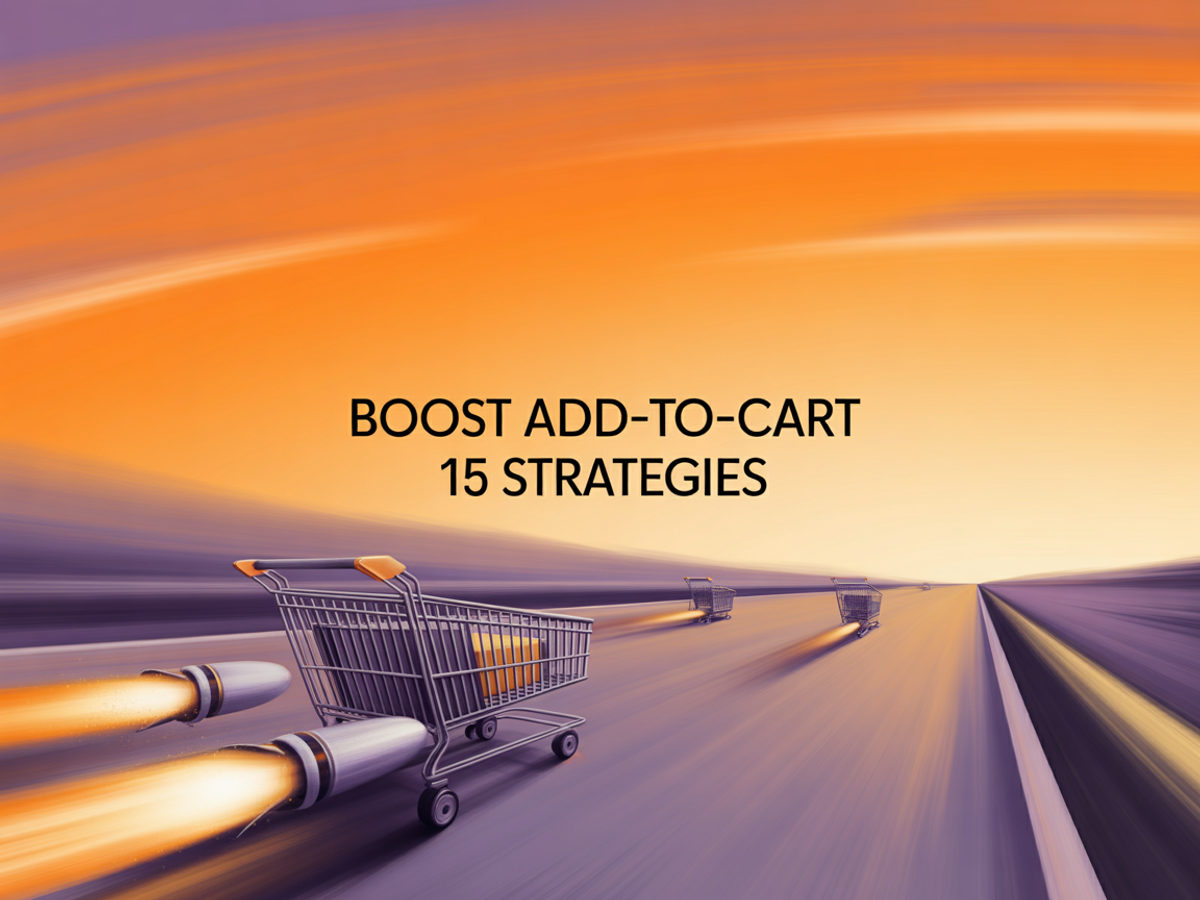
Your Shopify store visitors are filling their carts. Then they're abandoning them. Almost seven out of ten online shoppers add items to their carts but never complete the purchase—a problem that costs ecommerce brands billions annually.
The harsh truth? A high traffic volume means nothing if your add-to-cart rate is struggling. Most merchants obsess over driving more visitors while ignoring the friction that prevents those visitors from even taking the first conversion action: adding a product to their cart.
This is where most optimization guides get it wrong. They focus heavily on checkout friction. But the real leverage point sits earlier—on your product pages, where the decision to add (or skip) an item happens in seconds.
In 2026, the merchants winning aren't just driving traffic. They're converting that traffic into cart additions. Then they're converting those carts into orders.
This guide reveals 15 proven strategies to boost your Shopify add-to-cart rates, including one contrarian approach that challenges conventional loyalty wisdom. You'll learn what the data actually shows, how to implement changes immediately, and where most stores are leaving money on the table.
Understanding Your Shopify Add-to-Cart Rate
Your add-to-cart rate measures the percentage of store visitors who add at least one item to their cart. It's calculated simply: (total add-to-cart events / total store visitors) × 100.
This metric matters because it's the first real conversion action in your funnel. Someone who adds an item to their cart has already decided—at least tentatively—that your product solves a problem they have. They've moved past skepticism. They're considering a purchase.
The global average add-to-cart rate for ecommerce sits around 7.9% as of 2023, though Shopify stores consistently outperform the broader market. Top-performing Shopify merchants regularly achieve rates between 12-20%, depending on product category and price point.
Here's what matters: every 1% increase in your add-to-cart rate, holding everything else constant, translates directly to revenue. A store with 50,000 monthly visitors and a $100 average order value can generate an extra $50,000 in monthly revenue by moving from a 1.5% to a 2.5% add-to-cart rate. That's not theoretical. That's real money lost every month your rate stays flat.
The strategies below are organized by category, building from product page optimization through advanced analytics—each designed to remove friction at the exact moment a customer decides whether to add your product to their cart.
Optimize Your Product Pages for Conversion
Your product page is the salesperson for that item. Everything here determines whether a visitor becomes a cart addition.
Craft Irresistible Product Descriptions
Most product descriptions list features. "100% cotton. Machine washable. Available in five colors."
Customers don't care about features. They care about what the product does for them. The difference is subtle but massive.
Strong descriptions connect features to benefits through storytelling. Instead of "moisture-wicking fabric," write "stays dry during your morning run, so you can focus on your pace, not your sweat." Instead of "ergonomic design," show how the shape supports your posture during eight-hour workdays.
Address the specific pain points your ideal customer experiences. If you sell skincare, don't describe the formula. Describe the feeling of confidence when your skin finally looks the way you want it to. If you sell productivity software, don't list the features. Describe the relief of actually finishing your to-do list.
Work relevant keywords naturally into descriptions—"best running shorts for summer" or "moisture-wicking workout gear"—without sacrificing readability. Google rewards thorough, helpful content. So do humans.
Dazzle with High-Quality and Interactive Visuals
A single product image isn't enough anymore. Professional product photography from multiple angles is baseline. Add product videos showing the item in action—someone wearing that jacket in different weather, someone using that kitchen tool to actually prepare a meal.
360-degree views let customers rotate products virtually. Augmented reality features (available on Shopify through apps like Snapchat's AR lens integration) let customers visualize products in their own space before buying.
But here's what really moves the needle: user-generated content. Real photos from real customers wearing your clothes, using your products, living with your items in their homes. These images convert 6x more effectively than professional product photos alone because they answer the question every hesitant customer asks: "How will this actually look on me?"
Make Your "Add to Cart" Button Impossible to Miss
Your CTA button should be the most prominent element on your product page after the product image itself. Place it above the fold (visible without scrolling). Use a color that contrasts sharply with your page background. Make it large—minimum 50 pixels tall, full width on mobile.
The button copy matters. "Add to Cart" works. "Add to Bag" works. Avoid vague language like "Buy Now" or "Continue." You want the action crystal clear.
On mobile, this button should span the full width of the screen and remain sticky as customers scroll. A customer who scrolled through your description and decided to buy shouldn't have to scroll back up to find the CTA.
Proactive Pre-Purchase Support with Comprehensive FAQs
Most customers abandon carts because they have a question they can't answer. They don't know the fit. They're uncertain about materials. They're wondering if something is compatible with their current setup.
Anticipate these questions before they cause abandonment. Create a detailed FAQ section right on the product page covering:
- Sizing (include detailed size charts and fit guidance—"runs small," "true to size," etc.)
- Material composition and care instructions
- Compatibility information (will this work with X? Can I use it if I have Y condition?)
- Shipping and delivery timeframes
- Warranty and return policies
- Assembly requirements or setup time
Make customer support visible and accessible. Live chat, email, or phone support near the product page removes friction for the uncertain customer. Even the presence of these options (customers often don't use them but feel reassured knowing they exist) increases cart additions.
One underrated tactic: add reassuring micro-copy throughout the page. Near your CTA, write "Questions? Chat with us in seconds" or "Free returns within 30 days." These small statements dissolve hesitation at the critical moment.
Ready to increase customer lifetime value?
Join 100+ Shopify stores using Mage to turn one-time buyers into loyal repeat customers.
Build Unwavering Trust and Credibility
Trust is the currency of ecommerce. Without it, no product is worth buying.
Harness the Power of Authentic Social Proof
About 72% of people read customer reviews before making a purchase decision. But not all reviews are created equal. A five-star rating with no detail carries almost no weight. A detailed review with photos changes minds.
Integrate integrated reviews and loyalty platforms like Judge.me or Loox to make collecting and displaying photo reviews effortless. These apps automatically request reviews post-purchase, then showcase photos from real customers using your products.
Photo reviews are 3x more likely to influence purchase decisions than text-only reviews. They answer the unspoken question: "How will this actually look on people like me?"
Beyond individual reviews, feature customer testimonials, case studies, or influencer endorsements where relevant. A beauty brand might highlight "Before & After" customer photos. A software company might showcase case studies from recognizable companies using their platform.
Display Clear Trust Signals and Assurances
Certain visual elements signal safety and legitimacy. Security badges (Norton, McAfee, SSL certificates) near your checkout button matter. So do payment method logos showing customers you accept their preferred payment option.
Money-back guarantees reduce perceived risk dramatically. Clearly state your return window: "30-day no-questions-asked returns" outperforms vague language like "easy returns." Detail your return shipping process. Do you prepay return shipping? That's worth highlighting.
Add micro-copy near your CTA that speaks directly to customer concerns: "Secure Checkout," "Your payment is protected," "Hassle-free returns." These tiny reassurances compound into measurable lift in add-to-cart rates.
Deliver a Seamless and Engaging Shopping Journey
Speed, mobile experience, and navigation deserve their own focus. These factors directly impact whether visitors even stay on your product page long enough to consider adding items to their cart.
Accelerate Your Store's Performance
Over 40% of shoppers will abandon a website that takes more than three seconds to load. Not three minutes. Three seconds.
Compress images without losing quality. Audit your app ecosystem—each installed app adds code that slows your store. Remove unused apps ruthlessly. Choose a lightweight, fast-loading Shopify theme. The difference between a bloated theme and an optimized one is easily 1-2 seconds in load time.
Test your store speed using Google PageSpeed Insights. Aim for page load times under 2.5 seconds. Every half-second improvement shows measurable increases in cart additions, especially for price-sensitive products.
Prioritize a Flawless Mobile Shopping Experience
Most of your traffic comes from mobile devices. Your product page must be fully responsive, with text readable without pinch-zooming, buttons easily tappable without accidentally hitting adjacent elements.
Mobile payment options matter significantly. Shop Pay boosts conversions by up to 50% over traditional guest checkout, outpacing other accelerated checkout methods by a wide margin. Make Shop Pay, Apple Pay, and Google Pay prominent payment options.
Optimize forms for mobile data entry. Single-field entry is easier than dropdown menus on small screens. Confirm phone numbers and email addresses clearly to prevent errors that trigger cart abandonment.
Simplify Navigation and Enhance Product Discovery
Your navigation should be intuitive enough that first-time visitors understand where they are and where to go next. Sticky navigation that remains visible as customers scroll removes friction when they want to explore other products.
Implement smart search functionality with filters. Shoppers using filters or search are four times more likely to convert than those browsing without these tools. Filters should be specific to your products—color, size, price, material, style—not generic categories.
Clear breadcrumb navigation ("Home > Women > Jackets > Winter Jackets") helps customers understand where they are in your store and find related products easily.
Implement Smart Incentives and Strategic Urgency
Incentives and urgency work. They also get misused constantly, which is why understanding how to implement them ethically matters.
Master Strategic Free Shipping and Transparent Policies
Free shipping is one of the most powerful add-to-cart motivators. Customers see the potential for free shipping and add products to reach that threshold.
Set your free shipping threshold at roughly 1.5x your average order value. If your AOV is $60, offer free shipping at $100. This encourages customers to add more items to qualify for free shipping—increasing both cart additions and order value.
Clearly display shipping costs early in the shopping process. If shipping costs $15, show this before the customer reaches checkout. Surprises kill conversions. Transparency builds them.
Ethically Leverage Urgency and Scarcity
Genuine low-stock alerts work: "Only 3 left in stock." Fake ones destroy trust instantly.
Limited-time offers with countdown timers create urgency. "This price expires in 2 hours" motivates immediate action. Ensure these offers are genuine. Countdown timers that reset every time a visitor returns to the page signal dishonesty.
Craft urgency copy that's compelling without being manipulative: "Popular item—we frequently sell out" beats "Everyone's buying this!!!!" The first feels honest. The second feels desperate.
Personalize the Shopping Experience and Recommendations
Tailor product recommendations to individual customer behavior. Show recently viewed items, frequently bought-together products, or items similar to what customers are browsing.
Dynamic content that adapts to individual preferences increases relevance. A customer browsing winter activewear should see winter-specific recommendations, not summer styles.
For returning customers, use purchase history to personalize their experience. Someone who bought running shoes should see running gear recommendations, not hiking equipment.
Rethinking Initial Loyalty: Beyond Generic Points for High-Value ATC
Here's where most guides diverge from reality.
The conventional wisdom says: offer immediate loyalty points for adding items to your cart, even for first-time visitors. Small incentives like "earn 5 points on every add-to-cart" supposedly remove friction.
This approach has a fatal flaw. It attracts deal-seekers, not loyal customers. Someone who only adds items to their cart because they'll earn five points doesn't care about your product or brand. They care about the points. And worse, this strategy devalues your product in their mind—the product becomes secondary to the incentive.
For brands building sustainable businesses with higher-value customers, the opposite approach works better. Instead of bribing cart additions, focus on demonstrating intrinsic value.
Show clearly why this product is worth buying. Address every objection and question before it becomes a barrier. Create value through exceptional pre-purchase support (as covered earlier). Then, offer value-adds that enhance the relationship without discounting the product itself.
Instead of "earn 5 points for adding to cart," consider "add this to your cart and get early access to next week's new collection" or "add this item and download our free styling guide for this season." These leverage psychological principles like reciprocity and commitment, building genuine relationships instead of transaction-focused behavior.
This approach naturally filters for customers who value quality and community, not just discounts. Your repeat customer rate increases. Your customer lifetime value increases. Your margins stay healthy.
Explore this concept deeper with our guide to loyalty programs to understand how post-purchase loyalty differs from pre-purchase incentives.
Optimize Your Cart and Checkout Flow
Getting customers to add items is only half the battle. The journey from cart to purchase matters equally.
Simplify and Optimize Your Cart Page
Your cart page is where abandoned carts happen. Design it for clarity and confidence, not for upselling.
Customers should instantly see: what items are in their cart, quantities, individual prices, and total cost. Allow easy editing—customers want to adjust quantities or remove items without jumping through hoops.
Subtle cross-sell opportunities work (customers often accept relevant recommendations), but don't make them the focus. Your goal is moving customers to checkout, not distracting them.
State the total cost, including shipping and taxes, clearly. Surprises at the final step trigger cart abandonment. Transparency throughout the journey prevents this.
Decode User Behavior with Advanced Analytics
This is where most merchants miss the biggest opportunities.
Implement behavior analytics tools—heatmaps, session recordings, user interaction tracking—to see exactly where customers hesitate. A heatmap showing zero clicks on your CTA button signals something about that button isn't working (wrong color? Wrong copy? Wrong placement?).
Session recordings reveal the actual customer journey. You'll see customers hovering over your CTA, moving their cursor away, reading the FAQ section again, then leaving. This pattern tells you your FAQ isn't answering a critical question. Fix that question, and add-to-cart rates increase.
Use these tools to identify specific friction points:
- Where are customers spending time? (High engagement indicates interest)
- Where are they leaving without scrolling further? (Potential friction point)
- Which CTAs get ignored? (Design, copy, or placement issue)
- What questions appear in support tickets from customers who abandoned carts? (Answer these on the product page)
Conduct regular A/B testing. Test different CTA button colors, copy variations, product image arrangements, description lengths. Small changes compound. A 10% improvement in add-to-cart rate from optimized button placement plus a 5% improvement from better descriptions equals a 15% total improvement.
Frequently Asked Questions
What is a good add-to-cart rate for a Shopify store?
While the global average hovers around 7.9%, a "good" rate varies significantly by industry and product type. Fashion and accessories brands typically see higher rates (12-18%) because products are lower-priced and familiar. Higher-priced items like furniture or electronics see lower rates (5-10%) because customers need more consideration time. Set your initial goal at 10% or higher. Once you achieve that, optimize toward 15%+. Top performers in your category likely exceed 20%.
How can I quickly identify why customers aren't adding items to cart?
Start with heatmaps and session recordings using tools like Hotjar or Clarity. These show you exactly where users hesitate before abandoning your page. Look for patterns: Do users spend time on your CTA but don't click? Color or copy issue. Do they read your FAQ section repeatedly? Missing critical information. Do they leave immediately after viewing the first image? Image quality or product presentation issue. Cross-reference this data with your support tickets—customers who contact support before abandoning cart are telling you what questions need answering on your product page.
Are pop-ups effective for increasing add-to-cart rates?
Exit-intent pop-ups that trigger when customers move toward leaving can be effective, especially when offering genuine value: "Wait—here's a sizing guide for this item" or "Need help deciding? Chat with our team." Generic discount pop-ups ("Get 10% off!") often trigger cart abandonment because they train customers to wait for discounts. Use pop-ups strategically to remove friction, not to push aggressive incentives. A well-timed, helpful pop-up can increase add-to-cart rates. A poorly executed one damages trust.
What Shopify apps are best for boosting add-to-cart rates?
Several categories of apps drive measurable improvements. Review platforms such as Mage Loyalty, Judge.me, and Loox boost trust through social proof. Urgency apps like Fomo or Urgency & Social Proof create genuine scarcity signals. Personalization platforms like ReConvert tailor product pages to individual visitors. Speed optimization apps like Minify or TinyIMG compress images and code. The best approach: identify your biggest friction point (trust? urgency? speed? personalization?), choose the best app for that specific problem, and measure the impact before adding additional tools.
TLDR
Your add-to-cart rate determines whether traffic converts or vanishes. The 15 strategies above—optimized product pages with compelling descriptions and visuals, authentic social proof, mobile-first design, strategic shipping policies, ethical urgency tactics, and data-driven optimization—directly remove friction at the moment customers decide whether to add items to their carts. Start with your highest-traffic product pages, implement the three strategies with the biggest potential impact for your business, measure results for two weeks, then iterate. Every 1% improvement in add-to-cart rate translates to significant revenue increases.