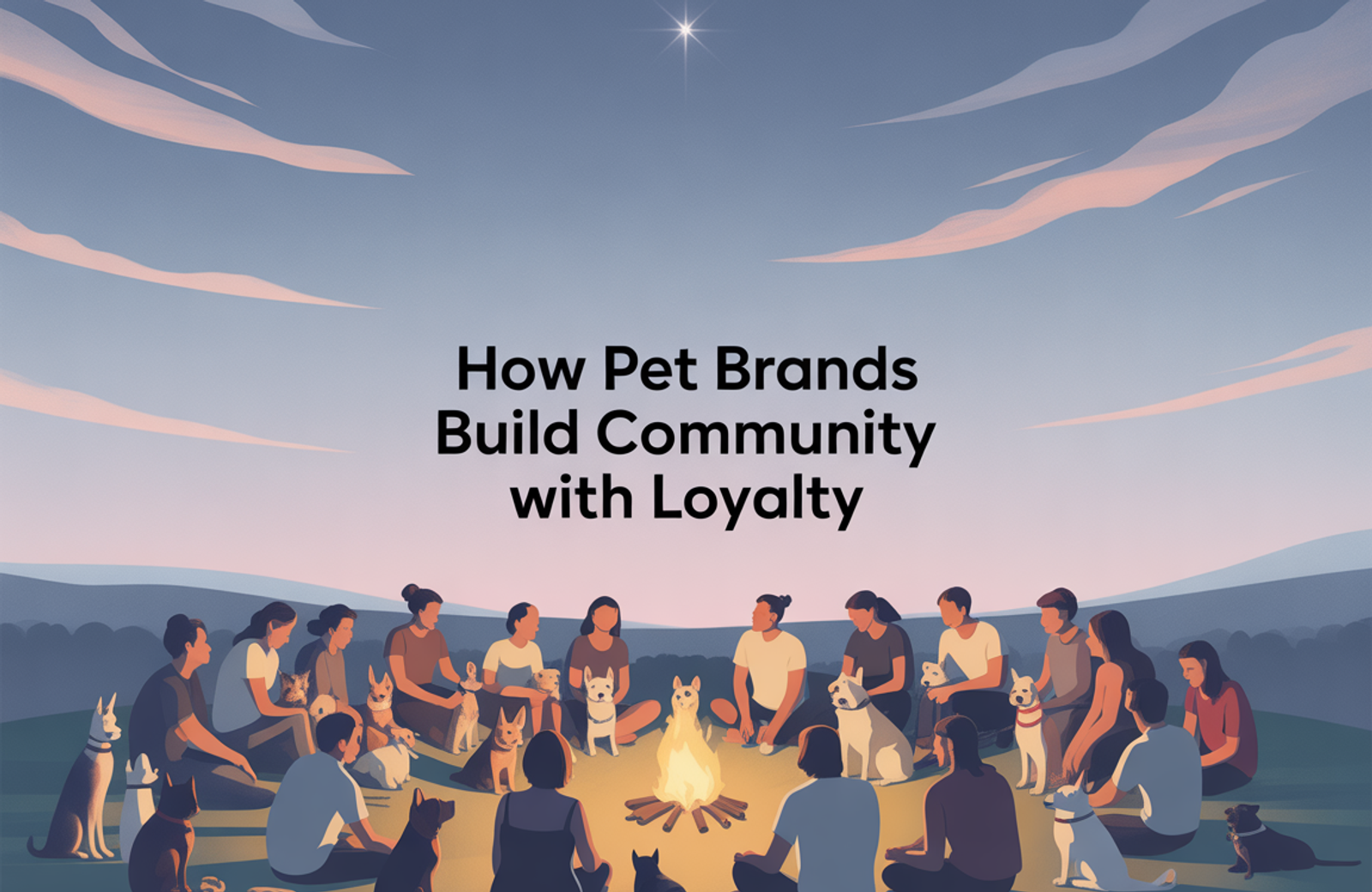
Most pet brands are making a critical mistake when it comes to building community. They're confusing reach with relationship. A brand with 50,000 Instagram followers and a basic points-based loyalty program assumes they've built a community. They haven't. They've built an audience. These are two fundamentally different things, and the distinction matters enormously for your bottom line.
A real community isn't passive. It's not people who occasionally see your content or snap up a discount. A real community is pet parents who actively engage with each other, create content about your brand without being asked, refer their friends because they genuinely believe in what you're doing, and stay loyal even when competitors undercut your prices. That's the difference between running a store and building something that lasts.
The pet care market is booming. Global pet industry spending reached $320 billion in 2024 and continues climbing toward half a trillion by 2030. But here's the problem: everyone's chasing that growth. Pet product companies are clawing for attention with flashy ads, influencer partnerships, and aggressive discounts. In that chaos, the brands that will win aren't the ones with the loudest megaphone. They're the ones with the most devoted pack behind them.
This article reveals exactly how to build that pack. We're not talking about vague community-building platitudes. We're talking about specific loyalty program features, designed with intention, that transform customers into advocates who actively strengthen your brand ecosystem.
The Myth of the 'Accidental Community': Why Likes and Discounts Aren't Enough
Let me be direct: you cannot accidentally build a community through a basic loyalty program or a social media following. Yet countless pet brands operate under this exact assumption. They launch a points system, set up some Instagram posts, and expect community to materialize. It doesn't work that way.
This misconception runs deep. Brands see metrics like engagement rates and follower counts, interpret them as community signals, and assume their retention problem is solved. But engagement metrics measure attention, not belonging. A 13.1% engagement rate on a "spin-to-win" promotion is great for marketing. It's not a community. People will click for a chance at a discount. They won't stick around for you when another brand offers the same thing cheaper.
Think of it like this: a crowded concert venue isn't a fan club. There might be thousands of people in the room, but they're strangers. A real fan club, by contrast, is a smaller group of people who know each other's names, share why they care, and show up repeatedly not because they were tricked by a discount, but because they genuinely belong there.
The fundamental issue is that most loyalty programs are designed around transactions, not relationships. Brands ask themselves: "How do we get people to buy more?" Instead, they should ask: "How do we create belonging so that buying more becomes a natural expression of that belonging?"
Real community requires intentional design around shared experiences, peer recognition, emotional connection, and the ability for members to interact with each other. This doesn't happen by accident. It happens because you've specifically built features into your loyalty program to facilitate it.
Consider this insight from working with ecommerce brands: the brands that see loyalty program adoption rates above 40% aren't the ones with the biggest discounts. They're the ones where customers feel seen and celebrated. A pet parent's birthday present from your brand feels like a friend remembering what matters to them. A photo contest where other community members vote for the cutest puppy creates genuine interaction between customers. A shared charitable mission transforms a transaction into activism. These aren't minor touches. They're the infrastructure of community.
What Does 'Community' Mean for a Pet Brand?
Before we go further, clarity: what exactly are we talking about when we say "community"?
A community is a group of people who identify with each other based on shared values, mutual interests, or a common cause. Members recognize each other, support one another, and feel a sense of belonging that transcends the transactional. It's characterized by authenticity, reciprocity, and a shared identity that's distinct from the broader brand audience.
Think about it this way. An audience is one-directional. The brand broadcasts, and the audience consumes. A community is multi-directional. Members interact with the brand, but more importantly, they interact with each other. They create content for each other, recommend products to each other, solve problems for each other, and celebrate milestones together.
For pet brands specifically, this distinction carries extra weight. Pet ownership is deeply emotional. People don't just buy food or toys for their animals. They invest their identity in their pets. Your customers think about their dogs or cats constantly. They celebrate their birthdays. They worry about their health. They feel genuine grief when something goes wrong. That's the emotional substrate you're working with.
A community of pet parents isn't just people who buy pet products. It's people who see each other as fellow advocates for their animals' wellbeing. They're connected by a shared belief that their pets deserve the best care, and they trust your brand to help them provide it. They see your brand as a fellow believer in that mission, not just a vendor selling them things.
This is why pet brands have such a powerful advantage over other ecommerce categories. The emotional intensity around pet ownership creates natural community potential. You just have to intentionally design for it.
Why a Pet Parent Community is Your Brand's Best Friend
Building a community of engaged pet parents moves beyond marketing sentiment. It's a concrete business strategy with measurable financial and operational benefits.
Enhanced Customer Lifetime Value (CLV)
Emotional bonds between customers and your brand translate directly to spending. When a pet parent identifies as part of your community, they're not shopping around constantly. They're buying from you repeatedly and across more product categories. They're willing to pay slightly more because they trust you and feel connected to your brand's mission. Research on pet industry spending shows that community-driven retention creates purchasing patterns that sustain significantly higher lifetime values. The specific data on pet CLV benchmarks demonstrates how loyalty communities outperform transactional models by 30-40% in repeat purchase behavior.
Organic Advocacy and Word-of-Mouth
Community members become volunteer marketers for your brand. They refer friends, leave detailed reviews, create content featuring your products, and most importantly, they do it authentically. When a pet parent recommends your brand to another pet parent, it carries weight that no paid advertisement ever could. They're not being compensated. They're enthusiastically sharing something they believe in. This word-of-mouth effect is powerful enough that it directly reduces your customer acquisition costs while improving the quality of new customers you attract.
Resilience and Retention
Loyal communities show remarkable stickiness during economic shifts. Data from the pet industry shows that only 19% of pet owners trade down on product quality during inflationary periods, compared to 47% in the grocery sector. Why? Because pet parents prioritize their animals' wellbeing, and when they've identified with a brand community, switching feels like a betrayal of that community identity, not just a financial transaction.
Valuable Feedback and Innovation
Community members provide direct, honest input on what they need. Rather than relying on expensive market research, you have hundreds or thousands of pet parents telling you exactly what problems they're trying to solve. This feedback accelerates product development and helps you build offerings that actually resonate rather than guessing what customers want.
Competitive Differentiation
In a crowded market, community is your moat. Competitors can copy your product. They can undercut your price. They can't easily replicate the genuine relationships and shared identity that exist within a thriving community. A brand with a strong community is stickier, more defensible, and ultimately more valuable.
The Blueprint: How Loyalty Program Features Build Community
This is where we move from theory to mechanism. Specific loyalty program features, thoughtfully implemented, actively cultivate community. The mistake most brands make is treating these features as isolated marketing tactics rather than parts of an integrated system.
Photo Contests and User-Generated Content: From Submission to Shared Celebration
Photo contests seem simple: ask customers to submit photos, pick a winner, maybe feature some entries on your social media. But when designed for community, they become something entirely different.
The shift is moving from "content collection" to "shared celebration." A well-designed photo contest includes voting mechanisms where community members vote for their favorite entries. It includes a branded gallery where all submissions stay visible and celebrated. It treats participants as peers, not just content creators for the brand. When pet parents see their photos displayed alongside photos from other community members, something shifts. They recognize each other. They comment on each other's entries. They develop friendly connections around shared enthusiasm for your products.
The comprehensive UGC loyalty guide details how to structure these contests specifically for Shopify stores, turning submissions into genuine community interactions. For example, a photo contest called "Pet of the Month" isn't just collecting the cutest photos. It's creating a monthly celebration where community members vote, comment, and celebrate each other's pets. Winners receive recognition and rewards, but equally important is how participants feel like they're part of something bigger than a transaction.
Personalized Pet Profiles: Facilitating Connections Between Pet Parents
Many brands create pet profiles purely for their own marketing purposes. They collect information about a pet's breed, age, and food preferences to send targeted emails. That's valuable, but it's one-dimensional.
Community-focused pet profiles do something additional: they facilitate connections between pet parents. An opt-in feature within your loyalty program could allow pet parents to see brief profiles of other pets in your community. They can find others with similar breeds, discover training tips from people with older versions of the same breed, or simply connect with fellow lovers of a specific dog type. This transforms pet profiles from a data collection tool into a social feature.
Birthday and adoption anniversary celebrations work similarly. Rather than just sending a customer a discount code on their pet's birthday, community-focused programs turn it into a shared celebration. Perhaps the pet's birthday gets featured in a community calendar. Other members can leave birthday messages or recommendations for celebrating the occasion. The loyalty reward becomes a backdrop for a genuine community moment.
Celebrating Milestones, Communally: Beyond Individual Rewards
Traditional loyalty programs celebrate customer milestones individually: reach 500 points, get a discount. Community-focused programs celebrate shared achievements.
Consider a tiered loyalty structure where reaching certain tiers unlocks community benefits. A "Pack Leader" tier might include exclusive access to a private forum where the most engaged community members discuss pet care topics, share training successes, and help each other troubleshoot problems. This tier recognition isn't just about the individual customer. It acknowledges their contribution to the community and rewards them with deeper community access.
Gamified challenges amplify this further. A "Pet Wellness Challenge" might invite the entire community to track their pet's exercise, training, or health improvements over a month. Individual members earn rewards for their progress, but the community collectively celebrates reaching milestones. This creates a shared narrative where members feel like they're part of something together, not just competing against each other for rewards.
Seamless Social Sharing and Empowering Advocacy
Community members already want to share their enthusiasm. Your job is to make it frictionless. When a customer earns a reward, they should see a one-click button to share it on their social media. When they receive special recognition in your loyalty program, there should be a shareable badge they can post proudly. These small friction reductions multiply into significant amplification.
Building a strong referral program specifically for pet brands turns advocacy into a structural feature of your program. When both the referrer and the referred friend receive rewards, the referral process becomes a shared positive experience rather than a one-sided transaction. The referring customer feels valued for bringing someone into the community, and the new customer feels welcomed with rewards.
Branded hashtags amplify this further. When your community all uses the same hashtag across Instagram, TikTok, and other platforms, they become visible as a collective. They can find each other through the hashtag. They can see what's possible within your product ecosystem by browsing what their peers are doing. The hashtag becomes the marker of community membership.
Gamification and Interactive Challenges: Driving Group Participation
The Shopify gamification guide reveals how game mechanics fundamentally shift engagement from passive to active. Instead of simply earning points for purchases, community members earn points for participation in challenges. A "Training Tuesday" challenge might ask members to share a video of a training accomplishment. A "Pet Styling Challenge" could invite members to style their pets in creative ways.
Reward badges and leaderboards create friendly competition and recognition. These aren't heavy-handed or exclusive. Everyone who completes a challenge gets recognition. Higher participation might unlock different badge tiers, but the emphasis is on participation and recognition rather than scarcity and winners-and-losers.
The "spin-to-win" promotional mechanic mentioned in industry data achieves a 13.1% engagement rate because it's interactive and fun. When that mechanic is integrated into a community context, where members share their results and celebrate their wins together, it becomes even more powerful.
Charitable Giving and Social Responsibility: Uniting Around Shared Values
Pet owners, as a demographic, care deeply about animal welfare. This is a profound cultural value you can align your brand around.
When loyalty program points can be donated to animal shelters, or when a portion of purchases automatically supports rescue organizations, community members feel like they're collectively advancing a mission they care about. This isn't charity as a brand image play. It's community activism. The community is doing something together that matters to them.
Some brands take this further by letting the community vote on which causes to support. Others run volunteer event drives where community members coordinate together to help at shelters or rescue centers. This transforms the community from "people who like your products" into "people doing good work together as part of their connection to your brand."
Bringing It All Together: Applying Loyalty Programs to Cultivate Community
Understanding these features is one thing. Implementing them strategically is another. Here's how to apply this framework to your pet brand.
Crafting Your Loyalty Program Strategy for Community
Start with audience segmentation. Your community isn't monolithic. New puppy owners have different needs and interests than people with senior dogs. Pet parents in urban apartments face different challenges than those in suburbs. Tailor your loyalty benefits to resonate with specific segments.
Balance transactional rewards with emotional ones. Points and discounts work, but they're not enough. Celebrate milestones. Show recognition. Create experiences. A customer who only ever sees point earnings and discount redemptions doesn't feel like part of something. A customer who's celebrated on their pet's birthday and featured in a community gallery feels like they belong.
Design every feature with interaction in mind. Ask yourself: does this feature enable pet parents to connect with each other? If not, ask yourself why you're implementing it. The community-building features have a different purpose than the customer acquisition features.
Invest in community management. A strong community requires moderation, engagement, and leadership. Designate someone on your team to actively participate in community spaces, respond to member contributions, and facilitate peer-to-peer connections. This isn't optional. Without active management, communities fade quickly.
Shopify's Role in a Community-Driven Loyalty Program
Shopify's app ecosystem is powerful here. Loyalty program apps like Mage integrate with your store and enable points systems, tiered rewards, and referral mechanics. But the ecosystem goes deeper. UGC apps facilitate photo contests. Email and SMS apps enable personalized communication. Integration with tools like Klaviyo allows you to segment customers and send tailored messages based on their engagement level or pet type.
The key is thinking omnichannel. If you have a physical retail location, your loyalty program should work there too. If you're active on social media, loyalty benefits should be shareable there. The community exists across channels, not just on your website.
Leverage Shopify's customer data capabilities to create detailed pet profiles. Use those profiles to personalize communication and rewards. Use them to facilitate connections within your community. Use them to surface relevant product recommendations that feel like trusted guidance rather than aggressive upselling.
When you launch a pet loyalty program on Shopify, you're not just setting up a points system. You're building infrastructure for community. Approach it with that intention.
Measuring Your Community's Growth and Impact
Standard loyalty metrics matter. Track enrollment, engagement, redemption rates, repeat purchase frequency. But go deeper.
Track member-to-member interactions. Count forum posts, contest votes, comments on user-generated content, and hashtag usage. Track the ratio of user-generated content to brand-generated content. If community members are creating more content than you are, that's a strong signal of engaged community.
Monitor your referral rate. How many new customers come from existing community member referrals versus paid advertising? As your community strengthens, this ratio should shift in favor of referrals.
Assess community sentiment. Beyond quantitative metrics, periodically survey members about their sense of belonging and how connected they feel to the brand and each other. Ask what features matter most to them. Ask what would make them feel more connected.
Track churn rates separately for community members versus casual customers. Community members should have significantly lower churn. If they don't, your community isn't working.
Real-World Paws-itive Examples
Wild One built an engaged Instagram following exceeding 176,000 by focusing on authentic community storytelling. Rather than broadcasting product features, they showcased real customers and their dogs. They created shared experiences around their aesthetic and values. When they integrated these principles into a loyalty program, they weren't just collecting followers. They were activating a community of people who saw themselves reflected in the brand. Photo contests and shared galleries created opportunities for followers to become each other's inspiration and accountability partners.
Raw Paws Pet Food demonstrates the power of diversified earning mechanisms within a loyalty structure. They reward purchases, account sign-ups, reviews, referrals, and social media engagement. This breadth of earning paths means that different types of people can contribute to the community in different ways. Someone who can't afford to spend more can still participate through reviews or referrals. This inclusivity strengthens community bonds because members feel valued regardless of their spending level.
CUDDLY pioneered the "buy a bag, donate a meal" model that transforms every transaction into collective action. Their community doesn't just buy pet food. They participate in animal welfare together. This shared purpose unites their community around something bigger than the products themselves. Community members evangelize not just because they like the food, but because they're part of a movement for animal welfare.
These aren't massive mega-brands. Successful pet brand loyalty examples show that community building works at all scales. The difference is intentionality.
“I looked into so many different integrations for loyalty and referrals for our Shopify Store, but no one impressed me more than Mage on human connection, customer service, and value.”


Read the Reelie case study →
Conclusion: Unleash the Power of Your Pet Brand's Community
True community building isn't accidental. It's not a byproduct of having a popular social media account or offering discounts. It's a strategic business practice built into the infrastructure of your loyalty program.
The pet brands winning right now aren't winning because they have the best product or the cheapest price. They're winning because they've created spaces where pet parents feel like they belong. They've built features that enable community members to see each other, celebrate together, advocate for shared causes, and strengthen their connection to the brand through connection with each other.
The path is clear: define what community means for your brand, intentionally design loyalty program features that facilitate it, and manage it actively. Start with one or two community-focused features. Master them. Expand from there. Measure what matters: engagement, member-to-member interactions, referral rates, and retention.
Your pet parent community is waiting to exist. It just needs you to build the infrastructure for it.
Frequently Asked Questions
Q: What's the biggest mistake pet brands make when trying to build a community?
A: Assuming that a large social media following or a basic points system equals a true community. Most brands focus on broadcast reach rather than designing for peer-to-peer interaction. They collect followers and data but fail to create belonging. Real community requires intentional feature design around shared experiences, recognition, and the ability for members to connect with each other, not just the brand.
Q: Can a small pet brand effectively build a community?
A: Absolutely. In fact, smaller brands often have advantages. You can build niche communities around specific interests (raw feeding advocates, small breed enthusiasts, etc.) rather than trying to appeal to everyone. Focus on authentic engagement with a smaller core group rather than broad reach. A tight-knit community of 500 engaged pet parents is more valuable than 50,000 passive followers. Shopify's loyalty app ecosystem makes this accessible at any scale.
Q: How quickly can I expect to see results from community-building efforts?
A: Community building is fundamentally a long-term strategy. You won't see dramatic spikes in revenue in month one. But you'll see engagement signals quickly: increased user-generated content submissions, higher referral rates, and better retention within 2-3 months of consistent community-focused features. The compounding effects on customer lifetime value and word-of-mouth growth become substantial over 6-12 months.
Q: Which Shopify apps work best for implementing community-focused loyalty features?
A: Design VIP tiers with tools like Mage that offer flexible reward structures, gamification, and integration with your broader marketing stack. For user-generated content and photo contests, apps like Loox or Taggbox handle collection and display. Pair these with email marketing apps (Klaviyo, Omnisend) to create personalized communication that reinforces community belonging. The key is choosing apps that integrate well with each other and with Shopify's native capabilities.
TLDR
Pet brands commonly mistake social media followers and basic points systems for genuine community. Real community is intentional, built through loyalty program features that enable peer-to-peer interaction: photo contests with peer voting, shared pet profiles, milestone celebrations, seamless social sharing, gamified challenges, and aligned charitable causes. These features transform casual customers into advocates with higher lifetime value, stronger retention, and powerful word-of-mouth growth. Community isn't a marketing tactic. It's your competitive moat.

Graeme is the co-founder at Mage Loyalty. He heads product development, from complex loyalty migrations and large-scale data handling to building the features shaping the future of loyalty on Shopify.