Here's a counterintuitive truth: most skincare brands spend money trying to convince strangers their products work, when they should be letting satisfied customers do the convincing instead. Word-of-mouth isn't just effective for beauty—it's the only thing that actually moves the needle in a market where trust is everything.
Skincare is personal. People apply these products to their faces, their most visible asset. They won't take recommendations from a polished ad campaign. They'll take them from their friend who actually uses the product and loves it. That's where referral programs become your secret weapon.
A referral program harnesses the natural trust that already exists between friends. Unlike traditional loyalty rewards that feel transactional, referrals tap into something deeper: the desire to share something good with people you care about. In the skincare industry, where 84% of customers trust recommendations from people they know more than any other form of advertising, this approach is almost absurdly powerful.
This guide walks you through building a referral program tailored specifically for skincare brands. You'll learn exactly how to structure rewards, make sharing effortless, automate the entire process, and turn happy customers into your most effective acquisition channel. More importantly, you'll understand the nuances that make referral programs work specifically for beauty and skincare, where samples matter, personalization wins, and community drives everything.
Why Referral Programs Are Your Skincare Brand's Best Growth Serum
Amplifying Trust and Credibility
Traditional advertising tells people your skincare works. A friend using your skincare proves it works.
The gap between these is enormous. When someone you trust recommends a product, you're not just hearing a marketing message—you're witnessing visible proof. You can see the results on their skin. You know their complexion, their concerns, their standards. That's incomparably more convincing than any brand claim.
The data backs this up dramatically. 92% of consumers trust recommendations from friends and family above all other forms of advertising. In the skincare space, this translates directly to sales. Every referred customer arrives with credibility already earned. They're not skeptical about whether the product works—they've already heard about real results.
This trust compounds. Referred customers don't just convert at higher rates. They're also more likely to become advocates themselves, creating a multiplier effect that paid advertising simply can't achieve.
Cost-Effective Customer Acquisition
Acquiring a new customer through paid ads typically costs 5 to 7 times more than selling to an existing one. This math is brutal for growing brands drowning in ad spend.
Referral programs invert this equation. You're essentially paying existing customers (through rewards) to bring you new customers. The cost-per-acquisition drops dramatically because you're leveraging relationships that already exist.
I've worked with skincare brands where referral-sourced customers arrived at a CAC of roughly 30-40% below their average paid ad spend. One skincare brand shifted just 20% of their acquisition budget toward referral incentives and watched their overall CAC drop by 18% in six months—while simultaneously increasing order volume.
The mechanism is simple: a customer who costs you $5 in rewards to acquire is fundamentally cheaper than a customer who costs you $35 in ad spend.
Higher Customer Lifetime Value (CLV)
This is where referral programs create genuine competitive advantage.
Referred customers are measurably more valuable than customers acquired through other channels. Here's the pattern: referred customers have a 16% higher lifetime value than non-referred customers. They're 25% more profitable. They're also 18% less likely to churn.
Why? Because they arrive with inherent brand loyalty already baked in. Their friend didn't just tell them about your product—their friend implicitly endorsed your brand values, your quality standards, your entire experience. That's a form of loyalty you can't purchase through conventional marketing.
This loyalty compounds over time. Referred customers who make a second purchase become even stickier. They're more likely to explore your full product line. They're more engaged with your content. They spend more per order.
Building a Community of Advocates
Referral programs do something that traditional loyalty programs often miss: they create genuine belonging.
When customers earn rewards for sharing your brand, they're not just transacting—they're actively participating in something they believe in. This shifts the dynamic from "I'm buying from this brand" to "I'm part of this brand's community."
That distinction matters enormously in skincare, where brand communities often become central to customer identity. Think about how passionate skincare enthusiasts become. They join forums, follow creators, buy multiple brands from the same house. A well-structured referral program gives them an official way to channel that passion while getting recognized for it.
This is where the real growth lives. Communities generate word-of-mouth at scale.
Laying the Groundwork: Preparing for Your Skincare Referral Launch
Before you build anything, you need clarity about what you're actually trying to achieve.
Define Your Program Goals
Vague goals produce vague results. You need specific, measurable targets.
Start by asking: What's the business problem I'm solving with this program? Are you trying to reduce customer acquisition costs? Increase average order value? Accelerate new customer acquisition during a specific season? Are you trying to activate dormant customers?
Your goals should follow the SMART framework: Specific, Measurable, Achievable, Relevant, and Time-bound.
Examples that actually work:
- "Increase new customer acquisition by 25% within six months through referral channels"
- "Reduce CAC for referred customers to $20 or below"
- "Drive 15% of new monthly signups through referrals by quarter end"
- "Boost AOV of referred customers to $95+ (versus $72 average for non-referred)"
These aren't aspirational—they're testable. You can track them monthly and adjust your program based on performance data.
Identify Your Ideal Referrers
Not all customers are equally effective referrers.
The customers you want participating in your referral program are the ones who already love your brand so much they've naturally been recommending you. These are your superfans. The ones leaving five-star reviews. The ones who've purchased multiple times. The ones who engage with your content.
Why focus here? Because they'll refer regardless of reward structure. They're already advocates. You're just formalizing and incentivizing something they're doing anyway. This creates the most authentic, highest-converting referral channel possible.
Look at your customer data. Find the customers with:
- Three or more repeat purchases
- Average order value above your median
- Engagement with your email and social content
- Positive review history or social mentions
These are your launch list. Start by inviting them specifically to your referral program. Don't blast everyone immediately.
The Shopify loyalty program growing brands trust
See how Mage helps Shopify brands lift repeat purchase rate with loyalty, referrals and store credit.
Book a demoUnderstand Your Skincare Brand's Unique Appeal
Skincare is not generic. Your brand exists because you solve specific problems for specific people.
Maybe you're focused on clean beauty for sensitive skin. Maybe you're anti-aging for women over 40. Maybe you're acne solutions for teenagers. Maybe you're eco-friendly luxury skincare. Whatever your positioning is, your referral program needs to reflect it clearly.
This matters because it determines:
- Which customer segments you prioritize
- How you craft your referral messaging
- What rewards actually incentivize your audience
- Which channels make sense for promotion
A sustainable skincare brand's referral messaging should emphasize environmental impact and ingredient transparency. An anti-aging luxury brand should emphasize results and premium positioning. An acne-solution brand should emphasize community and real results.
The core appeal of your brand becomes the emotional core of your referral program.
“Cannot say enough good things about the team at Mage Loyalty, one of the absolute best organizations we have ever worked with, full stop! So glad we connected with them, completely redid our loyalty program, new concepts, use of loyalty, increasing user engagement, showing us where we were not valuing our best customers, just WOW, amazing team!”


Read the West Coast Goalkeeping case study →
Crafting an Irresistible Skincare Referral Program: A Step-by-Step Blueprint
Step 1: Design Engaging Rewards for Both Parties
Here's where most skincare brands get it wrong.
The standard approach is simple: offer points. Give 100 points for a referral, let customers redeem them for 10% off. It works. Minimally. But it doesn't create excitement. It doesn't make someone want to share your brand with three friends instead of one.
The contrarian take that actually works for skincare: direct product rewards and experiential benefits almost always outperform points-based incentives for beauty brands.
Here's why. In skincare, the core barrier to purchase is uncertainty. Will this product work for my skin? Will I actually use it? Points don't address that concern. They're abstract. But a free deluxe sample? A free full-size product? Early access to a new launch? These feel concrete and immediately valuable.
The data supports this. 72% of cosmetics shoppers are more likely to make repeat purchases with brands that let them try things out for free. Samples don't just acquire customers—they activate them.
Here's a concrete reward structure that works:
Two-sided asymmetric rewards:
- Referrer gets: $20 off their next order + early access to your next product launch
- Referred customer gets: $10 off their first order + a free deluxe sample set (worth $25)
Why asymmetric? Because the referrer bears the social risk of recommending you. They're putting their taste and judgment on the line. Reward that more generously.
Why samples for the referred customer? Because they're trying your brand for the first time. They need to experience quality before committing to full-price products.
Tiered rewards for repeat referrers:
- 1st referral: $20 off + free sample set
- 2nd referral: $20 off + free full-size product (under $50)
- 3rd referral: $30 off + early access + free luxury product
- 5+ referrals: VIP status, quarterly surprise gifts, exclusive line access
This structure acknowledges that some customers will become serial advocates. You want to celebrate and reward that disproportionately.
Step 2: Ensure Seamless Sharing and Participation
The second biggest mistake: making referral sharing too complicated.
If sharing your brand requires five clicks and a login, people won't do it. They'll think about it, plan to do it, and forget about it. Friction kills referral programs at scale.
Seamless sharing means:
Unique referral codes: Each customer gets a personal code they can copy and share instantly. "SARAH2024" is easier to remember and share than a long URL. Make it part of their brand identity.
Ready-to-send messaging: Pre-written text, email, and social media templates that customers can copy directly. Don't make them compose the pitch themselves. Provide language they can use:
- "I've been using [Brand] for three months and my skin has genuinely transformed. Use code SARAH2024 for $10 off your first order."
- "My skin therapist recommended I try [Brand]. Game-changing. Your code: SARAH2024"
Dedicated referral landing page: Create a branded page explaining the program, showing the rewards, and making it easy to find their unique code. This page should also have the simplest possible sharing buttons—one click to text, email, or social share.
Mobile optimization: This is non-negotiable. Most skincare shoppers browse on mobile. A brand that optimized its referral signup form for mobile saw a 25% increase in referral submissions. Make every sharing option work flawlessly on phones.
Step 3: Automate for Efficiency and Scalability
Manual tracking kills referral programs as they grow.
You need automation at every step: tracking when someone uses a code, verifying the purchase was legitimate, delivering the reward instantly, and notifying the referrer that they've earned credit.
Here's what good automation does:
Instant reward delivery. The moment a referred customer completes a purchase using a code, both parties should receive their rewards immediately (or be notified they're pending). This positive reinforcement is crucial. If customers have to wait two weeks to see if they got their reward, engagement drops dramatically.
Fraud detection. Built-in systems that flag suspicious patterns (same person creating multiple accounts, codes used repeatedly from the same IP, etc.). This protects program integrity without requiring you to manually audit every referral.
Real-time tracking dashboard. You should see exactly how many referrals each customer has made, conversion rates by referrer, AOV of referred customers, and lifetime value trends. This data is how you optimize.
Integration with your tech stack. Your referral program should talk to your email platform (Klaviyo, Omnisend), your CRM, and your analytics. When a referred customer enrolls, they should automatically be tagged in your email platform so you can send them personalized onboarding sequences.
Step 4: Strategically Promote Your Referral Program
The best program in the world generates zero results if customers don't know it exists.
Website and email: Add a referral banner to your homepage above the fold. Feature the program on product pages with language like "Love this product? Earn $20 when friends buy through your link." Include a dedicated "Refer and Earn" page in your navigation menu. Email your existing customer base with a dedicated campaign explaining the program, showing the rewards, and inviting them to participate.
Post-purchase touchpoint: The moment after someone completes a purchase is peak brand enthusiasm. Include a thank-you email with information about your referral program and their unique code. This is one of your highest-converting moments for referral program enrollment.
Social media: Pin a post about your referral program to your Instagram. Create a simple graphic explaining the reward structure and include a CTA to "DM for your code." Use Stories to highlight customer testimonials from referrers who've already benefited.
In packaging (if you ship physical products): Include a referral card in every order. Make it visually appealing and easy to understand. "Share your code SARAH2024 with friends and earn $20 off each purchase they make."
Influencer and ambassador activation: If you work with micro-influencers or brand ambassadors, their referral codes should be prominently featured in their content. They're natural advocates, so facilitate their participation directly.
Step 5: Monitor, Analyze, and Optimize for Continuous Growth
Launch is just the beginning. Real growth comes from continuous optimization based on data.
Track these KPIs:
- Referral enrollment rate: What percentage of your customer base actively joins the program?
- Referral conversion rate: Of people who use a referral code, what percentage convert to paying customers?
- Cost per referred acquisition: How much are you spending in rewards per acquired customer?
- Referred customer AOV: Do referred customers spend more or less than your average?
- Referred customer retention: Do referred customers have higher repeat purchase rates?
- Referral program ROI: Total revenue from referred customers divided by total rewards paid.
A/B test continuously:
- Test different reward amounts. Does $20 off drive more referrals than $15? Test it over a month.
- Test different messaging. Does "Earn $20" outperform "Get a free product"? Run both versions.
- Test different promoted channels. Are SMS reminders more effective than email? Track it.
- Test reward timing. Does immediate reward delivery increase participation versus delayed rewards?
Run monthly optimization sprints. Pick one variable to test, run it for 4 weeks, measure results, implement winners, and move to the next variable.
Elevating Your Program: Skincare-Specific Strategies for Deeper Connection
Skincare referral programs need to acknowledge the unique reality of skincare shopping.
Leveraging Product Trials and Samples
The single biggest barrier in skincare sales is uncertainty. Will this product work for my skin type? Will I have a reaction? Do I actually need another serum?
Samples eliminate this objection. They let people experience quality and fit without committing financially. This is why you should absolutely include sample sets as referral rewards.
Here's the strategy:
- Curate referral-specific sample sets. Create a bundle of your best-sellers in deluxe sizes: a cleanser, a moisturizer, a treatment serum, sunscreen. Make it feel premium. Value it at $25-35 even if your cost is lower. Perceived value matters.
- Segment sample sets by skin concern. A customer with oily, acne-prone skin should receive samples targeted to that. A customer with dry, sensitive skin gets a different set. This personalization increases the chance they'll actually use the samples and love the results.
- Include education with samples. A simple guide: "How to use these products together" or "Your 7-day routine" increases the likelihood they'll see results and convert to full-size purchases.
- Track sample-to-purchase conversion. Which sample sets drive the highest conversion rates? Double down on those for future referral promotions.
Personalization Based on Skincare Needs
Generic referral offers underperform personalized ones by significant margins.
You already know things about your referring customers. You know their skin type (from past purchases or quiz responses). You know their main concerns (acne, aging, sensitivity, hydration). You know their price sensitivity based on purchase history.
Use this information to tailor referral offers:
- Segment referral messaging by referrer characteristics. A customer who buys your anti-aging line should send a referral message emphasizing visible results and proven ingredients. A customer who buys your sensitive-skin line should emphasize gentleness and dermatologist testing.
- Customize the referred customer experience based on their profile. If someone is referred by an anti-aging customer, their welcome email should focus on anti-aging benefits and results timelines. Include a quiz to determine their specific concerns, then recommend a starter routine.
- Vary sample sets offered based on referrer profile. Anti-aging referrers might receive an anti-aging sample set. Acne referrers get acne-targeted samples. This increases the chance they're recommending to friends with similar skin types.
Personalization at this level can increase referral sharing rates by 25-30% because the offer feels tailored rather than generic.
Integrating with User-Generated Content (UGC)
Referred customers who become advocates should be encouraged to share their before-and-after results and routines using your branded hashtag.
This serves dual purposes:
- Social proof. New customers see real results from real people. This is more convincing than any testimonial you could write.
- Referral amplification. When referred customers post about your brand on Instagram or TikTok, they're essentially creating additional referral messages organically.
Structure this by:
- Creating a branded hashtag specifically for referral participants: #[BrandName]Advocates or #ReferralsWithUs
- Incentivizing UGC with bonus points: "Post your results using [hashtag] and earn 50 bonus points on top of your referral reward."
- Featuring customer content. Reshare the best referral-participant content to your Stories and main feed. Tag them. Give them recognition. This encourages more participation and makes them feel like part of something bigger.
- Running seasonal UGC challenges: "Share your three-month transformation with [Product] for a chance to be featured and win [reward]." Tie this to your referral program so participants are getting multiple incentive layers.
Building a Skincare Community
The strongest referral programs sit inside thriving brand communities.
When customers feel like they're part of a community of people who share their skincare values, they don't just buy—they evangelize. They want others to join because it deepens their sense of belonging.
Foster an engaged community by:
- Creating exclusive spaces. A Facebook Group or Discord server where community members share routines, ask questions, and celebrate results. Position your referral advocates as valued members who've earned special access.
- Hosting virtual or in-person events. Skincare webinars, Q&As with your founder or skin experts, routine-building workshops. Invite your most active referral participants to co-host or participate as experts.
- Celebrating member milestones. "Sarah has referred 10 friends and helped them all find their skincare match! Here's her favorite routine." This recognition drives both the recognized person and onlookers to participate.
- Creating referral-specific tiers within your community. "Advocate" status for top referrers, exclusive channels, early access to new products. Make referral participation a source of status within your community.
Beyond the Referral: Nurturing New Skincare Customers for Long-Term Loyalty
Referral programs acquire customers. What you do next determines whether they stay.
Personalized Onboarding Journeys
The referred customer's first experience with your brand should feel tailored, not generic.
Use automated email marketing platforms like Klaviyo or Omnisend to build personalized sequences triggered when someone makes a first purchase through a referral code.
The sequence should:
- Welcome them personally. Acknowledge that they were referred by [Name], and thank them. "Sarah recommended us. We think you'll see why she loves our serum." This reinforces the trust bridge.
- Ask clarifying questions. A short survey: "What's your skin type?" "What's your main concern?" "Have you had any reactions to products before?" Use their answers to personalize everything that follows.
- Recommend a starter routine. Based on their answers, suggest a logical first routine. Not your entire product line. Three to four products that work together. Include usage instructions and realistic timelines for visible results. Skincare isn't instant—set expectations.
- Provide education. A guide on how to use their products correctly. Incorrect usage is the #1 reason customers don't see results and don't reorder. Prevent this with detailed, visual instructions.
- Offer reassurance. "Most customers see visible results in 4-6 weeks. Here's what to expect week by week."
Education on Skincare Routines
One of the biggest reasons skincare customers don't reorder is that they don't know how to use their products effectively.
They apply too much. They skip steps. They expect results in two weeks instead of six. They mix incompatible products.
Your job is to prevent these mistakes:
- Build a knowledge base. Create detailed guides on your website: "How to Build Your Evening Routine," "Layering Serums Correctly," "When to Use This Product" (morning vs. evening, frequency, etc.). Link to these from your onboarding emails.
- Create video content. Skincare routine videos perform exceptionally well on platforms like Instagram and TikTok. Show real application, real techniques. Include a link in your onboarding sequence: "Watch how to use your new routine for maximum results."
- Implement a routine quiz. Let customers input their skin type, concerns, and current products, then receive personalized recommendations on what to use and when. This increases the likelihood they'll build an actual routine rather than random products.
- Send routine reminders. After 7 days: "How are you loving your routine? Here's a reminder on how to use your treatment serum." After 14 days: "You should start seeing subtle changes by now. Here's what to look for." After 30 days: "It's been a month! Share your results with us."
Exclusive Offers and Early Access
Don't let the relationship fade after the first purchase.
Send referred customers exclusive follow-up offers:
- First reorder discount. Two weeks after their first purchase: "You're part of our referral community. Here's 15% off your second order."
- Early access to launches. "Before we release our new serum to everyone, [Referrer Name]'s community gets first access." Position it as a perk of being part of a special group.
- Tiered rewards. After they've purchased twice, invite them to become referral advocates themselves. "You love our products. Earn $20 when your friends do too."
Gathering Feedback and Fostering Engagement
Post-purchase, you need feedback to understand what's working and what isn't.
- Send a post-purchase survey at day 14. "How's your skin responding? Any concerns?" Use their responses to identify issues early and intervene. If someone reports irritation, reach out personally.
- Ask for reviews and UGC. Include a gentle request in your day-30 email: "Share your skincare transformation using [hashtag]. We'll feature it." You get social proof; they get recognition.
- Segment by outcome. Customers who report positive results should be invited to refer more aggressively. Customers who haven't seen results need support and potentially different product recommendations.
- Build long-term engagement loops. Monthly newsletters featuring community stories, new product launches, skincare tips. Keep your brand top-of-mind and keep reinforcing the community identity.
Navigating the Ethical and Legal Landscape of Skincare Referrals
Skincare lives in a heavily regulated space. You need to be careful.
Transparency and Disclosure (FTC Guidelines)
The FTC requires clear disclosure of referral relationships, especially when influencers or brand ambassadors are involved.
If Sarah recommends your product in exchange for $20 off, that relationship needs to be disclosed. Not buried in terms and conditions. Clear and visible.
This applies to:
- Paid influencer partnerships that include referral codes
- Customer testimonials where someone received a reward for participation
- Brand ambassador content featuring referral codes
The language should be simple: "Sarah earned $20 off for this referral" or "This link includes my personal referral code; I earn a commission if you purchase." Make the relationship transparent and the disclosure prominent.
Honest and Accurate Claims
In skincare, avoid making any claims that can't be substantiated.
- Don't claim your product "eliminates acne" or "reverses aging" unless you have clinical evidence.
- Don't suggest your product is "dermatologist-recommended" unless actual dermatologists have recommended it.
- Don't say "clinically proven" without backing clinical studies.
Your referral program messaging should focus on benefits and real results, but stay within what you can actually claim. "Customers report visibly clearer skin after six weeks" is fine. "Cures acne" is not.
Data Privacy Considerations
When customers participate in your referral program, you're collecting information (their referrals, their email address, potentially their friend's information if they're referring directly).
You need clear privacy policies explaining:
- How you'll use their data
- Whether you'll contact their referrals (and how)
- How long you retain data
- Their rights to opt out
If you're operating in the EU, you need to comply with GDPR. In California, you need to comply with CCPA. This matters. Get it right from the start.
Authenticity in Messaging
The strongest referral programs feel authentic because they align with your brand values.
If your brand is built on clean beauty and transparency, your referral program should feel that way. Don't offer cheap rewards that feel generic. Offer things that reflect your values. If you're sustainable-focused, give a tree planted for every referral. If you're inclusive, celebrate diverse skin tones and types in your referral campaigns.
This alignment creates credibility and makes advocates feel proud to represent your brand.
Common Pitfalls to Avoid in Your Skincare Referral Program
Overlooking Automation
Manual tracking doesn't scale. If you're tracking referrals in a spreadsheet, you'll hit a wall around 50-100 active referrers. Automate from day one.
Generic, One-Size-Fits-All Rewards
"Earn 100 points" is forgettable. "$20 off + a free deluxe sample set" feels valuable. Points feel abstract. Products feel concrete. Choose concrete.
Ignoring Mobile Optimization
Most skincare shoppers use mobile. If your referral sharing experience sucks on mobile, you've already lost 60% of potential referrals.
Failing to Promote Consistently
Your best customers might not know your referral program exists. Promote it in welcome sequences, post-purchase emails, your website, and in packaging. Do this consistently.
Underestimating the Importance of Community
The best referral programs sit inside communities where people actually want to belong. If your brand has no community, build one first. Then layer referrals on top.
Inspiring Success: Top Skincare Referral Program Examples
Glossier: Community-Led Advocacy
Glossier's Give $10, Get $10 program works because it sits inside an exceptionally strong brand community. Customers don't just buy products; they identify as Glossier people. The referral program is almost secondary to the community aspect.
Result: 70% of online sales and traffic attributed to referrals.
Kiehl's #KiehlsBFF
Kiehl's offers $20 off for referrers and $10 plus five deluxe samples for the referred customer. The asymmetry is deliberate. The samples are crucial—they reduce purchase hesitation for first-time buyers.
The program works because it acknowledges that skincare is about trying before committing.
The Body Shop: Values-Driven Referrals
The Body Shop ties referral incentives ($10 off for referees, 20% off for referrers) to their core mission around ethical beauty and sustainability. This alignment makes participation feel meaningful rather than purely transactional.
Sephora Beauty Insider
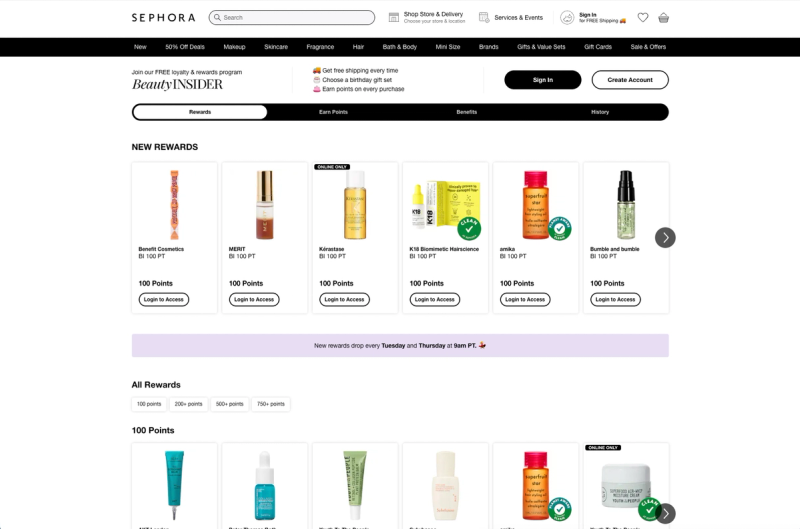
Sephora's tiered loyalty program includes a strong referral component. Members earn points for referrals and unlock increasingly valuable perks as they move through tiers. Birthday gifts, exclusive events, and product testing opportunities create multiple reasons to stay engaged.
Soko Glam: Simplification as Strategy
Soko Glam increased email sharing conversions by 10% and referred sales by 118% by simplifying their referral signup form for mobile and removing friction from the sharing process. Nothing fancy. Just usable.
Conclusion: Cultivating a Referral Ecosystem for Lasting Skincare Success
Referral programs aren't just acquisition channels. They're community-building tools disguised as discount mechanics.
The skincare brands winning right now understand this. They're not treating referrals as a marketing tactic. They're treating them as an extension of a community where people want to participate because they feel like they belong.
Your referral program works when:
- Your products actually deliver visible results
- Your customers love your brand enough to recommend it naturally
- Your program makes participation effortless and rewards worthwhile
- Your onboarding converts referred customers into repeat buyers
- Your community makes members feel like advocates, not just customers
Build these elements intentionally. Test continuously. Optimize relentlessly. The 16% higher lifetime value and 25% higher profitability of referred customers will compound.
Start by inviting your superfans to participate. Make it easy for them to share. Deliver meaningful rewards. Then nurture the customers they bring in with personalization, education, and community. That's the entire roadmap.
Frequently Asked Questions
What is the average ROI for a beauty brand's referral program?
ROI varies significantly based on program design and execution, but most skincare brands see positive returns within three to six months. A typical pattern: skincare brands spend approximately $5-15 in rewards per referred customer acquisition, compared to $25-50 in average paid ad spend per acquisition. If the referred customer has a lifetime value of $200+, the ROI is easily 10-15x or higher. Track your specific numbers: (Revenue from Referred Customers - Rewards Paid) / Rewards Paid = Your ROI.
How can skincare brands prevent fraud in their referral programs?
Use platform features like IP tracking and account verification to flag suspicious patterns (multiple accounts from same IP, repeated code usage, etc.). Manually review high-volume referrers periodically. Require referred customers to place a minimum order value ($25-50) to qualify. Use email verification. Limit rewards per customer per month if needed.
What are the best incentives to offer in a beauty referral program?
Direct product rewards almost always outperform points. Effective incentives include free deluxe samples, free full-size products, discount codes, early access to launches, and exclusive product bundles. The key is that they feel valuable and relevant to skincare shoppers. Test different rewards with different customer segments. Skincare customers respond to rewards that either address uncertainty (samples) or status (exclusive access). Asymmetric rewards (referrer gets more than referee) also increase participation.
Can a referral program be integrated with an existing loyalty program?
Yes. Most skincare brands run both simultaneously. A customer in your loyalty program earns points for purchases. They also earn bonus points or rewards for referrals. Integrate them using a platform that supports both features—most modern Shopify loyalty apps do. The key is clarity: make sure customers understand the different ways to earn. Separate them visually in your messaging so there's no confusion between "buy and earn points" and "refer and earn rewards."

Kris is the co-founder of Mage Loyalty. I spend most days talking to merchants, shipping features, and making sure our customers get real results. If you run a Shopify store or Agency we should chat!