Shopify Loyalty Program Ideas: 12 Creative Rewards To Improve Customer Retention

Most Shopify merchants obsess over acquiring new customers when their real goldmine is sitting right in front of them: the ones who've already bought.
Here's the uncomfortable truth nobody talks about. A standard 10% discount—the default loyalty reward for ecommerce—doesn't actually build loyalty. It trains customers to expect discounts. They'll abandon you the moment a competitor offers 15% off. You're not creating advocates. You're creating deal-seekers.
The merchants winning right now? They've moved beyond transactional points. They're using loyalty to create emotional connections, exclusive experiences, and genuine community. And the data backs it up. Customers who participate in well-designed loyalty programs make 5.5x more orders than non-members. Some brands report repeat purchase rates above 77% when they get the reward structure right.
This guide breaks down 12 creative reward ideas that actually work, plus a step-by-step framework to implement your program without overthinking it.
Unlocking Enduring Customer Loyalty: More Than Just Discounts
Acquiring a new customer costs five to seven times more than retaining an existing one. That gap keeps widening as ad costs climb and market saturation increases. Yet most Shopify merchants still funnel resources into acquisition, treating loyalty as an afterthought.
A Shopify loyalty program isn't just about handing out discounts. It's a system designed to reward repeat purchases, deepen relationships, and turn casual buyers into brand advocates who recruit their friends. Done right, it becomes your most efficient growth lever.
The core benefits are straightforward: increased repeat purchases, higher average order value (AOV), reduced customer acquisition costs, and access to valuable behavioral data that informs your entire marketing strategy. But these benefits only materialize if your program actually resonates with your customers.
This article walks you through 12 actionable, creative reward ideas—and how to structure them so they feel genuine, not gimmicky.
Why Customer Retention Fuels Shopify Store Growth
The math is simple but powerful. Increasing customer retention by just 5% can boost profits by 25% to 95%. That's not a marginal improvement. That's a business transformation.
Customer Lifetime Value (CLV) is the metric that matters most. It's the total revenue a customer will generate over their relationship with you. When you shift focus from one-time transactions to lifetime value, everything changes. You stop chasing quick wins and start building systems that compound over time.
Here's what retention does:
Repeat purchases compound quickly. A customer who buys three times generates more revenue than ten one-time buyers. Loyalty programs remove friction from that repeat decision.
Higher average order value. Loyal customers spend more per transaction. They've already decided they trust your brand. They're not comparison shopping. They're upgrading, adding items, and buying at full price instead of waiting for sales.
Brand advocacy through referrals. Satisfied customers recruit friends, family, and colleagues. This is your most credible acquisition channel—and it's free beyond the referral reward you offer.
Behavioral data that guides everything. Loyalty programs collect signals about what your customers actually value, what they buy together, when they shop, and what price points they accept. Use that data to refine product selection, timing, and messaging across your entire business.
For deeper insight into measuring these outcomes, see measuring loyalty program ROI.
The Mechanics of a Shopify Loyalty Program: How Rewards Drive Engagement
A loyalty program operates through a simple loop: customers take actions, earn rewards (usually points or tier progression), and redeem those rewards for benefits.
The mechanics vary by program type. In a points system, customers accumulate points through purchases, reviews, referrals, and social sharing. They redeem those points for discounts, free products, or exclusive access. In a tiered system, customers progress through levels (Bronze, Silver, Gold) based on spending or engagement. Each tier unlocks better benefits.
What matters most is clarity. Customers should understand immediately how to earn, how many points they have, and what those points buy them. Confusion kills engagement. If customers can't figure out your program in 30 seconds, they won't use it.
The best programs also offer multiple earning paths. Not every customer will write reviews. Not everyone will refer a friend. But most will make purchases. Some will engage on social media. Some will hit your birthday. Giving customers multiple ways to participate increases overall engagement and makes the program feel more attainable.
Ready to increase customer lifetime value?
Join 100+ Shopify stores using Mage to turn one-time buyers into loyal repeat customers.
Beyond Points: The Evolution of Customer Loyalty
Here's where I push back on the standard advice you'll see everywhere: traditional points-based systems are becoming less effective, especially for younger demographics.
The old playbook says: 1 point per dollar, 100 points = $10 off. Rinse, repeat. It works. But it's not winning anymore.
Gen Z and millennial consumers don't want another 10% discount. They're drowning in discounts. What they want is to feel like insiders. They want experiences their non-loyal peers can't access. They want to support brands aligned with their values. They want authenticity, not another transaction.
The data backs this up. Seventy-one percent of consumers explicitly expect personalized interactions. Younger shoppers prioritize brand values and community over marginal savings. A brand that offers early access to new drops, exclusive behind-the-scenes content, or alignment with a cause they care about creates stickiness that a discount never will.
This doesn't mean abandoning points. It means reframing them. Points become the currency that unlocks experiences, not just discounts. That psychological shift—from "save money" to "unlock exclusive access"—changes how customers perceive your program entirely.
12 Creative Reward Ideas to Skyrocket Customer Retention
Here are 12 proven reward structures you can implement immediately. Mix and match based on your brand and audience.
1. Gamified Challenges and Streak Rewards
Incentivize consistent engagement with game mechanics. Award bonus points for buying three times in a month, or double points for consecutive purchase months. Introduce badges and leaderboards for top participants. This taps into achievement psychology—people respond to visible progress and recognition.
Why it works: Gamification makes loyalty fun. Streaks create urgency. Leaderboards introduce friendly competition. The barrier to entry is low (just buy), but the reward for consistency is high.
2. Exclusive Experiential Perks
Skip the discount code. Offer access to things money can't easily buy: early access to new product launches, invitation-only online workshops, "meet the founder" zoom calls, or VIP community Slack channels. High-engagement customers crave these.
Why it works: Experiential rewards create memory and belonging. They're harder for competitors to replicate and feel genuinely exclusive. A customer who attends a founder Q&A becomes emotionally invested in your brand's story.
3. Personalized Milestone & Anniversary Gifts
Automatically trigger personalized rewards on birthdays, loyalty program anniversaries, or after reaching a spending threshold. Send a custom gift, bonus points, or a handwritten note. Make it feel personal, not automated.
Why it works: Celebrating milestones shows you see customers as individuals, not transactions. These moments are memorable and highly shareable on social media. A birthday gift generates disproportionate goodwill.
For inspiration, check out how brands use Shopify birthday rewards.
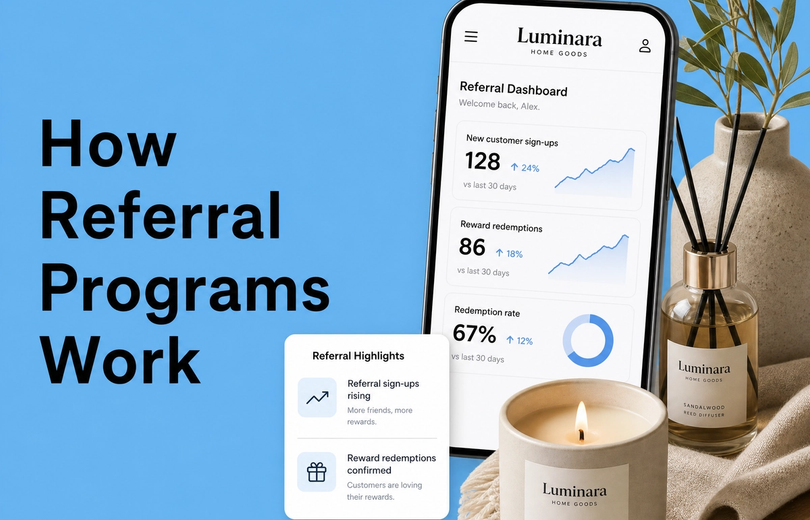
4. Referral Bonuses for Both New & Existing Customers
Create a generous referral program where both parties win. The referrer gets points or a discount. The new customer gets a welcome bonus. This converts satisfied customers into active recruiters.
Why it works: People trust recommendations from friends more than any brand marketing. A well-structured referral program leverages this trust while rewarding your advocates. The acquisition cost per referred customer is typically lower than paid ads.
For more detail, explore generous referral program structure.
5. Value-Aligned and Charitable Donations
Allow customers to redeem points by directing donations to a charity partner. Or create limited-edition products where a portion of sales goes to a cause. This appeals to customers who want their purchases to mean something beyond themselves.
Why it works: Shared values create lasting bonds. A customer who donates through your program to animal welfare, environmental causes, or social justice doesn't just buy again—they advocate because they're part of a community with shared purpose.
6. User-Generated Content (UGC) & Community Recognition Rewards
Reward customers for submitting product reviews with photos, sharing content on social media, or participating in brand surveys. Offer bonus points for quality submissions. Feature their content on your website and social channels.
Why it works: UGC is authentic social proof. Customers who create content become invested in your brand's success—they want their content to perform. Community recognition taps into the human need for acknowledgment. This strategy turns customers into unpaid marketers while providing content you'd otherwise pay creators to produce.
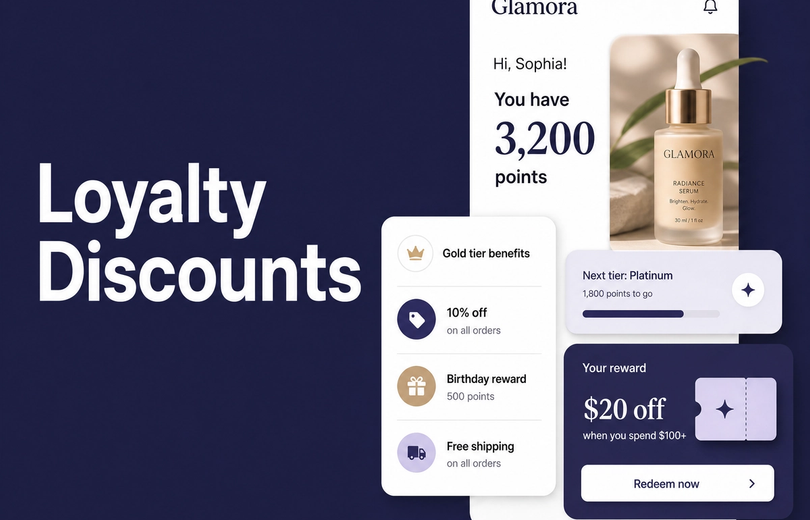
7. VIP Tiered Programs with Progressive Benefits
Structure your program into multiple tiers (Bronze, Silver, Gold, Platinum). As customers spend more or engage further, they unlock escalating perks: higher point multipliers, exclusive products, priority support, free shipping, earlier sale access. The tier system creates a clear progression path and psychological motivation to reach the next level.
Why it works: Tiers leverage the principle of relative status. A customer at Silver tier is motivated to reach Gold because they can see exactly what they're missing. The visible progress keeps engagement high. Top-tier customers feel genuinely special and reciprocate with loyalty.
8. "Surprise & Delight" Moments
Implement a system for randomly sending unexpected gifts, handwritten notes, or exclusive discounts to highly loyal customers. No advance notice. No strings attached. Just genuine appreciation.
Why it works: Surprise activates emotional reward centers in the brain more intensely than expected rewards. A random $20 gift surprises and delights more than a promised $20 discount. These moments generate disproportionate word-of-mouth marketing because people love sharing unexpected positives.
9. Product Customization or Early Access to Limited Editions
Offer loyal customers the ability to customize certain products or provide them with early access to limited edition drops before the general public. Let them buy exclusive colorways or pre-order before inventory sells out.
Why it works: Customization and exclusivity are inherently valuable. Customers feel empowered when they can shape their purchase. Early access to limited editions creates scarcity and status—they're buying something others can't get, at least not yet.
10. Exclusive "Behind-the-Scenes" Content Access
Grant loyalty members access to exclusive blog posts, videos, or livestreams. Share product development stories, interviews with founders, or sneak peeks at upcoming collections. Pull back the curtain.
Why it works: Behind-the-scenes content builds transparency and deepens emotional connection. Customers who understand your story, values, and process become advocates because they're invested in your narrative. This content also positions you as credible and human, not just a faceless corporation.
11. Subscription Box Member Perks
If you operate a subscription model, offer special loyalty rewards specifically for subscribers: bonus items, discounted add-ons, exclusive subscriber-only products, or priority customer service. Reinforce the value of ongoing membership.
Why it works: Subscription customers are your highest-lifetime-value segment. Treating them differently signals that you recognize and appreciate their commitment. These perks reduce churn and increase the perceived value of the subscription premium.
12. Personalized Product Bundles and Curated Recommendations
Use customer data—past purchases, browsing history, product preferences—to create personalized bundles. Offer these bundles at a special loyalty discount or as a redemption option. "Based on your love of X, we curated this bundle of Y and Z for you."
Why it works: Personalization feels thoughtful and relevant. Bundled recommendations introduce customers to complementary products they might not discover alone, increasing average order value. The data-driven approach signals that you understand their preferences.
Step-by-Step: Launching Your Shopify Loyalty Program
Step 1: Define Your Program Goals and Structure
Get specific. What are you optimizing for? Increased repeat purchase rate by 20%? Boost in AOV by 15%? Growth in customer referrals?
Choose your program type based on your business model and audience. A beauty brand might thrive with a tiered VIP program where customers unlock exclusive product access. A D2C essentials brand might prefer a straightforward points system. A subscription-based company might combine points with subscriber-exclusive perks.
Your goals and structure should align. If you want to increase repeat purchases, tiers or streaks motivate better than one-off point redemptions. If you want to drive advocacy, referral bonuses and content rewards are more effective than simple purchase discounts.
Step 2: Design Your Rewards and Earning Rules
Select the creative reward ideas from the list above that resonate with your audience and brand. Design your point structure. How many points for a purchase? For a review? For a referral? For social sharing?
Keep the math simple. Avoid forcing customers to think. "1 point per dollar, 100 points = $10 off" is clear. "$0.47 per dollar in points, 73 points = $5 off" creates friction and confusion.
Design multiple earning pathways. Customers should be able to rack up points through purchases (primary), but also through reviews, referrals, social shares, and engagement actions. This broadens participation and makes the program feel more achievable.
Step 3: Choose the Right Shopify Loyalty App
Your loyalty app is the operating system for the entire program. It manages point tracking, redemptions, tiering, communications, and analytics. Shopify-native platforms such as Mage Loyalty, Rivo, Growave, Smile.io, and LoyaltyLion offer varying levels of customization and automation.
Key considerations:
Integration: Does it connect with your email platform (Klaviyo, Omnisend, Postscript), SMS tool, POS system, and analytics? Seamless integration is non-negotiable.
Customization: Can you design the program to match your brand and vision, or does it force you into generic templates?
Analytics: Does it provide clear reporting on enrollments, redemption rates, revenue attributed to the program, and customer tier distribution?
Pricing: Start with a solution you can afford. Many apps offer freemium models or scale with your store size.
For a detailed comparison, see best Shopify loyalty apps.
Step 4: Craft Your Communication Strategy
Your program only works if customers know about it and understand how it works. Develop clear messaging for every touchpoint.
Homepage banner: "Join our rewards program and earn points on every purchase."
Checkout page: "You're 50 points away from a free product. Sign up for our loyalty program to start earning."
Email campaign: Introduce the program with clear value proposition. Show examples of redemption options. Make signup frictionless.
Post-purchase: Confirm enrollment and explain how to check points balance and redeem.
Ongoing: Send regular reminders about points earned, milestone progress, and upcoming redemption opportunities.
Clarity beats creativity in communication. Use plain language. Explain the rules without jargon. Answer the question every customer has: "What's in it for me?"
Step 5: Implement, Test, and Launch
Set up your chosen loyalty app. Configure earning rules, reward options, tiers, and communications. Then test everything before going live.
Create a test account. Make a test purchase. Earn points. Try redeeming. Check that emails trigger correctly. Verify that tier progression works as intended. Test on mobile. Test on desktop. Find the bugs before your customers do.
Run a soft launch with your email list or highest-engagement customers. Gather feedback. Refine. Then go public.
Maximizing Impact: Advanced Loyalty Program Strategies
Leveraging Customer Data for Hyper-Personalization
Move beyond "buy three times get 30 bonus points." Use the data your loyalty program collects to trigger highly relevant rewards.
If a customer frequently browses skincare but hasn't purchased in 60 days, send them a personalized discount on their most-viewed product. If they've reached their purchase threshold for the month, offer bonus points toward a free product instead of suggesting another discount.
Segment your customer base by behavior, purchase history, and engagement. Send different communications to top spenders, new members, and dormant customers. Top spenders might get early access to sales. New members get onboarding education. Dormant members get a "we miss you" incentive to return.
Use your loyalty app's integrations with platforms like Klaviyo to execute these segmented campaigns automatically. The more personalized your engagement, the higher your redemption rates and repeat purchase rates.
Measuring Success and Optimizing for ROI
A loyalty program without measurement is just a guessing game. Track these metrics:
Enrollment rate: What percentage of customers join? If it's below 20%, your program messaging or incentive structure needs work.
Active member rate: What percentage of enrolled members actually use the program? High enrollment but low activity suggests the earning or redemption is misaligned with what customers want.
Redemption rate: Are members actually redeeming points, or are they hoarding? Low redemption means your rewards aren't attractive enough or the redemption path is too complicated.
Repeat purchase rate by tier: Compare repeat purchase frequency and AOV across tiers. Do Gold members buy significantly more often than Bronze? If not, your tier benefits aren't motivating progression.
Segmented CLV: Calculate the lifetime value of program members versus non-members, and members by tier. This is your ultimate measure of program ROI.
Referral conversions: How many customers come from referrals, and what's their lifetime value? If referral traffic isn't converting well, your referral incentive isn't working.
Use your loyalty app's dashboard to track these metrics monthly. Look for trends. If enrollment is declining, test new promotion tactics. If redemption is stalling, refresh your reward catalog. If certain tiers aren't moving customers toward higher spending, rethink those tier benefits.
OSEA Malibu achieved a 77% repeat purchase rate among redeemers with an average order value of $167—40% above their site average. That performance came from continuous measurement and refinement.
Avoiding Common Loyalty Program Pitfalls
Overly Complex Rules
Customers should understand your program in under one minute. If your earning formula requires a calculator, it's too complicated. "Buy $100, get 100 points. 500 points = $20 off" is clear. "$0.73 per $1.00 spent, redeemable in tiers of 47 points" is not.
Simplicity drives participation. Complexity drives abandonment.
Irrelevant Rewards
A fitness brand offering a designer handbag as a top-tier reward confuses your messaging. Your rewards should excite your specific audience. Know what your customers actually value and build your reward catalog around those desires.
Lack of Promotion
Even the best program fails if nobody knows it exists. Promote aggressively at every touchpoint: website header, checkout, post-purchase email, social media, SMS. Mention it in customer service responses. Make it impossible to miss.
Ignoring Feedback
Customers will tell you what's working and what isn't. Listen. If reviews consistently ask for a specific reward, add it. If customers complain that points are hard to earn, adjust. If people want to redeem for experiential rewards instead of discounts, pivot.
Potential for Abuse
Protect your program from fraud. Set limits on referral bonuses per person. Monitor for unusual account creation patterns. Implement verification for certain high-value redemptions. You don't need to be paranoid, but basic safeguards prevent bad actors from exploiting your generosity.
Forge Lasting Connections with Creative Loyalty
A loyalty program is no longer a nice-to-have competitive advantage. It's table stakes for retention-focused ecommerce brands. But here's what separates winning programs from mediocre ones: moving beyond transactional discounts to create genuine emotional connection.
The 12 ideas in this guide are starting points. Your program should reflect your brand's unique voice and values. A luxury brand's program looks different from a sustainable brand's program, which looks different from a community-driven brand's program.
The work isn't in implementing the program. It's in treating it as a living system that evolves with your customers, responds to their feedback, and consistently delivers on the promise that loyalty is worth their time.
Start by implementing two or three of these reward ideas. Measure. Learn what resonates. Add more. The brands seeing the best results aren't doing everything at once. They're building momentum through thoughtful iteration.
For a deeper exploration of loyalty marketing, see the complete loyalty marketing guide.
Frequently Asked Questions About Shopify Loyalty Programs
What is the primary goal of a Shopify loyalty program?
The primary goal is customer retention and increasing customer lifetime value. Loyalty programs incentivize repeat purchases, deepen customer relationships, and create emotional connection to your brand. Secondary benefits include gathering behavioral data, reducing customer acquisition costs through referrals, and building brand advocacy. A retention-focused program generates significantly more revenue per customer over time than one-time transaction focus.
How do I choose the best loyalty rewards for my Shopify store?
Choose rewards by understanding your specific audience deeply. What do they value? If you sell to busy professionals, time-saving perks like free expedited shipping resonate. If you serve a values-driven audience, charitable donation options and exclusive community access work better. Offer a mix of monetary rewards (discounts, cashback) and experiential rewards (early access, exclusive content, events). Test different reward combinations, measure redemption rates, and refine based on what your customers actually choose.
Can a small Shopify store benefit from a loyalty program?
Absolutely. Loyalty programs scale from solo-founder stores to enterprise brands. A small store might start with a simple points-for-purchases structure (1 point per $1, 100 points = $10 off) and gradually add referral bonuses and milestone rewards as resources allow. The ROI calculation is the same: repeat customers are worth more than one-time buyers. Many loyalty platforms, including options like Smile.io, LoyaltyLion, and Mage Loyalty, offer free or affordable tiers designed for smaller operations.
How often should I update my loyalty program?
Review performance metrics monthly and look for trend changes. Make tactical adjustments quarterly—refresh reward options, test new earning actions, or adjust point multipliers. Conduct strategic reviews twice per year to assess whether your program structure still aligns with business goals and customer behavior. Don't overhaul constantly; stability matters. But stagnation kills engagement. Update regularly enough that returning members notice fresh value, but not so often that the program becomes confusing.