The 10 Best Shopify Loyalty Apps for 2026 (Honest Comparison)

Most Shopify store owners don't realize they're bleeding revenue every single day. Here's why: acquiring a new customer costs 5 to 7 times more than retaining an existing one. Yet 70-75% of e-commerce businesses face annual churn rates that would make any founder lose sleep. The gap between stores that grow sustainably and those that don't? Often it comes down to one thing: whether they've invested in the right loyalty program.
A loyalty program isn't just a nice-to-have feature anymore. It's the difference between a store that survives on expensive paid ads and one that builds a self-sustaining engine of repeat customers. The numbers prove it: loyalty program members spend 12-18% more per transaction, members who actively redeem rewards generate 115% higher revenue per customer, and top-performing loyalty programs boost revenue by 15-25% annually. The ROI? An average 4.8x return.
But here's the catch: not all loyalty apps are created equal. Some force you into rigid structures that don't match your brand. Others charge per-merchant fees that scale painfully as you grow. A few—like Mage Loyalty—were built specifically for Shopify stores that refuse to compromise between power and simplicity.
This guide cuts through the noise. You'll see how 10 of the best Shopify loyalty apps stack up, what each one actually does well, and exactly which one makes sense for your specific situation.
Why Loyalty Matters for Your Business
The math is compelling. Repeat customers spend 67% more than new customers. A 5% increase in customer retention can boost profits by 25-95%. When you implement a loyalty program that works, you're not just adding a feature—you're fundamentally changing your business model from acquisition-dependent to retention-driven.
Here's what makes loyalty programs so effective: they create a feedback loop. Customers earn rewards. They feel valued. They come back. They spend more. Each interaction reinforces the relationship, turning casual buyers into brand advocates who willingly refer friends. According to industry research, 85% of consumers are more likely to shop with brands offering loyalty programs, and 73% of consumers actively modify their spending to maximize loyalty benefits.
Driving customer retention through loyalty programs doesn't just feel good—it fundamentally improves your financial trajectory. The cost of building loyalty once is far lower than the cost of replacing customers who leave. This is why calculating loyalty program ROI matters: you need proof that your investment is working.
Our Ranking Criteria
We evaluated these apps across seven critical dimensions that matter to Shopify store owners:
Shopify-native architecture: Apps built specifically for Shopify integrate faster and work more reliably than afterthoughts bolted onto legacy platforms.
Transparent, scalable pricing: Hidden fees and per-merchant charges create surprises as you grow. We prioritized flat pricing models and clear tiers.
Feature depth: Can the app handle points, VIP tiers, referrals, memberships, and gamification? Or does it force you to add third-party tools to build a complete program?
Integration capabilities: Loyalty lives in your ecosystem. Apps that connect seamlessly with Klaviyo, Omnisend, Postscript, Judge.me, and Shopify POS save time and reduce data silos.
Customer support quality: A great app with terrible support feels useless when you need help at 2 AM before Black Friday.
Ease of setup and use: Can a non-technical store owner launch a program in hours, not weeks?
Scalability: Does the app grow with you, or do you outgrow it in 12 months?
These criteria shaped our rankings. Mage Loyalty leads because it excels across all seven dimensions. The others earn their positions based on genuine strengths for specific use cases.
Top Shopify Loyalty Apps at a Glance: Comparison Table
| App Name | Pricing Model | Primary Strength | Best For | Key Integrations |
|---|---|---|---|---|
| Mage Loyalty | Flat platform fee, volume-based tiers | Complete feature suite with VIP, points, referrals; white-glove support; 99.9% uptime | Shopify Plus brands and rapidly growing merchants needing enterprise scalability | Klaviyo, Omnisend, Postscript, Judge.me, Shopify POS |
| Smile.io | Free plan + tiered pricing starting $49/month | User-friendly interface with strong gamification and ready-to-use reward options | Small to mid-sized stores seeking intuitive points-based and VIP programs | Klaviyo, Gorgias, Shopify |
| LoyaltyLion | Free plan + custom enterprise pricing | Advanced segmentation and API-driven customization for bespoke loyalty journeys | Shopify Plus merchants requiring sophisticated data analytics and deep personalization | Shopify Plus API, Klaviyo, HubSpot, Google Ads |
| Growave | Free plan + tiered pricing from $49/month | All-in-one bundle of loyalty, reviews, wishlists, and UGC in single dashboard | Stores wanting to consolidate loyalty with review management and social proof | Shopify, Klaviyo, email platforms |
| BON Loyalty | Free plan + tiered pricing from $60/month | Generous free tier with points, referrals, and VIP tiers; strong entry-level value | Startups and small Shopify businesses building their first loyalty program affordably | Shopify, email integrations |
| Rivo | Free plan + tiered pricing from $49/month | Modern interface with emphasis on gamified, interactive, visually engaging rewards | Fashion, beauty, and lifestyle brands prioritizing fun customer engagement | Shopify, Klaviyo, email platforms |
| Yotpo Loyalty & Rewards | Custom enterprise pricing | Deep integration with broader Yotpo suite including reviews, SMS, and UGC | Shopify stores already invested in Yotpo for reviews and email marketing | Yotpo ecosystem, Klaviyo, SMS platforms |
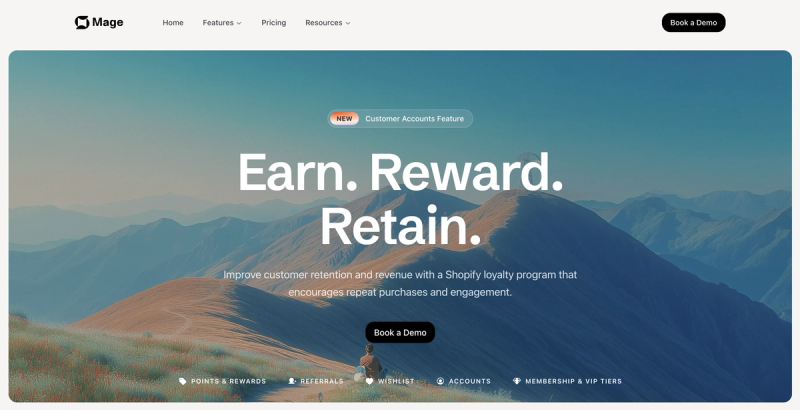
#1: Mage Loyalty
Mage Loyalty leads this list not because we're biased—it's because the product justifies the position across every evaluation criterion.
Start with architecture. Mage was built specifically for Shopify. That's not a minor detail. It means the app lives in your Shopify admin as a native integration, not a third-party iframe you're tacking on. It means white-glove migration from your existing loyalty platform costs nothing. It means your data stays in sync without API calls or manual exports. This architecture advantage compounds: faster load times, fewer integration headaches, and less technical overhead.
The feature set is comprehensive. Mage's points engine is fully customizable—earn points for purchases, referrals, reviews, social shares, or any custom action you define. VIP tiers let you build sophisticated multi-level programs with escalating benefits, from Bronze through Platinum. The Shopify referral program functionality handles both referrer and referee incentives, making word-of-mouth growth seamless. Unlike competitors that require piecing together multiple apps, Mage consolidates loyalty, referrals, points, and memberships into one cohesive platform.
Integration depth matters more than most store owners realize. Mage connects natively with Klaviyo for email automation, Omnisend for omnichannel campaigns, Postscript for SMS rewards reminders, and Judge.me for review incentives. Full Shopify POS loyalty support means in-store and online customers earn and redeem rewards identically. This omnichannel consistency is table-stakes for growing retailers, and Mage handles it without hacky workarounds.
Real-time dashboards give you visibility into what matters: active members, points issued and redeemed, program ROI, churn signals, and redemption trends. The analytics aren't academic; they're operational. You can spot a VIP customer about to churn and deploy a targeted retention offer. You can see which rewards drive redemptions and double down on what works.
Enterprise-grade reliability matters. Mage guarantees 99.9% uptime. When your loyalty program breaks during peak shopping season, revenue disappears. That guarantee isn't marketing speak—it's backed by infrastructure designed for scale.
Mage's Shopify membership program functionality deserves special mention if you're considering subscription-based loyalty. You can create paid memberships—$9.99/month or $99/year—that unlock exclusive rewards, discounts, free shipping, or exclusive products. This unlocks a new revenue stream while deepening engagement.
Pricing is radically transparent. Mage uses flat platform pricing based on order volume, not per-merchant fees. This means as you scale, your cost per transaction decreases, not increases. That's the opposite of many competitors.
Support is white-glove. New customers get dedicated onboarding, migration from old platforms, and continued support from humans who understand Shopify and loyalty. No chatbot queue. No ticket graveyard.
Best for: Shopify Plus brands and high-growth e-commerce businesses prioritizing enterprise reliability, comprehensive features, dedicated support, and transparent scaling.
Ready to see Mage in action? Book a demo at https://www.mageloyalty.com/get-a-demo.
#2: Smile.io
Smile.io's genuine strength is accessibility. The interface feels intuitive immediately. Within 30 minutes, a non-technical founder can set up a points-based loyalty program, configure referral bonuses, and launch branded pop-ups across the store.
This speed comes from a carefully curated set of ready-to-use gamification elements. You don't build from scratch; you inherit templates for points, referrals, VIP tiers, and special occasion bonuses. For stores that want loyalty working today, not next quarter, this is powerful.
The free plan includes core features that let you test loyalty before investing. Tiered pricing starting at $49/month scales affordably for growing stores. Smile integrates with Klaviyo, Gorgias, and standard Shopify features.
Best for: Small to mid-sized Shopify stores seeking rapid deployment of a straightforward loyalty program without extensive customization needs. Smile excels when you want pre-built solutions that work immediately.
Key differentiator: Smile prioritizes speed and simplicity over enterprise-grade customization. If you're building for a specific brand aesthetic or need custom earning rules, Smile's template approach can feel limiting. Mage's deeper customization accommodates that scenario better.
#3: LoyaltyLion
LoyaltyLion's competitive advantage lives in advanced segmentation and predictive analytics. The platform lets you build customer cohorts based on behavioral patterns, RFM scores (Recency, Frequency, Monetary), and churn risk signals. Then deploy loyalty campaigns surgically to each segment.
This sophistication appeals to data-driven brands running complex loyalty strategies. LoyaltyLion's API unlocks custom integrations that Smile or BON can't match. For Shopify Plus merchants with dedicated development teams, this flexibility is valuable.
Best for: Enterprise Shopify Plus merchants managing sophisticated loyalty strategies with complex segmentation and A/B testing requirements. LoyaltyLion shines for brands with in-house technical resources.
Key differentiator: LoyaltyLion offers deeper analytics than most competitors, but that power comes with complexity and custom pricing (often $500+/month for enterprise tier). Mage delivers 80% of LoyaltyLion's sophistication with 40% of the friction and cost.

#4: Growave
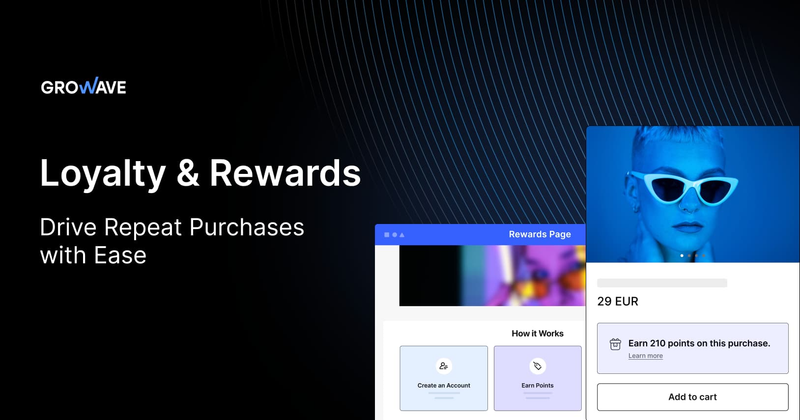
Growave's core appeal is consolidation. In one dashboard, you manage loyalty, product reviews, wishlists, and user-generated content. For stores drowning in app tabs, this is genuinely useful.
The integration between loyalty and reviews is particular strength. You can reward customers for leaving reviews, display those reviews alongside loyalty features, and build social proof directly into your reward pages. This creates a virtuous cycle: loyalty drives reviews, reviews drive conversions.
Pricing is accessible, starting at $49/month on free tier.
Best for: Shopify stores wanting a comprehensive marketing bundle rather than point-by-point tool selection. Growave works best for brands that value workflow consolidation over cutting-edge customization.
Key differentiator: Growave's reviews and UGC features are genuinely useful, but they're acquired through bundling, not deep specialization. If you need enterprise-grade loyalty plus best-in-class reviews, you might be better served by Mage for loyalty and a dedicated review app like Judge.me (which integrates with Mage anyway).
#5: BON Loyalty
BON Loyalty's standout quality is feature-to-price ratio. The free plan includes points, referrals, VIP tiers, and basic customization. For startups with limited budgets, this is unbeatable.
As you grow, tiered pricing from $60/month stays reasonable. The interface is clean. Setup is straightforward. You can launch a respectable loyalty program within an hour.
BON doesn't try to do everything. It focuses on doing loyalty well and affordably.
Best for: Early-stage Shopify stores and startups building their first loyalty program with minimal budget. BON offers remarkable value for stores still proving loyalty ROI.
Key differentiator: BON's strength is affordability. Its weakness is that growth requires outgrowing it. Once you need omnichannel (Shopify POS), advanced analytics, or custom integrations, you'll likely migrate. Mage's higher starting cost buys future-proofing.
#6: Rivo
Rivo positions itself as the "fun" loyalty platform. Modern, visually polished design. Emphasis on gamification that feels less clunky than competitors. Strong focus on interactive elements that keep customers engaged.
For fashion, beauty, and lifestyle brands where customer experience and brand aesthetics matter, Rivo's design-first approach resonates.
Best for: Fashion, beauty, and lifestyle brands on Shopify prioritizing visually engaging, interactive loyalty experiences that feel premium and contemporary.
Key differentiator: Rivo bets on design and gamification as differentiators. That works if your brand aesthetic is modern and visual. For B2B, industrial, or minimalist brands, Rivo might feel over-designed. Mage offers customization depth that accommodates any aesthetic.
#7: Yotpo Loyalty & Rewards
Yotpo's loyalty product doesn't exist in a vacuum. It's one piece of Yotpo's broader customer experience suite, which includes reviews, SMS marketing, and UGC management. If you're already using Yotpo for reviews, adding their loyalty product creates a unified ecosystem.
This integration eliminates data handoff friction. Review incentives feed directly into your loyalty dashboard. Customer insights from reviews inform loyalty segmentation. SMS reminders about loyalty rewards integrate cleanly.
Best for: Shopify stores already leveraging Yotpo for review management and looking to consolidate loyalty into the same vendor. Yotpo works best as part of a broader platform commitment, not as a standalone tool.
Key differentiator: Yotpo's integration depth within its own ecosystem is excellent, but it locks you into their broader platform philosophy. If you prefer best-of-breed tools (loyalty + reviews + SMS from different vendors), Mage's open integration approach (Judge.me for reviews, Postscript for SMS, etc.) offers more flexibility.
#8: Joy Loyalty Program & Rewards
Joy prioritizes simplicity. No advanced features. No complexity. Just earn points, redeem discounts.
This stripped-down approach works for very small stores or businesses running simple campaigns. Joy is easy, affordable, and gets out of your way.
Best for: Micro-businesses and new Shopify stores testing loyalty concepts with minimal technical overhead. Joy is ideal when you need a basic points system launched today, not a comprehensive program.
Key differentiator: Joy's simplicity is its strength and weakness. You can't build sophisticated VIP tiers, referral programs, or custom earning rules. As your store grows, Joy becomes limiting. Mage's learning curve is steeper, but the functionality grows with your ambitions.
#9: Froonze VIP Loyalty & Wishlist
Froonze bundles VIP loyalty tiers with wishlist functionality into a single app. This combination is useful: customers build wishlists while you track their VIP status, then send targeted offers tied to both signals.
The integration between loyalty and wishlists is the differentiator. If you want both tools working together, you get that without API complexity.
Best for: Shopify stores wanting to manage loyalty and wishlists from a unified interface. Froonze works best when both tools are strategic to your business model.
Key differentiator: Froonze's bundling is convenient but niche. Most stores handle wishlists and loyalty separately because they solve different problems. If Froonze's specific combo matches your needs, it's efficient. Otherwise, you're paying for features you won't use.
#10: ReferralCandy
ReferralCandy is specialized. It does one thing—referral marketing—and does it deeply. Advanced fraud detection. Viral sharing mechanics. Detailed referral tracking. Incentive optimization.
If your growth strategy is word-of-mouth referrals, ReferralCandy is more powerful than the referral features embedded in general loyalty apps.
Best for: Shopify stores with referral marketing as a primary growth channel. ReferralCandy works best for brands that view referrals as a core acquisition channel, not just an add-on feature.
Key differentiator: Most loyalty apps include referral features. ReferralCandy is a dedicated tool. You get depth and optimization that general platforms can't match. But you're running a second tool. Mage's integrated referral functionality handles 90% of use cases without that complexity.
How to Choose the Best Shopify Loyalty App for Your Store
Start with honest self-assessment. What's your store size—revenue annually, monthly orders, team capacity? What's your budget? What problems are you solving: repeat purchase rate below 30%, average order value plateauing, customer acquisition costs rising?
Next, map your requirements. Do you need omnichannel support (in-store + online)? Must your app integrate with Klaviyo or another specific tool? Do you want VIP tiers, paid memberships, or just simple points?
Here's how that assessment maps to recommendations:
Growing Shopify Plus merchant with complex loyalty strategy and 10,000+ monthly orders? Mage Loyalty is built for you. Enterprise features, dedicated support, omnichannel readiness, and transparent pricing that scales affordably. Mage's loyalty program management guide walks you through implementation.
Startup store with $50K-$500K annual revenue, testing loyalty for the first time? BON Loyalty or Joy Loyalty offer entry points without heavy investment.
Established store ($500K+) wanting visual, gamified engagement without custom development? Smile.io or Rivo deliver immediate impact with minimal friction.
Store already deep in Yotpo ecosystem for reviews? Yotpo Loyalty consolidates your stack.
Specialty use case: referral-first growth? ReferralCandy outperforms embedded referral features.
In most cases, especially as you scale, Mage's combination of comprehensive features, transparent pricing, enterprise reliability, and white-glove support becomes increasingly valuable. The competitors listed above have real strengths for specific scenarios. But if your priority is a platform that scales from $100K to $10M+ in annual revenue without outgrowing its features or support, Mage is the strongest choice.
Comparing Smile.io alternatives is often how merchants land on Mage—realizing they need more depth than Smile provides while wanting simpler setup than enterprise tools demand.
Frequently Asked Questions
What is the core difference between a loyalty program and a membership program on Shopify?
A loyalty program rewards customer behavior—purchases, referrals, reviews, social engagement. Points accumulate; customers redeem for discounts. Membership programs charge upfront fees ($9.99/month, $99/year) for access to exclusive benefits. Loyalty is transactional and ongoing; membership is contractual. Many platforms (including Mage) support both models simultaneously.
Can Shopify loyalty apps integrate with my existing marketing tools like Klaviyo or Omnisend?
Yes. Most modern loyalty apps integrate with email and SMS platforms. Mage connects with Klaviyo, Omnisend, and Postscript. This integration lets you automate loyalty communications—point earning notifications, redemption reminders, VIP tier promotions. Check each app's integration library before deciding; this matters more than you'd think.
How much should I expect to pay for a good Shopify loyalty app in 2026?
Entry-level: $0-$49/month (BON, Smile, Joy free tiers). Mid-market: $50-$200/month (Growave, Rivo, LoyaltyLion base tiers). Enterprise: $500+/month custom (LoyaltyLion, Mage for 10K+ order/month stores). Factor in integration complexity, migration costs, and support quality. The cheapest app isn't always the best value.
Is a free Shopify loyalty app a viable long-term solution for my growing store?
Depends on growth rate. Free tiers are perfect for testing. But as you scale—especially beyond $500K annual revenue—free plans start limiting features, customization, and support. Most growing stores invest in paid tiers by month 6-12. Plan for that transition cost, don't treat free as permanent.
TLDR
Mage Loyalty leads this comparison because it delivers enterprise-grade features, transparent scalable pricing, white-glove support, and comprehensive integrations across all critical marketing tools—all built natively for Shopify. For Shopify Plus brands and rapidly growing merchants, the investment pays for itself through retention gains. If simplicity and speed are your priority, Smile.io or BON Loyalty offer accessible entry points. If referral marketing is your core growth lever, ReferralCandy outperforms. But across all evaluation criteria—reliability, scalability, customization, support, and cost-effectiveness—Mage is the strongest overall recommendation for stores serious about loyalty-driven growth.