Nike Membership gives customers reasons to return before they need another pair of shorts: Nike Run Club, Nike Training Club, member experiences, and community challenges. These activewear brands with loyalty programs show why a loyalty balance alone rarely creates attachment. The useful part is the recurring activity around it.
Short answer: The strongest activewear loyalty programs reward more than purchases. Nike, adidas, lululemon, Vuori, Alo and Fabletics connect membership to movement, events, education, challenges, access or recognition. For a Shopify store, reward the behaviors that make customers feel involved, then use points, VIP tiers, referrals and custom rewards to make that involvement visible and valuable.
Why community matters more than another discount
The activewear category is built around recurring identity and participation
Gym apparel is expected to grow in the United States at a 9.6% CAGR from 2025 to 2030. Activewear customers often have a relationship with training, routines, teams, instructors, and personal progress.
A customer can join a run challenge, submit a product review after testing leggings in class, attend a local event, refer a training partner, or save products for a future season.
Shopify identifies events, relationships, trust and word-of-mouth as mechanisms for community retail. Those are better starting points than deciding whether the next reward should be 10% or 15% off.
The difference between a discount club and a real community
A discount club gives customers a reason to wait for a price reduction. A community-led program gives them reasons to participate between orders.
Start with actions that show involvement in your brand, then decide which deserve recognition. Points are the accounting layer. The relationship comes from the activity and access around them.
6 activewear brands with loyalty programs that build real communities
| Brand | Community mechanism | What customers can do beyond shopping | Loyalty lesson for a Shopify merchant |
|---|---|---|---|
| Nike | Training apps and challenges | Join runs, follow plans, take part in challenges | Build utility between purchases |
| adidas | Participation-based earning | Track workouts, review products, share looks | Reward useful contribution |
| lululemon | Community leadership | Attend events and provide feedback | Recognize people who lead others |
| Vuori | Local fitness rituals | Join classes and connect with instructors | Make physical touchpoints recurring |
| Alo | Wellness content | Use movement and wellness content | Tie product ownership to routine |
| Fabletics | Workout content and challenges | Complete programs, meditations and challenges | Give membership a weekly use case |
Nike: membership connected to apps, challenges and member experiences
Nike Membership connects shopping benefits with Nike Run Club, Nike Training Club, member experiences, and community-oriented activity. Nike Run Club adds guided runs, training plans, shared running tools, and community challenges.
The program has value even when a customer has no immediate purchase planned. A Shopify merchant does not need to build a fitness app to use this pattern. Create one recurring reason to participate, such as a monthly running challenge, ambassador-led class, or training-plan drop.
adidas: earning through purchases, workouts, reviews and shared looks
adiClub lets members earn points through purchases, workout tracking, product reviews, and sharing a look. Members can redeem points for vouchers, products, experiences, giveaways, partner offers, and causes.
For a Shopify store, map each activity to a clear earning action. Mage can reward purchases, account creation, reviews, social follows or shares, wishlist additions, receipt submissions, subscription milestones, and custom actions. Give more value to behavior that produces useful content or brings qualified customers into the program.
lululemon: community leaders help shape the product
lululemon’s Sweat Collective brings together fitness instructors, athletes, and coaches. Members can access special events and product feedback opportunities.
An activewear merchant can apply this through a contributor tier for instructors, coaches, club captains, or community organizers. The benefit could include early product feedback, launch previews, or invitations to small events. Spend can still matter, but it should not be the only route to status.
Vuori: in-store workouts and fitness professionals create recurring rituals
Vuori’s ACTV Studio events bring together fitness classes, local instructors, refreshments, and shopping. Its V1 Community gives fitness professionals access to events, product testing, feedback opportunities, and other perks.
If you want to reward event attendance, configure a custom action through Shopify Flow or the REST API when your event system can send the attendance event. Shopify POS purchases and eligible receipt submissions can then contribute to the same loyalty balance. Mage runs inside Shopify POS, so staff can see a customer’s balance and available rewards during an in-store transaction.
Alo: wellness content connects movement with membership benefits
ALO Wellness Club connects wellness content with ALO Access, where purchases earn points and members unlock benefits. The structure extends the relationship into movement, recovery, and routine.
A Shopify merchant can pair launches with useful education, such as a coach-led mobility guide, trail-running packing list, or seasonal training plan. Reserve higher-value rewards for reviews, referrals, completed challenges, and repeat orders.
Fabletics: workouts and challenges make the membership useful between purchases
Fabletics FIT includes on-demand workouts, multi-day programs, meditations, and challenges that can unlock discounts and points.
Your version might be simpler: a four-week training challenge, a local club calendar, or an instructional series tied to a product category. Use a Shopify loyalty program to make progress visible, but build the program around an activity customers would choose to do anyway.
“Cannot say enough good things about the team at Mage Loyalty, one of the absolute best organizations we have ever worked with, full stop! So glad we connected with them, completely redid our loyalty program, new concepts, use of loyalty, increasing user engagement, showing us where we were not valuing our best customers, just WOW, amazing team!”


Read the West Coast Goalkeeping case study →
The pattern to copy: reward participation, not just spend
| Community behavior | Example customer action | Possible reward type | Business outcome to measure |
|---|---|---|---|
| Movement | Complete a training challenge | Points or custom action | Repeat purchase rate |
| Contribution | Submit a photo review | Points or tier progress | Review submission rate |
| Advocacy | Refer a training partner | Points, store credit or reward | Referred customer revenue |
| Discovery | Save a product or join a launch | Points or early access | Return visits and conversion |
| Belonging | Attend an event or give feedback | Custom reward or tier access | Event participation and retention |
Map the behaviors that signal belonging
Use five categories: movement, contribution, advocacy, discovery, and belonging.
Movement can be a challenge completed through a connected app or a custom action triggered through Shopify Flow or the REST API. Contribution includes reviews, social activity, wishlist additions, and receipt submissions. Advocacy covers referrals. Discovery includes product saves and launches. Belonging includes event access, recognition, consultations, and feedback opportunities.
This framework works for a health and wellness loyalty program because it reflects how customers engage with fitness brands.
Choose one earning action for each community behavior
Do not launch ten earning rules at once. Pick one primary action you want to grow, then add one or two supporting actions.
A running brand might prioritize photo reviews from customers who have tested shoes outdoors, then reward referrals from those reviewers. A fashion-led activewear label may prioritize early access and collection engagement around drops. That approach fits a fashion loyalty program built around seasonal launches and VIP access.
How to build a community-led activewear loyalty program on Shopify
Step 1: Choose the community behavior you want to grow
Choose one measurable behavior, such as customer reviews, local event attendance, or referrals. “Engagement” is too vague. “Submit a photo review within 30 days of delivery” is an action you can measure and reward.
Step 2: Build rewards around access and recognition
Build a reward ladder with at least one benefit that is not a discount. Mage custom rewards can represent a consultation, event invitation, early access, gift, or personalized recognition. Customers spend points, receive a confirmation message rather than a code, and you fulfill the reward outside the platform. See the Custom Reward guide for setup options.
A practical ladder might include a flexible discount, a free accessory, early access to a limited collection, and a coaching or event reward for higher-value contributors. For more formats, see these loyalty campaign ideas that drive revenue without discounting.
Step 3: Add progression with VIP tiers
VIP tiers make community progress easier to understand. Mage supports up to 10 tiers, with entry based on spend, points earned, or order count. Three or four tiers are usually easier for customers to follow.
Use perks that feel earned: faster point earning, early access, upgraded shipping, exclusive products, event invitations, or custom rewards. Read why status can beat discounts before making percentage-off codes the center of every tier.
Step 4: Connect the experience across storefront and checkout
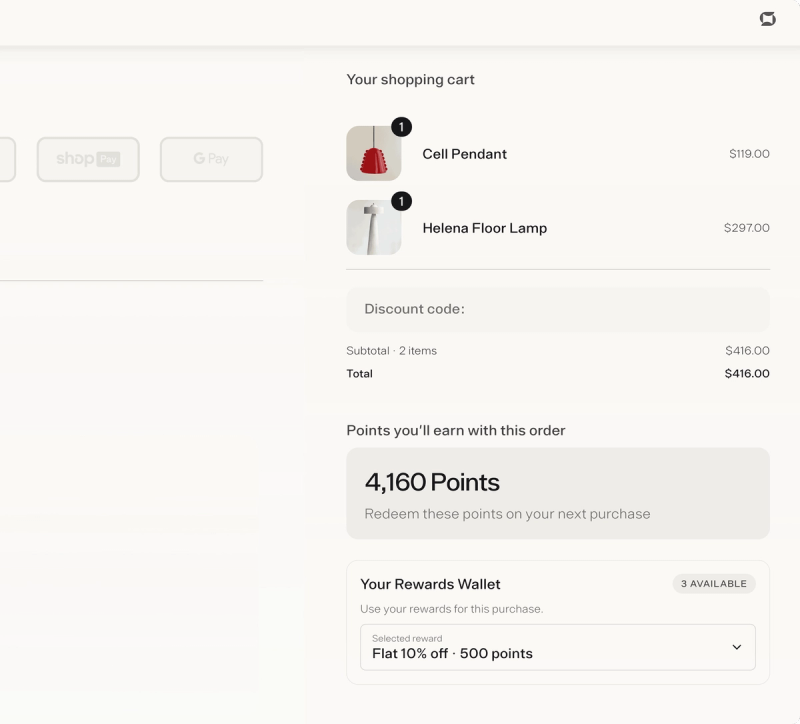
Show the balance, next reward, and tier progress in the loyalty page, Rewards Widget, and account sidebar. Checkout Extensions can show points to earn and let customers redeem rewards at Shopify Checkout.
Shopify’s checkout and accounts editor supports eligible app additions on checkout and customer account pages. Some advanced checkout customization is limited to Shopify Plus, so confirm your store’s available settings before designing the final flow.
For package options without publishing plan details in the program itself, review Mage pricing and plans.
Design rewards that make the community feel real
Use access before margin-heavy discounts
Lead with early access, event invitations, product feedback opportunities, upgraded shipping, free products, and custom rewards. Discounts still have a role, but should support a second or third purchase rather than be the only reason to join.
Make recognition visible
Create tier-exclusive rewards for people who contribute, not only people who spend the most. Give each benefit a name, clear requirement, and real value. Hidden perks do not build motivation.
Give customers a reason to invite someone else
Referrals work best when the advocate and friend both have a clear next step. The advocate might unlock points toward an event invite. The friend might receive a first-purchase reward and access to the current challenge or member content.
Points expiry is off by default in Mage. If you enable it, match the window to the natural purchase cycle and explain the policy before launch.
Put the community inside the customer account
Make progress visible
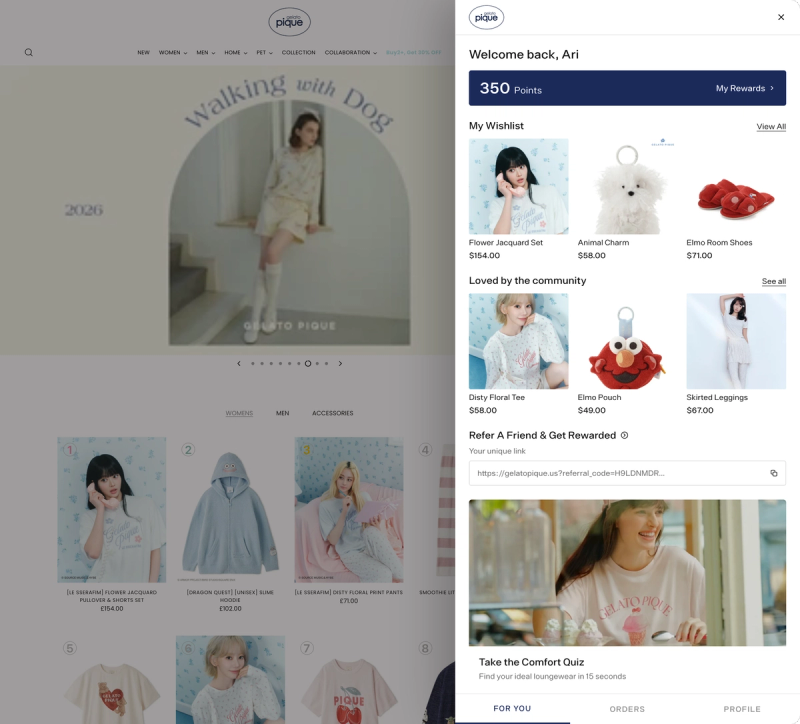
A customer should see what they have earned and what they can do next. Mage Accounts can place points, VIP progress, referrals, wishlist items, recently viewed products, and promotional content inside an on-site account drawer.
Add one obvious next action: submit a review, invite a friend, save an item for later, redeem a reward, or reach the next tier.
Turn the account into a member hub
Mage Canvas lets your team control the layout, colors, typography, spacing, and content blocks across loyalty, account, referral, wishlist, and saved-for-later surfaces without code.
A customer preparing for a race could see saved products, a tier progress bar, a product recommendation powered through the Kimonix integration, and an upcoming community challenge in the same place.
Use data to personalize the next action
Mage syncs loyalty data into Shopify metafields and tags customers by their current VIP tier. That gives you usable segments for connected marketing tools and Shopify workflows.
Send a review prompt after enough time to test the product. Invite high-tier customers to a local class. Remind a customer with a saved item when a relevant collection launches.
Measure community loyalty without losing the revenue connection
| Metric | Why it matters | Where to review it | What to do if it is weak |
|---|---|---|---|
| Participation rate | Shows whether members take actions | Loyalty analytics | Simplify earning actions |
| Review submission rate | Measures contribution | Loyalty and review data | Improve timing and incentive |
| Referral participation | Shows advocacy | Referral analytics | Clarify both rewards |
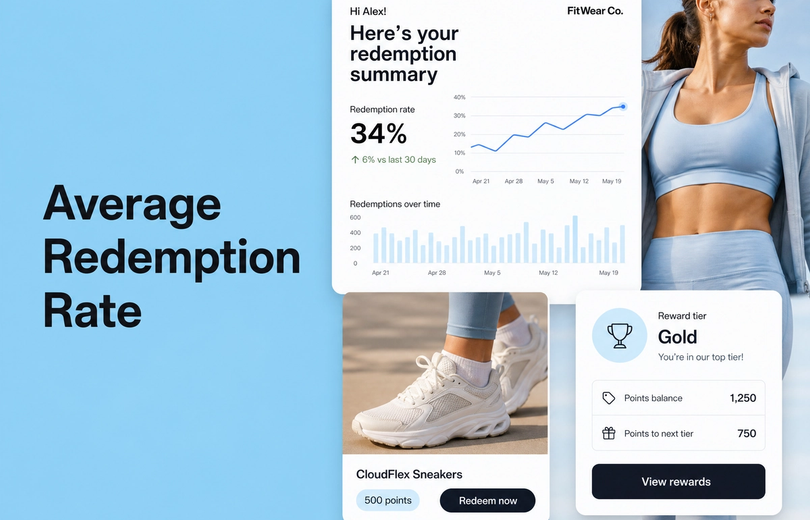
| Reward redemption rate | Shows whether rewards feel useful | Loyalty analytics | Rework reward mix |
| Repeat purchase rate | Connects activity to retention | Shopify and loyalty reporting | Test stronger second-order offers |
| AOV by tier | Tests whether progression changes behavior | VIP tier reporting | Adjust tier perks |
Participation metrics
Track active members, earning actions per member, referral participation, review submission rate, event or challenge participation, and reward redemption rate.
These metrics show whether people use the program. A rising social-follow count with no repeat buying may mean the reward is too generous for the action.
Commercial metrics
Track repeat purchase rate, time to second purchase, purchase frequency, AOV by tier, revenue from referred customers, and revenue from members who redeem.
In Mage’s experience, Shopify brands often sit around a repeat purchase rate of 23% to 25%, while exceptional category leaders can reach about 40%. Treat that as operational context, not a universal benchmark. Compare program members with your own non-members and pre-launch baseline.
A practical 30-day review
Run a review every 30 days. Identify the most-used earning action, most-redeemed reward, highest-converting tier benefit, and largest outstanding point liability.
Then make one change. If reviews produce second purchases, improve the prompt or increase their value. If a social action produces little downstream revenue, reduce its reward.
Frequently asked questions
What makes an activewear loyalty program feel like a community?
It gives customers recurring ways to participate beyond purchases. Challenges, events, education, referrals, product feedback, recognition, and member access create reasons to return, while points and tiers make progress visible.
Which activewear brands have loyalty programs that build community?
Activewear brands with community-led loyalty mechanisms include Nike, adidas, lululemon, Vuori, Alo, and Fabletics. Their programs use training apps, workout challenges, local events, fitness professionals, wellness content, product feedback, and member experiences.
How do activewear brands reward customers beyond purchases?
They reward workouts, reviews, social participation, referrals, challenges, events, and product feedback. A Shopify merchant can turn these into earning actions, then offer points, free products, access, tier progress, or manually fulfilled custom rewards.
Are points enough to build loyalty for an activewear brand?
No. Points track value, but the program also needs activities and benefits customers care about, such as challenges, early access, local events, useful content, recognition, and a visible path to status.
How should an activewear brand structure VIP tiers?
Use three or four clear levels with thresholds based on spend, points earned, or order count. Benefits can include early access, point multipliers, exclusive products, upgraded shipping, event invitations, and contributor-specific rewards.
How can a Shopify activewear brand measure community loyalty?
Track participation, referrals, reviews, redemptions, repeat purchase rate, purchase frequency, AOV by tier, and time to second purchase. Review whether each non-purchase action contributes to retention or referred revenue before increasing its reward value.
Build around one behavior your customers genuinely value, then make the next action and next benefit obvious wherever they shop. Community-led loyalty needs a useful routine, visible progress, and rewards that feel connected to the brand.
Ready to see Mage in action? Book a demo.

Kris is the co-founder of Mage Loyalty. I spend most days talking to merchants, shipping features, and making sure our customers get real results. If you run a Shopify store or Agency we should chat!