Not all brand loyalty looks the same. The customer who buys from you every two weeks because they genuinely love your product is loyal in a different way than the customer who only buys when a 20% discount code is expiring. Treating both the same is the most common mistake Shopify brands make in their retention strategy. This guide breaks down the six recognised types of brand loyalty, what each looks like in the data, and what to actually do about each one.
Key Insights
- Brand loyalty isn't binary. Six distinct types exist, each with different drivers and different retention responses.
- True (or "inherent") loyalty is the most valuable but hardest to build. It accounts for roughly 20% of customers in mature loyalty programs.
- Price/discount loyalty is the most fragile — those customers leave for the next discount.
- Convenience loyalty is more durable than people think. Amazon is built on it.
- The goal of a Shopify loyalty program isn't to convert every customer to true loyalty. It's to move each one up one rung from where they currently are.
- Measuring brand loyalty types requires more than NPS. You need purchase-frequency cohorts, discount-attribution data, and qualitative survey responses together.
What is brand loyalty?
Brand loyalty is the tendency of a customer to keep buying from the same brand over time, even when reasonable alternatives exist. It's distinct from customer loyalty — which can include loyalty to a specific salesperson or location — and from program loyalty, which is loyalty to the rewards mechanism itself.
The distinction matters because brand loyalty is what survives when you raise prices, change packaging, or temporarily run out of stock. Program loyalty evaporates the moment a competitor offers better rewards. Most Shopify brands chase program loyalty when they should be building toward brand loyalty — see what causes customer loyalty for the underlying mechanics.
The 6 types of brand loyalty
Each type maps to a different psychological driver and requires a different retention strategy. The classification below is widely used in academic and applied marketing literature with minor variations.
1. True (or inherent) brand loyalty. The customer prefers your brand for emotional and identity reasons — they think of themselves as the kind of person who buys from you. They'll choose you at a price premium. This is the strongest form and the most expensive to build. Examples: Apple, Patagonia, Glossier.
2. Premium loyalty. Customers pay extra for membership-based benefits. They're loyal because they've already invested in the relationship. Amazon Prime is the canonical example. On Shopify, paid memberships are the direct analogue.
3. Hard (habitual) loyalty. The customer buys from you out of habit. Switching costs aren't financial — they're cognitive. The customer doesn't want to research alternatives or change their routine. Most grocery-replenishment categories work this way.
4. Price/discount loyalty. The customer buys when the price is right. They're not loyal to the brand — they're loyal to the discount. The moment a competitor offers a better deal, they switch. Heavy discounting trains this loyalty type and erodes the others.
5. Convenience loyalty. The customer chooses you because you're easier to use than the alternatives. Faster checkout, better mobile experience, native integration with their existing tools. Convenience loyalty is more durable than discount loyalty because switching has a real cost in time and friction.
6. Latent loyalty. The customer has positive sentiment toward your brand but doesn't buy often. The price might be wrong, the category might be low-frequency, or they only buy from you when a specific need arises. Latent loyalty is the under-monetised pool — the opportunity is to reactivate, not to convert.
How to identify which type your customers have
Three data sources together tell you which type dominates your customer base.
Purchase-frequency cohorts. Group customers by purchases-per-year. A long tail of one-time buyers with rare repeats suggests latent or discount loyalty. A clustered peak at 4–8 orders/year suggests hard/habitual loyalty. Customers who buy at full price more than half the time skew toward true loyalty.
Discount attribution. What percentage of orders use a discount code? Above 50% means you've trained discount loyalty into the base. Below 20% means most purchases happen at full price — a strong signal for true or convenience loyalty.
Qualitative survey. Ask top customers: "Why do you buy from us?" Open-ended answers categorise quickly into the six types. Score them and you'll see the dominant mode.
How to move customers up the brand-loyalty ladder
The goal isn't converting everyone to true loyalty. It's moving each customer one rung up.
- Discount loyalty → Convenience loyalty. Stop conditioning the discount habit. Introduce a loyalty program that rewards frequency with non-monetary perks (early access, expedited shipping, members-only drops) instead of always offering a percentage off.
- Convenience loyalty → Hard/habitual loyalty. Build replenishment paths. Auto-reordering, subscribe-and-save, and post-purchase nudges turn one-off convenience purchases into a routine.
- Hard loyalty → True loyalty. Layer in emotional engagement. Brand storytelling, community programs, referral mechanics where customers actively recommend you. True loyalty is built when the customer's identity overlaps with the brand's.
- Latent loyalty → Active loyalty. Win-back campaigns with store credit — which pulls a return visit, unlike a discount code that just lowers the next order.
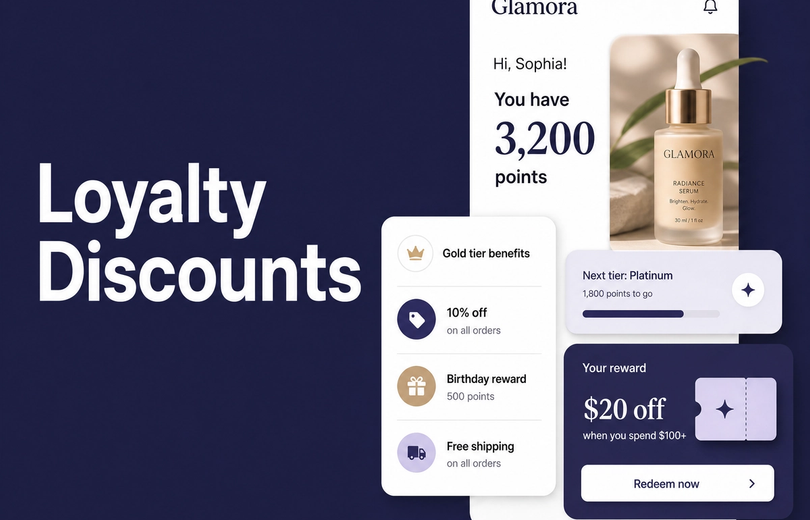
- All types → VIP tiers. Tiered programs are the most reliable mechanism for moving customers up because each tier offers something the previous tier didn't.
Common mistakes brands make when measuring brand loyalty
Treating NPS as a brand-loyalty score. Net Promoter Score measures advocacy willingness, not behavioural loyalty. A customer can score 9 on NPS and still buy a competitor's product because it was on sale. NPS is a useful signal, not a definitive metric.
Confusing program loyalty with brand loyalty. A high points-redemption rate doesn't mean customers love the brand — it means they love the points. The test: would the customer still buy if you removed the program? If most wouldn't, you have program loyalty, not brand loyalty.
Optimising the wrong metric for the wrong segment. Discount-loyal customers don't respond to brand storytelling. True-loyal customers don't respond to discount campaigns. Segment your retention emails and incentives by loyalty type, not by total spend.
Why brand loyalty types matter for Shopify retention strategy
Most Shopify brands run one retention strategy and apply it to every customer. That's why retention rates stall. Operators who segment by brand-loyalty type and customise the lever per segment consistently see 10–20% lift in repeat-purchase rate within two cohorts — see Shopify customer retention for the broader playbook. The six-type framework above is the starting point for that segmentation.
Designing retention campaigns by loyalty type
Each loyalty type responds to a different campaign shape. Segment your customer base by dominant loyalty type and tune the retention lever accordingly.
- True/inherent loyal customers → community + brand storytelling campaigns. Skip discount messaging entirely; over-discounting devalues the relationship.
- Premium/membership loyal customers → renewal nudges, exclusive perks reminders, member-only event invitations. Reinforce the value of the paid relationship.
- Hard/habitual loyal customers → replenishment reminders, subscribe-and-save offers, post-purchase upsells in the same category.
- Price/discount loyal customers → graduate them with store credit rather than continuing the discount habit; introduce points multipliers tied to non-discount earning paths.
- Convenience loyal customers → friction reduction (faster checkout, expedited shipping, saved addresses), not discount campaigns. They stay for the experience.
- Latent loyal customers → win-back with store credit (not a discount code), wishlist restock alerts, anniversary recognition. The opportunity is reactivation, not conversion.
Common patterns across high-loyalty Shopify brands
Three observable patterns emerge in Shopify brands with above-category retention rates.
They diversify earning paths beyond purchase. High-retention brands typically award points for reviews, referrals, social engagement, profile completion, and birthday submission — not just purchases. Programs that only award points-per-dollar see participation cap below 10%; programs that diversify hit 25–35% participation.
They pair status with utility in tier design. Top-performing tier structures combine quantifiable utility (free shipping, member pricing) with status signalling (named tier, badge, early access). Pure-utility tiers feel transactional; pure-status tiers feel hollow.
They measure cohort lift, not absolute revenue. Comparing program-member revenue to non-member revenue overstates impact (already-loyal customers are more likely to join the program). Measuring cohort lift (member vs non-member in the same acquisition cohort over the same period) is the only metric that proves the program is causing the retention lift.
Frequently Asked Questions
What are the 6 main types of brand loyalty?
True (inherent) loyalty, premium loyalty, hard/habitual loyalty, price/discount loyalty, convenience loyalty, and latent loyalty. Each is driven by a different psychological mechanism and requires a different retention strategy.
Which type of brand loyalty is most valuable?
True (inherent) loyalty is the most valuable because it's the most durable — these customers stay through price increases, packaging changes, and out-of-stock situations. It's also the hardest and most expensive to build.
Is discount loyalty real loyalty?
It's measurable behavioural loyalty (the customer keeps buying from you), but it's the weakest form because it evaporates when a competitor offers a better deal. Heavy reliance on discounts also crowds out the development of stronger loyalty types.
How do I measure brand loyalty types in my customer base?
Combine three data sources: purchase-frequency cohorts, discount attribution (what percentage of orders use a discount code), and qualitative survey responses asking customers why they buy. Together they cluster customers into the six types.
Can a customer have more than one type of brand loyalty?
Yes — types blend, especially over time. A customer might start as price/discount-loyal during a sale, develop convenience loyalty after their second purchase, and eventually move into hard/habitual loyalty. The strongest brands actively move customers across types rather than locking them into one.
The best Shopify loyalty program for retention-driven brands
Mage Loyalty for Shopify bundles segment-aware retention tools alongside points, VIP tiers, store credit, paid memberships, referrals, wishlists, AI receipt scanning, and a no-code editor — all from a single app, with native Shopify POS, customer-account, and checkout integration. Pricing starts at $49/month with no enterprise minimums.

Kris is the co-founder of Mage Loyalty. I spend most days talking to merchants, and making sure our customers get real results. If you run a Shopify store or Agency we should chat!