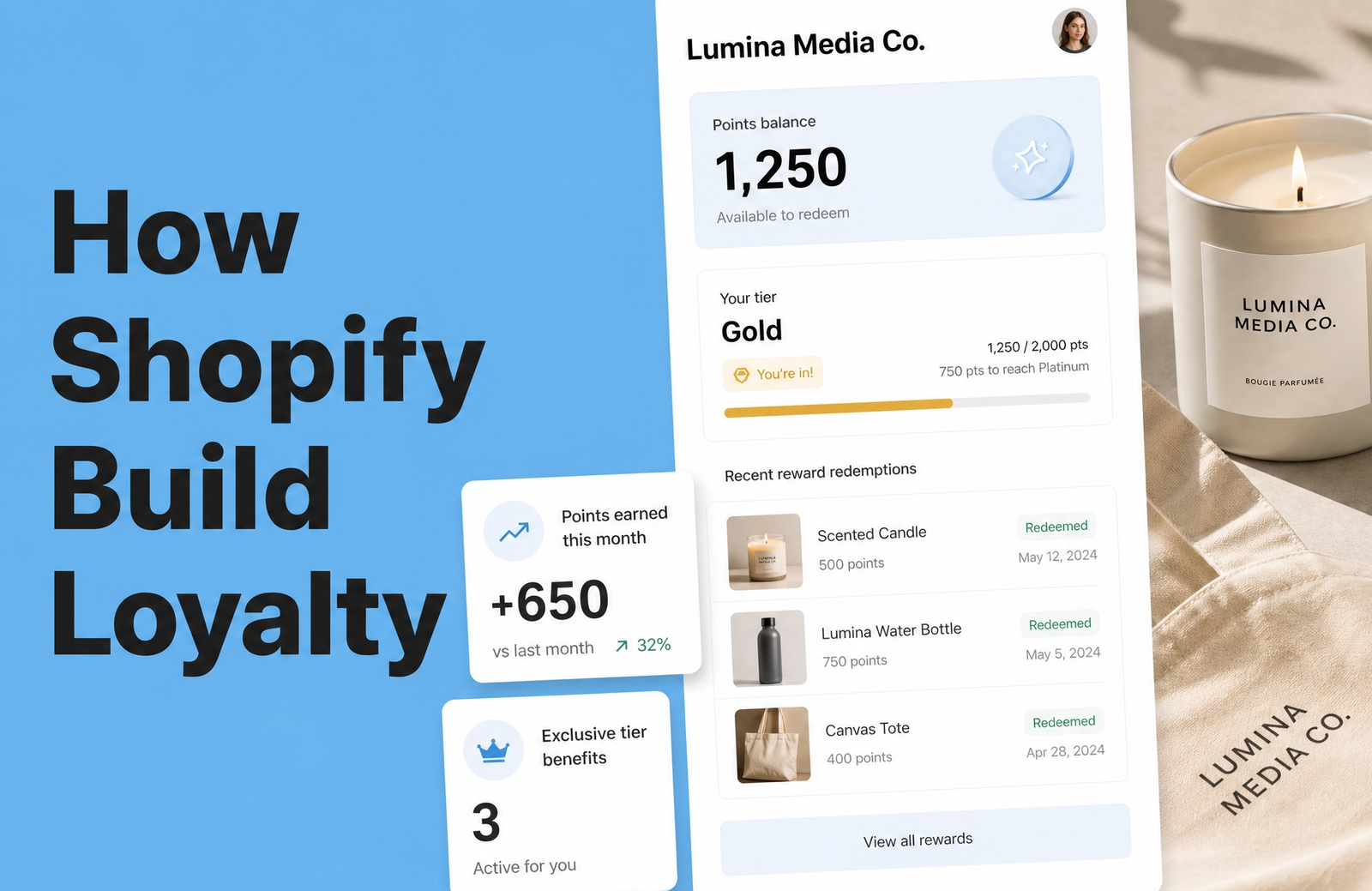
TLDR: Traditional loyalty programs often miss the mark for books and media. To thrive against subscription boxes and streaming, Shopify brands need specialized, content-aware loyalty strategies. Focus on mechanics that reward customers for building collections, maintaining reading/engagement streaks, and fostering vibrant communities to create deep, lasting fandom.
Here's a counterintuitive truth: loyalty programs don't fail book and media brands because customers prefer subscriptions. They fail because most programs treat a passionate reader the same way they'd treat someone buying socks.
The modern content landscape is unforgiving. Physical books, audiobooks, and media purchases compete directly with Netflix, Kindle Unlimited, and subscription boxes that promise unlimited access for a flat monthly fee. The convenience is undeniable. The selection is vast. The friction is minimal.
Yet something powerful gets lost in that transaction model. Ownership. Curation. The identity that comes from building a personal library. The pride in completing a series you love. The connection to a community of people who share your passions.
This environment presents a genuine challenge for Shopify book and media brands: how to move beyond transactional relationships and foster enduring customer loyalty when your customers can access nearly infinite content with a single click.
The answer isn't to beat subscriptions at their own game. It's to compete in an entirely different arena—one where generic loyalty programs designed for broad e-commerce simply cannot operate.
The Great Myth: Loyalty Programs Don't Work for Books and Media
Let me debunk this right away.
The prevailing narrative goes something like this: "In a world dominated by subscription services and streaming platforms, traditional loyalty programs are ineffective for Shopify book and media brands. Customers only care about the lowest price or endless access."
This is, frankly, incomplete thinking.
While price and convenience absolutely matter, true loyalty for books and media is built on something far deeper: emotional connection, the satisfaction of ownership, curated discovery, and shared passion. Generic, purchase-driven loyalty programs fail because they treat "buy more, save more" as universal motivation. For content enthusiasts, it's not.
Here's what I've observed working with media brands: customers don't abandon your store because they can get the book cheaper elsewhere. They leave because no one celebrates when they finally complete a series they've been collecting. They leave because a streaming platform's algorithm feels more thoughtful about recommendations than your email campaigns. They leave because they're treated as isolated transactions rather than members of a community.
Specialized loyalty programs—designed with content engagement and collection building in mind—offer a powerful counterargument to the "rent vs. own" dilemma. They say: "We see you. We understand what you're building here. We're invested in your story, not just in another sale."
This shift from transactional rewards to emotional and experiential loyalty is what separates survival from genuine growth in this niche.
What Loyalty Actually Means in the World of Books and Media
For most of e-commerce, loyalty is measured in repeat purchases. For books and media, it's more nuanced.
Customer loyalty here encompasses sustained engagement (not just one-off transactions), emotional attachment to the brand and its offerings, active advocacy without being asked, and a distinct preference for your store even when competitors or alternatives exist.
Books and media are unique products. They foster passion, personal identity, learning, and shared experience in ways that most consumer goods do not. Someone reading a sci-fi series isn't just buying entertainment—they're investing hours of their time, building connections to characters, developing identity around those preferences. That creates a psychological hook that a generic loyalty program can either activate or completely miss.
Subscriptions offer undeniable benefits: convenience, breadth, discovery algorithms. But they sacrifice something crucial. Ownership. Personal curation. The specific relationship with a single brand that has consistently understood and delighted you.
Think of it this way: a subscription is like renting a house you rotate through. Loyalty for purchased media is like building and furnishing your own home. One is temporary and flexible. The other is deeply personal.
The mistake most Shopify book and media brands make is applying "one-size-fits-all" loyalty approaches to this uniquely passionate market. You can't use the same playbook that works for a home goods store and expect it to resonate with people who organize their lives around the stories they consume.
Why Niche-Specific Loyalty Programs Are Crucial for Shopify Book and Media Brands
Combating the "Rent, Don't Own" Mentality
Subscriptions have normalized the idea that access is more valuable than ownership. Your loyalty program should prove the opposite—not through discount battles, but by making ownership feel like an identity upgrade.
A specialized program incentivizes building collections, completing series, and acquiring specific editions. It celebrates these milestones publicly, makes progress visible, and rewards the customer for choosing ownership over fleeting access.
When a customer completes a fantasy series over six months of deliberate purchases from your store, that's loyalty. Subscriptions can't offer that reward because they devalue ownership from the start.
Elevating Customer Lifetime Value (CLV)
The economics are stark: acquiring a new customer costs 5 to 25 times more than retaining an existing one. Returning customers spend 67% more than first-time shoppers.
But here's what I've seen specifically in the media niche: loyal customers don't just spend more. They spend differently. They buy across formats (hardcover, paperback, audiobook). They explore adjacent genres. They gift books as a way to extend their influence. Their lifetime value isn't linear—it accelerates.
A customer who's part of a bookstore's community, who feels their collection is recognized, who knows they'll get early access to new releases they care about—that customer might spend $500 annually instead of $150. That's the difference between a viable business and one that scales.
Building a Defensible Niche and Competitive Edge
Amazon can compete on price and selection. Netflix can compete on breadth. But neither can offer the intimacy of a specialized loyalty program built specifically for people who love a particular genre or medium.
Unique loyalty programs create a moat. They differentiate your Shopify store, establish a distinctive brand identity, and make switching costs real (not just economically, but psychologically—leaving means losing progress, community standing, and curated experiences).
Enhancing Customer Engagement and Satisfaction
When your bookstore's loyalty program offers personalized recommendations based on what someone's actually read, not just what's on sale, they feel genuinely understood. That feeling drives satisfaction in ways discount codes never will.
84% of customers are more likely to stick with a brand offering a loyalty program. But the deeper insight: 90% will spend more with businesses providing personalized experiences. Personalization isn't a nice-to-have—it's what transforms programs from marketing tactics into relationship infrastructure.
The Shopify loyalty program growing brands trust
See how Mage helps Shopify brands lift repeat purchase rate with loyalty, referrals and store credit.
Book a demoDriving Organic Marketing and Advocacy
Here's something that doesn't appear on loyalty program dashboards but shapes everything: delighted customers become advocates.
A loyal community member leaves thoughtful reviews without incentives. They recommend your bookstore in online forums. They post their hauls on social media using your branded hashtag. They refer friends who are likely to stick around because they already know the store's values.
Loyalty program members are 2.5 times more likely to repeat purchase. But they're also far more likely to generate the word-of-mouth and user-generated content that niche brands depend on. This organic advocacy is invaluable when you're competing against algorithms and massive ad budgets.
“Cannot say enough good things about the team at Mage Loyalty, one of the absolute best organizations we have ever worked with, full stop! So glad we connected with them, completely redid our loyalty program, new concepts, use of loyalty, increasing user engagement, showing us where we were not valuing our best customers, just WOW, amazing team!”


Read the West Coast Goalkeeping case study →
The Mechanics of Engagement: How Specialized Loyalty Fuels Fandom
Let's move beyond generic points systems. Here's what actually resonates with book and media enthusiasts.
Building and Rewarding Collections: The Allure of Completion
There's a psychological force driving collectors that most loyalty programs overlook: the satisfaction of completion.
People collect for mastery (I want to read everything by this author), for nostalgia (I'm recreating the library from my childhood), and for identity (these books represent who I am). A specialized loyalty program channels that drive.
Incentivizing series completion is the most obvious application. When a customer buys their fifth book in a fantasy series, your program recognizes it—not as a transaction, but as a milestone. Offer bonus points. Unlock exclusive content. Let them know they're close. Make it feel like an achievement, because it is.
The same logic applies to editions. A fan might own the original hardcover, then discover there's an illustrated edition, then a special anniversary release. Each purchase is an expression of deeper fandom. Reward that depth.
Curated library building takes this further. Imagine offering a "Complete Thriller Collector" tier where customers earn escalating rewards for acquiring 10, 20, 30+ titles within the thriller genre. Or a "Publisher Discovery" program that rewards exploring different imprints.
The implementation is straightforward: use product tags and automated triggers within your building your Shopify loyalty program platform to recognize progress toward these collection goals.
Reading and Engagement Streaks: The Power of Habit
Streaks leverage some of the most powerful behavioral psychology: consistency, visible progress, and the intrinsic reward of achievement.
Think of them like reading challenges, but with real stakes. "Read a new book every month for a year." "Listen to an audiobook daily for 30 days." "Submit a review every week for eight weeks straight."
The challenge, of course, is tracking actual reading for physical media. You can't directly know when someone finishes a book they purchased from you three months ago.
Solutions exist. Encourage review submissions upon completion and reward those. Implement self-reported achievement systems where customers log their progress (with verification mechanisms to prevent gaming). Where possible, integrate with compatible e-reader or audiobook apps if customers grant permission.
For active participation streaks, the tracking is simpler. Reward consecutive days of engaging with brand community content: commenting on blog posts, participating in forums, submitting reviews. This builds habit and deepens the relationship beyond purchases.
The rewards for streaks should feel premium. Early access to new releases. Exclusive digital content (author interviews, deleted scenes, bonus chapters). Personalized reading lists curated by experts who understand the customer's specific tastes. These are the rewards that make streaks feel worth maintaining.
Fostering Community: Turning Readers into a Tribe
The most engaged book communities aren't built around transactions. They're built around shared passion.
Your loyalty program should facilitate this. Reward social engagement directly: incentivize participation in online book clubs, discussion forums, or virtual author events hosted by your brand. Offer points for submitting user-generated content—thoughtful reviews, fan art, curated reading lists, unboxing videos.
A referral program with a twist works differently here. Don't just reward bringing new buyers. Reward bringing new community members who become active participants. Implement tiered structures: basic rewards for referral signups, escalating rewards for referrals who hit engagement milestones (their first review, their first community post, their first collection purchase).
This changes the psychological equation. You're not just buying attention; you're building something together.
Exclusive community perks cement this. Early or exclusive access to community-only content. Polls where members vote on future stock, future author events, or collection themes. Direct interaction opportunities with authors or creators—even brief Q&A sessions feel premium when they're exclusive to loyal members.
Content-Aware Reward Triggers: The Advanced Layer
Most loyalty programs operate at a surface level. They reward the action (bought a book) without understanding the context (which book, why it matters, what it reveals about the customer's passions).
Content-aware reward triggers represent the next evolution. They use a system that understands the specific characteristics of what customers engage with—genres, authors, series, themes, even sentiment within descriptions.
Here's a practical example: a customer just completed a science fiction series. A traditional program might offer "10% off your next purchase." A content-aware system recognizes the sci-fi preference and offers "15% off your next science fiction title" or "Unlock 50 bonus points toward any author in the cyberpunk genre."
This feels intuitive rather than algorithmic. It feels like the brand understands you.
The same logic applies to recommendations and collection building. Content-aware systems can identify that a customer owns books 1, 3, and 5 of a series (perhaps purchased at different times or from different sources) and suggest book 2 with a specific incentive to complete the run. They can recognize that someone loves cozy mysteries and recommend recent releases in that genre.
This approach leverages first-party customer data not just for broad segmentation, but for hyper-personalization. It creates loyalty experiences where customers feel genuinely understood by the brand, not just targeted by algorithms.
Rewarding Social Engagement
User-generated content is where many bookstore loyalty programs miss an opportunity. Reviews aren't just social proof—they're community currency.
Implement robust rewards for reward loyal customers for reviews: points for text reviews, bonus points for photo reviews, premium rewards for video testimonials. Create campaigns celebrating exceptional user-generated content on your social media.
This transforms customers from buyers into creators. They're not just purchasing from you; they're building the social proof that attracts future customers. That shift in identity—from consumer to contributor—is powerful.
Applying Loyalty: Building Your Shopify Book and Media Program
Defining Your Loyalty Goals
Before any implementation, get specific about what you're trying to achieve. Is it increasing series completion rates? Boosting community engagement for a specific genre? Improving retention for audiobook customers? Driving collection building?
These goals should shape every other decision. A program optimized for series completion will look different than one optimized for community participation.
Choosing the Right Shopify Loyalty App
Look beyond basic points systems. Your platform needs:
- Advanced customer segmentation (so you can target niche behaviors, not just spend levels)
- Highly customizable earning and redemption rules (because your book program isn't like other programs)
- Integration capabilities (especially for content-aware triggers and email platforms)
- Analytics that track engagement metrics, not just transactions
Some emphasize ease of setup, others prioritize advanced features. Evaluate based on your specific needs, not generic recommendations.
Consider a pre-launch checklist for your program to ensure you're covering the implementation details properly.
Designing Your Earning Rules
Start with basics: points for purchases. Then layer in sophistication:
- Bonus points for specific actions (buying new releases, supporting indie authors, purchasing within certain genres)
- Extra points for quality reviews and user-generated content
- Milestone rewards for collection completion, streak maintenance, community participation
Each rule should ladder toward your specific goals. If series completion is critical, make completing a series worth significantly more than random purchases.
Crafting Compelling Rewards
This is where most programs fail. They offer discounts and call it done.
Niche-specific rewards matter more. Signed copies. Exclusive digital content (author interviews, deleted scenes, concept art, behind-the-scenes footage). Early access to new releases. Invitations to virtual author Q&As. Personalized reading lists curated by actual humans, not algorithms.
Experiential rewards create deeper loyalty than transactional ones. Exclusive virtual book club meetings with special guests. Private online events. Opportunities to shape future offerings.
Use discounts and free shipping as baseline benefits, but make them the foundation, not the destination.
Promoting Your Loyalty Program
Your program can be brilliant and still fail if no one knows about it. Be explicit about the unique value on your homepage, product pages, and in email. Use in-app notifications to celebrate achievements ("You're one book away from completing the series!") and highlight personalized opportunities.
Consider this your powerful Shopify referral program implementation: incentivize members to recruit friends by making membership itself feel exclusive and valuable.
Measuring and Optimizing
Track the metrics that matter: repeat purchase rate, Customer Lifetime Value, engagement rates (reviews submitted, community posts), collection completion rates, reward redemption rates.
A/B test different reward structures, communication strategies, and loyalty mechanics. What motivates your specific audience might differ from broader benchmarks.
The program should evolve based on data. If collection completion rewards aren't driving behavior, adjust the incentive structure. If community participation lags, investigate whether your barriers to entry are too high.
Nurturing a Universe of Loyal Readers and Viewers
In a content landscape increasingly dominated by subscription models, generic loyalty programs won't move the needle for Shopify book and media brands.
The key to sustained success lies in implementing strategies for customer retention that are specifically designed for this niche. Content-aware loyalty strategies that deeply resonate with the unique passions of readers, viewers, and collectors.
By rewarding the building of cherished collections, celebrating consistent engagement through streaks, and fostering vibrant connected communities, you transcend transactional relationships.
This approach transforms casual buyers into deeply engaged fans, cultivating a sustainable competitive advantage and creating a loyal customer base that genuinely feels understood and valued.
Ultimately, true loyalty for book and media brands is about celebrating and enriching the enduring human passion for stories and content, not just selling products.
Frequently Asked Questions
Q: Can a small Shopify book store truly compete with major retailers and subscription services using loyalty programs?
A: Yes. Small and niche Shopify stores have a structural advantage: the ability to build deeper, more personalized loyalty experiences than large platforms can offer. Major retailers optimize for scale. You can optimize for intimacy. A well-designed loyalty program that celebrates collections, communities, and reading streaks creates switching costs that price alone cannot match.
Q: How can I track reading or listening streaks if customers are buying physical books?
A: Direct tracking is indeed challenging for physical media. Solutions include: (1) encouraging review submissions upon completion with milestone rewards, (2) implementing self-reported achievement systems where customers log progress voluntarily, (3) integrating with compatible e-reader or audiobook apps where technically feasible and permissioned. Many customers enjoy manually tracking their reading anyway—it's another form of curation and identity expression.
Q: Is content-aware loyalty primarily for digital media, or does it work for physical products too?
A: Content-aware loyalty is highly effective for both. By analyzing purchase history, a system understands genre preferences, favorite authors, series patterns, and format choices. These insights trigger relevant, personalized recommendations and rewards for future physical purchases. A customer who loves historical fiction receives different incentives than one who reads thrillers, even if both buy from your store.
Q: What's the biggest mistake Shopify book and media brands make with loyalty programs?
A: Treating loyalty as a discount engine rather than a celebration of passion. The biggest brands in this space (Sephora, GymShark) use loyalty to deepen identity and community. Bookstore brands often use it to drive clearance sales. Instead, ask: How can this program celebrate what my customers love? How can it make them feel part of something bigger? The answer to those questions shapes everything else.

Graeme is the co-founder at Mage Loyalty. He heads product development, from complex loyalty migrations and large-scale data handling to building the features shaping the future of loyalty on Shopify.