Most Shopify store owners running subscription businesses operate their loyalty and subscription programs in complete isolation. You probably do too. The result is painful: customers earn points on one-time purchases but can't redeem them on their recurring subscriptions, creating friction right where you want seamless engagement.
This isn't a small problem. It's costing you customer lifetime value, accelerating churn, and wasting the potential of what should be your most profitable customer segment. Subscribers deliver 3x higher lifetime value than one-time buyers—yet most loyalty programs don't even acknowledge they exist.
Here's the core issue: your subscribers are your best customers, but they're often treated like an afterthought in your loyalty strategy. They're already committed to your brand (that's why they're subscribed), yet they get the same generic points-per-dollar rewards as someone making their first purchase. That's strategically backwards.
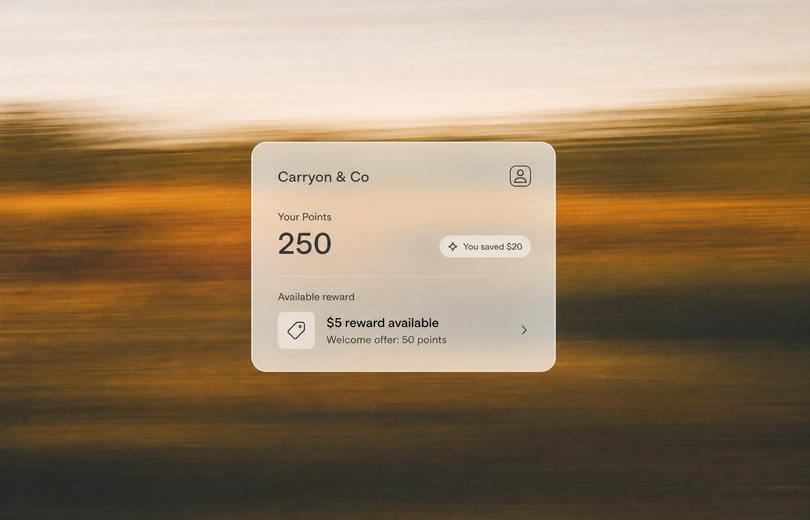
Integrating your Shopify loyalty program directly with your Recharge subscription platform changes everything. Suddenly your subscribers can earn points on renewals, get rewarded for tenure, redeem points directly against their next charge, and experience loyalty as a unified journey rather than two disconnected systems fighting for their attention.
This guide walks through exactly how to integrate a loyalty program with Recharge subscriptions—why it matters, what you'll enable, and the step-by-step technical and strategic implementation. By the end, you'll understand not just the mechanics, but the deeper retention leverage this integration unlocks.
Quick Guide to Integrating Loyalty with Recharge Subscriptions
Connecting your Shopify loyalty program to Recharge takes three phases: preparing your loyalty platform for subscription data, creating the technical connection between the systems, and configuring earning/redemption rules specifically for recurring purchases. The core steps involve accessing your Recharge API credentials, entering them into your loyalty app's integration settings, and building subscription-specific earning rules that reward both initial signups and ongoing renewals. The payoff is immediate—customers earn and redeem rewards on their most valuable purchases, churn decreases because loyalty incentives stack with subscription convenience, and you gain a unified view of subscriber behavior for smarter retention campaigns. Most integrations take 30-60 minutes to set up once you've decided on your earning structure.
Why Your Subscription Business Needs Seamless Loyalty Integration
Boost Customer Lifetime Value (LTV)
Subscribers already outspend one-time buyers by a factor of three. But that gap widens dramatically when you add loyalty incentives that actually apply to their recurring purchases. When customers can earn and redeem points on renewals, you're creating a compounding engagement loop: they stay subscribed longer, spend more per renewal, and refer friends who become subscribers themselves.
The math is compelling. A customer earning 10 points per $1 on a $30 monthly subscription generates 300 points annually—enough for meaningful rewards. Scale that across your subscriber base and you've created a retention multiplier that's impossible to achieve through discounts alone. Points-based loyalty on subscriptions naturally extends average subscription length because redemptions incentivize continued engagement.
Combat High Churn Rates
Subscription churn is brutally predictable. The average subscription business loses 5.3% of customers monthly. Worse, 44% of all cancellations happen within the first 90 days. That's where integrated loyalty becomes a lifeline. When new subscribers can see their points accumulating on their first renewals, they develop an immediate sense of progress and tangible benefit. That's psychological friction against cancellation.
Integrated loyalty also gives you early warning signals. A subscriber who stops earning or redeeming points is at risk before they hit cancel. Loyalty data lets you trigger retention campaigns before churn happens—offering bonus points, exclusive perks, or milestone rewards that reactivate engagement before it's lost.
Enhance the Subscriber Experience
Here's what friction looks like in practice: A customer subscribes, completes their first renewal, then checks your loyalty page only to discover they can't redeem points on the one purchase that matters—their recurring charge. They can use points on one-off purchases, sure, but that defeats the purpose of subscribing. The experience feels deliberately punishing.
When loyalty and subscription systems integrate, that friction vanishes. Customers see one account, one point balance, one redemption flow. They understand immediately that staying subscribed is rewarded. That unity transforms loyalty from a acquisition game into a retention engine.
Consolidate Customer Data
Keeping loyalty and subscription data separate means you're making decisions on incomplete information. You don't know which of your highest-value subscribers are disengaged from loyalty. You can't identify your best referral candidates among subscribers. You can't segment by subscription tenure and loyalty engagement simultaneously.
Integration creates a single customer view. You see subscription history, payment patterns, point activity, and engagement all in one place. That's the foundation for sophisticated retention strategies—targeting long-tenure subscribers with VIP perks, rewarding referrers who bring in new subscribers, or proactively offering loyalty incentives to subscribers showing early churn signals.
Beyond Points: Why Experiential Rewards Drive Deeper Loyalty for Gen Z Subscribers
There's a contrarian truth here worth stating plainly: if you're building a loyalty program in 2025 and your primary reward is "10% off," you're already losing. Especially with younger demographics who see discounts as commodities rather than rewards.
Gen Z subscribers—which increasingly describes healthy subscription customer bases in beauty, wellness, food, and fashion—don't primarily want cheaper products. They want belonging, status, and experiences that validate their choices. A 10% discount does neither. It just makes your product feel like everything else on the internet.
The real issue with points-only loyalty is that it reduces brand affinity to a transaction. Who offers the better reward wins. That's not loyalty; that's a auction where the customer always shops based on margin. It's especially true for subscribers, who are already committed to your brand through an ongoing payment. Adding another layer of transactional friction (track points, accumulate to threshold, redeem discount) can actually feel like work rather than reward.
The solution isn't abandoning points. It's pairing points with experiential and status rewards that create deeper attachment. Think VIP tiers that unlock early access to new products or exclusive customer events. Think surprise-and-delight rewards on subscription milestones—a handwritten note and a free product on someone's one-year anniversary, not just 500 bonus points. Think exclusive community access for your longest subscribers.
Mage Loyalty and similar platforms enable this balanced approach by supporting multiple reward types simultaneously—points for transactions, plus tier-based perks, plus milestone bonuses, plus exclusive access. Your most valuable subscribers don't just accumulate points; they feel seen and valued in ways that transcend price.
Understanding Mage Loyalty and Recharge Subscriptions
To integrate loyalty with subscriptions effectively, you need to understand what each system does and why they're designed to work together.
A flexible Shopify loyalty program like Mage combines VIP tiers, points-based rewards, referral mechanics, and milestone tracking into a single customizable platform. It lives natively on your Shopify store, meaning data syncs automatically and customers never leave your ecosystem to engage with loyalty. The platform emphasizes flexibility—you're not locked into rigid point structures or predetermined reward tiers. You build exactly what your brand needs.
Recharge is the default subscription infrastructure for Shopify stores. Seventy-one percent of all Shopify subscriptions run on Recharge. It handles subscription management, billing, customer portals, and renewal orchestration. Recharge doesn't require your involvement after setup; it automates the ongoing revenue stream.
The power couple emerges because Recharge handles the subscription machinery while loyalty drives the engagement strategy. Recharge knows when renewals happen, who's at risk of churn, and how much lifetime value each customer represents. A loyalty program integrated with that data can reward subscribers intelligently—not with generic points, but with tenure-based perks, at-risk interventions, and referral incentives calibrated to your subscription model.
When they're disconnected, you're treating your most valuable customers like everyone else. When they're integrated, you're building a retention system specifically engineered for recurring revenue.
The Shopify loyalty program growing brands trust
See how Mage helps Shopify brands lift repeat purchase rate with loyalty, referrals and store credit.
Book a demoPhase 1: Preparing Your Mage Loyalty Program for Recharge Integration
Before touching any technical settings, you need baseline clarity on what you're connecting and what you want to achieve.
Pre-Integration Checklist
Start with the fundamentals:
- Both apps installed and active: Your Shopify store has Mage Loyalty installed and active in your app section. Recharge is also installed and processing subscriptions. You can verify this by checking your Shopify admin and confirming both appear in your Apps section.
- Verify your Recharge Checkout Type: Recharge uses two checkout implementations—RCS (Recharge Checkout Server) and SCI (Stored Card Integration). This matters because it affects how discount codes sync and how renewal data flows. You'll find this in your Recharge admin under Settings > General. If you're unsure which you're using, contact Recharge support or check your checkout page to see if it's branded Recharge or looks like standard Shopify checkout.
- Confirm Mage Loyalty account setup: You've set up basic earning rules (e.g., 1 point per $1 spent) and at least one redemption option (e.g., 100 points = $10 discount). These don't need to be subscription-specific yet; they're your foundation.
Reviewing Existing Loyalty Rules
Next, audit what you already have configured:
Look at your current earning rules. Do you award bonus points for specific products or purchase types? Those rules will apply to subscription orders too unless you explicitly exclude them. Consider whether that's intentional. For example, if you offer 2x points on certain products and a subscriber orders one of those products as part of their renewal, they should get the multiplier. That makes sense.
Check your redemption options. Can customers redeem for discounts, free products, or store credit? Each redemption type has implications for subscription integration. A free-product redemption is straightforward; the customer receives their item. A percentage-off discount is more complex because it needs to sync to Recharge as a valid code. You'll want to understand these mechanics before enabling subscription redemptions.
Setting the Stage for Subscription-Specific Rewards
Before you integrate, decide what you want to reward:
- First subscription purchase: Do you want a bonus (e.g., 50 extra points) when someone signs up for their first recurring order?
- Renewal rewards: How many points per dollar on renewals? Same as one-time orders, or higher to signal you value the commitment?
- Tenure milestones: Should a subscriber hitting their one-year anniversary get a special bonus, exclusive perk, or status upgrade?
- Referral mechanics: Do you want subscribers to earn bonus points or status bumps for referring friends who become subscribers?
Write these down. They're the blueprint for your integration.
“I looked into so many different integrations for loyalty and referrals for our Shopify Store, but no one impressed me more than Mage on human connection, customer service, and value.”


Read the Reelie case study →
Phase 2: Connecting Recharge to Your Mage Loyalty Account
The technical connection is straightforward, but you need the right credentials.
Step 1: Accessing Recharge API Credentials
Navigate to your Recharge admin dashboard. Look for Settings (usually in the main menu), then API Keys. Recharge may ask you to confirm your identity or enable two-factor authentication for this action.
Click Create API Token and give it a descriptive name like "Mage Loyalty Integration." Recharge will ask you to specify permissions. At minimum, enable:
- Read subscriptions
- Read orders
- Read customers
These permissions let Mage Loyalty see subscription history, payment data, and customer records. Don't grant write permissions unless Mage explicitly requests them (they shouldn't for a standard integration).
Once created, copy the API token to a secure location. You'll only see it once. If you lose it, you'll need to regenerate and reconfigure.
Step 2: Entering Credentials into Mage Loyalty
Log into your Mage Loyalty admin panel. Look for Settings or Integrations (the exact location depends on your Mage version, but it's typically in a left-side admin menu).
Find the Recharge integration option. Paste your API token into the designated field. Mage may also ask for your Recharge Store ID (also called Shop ID), which you can find in Recharge settings.
Step 3: Authorizing the Connection
Click Authorize or Connect. Mage will attempt to verify the credentials with Recharge. If successful, you'll see a confirmation message. If it fails, double-check:
- Incorrect API token: Copy and paste again from Recharge. Typos break the connection.
- Insufficient permissions: Go back to Recharge and verify that read subscriptions, orders, and customers are enabled.
- Checkout type mismatch: If you're using SCI, some integrations require additional configuration. Check Mage documentation or support.
Once confirmed, test by checking if Mage can access your subscriber data. Most platforms will show a sample subscription or allow you to run a sync test. Do this before moving forward.
Earning Points on Subscription Orders with Mage Loyalty
Now that Mage and Recharge are connected, you can configure how points are earned on subscriptions.
Setting Up Points for Initial Subscription Purchases
In your Mage Loyalty admin, navigate to Earning Rules or Points Configuration. Look for an option to create a new earning rule or edit existing ones.
Create a rule with these parameters:
- Trigger: First subscription order (or "Subscription purchase" if the UI doesn't differentiate)
- Points awarded: Choose your structure. Common options are 1 point per $1 spent (same as one-time purchases), or a bonus multiplier like 1.5 points per $1 to signal that you value the subscription commitment.
- Description for customers: Something like "Earn points on every subscription order" so subscribers understand the reward.
Apply the rule and test by checking a recent subscriber. Their first order should show the assigned points in your admin.
Automating Points for Recurring Subscription Renewals
This is where the real retention power emerges. You're rewarding the ongoing commitment, not just the initial signup.
Create another earning rule:
- Trigger: Subscription renewal
- Frequency: Every renewal (the system should automatically recalculate on each billing cycle)
- Points awarded: Usually 1 point per $1 (same as initial purchase). You can experiment with bonuses, but consistency typically performs better.
This rule fires automatically each month (or whatever your subscription cycle is). A customer on a $40 monthly subscription earns 40 points each month, accumulating to 480 points annually. That's enough for real rewards and creates genuine incentive to stay subscribed.
Test this by examining a subscriber's point history. You should see points added on their renewal dates.
Best Practice: Communicating Renewal Rewards
Don't assume subscribers know they're earning points on renewals. Email them. Include point-earning language in your order confirmation emails ("Your renewal order earned 45 points—you're 55 points away from a free product!"). Add a dashboard widget on your Shopify store showing subscribers how many points they've earned from renewals this year.
Transparency drives engagement.
Rewarding Subscription Tenure & Milestones with Mage Loyalty
Beyond basic per-purchase points, tier your rewards based on how long someone has been subscribed. This is where experiential loyalty becomes powerful.
Creating Anniversary Rewards
In Mage Loyalty, create a milestone-based earning rule:
- Trigger: Subscription anniversary (1 year, 2 years, etc.)
- Reward: Bonus points (e.g., 100 extra points on the one-year anniversary) or exclusive perk (VIP tier upgrade, early access to a new product)
An example: A subscriber hits their one-year anniversary. Automatically, they receive an email: "You've been a member for one year! We're awarding you 100 bonus points and exclusive early access to our next product launch—arriving next week."
That's not a discount. That's recognition. And it reinforces the value of staying subscribed.
Progressive Benefits for Long-Term Subscribers
Design a tenure-based VIP structure:
- Bronze (0-6 months): Standard earning rate, access to loyalty perks
- Silver (6-12 months): 1.25x point multiplier, free shipping on renewals
- Gold (12+ months): 1.5x multiplier, exclusive community access, quarterly gifts
Customers advance automatically as subscription anniversaries pass. They see their tier status in their account dashboard. The progression creates both short-term incentive (earn the next tier) and long-term retention (established tiers feel like status worth protecting).
You can design effective VIP tiers that segment subscribers not just by spending but by tenure, engagement, and referral activity. The combination is more powerful than any single metric.
Integrating with Recharge's Milestone Programs
Recharge has its own native milestone system. Mage loyalty shouldn't replace it; it should complement it. Recharge handles the technical automation of chargeback intervals. Mage handles the emotional rewards and tier progression.
If Recharge is already configured to do something (like automatic renewal on a specific date), let it. Mage adds the loyalty layer on top—recognizing that renewal with points, status advancement, or exclusive perks.
Redeeming Loyalty Rewards on Subscription Purchases
Points are only valuable if they're redeemable. Subscription integration means customers can redeem directly against their recurring charges.
Enabling Point Redemption for Recurring Charges
In Mage Loyalty, navigate to Redemption Options and create a new redemption tied to subscriptions:
- Redemption type: Fixed amount discount (e.g., 100 points = $10 off) or percentage off (e.g., 200 points = 15% off)
- Application: Can be redeemed on subscription renewals
- Frequency: One-time use or recurring (e.g., customer can redeem once per month)
Test by finding a subscriber with accumulated points. Trigger a redemption in your test environment and verify the discount applies to their next scheduled renewal.
Configuring Discount Code Synchronization
When a customer redeems points, Mage Loyalty generates a unique discount code (e.g., "LOYALTY2024ABC"). This code must sync automatically to Recharge so the customer can apply it in their renewal portal.
Check your integration settings to confirm:
- Sync is enabled: Usually a toggle labeled "Auto-sync codes to Recharge" or similar
- Code timing: Codes should be generated immediately after redemption, not delayed
- Validity window: Set an expiration (typically 30-90 days) so customers use redeemed discounts promptly
Customer Experience: Applying Discounts in the Recharge Portal
Here's what the customer sees: They log into their Recharge subscription portal, view upcoming renewal. They see a section "Available Loyalty Discounts" showing their redeemed code and the discount amount. They click "Apply" and the code is added to their next charge. On the next billing date, the discount is processed.
This flow requires zero friction. If the process is clunky, customers will abandon it. Test thoroughly with real subscribers before calling it complete.
Types of Redemption Rewards
Fixed amount discounts ("100 points = $10 off") are easiest to understand and most predictable. A customer knows exactly what they're getting.
Percentage-off discounts ("200 points = 15% off") feel more generous for high-value renewals but are harder to track mentally. Use these for milestone rewards rather than standard redemptions.
Free shipping is a powerful subscription reward because shipping costs scale with frequency. A subscriber saving $7 shipping on 12 renewals gets $84 in value—significant enough to drive retention.
Leveraging Loyalty to Reduce Subscription Churn
This is where integrated loyalty becomes a strategic churn-prevention engine.
Proactive Retention with Loyalty Data
Churn rarely happens suddenly. It's preceded by behavioral signals. A subscriber who stops earning points, doesn't redeem rewards, or reduces purchase frequency is at risk.
Use your Mage Loyalty analytics to identify these signals:
- Declining engagement: Customers whose point activity has dropped 50% or more month-over-month
- Approaching tier downgrade: Subscribers about to lose VIP status due to inactivity
- Unclaimed rewards: Subscribers with redeemable points who haven't used them in 60+ days
Once identified, trigger intervention campaigns. Send an email offering bonus points on their next renewal, exclusive access to a new product, or a free gift with their next charge. The goal is to reactivate engagement before they hit cancel.
This approach works because you're offering value they care about—based on their actual behavior—not generic discounts everyone gets.
Loyalty-Driven Win-Back Campaigns
Inevitably, some subscribers will cancel. Loyal customers are easier to win back than cold prospects because they already know your brand.
Create a win-back campaign triggered when a subscription is cancelled:
- Timing: Send within 24 hours of cancellation
- Offer: Bonus loyalty points (e.g., "Reactivate your subscription and get 200 bonus points"), a free month, or exclusive welcome-back perk
- Channel: Email from your loyalty platform, not generic Recharge cancellation emails
Segment win-back by tenure. A customer who cancelled after 18 months gets a different offer than someone who cancelled after 2 months. Long-term subscribers have invested in your brand; they're far more likely to return if given the right incentive.
Implementing "Credit" Systems
Beyond points, some brands offer loyalty credits—a fixed cash value (e.g., "$5 loyalty credit") that grows with activity. Credits feel more tangible than abstract points and create a sunk-cost effect. A customer with $25 in accumulated credits is psychologically more likely to maintain their subscription than someone with 250 points (which feels theoretical).
Mage Loyalty supports credit-based systems that integrate with Recharge. A subscriber earns $1 credit for every $20 spent on renewals. At $40/month, that's $2 monthly credit, $24 annually. That's genuine value and a reason to stay.
Exclusive Subscriber Perks as a Churn Deterrent
The highest-impact perks aren't discounts. They're exclusivity. Examples:
- Early access to product launches: Subscribers get new products 2 weeks before general availability
- Members-only content: Educational resources, expert webinars, or community forums for subscribers only
- Birthday gifts: A free product or surprise discount on their birthday month
- Exclusive bundle discounts: Subscriber-only bundles that feel special, not cheapened
These perks don't erode margins. They increase perceived value dramatically, making the subscription feel irreplaceable.
Advanced Strategies & Best Practices with Mage & Recharge
Once basic integration is running smoothly, exploit deeper capabilities.
Creating Exclusive VIP Tiers for Subscribers
Subscribers are already your VIPs in one sense—they've committed to ongoing purchases. Make that explicit.
Segment your subscriber base:
- Essential subscribers (0-6 months): Standard earning and redemption
- Loyal subscribers (6-12 months): 1.25x points, exclusive sales notice
- Lifetime subscribers (12+ months): 1.5x points, exclusive community, quarterly gifts
Communicate tier status clearly. Customers should see their current tier in their dashboard and know exactly what's required to reach the next level.
Integrating Referral Programs for Subscription Growth
Your longest subscribers are your best brand advocates. Reward them for bringing in new subscribers.
Set up a referral rule:
- Who qualifies: Existing subscribers refer friends
- Incentive: 50 bonus points per successful referral, plus a $20 reward for the referred friend
- Tracking: Referral link generated via Mage Loyalty, friend's first subscription triggers rewards
Subscribers don't just benefit personally; they become acquisition channels. Setting up a referral system is particularly powerful for subscription brands because referred subscribers already understand the value proposition through personal recommendation.
Data confirms this works: 84% of consumers trust personal product recommendations from friends or family. A referral from your best customer carries more weight than any ad.
Leveraging Analytics for Subscriber Segmentation
Combine Mage Loyalty data and Recharge data for sophisticated segmentation:
- High-value subscribers: Top 20% by LTV, 6+ month tenure, engaged with loyalty rewards
- At-risk subscribers: 50%+ decline in engagement, approaching churn date, negative renewal trends
- Growth opportunity: Recent subscribers (0-3 months) with high engagement—prime candidates for tier advancement campaigns
Target each segment with custom campaigns. At-risk subscribers get retention offers. High-value subscribers get exclusive perks. Growth-opportunity subscribers get milestone rewards to accelerate tier advancement.
This level of precision is impossible without integration. Silo-ed systems can't combine subscription behavior and loyalty engagement into a unified customer view.
Mage Loyalty's Unique Advantages for Subscription Businesses
Subscription loyalty is complex. Standard platforms built for one-off retail struggle with recurring revenue dynamics.
The specific advantages for subscription integration include deep customization of earning rules tied to subscription events (renewals, anniversaries, tenure milestones). Seamless synchronization with Recharge data means points, tiers, and customer status stay aligned across systems. Real-time analytics showing which subscribers engage with loyalty rewards versus those who ignore them, allowing targeted retention campaigns. And multi-touch reward types—points combined with status tiers, exclusive perks, and milestone bonuses—create layered incentives that points alone can't achieve.
The Mage Loyalty Mage Loyalty Recharge integration documentation provides step-by-step implementation guidance specific to this use case, ensuring you're not translating generic loyalty setup guides to a subscription context.
Troubleshooting & Ongoing Optimization
Integration issues are typically minor and fixable:
- Points not appearing on renewal orders: Verify the renewal earning rule is active and check the rule's trigger criteria. Sometimes the rule is set to "manual approval" instead of "automatic."
- Discount codes not syncing to Recharge: Confirm that your Recharge checkout type (RCS vs. SCI) matches the integration documentation. Some checkout types require additional configuration.
- Subscribers not seeing tier upgrades: Check that tier advancement rules are set to automatic, not manual approval.
- Revenue impact tracking: Use your combined analytics to verify that loyalty-engaged subscribers have higher LTV and lower churn than the control group. You need baseline data to prove the program's value.
Quarterly, review your program's performance. Are subscribers earning rewards as expected? Are redemption rates climbing or stagnant? Are at-risk retention campaigns working? Adjust earning structures, redemption values, and campaign timing based on what the data shows.
Conclusion: Future-Proofing Your Subscription Brand with Integrated Loyalty
The subscription economy rewards brands that integrate loyalty into the core customer experience, not bolted on as an afterthought. When your loyalty program actively rewards the behavior that matters most—staying subscribed, renewing consistently, reaching tenure milestones—you're no longer competing on price. You're competing on belonging.
Integrating Mage Loyalty with Recharge gives you this foundation. Subscribers see a unified experience where their loyalty is recognized across both systems. They earn points on the purchases that matter most. They reach milestones that trigger status and exclusive access. They redeem directly against their recurring charges. Churn drops because loyalty incentives compound with subscription convenience.
The setup is straightforward—30-60 minutes from API credentials to first earning rule. The payoff compounds for months and years as subscribers stay longer, spend more per renewal, and refer friends. Your most valuable customer segment becomes your most engaged one.
Start with the basics: enable points on renewals, reward tenure milestones, allow redemption on subscriptions. Test the integration for 30 days. Track churn, LTV, and engagement metrics. Then layer in advanced strategies—referral programs, exclusive tiers, at-risk interventions—based on what your data shows is working.
Your subscription business is built on committed customers. Your loyalty program should be too.
Frequently Asked Questions
Can customers redeem loyalty points on existing subscriptions?
Customers can redeem loyalty points on upcoming subscription renewals once the integration is enabled, not on charges that already processed. When a customer redeems points in your loyalty app, Mage Loyalty generates a discount code that syncs to Recharge. The customer then applies that code in their subscription portal, and the discount applies to their next billing cycle. This one-cycle delay is built into how Recharge processes recurring charges.
How do I track if points are actually earning on subscription renewals?
Check your Mage Loyalty analytics dashboard, which shows earning activity by transaction type. Filter for "subscription orders" or "renewal orders" and review the points awarded over a specific period. You can also examine individual subscriber point histories; their transaction log should show points added on renewal dates that correspond to their subscription billing cycle. If points aren't appearing, verify the renewal earning rule is set to "active" and "automatic" rather than "manual approval."
What happens if a customer cancels their subscription while they have unredeemed loyalty points?
Unredeemed points typically remain in the customer's account indefinitely, unless your program specifies an expiration policy. This design encourages customers to reactivate their subscription to use their points. If a cancelled subscriber reactivates, their points are still available. You can also use expiring points as a win-back incentive—"Your 300 loyalty points expire in 30 days; reactivate your subscription to use them."
TLDR
Integrating your Shopify loyalty program with Recharge subscriptions creates a unified customer experience where subscribers earn points on renewals, get rewarded for tenure milestones, and redeem directly against recurring charges. The integration takes 30-60 minutes after connecting your Recharge API credentials, enables automatic earning rules on subscription purchases, and unlocks advanced retention strategies through combined loyalty and subscription data. The payoff is measurable: higher subscriber lifetime value, lower churn, and increased engagement because loyalty incentives now reward your most valuable customer behavior.

Kris is the co-founder of Mage Loyalty. I spend most days talking to merchants, and making sure our customers get real results. If you run a Shopify store or Agency we should chat!