← Back to Blog
Loyalty & Retention

Tiered Loyalty Programs: How They Work + 2026 Examples That Convert

KrisKris
Posted: May 14, 2026
Minimalist landscape with article title "Tiered Loyalty Programs: How They Work + 2026 Examples That Convert" displayed as te

Tiered loyalty programs sound expensive and complex. You need enterprise-level infrastructure, dedicated teams, and massive customer bases to make them work, right?

Wrong.

That's the myth holding back countless Shopify merchants from implementing one of the highest-ROI customer retention strategies available. The truth? Tiered loyalty programs are scalable and adaptable for Shopify stores of any size. When designed correctly, they tap into fundamental human psychology—status, progress, loss aversion—to drive repeat purchases without requiring Fortune 500 budgets.

Here's what separates successful tiered programs from the ones that flop: specificity. Most brands copy generic "Bronze, Silver, Gold" structures without understanding why those tiers work for their particular customer base. This guide reveals the psychology, mechanics, and real 2026 examples you need to build a high-converting tiered loyalty program from the ground up.

What is a Tiered Loyalty Program? Defining the Ladder of Loyalty

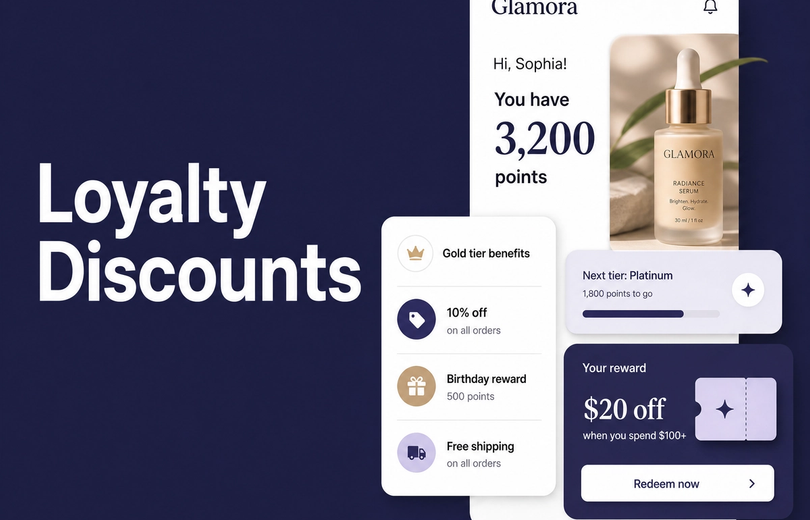
A tiered loyalty program is a structured rewards system that offers escalating benefits and recognition based on accumulated customer engagement, spending, or actions over time. Customers progress through different levels (tiers), unlocking increasingly valuable perks, exclusive experiences, and status recognition.

Think of it like a video game achievement system. You start at the entry level, complete actions to earn points or progress, hit milestones to unlock the next tier, and suddenly you're part of an exclusive inner circle with access to rewards others don't get. The difference? Your customers are earning these rewards through real purchases and engagement, not fictional quests.

The core mechanics are straightforward: customers enter at a base tier, accumulate points or meet spend thresholds, advance to higher tiers when they hit those milestones, and unlock better rewards at each level. The visual progress creates psychological momentum that generic, one-size-fits-all loyalty programs simply can't match.

What makes tiered systems particularly powerful for retention is their dual appeal. New customers see a clear ladder to climb. Existing customers become protective of their status, making them more likely to keep spending to avoid demotion. That's loss aversion in action—and it's one of the most underutilized retention levers in ecommerce.

The Psychology Behind Status Tiers: Why We Strive for More

Tiered loyalty programs succeed because they're built on fundamental human motivations, not arbitrary reward rules.

Status as a Motivator

Humans crave relative standing. We want to know where we fit within our communities. A tiered program makes that standing visible and meaningful. Bronze members see Silver members and think: "I want that." VIP members see exclusive perks and double down to protect what they've earned. That status—even when it's just a label and some perks—drives behavior.

The Goal Gradient Effect

Research in behavioral psychology shows that people accelerate their efforts as they approach targets. When a customer is three purchases away from hitting Gold status, they're more likely to add items to their cart than someone far from the next milestone. Tiers create these visible finish lines. The closer customers get, the harder they push.

Loss Aversion and Status Maintenance

Here's the myth-busting insight: people hate losing status more than they enjoy gaining it. Psychologists estimate loss aversion at roughly 2-to-1. If you tell a customer they'll lose VIP status if they don't meet annual spend targets, you've just created a retention engine. They'll maintain spending not just to keep benefits—but to avoid the pain of downgrading.

Endowed Progress Effect

Customers who feel they've already made progress toward a goal show stronger commitment than those starting from zero. Some brands tackle this by starting all new members at a low tier with a few points already credited. The perception of a head start boosts motivation and reduces the friction of program adoption.

Competence and Belonging

Tiers satisfy two deep psychological needs: achievement and inclusion. Advancing feels like earning a badge. Being in a higher tier means you're part of an exclusive group. That combination—competence plus belonging—makes loyalty sticky.

Beyond Psychology: Tangible Benefits for Your Business

The psychology converts to real revenue. Companies with strong loyalty marketing programs grow revenues 2.5 times faster than competitors and generate 100-400% higher returns to shareholders. That's not correlation. That's the direct impact of tiers on customer behavior.

When you implement a well-designed tiered program, you unlock several measurable outcomes. Increased Customer Lifetime Value (CLV) becomes the primary metric—tiered members spend more frequently and in higher volumes. VIP tier members generate 73% higher average order value and make 3.6X more purchases annually compared to non-tier customers.

You also gain enhanced customer segmentation. Each tier becomes a cohort with distinct behaviors, preferences, and profitability. That data unlocks smarter targeting, more personalized email campaigns, and product recommendations that actually resonate because they're based on real tier-level behavior patterns.

For a deeper dive into how these benefits stack up across your entire customer base, check out this general guide to the benefits of loyalty programs for e-commerce.

Tiered loyalty programs achieve 1.8X higher ROI than non-tiered programs. That gap widens as your program matures and data improves your targeting precision.

How Tiered Loyalty Programs Work: Mechanism & Structure

The mechanics are simple to explain and harder to execute well. Let's break it down.

The Customer Journey Through Tiers

A typical tiered program follows this path: a customer makes their first purchase and enters at Entry Tier (sometimes called Insider or Member). As they spend or engage, they accumulate points or progress markers. When they hit a threshold—say, $500 spent—they unlock Mid Tier status. At $1,500 total spend, they reach Premium Tier.

At each level, the benefits change. Entry Tier might offer 1 point per dollar spent and 10% off at birthday. Mid Tier gets 1.5 points per dollar, free shipping on orders over $50, and early access to sales. Premium Tier earns 2 points per dollar, free expedited shipping always, priority support, and exclusive product drops.

The customer can see exactly how close they are to the next tier (often through a progress bar on their account dashboard or in emails). That visibility drives the goal gradient effect. It's not abstract—it's "I need $200 more in spend to unlock Gold."

Deciding Your Tier Structure: Optimal Number of Tiers

One of the first decisions you'll face is how many tiers to implement. This is where many brands overthink it.

The Power of Three Tiers

Most successful e-commerce programs use three tiers. Bronze, Silver, Gold. Member, VIP, Elite. Insider, Insider Plus, Insider Premier. The magic here is simplicity paired with meaningful differentiation.

Three tiers are easy for customers to understand. They can remember what they get at each level without constant reference to documentation. For your team, three tiers are manageable—you're not juggling seven different benefit sets or complex migration rules. The threshold spacing (usually bottom 60% of customers in Bronze, middle 25-30% in Silver, top 10-15% in Gold) creates the psychological tension you want: Bronze members feel like they're closer to Silver than to the elite top tier.

Three tiers also distribute benefits logically. Entry-level rewards feel meaningful (most customers benefit from something). Mid-tier feels like a real achievement that's attainable (experienced customers can typically reach it). Top tier remains exclusive and aspirational.

Expanding to Four or Five Tiers

Where four or five tiers make sense is when you have a broad customer base with vastly different engagement patterns or order values. A luxury brand where customers spend between $200 and $10,000 per year might use five tiers to properly segment those customers and ensure each cohort feels appropriately recognized and motivated.

Four or five tiers also work better when your product line spans huge price ranges or when you have distinct customer segments (e.g., wholesale buyers and retail customers, or regional markets with different spending patterns). The trade-off is complexity. More tiers mean more benefit combinations to design, more thresholds to manage, and more potential for customer confusion about where they stand.

A practical rule: use three tiers unless you have a compelling reason not to. If you're considering four, ask yourself: would three tiers with different benefit structures at each level achieve the same outcome? Usually the answer is yes.

Setting Intelligent Tier Thresholds: Beyond Just Spend

This is where most brands stumble. They set tiers based purely on spend: $0-$500 is Bronze, $500-$1,500 is Silver, $1,500+ is Gold. That's functional, but it misses massive opportunities.

Traditional Metrics

Spend and purchase frequency are important starting points. Look at your customer data. What does the distribution actually look like? If 85% of customers spend under $1,000 annually, you can't make your Silver threshold $2,000—it won't drive motivation.

Use cohort analysis. Group customers by purchase dates and examine their spend patterns. Compare new customers to those three years in your database. Seasonal variations matter too. Do most purchases cluster around holidays? Your annual thresholds need to account for that.

Behavioral Thresholds

Here's where strategic differentiation emerges. Beyond spend, you can advance customers based on product reviews, social media mentions, referrals, app usage, or email engagement. A customer who writes three detailed product reviews might jump a tier tier. Someone who generates $100 in referral sales moves toward their next level. These non-transactional behaviors reveal customer advocacy and reduce dependence on pure spending power.

Some brands use hybrid approaches: you need both minimum spend ($250) AND one of the following: 3+ product reviews, 5+ social mentions, or 1+ successful referral. This ensures tier members are genuinely engaged, not just big spenders.

You can also reward non-transactional engagement through specific earning rules. A customer who reviews a product contributes to your trust signals and SEO while moving closer to the next tier. Everyone wins.

Leveraging Customer Data for Precision

Advanced implementations use predictive analytics. Which customers are most likely to churn? Create a grace period or soft reactivation offer before demoting them. Which cohorts generate the highest lifetime value? Set their tier thresholds slightly easier to reach—you're willing to grant status to customers who historically deliver revenue.

Customer lifetime value segmentation is powerful. Instead of setting spend thresholds at arbitrary amounts, base them on what your data shows you want to reward. If a customer has a 95% probability of becoming a repeat buyer (based on first purchase value and product category), they might deserve Silver status at a lower spend threshold than someone with a 30% repeat probability.

The complexity here pays off. Thoughtful thresholds feel fair, achievable, and motivating rather than arbitrary or impossible.

Avoiding Common Pitfalls

Thresholds that are too high don't motivate—they frustrate. If 95% of your customer base can never reach Silver, you've failed. You need at least 25-30% of customers capable of reaching your mid-tier within a reasonable timeframe (12 months is typical).

Thresholds that are too low cheapen the program. If every customer hits Gold within three months, there's no aspiration, no distinction, no reason to keep engaging.

The sweet spot: thresholds that feel challenging but achievable. Most brands land here by using their actual customer data to set percentile-based tiers (bottom 60% Bronze, next 25% Silver, top 15% Gold). Then you test and adjust based on engagement metrics over the first 90 days.

Naming Your Tiers: Creating Aspiration and Identity

Bronze, Silver, Gold works because the progression feels natural. Each name implies an increase in value and status. Avoid generic tiers that don't resonate with your brand (unless you have a specific reason).

Direct-to-consumer beauty brands often use Insider, VIB, and Rouge (Sephora's famous example). Outdoor brands might use Adventurer, Explorer, and Pioneer. The names reinforce your brand identity and make the tiers feel less transactional and more like exclusive membership.

Bad tier names: Level 1, Level 2, Level 3. Basic, Standard, Premium. These are functional but forgettable. Good tier names: Founder's Circle, Inner Circle, Diamond Circle. Core, Pro, Elite. The slight effort in naming pays off in perceived value.

Ready to increase customer lifetime value?

Join 100+ Shopify stores using Mage to turn one-time buyers into loyal repeat customers.

Crafting Compelling Tier Benefits: Differentiating Value

Designing the benefit structure is where the psychology translates into behavior change.

The Art of Progressive Rewards

Every tier needs a clear value proposition that increases with status. The jump from Bronze to Silver should feel meaningful. The leap from Silver to Gold should feel exclusive and aspirational.

Discounts & Early Access

Bronze might get 5% off all purchases. Silver gets 10% off plus early access (24 hours before public launch) to seasonal sales. Gold gets 15% off, early access, and exclusive limited-edition products never available to the public.

These benefit tiers work because the value gap widens. The percentage-off improvement from Bronze to Silver is modest (5 points). But early access creates a fundamentally different experience. Gold members literally get first pick. That's not just a better discount—it's privilege.

Experiential Benefits

Many brands neglect experiential rewards, but they often outperform discounts in driving engagement and brand loyalty. Bronze members might get monthly style tips via email. Silver members get a quarterly 30-minute virtual consultation with a brand stylist. Gold members get first access to limited drops, quarterly personalized trend reports, and an invitation to an exclusive annual brand event.

The cost to your business might be modest (a staffer's time), but the perceived value to the customer is enormous. Experiences create memories and deeper emotional connections to your brand.

Service & Convenience

Bronze gets standard customer service (24-48 hour response). Silver gets priority support with guaranteed 4-hour response. Gold gets a dedicated account manager and white-glove service.

Free shipping is table stakes for many categories, but tiers can differentiate. Bronze might get free shipping over $100. Silver gets free shipping over $50. Gold gets always-free expedited shipping.

Personalization

Each tier should receive progressively personalized treatment. Bronze gets the email newsletter everyone gets. Silver gets a curated monthly "editor's picks" based on their purchase history. Gold gets quarterly personalized product recommendations based on advanced preference modeling.

The key to all of this: make sure the benefits genuinely appeal to the target audience of each tier. Surveying your customer base about what would motivate them to advance is worth the effort. Your intuition about valuable rewards might miss the mark.

Managing Tier Downgrades: A Strategy for Retention

Here's where most programs fail. They implement tier advancement but ignore tier management.

The psychological impact of demotion is brutal. A customer who was Gold and drops to Silver experiences loss aversion in full force. They feel disappointed, often angry. Many never re-engage at the same level.

So don't just let it happen. Build in grace periods. A customer who would be demoted to Silver based on annual spend gets a 60-day warning email: "You're 3 purchases away from maintaining your Gold status. Here's a personalized offer to help you get there." That's not manipulation—it's helpful communication that respects their status and gives them a clear path to maintain it.

Some brands implement "soft landings." A long-time customer who can't meet Gold thresholds one year drops to Silver but receives exclusive re-activation offers: "As a former Gold member, here's 20% off—reserved just for you—to help you get back on track." This acknowledges their history and creates a path forward rather than a cliff.

If a customer does downgrade, treat them differently than new customers at that tier. They know what they lost. That knowledge drives faster re-engagement if your communication is smart.

Top Tiered Loyalty Program Examples (2026 Insights)

Leaders in Loyalty: How Brands Inspire Engagement

Sephora Beauty Insider

Sephora's program remains the gold standard. Three tiers (Insider, VIB, Rouge) based on annual spending ($0, $350, $1,000). The psychological brilliance is the experiential differentiation. All members earn points on purchases, but the tiers unlock dramatically different experiences: exclusive events, early product access, free beauty services, and community engagement.

Rouge members don't just get a percentage discount. They get invited to invitation-only events, priority customer service, and personalized beauty consultations. The benefits feel premium because they're hard to replicate elsewhere. You can't get the same experience from a competitor.

Nordstrom Nordy Club

Four tiers (Member, Silver, Gold, Icon) based on annual spend and engagement. Icon is intentionally exclusive—designed for their top 3% of customers. The differentiation is service-focused: alterations for free, exclusive workshops and classes, dedicated styling consultants at higher tiers.

Nordstrom understood that for luxury retail, the service experience matters more than the discount. Their tiers are built around that insight. Lower tiers get convenience improvements (free returns, order customization). Higher tiers get access to expertise and personal attention.

REI Co-op Membership

REI flips the model entirely. It's a fee-based program ($20 annual membership), which immediately creates a commitment. Members get an annual dividend (usually 10% of eligible purchases), access to Co-op community events, and exclusive gear and experiences.

The genius here is that the membership fee itself creates tier-like behavior. Members who spent $100 feel ownership ("I paid for this, I should use it"). That psychological ownership drives engagement. REI layered a regular loyalty tier on top for additional benefits, but the membership structure itself functions like a tier.

Starbucks Rewards

Mobile-native tiered program with visible progress tracking. Three tiers (Member, Gold, Platinum) based on purchase frequency and engagement. Gold and Platinum unlock free beverages, customization options, and exclusive drink access.

The mobile app is the real innovation. You see your points in real-time, watch your progress toward the next tier, and get personalized offers based on your purchase patterns. That real-time feedback loop drives engagement in ways traditional loyalty cards never could.

Total Tools Insider Rewards

A B2B example (though applicable to retail). Three expense-based tiers (Bronze, Silver, Gold) where contractors earn points per dollar spent. Higher tiers unlock volume discounts, early access to tool sales, and priority shipping.

The insight here is that for professional customers, convenience and business efficiency matter more than consumer-facing perks. The benefits reflect that reality.

Comparison Table: Tier Benefits Across Leading Brands

BrandTiersQualification CriteriaBronze/Base BenefitsSilver BenefitsGold BenefitsWhat Makes It Unique
SephoraInsider, VIB, Rouge$0, $350, $1,000+ annual spendBirthday gift, points earning (1 pt/$1)Point multiplier, exclusive eventsFree beauty services, highest ROI point earning (1.5x), Rouge lounge accessExperiential rewards over discounts; community focus
NordstromMember, Silver, Gold, IconSpend-based with service tiersFree returns, styling advice availableExclusive workshops, free alterationsWhite-glove service, dedicated stylist, Icon lounge accessLuxury service model; Icon tier for top 3%
REICo-op Member$20 annual fee + engagement10% dividend, event access, communityHigher event priority, exclusive co-op salesPremium event access, members-only productsFee-based creates ownership; outdoor community focus
StarbucksMember, Gold, PlatinumPurchase frequency tracked mobileFree in-app features, birthday rewardFree beverage after 100 stars, customizationFree beverage after 50 stars, exclusive drink launchesReal-time mobile progress tracking; 50+ rewards options
Total ToolsBronze, Silver, GoldCumulative annual purchasesEarnings at standard rate (1 pt/$1)Earnings multiplier (1.2x), early sale accessEarnings multiplier (1.5x), priority shipping, volume discountsB2B efficiency focus; contractor-specific benefits

Lessons from the Best: Adapting Strategies for Your Shopify Store

The patterns across these brands reveal what actually works:

First, experiential benefits outperform pure discounting. Sephora and REI both invest heavily in experiences—events, communities, expert access—rather than just taking margin off transactions. That's because experiences create memories and emotional connection that pure price cuts don't.

Second, mobile visibility matters. Starbucks' real-time progress tracking drives massive engagement. If your loyalty program is invisible to customers between purchases, you're wasting the psychological power of progress.

Third, tier benefits should reflect your customer's core motivation. For luxury retail (Nordstrom), it's service and expertise. For outdoor enthusiasts (REI), it's community and product access. For beauty (Sephora), it's experience and belonging. Don't force generic benefits onto your customer base.

Fourth, transparency in thresholds drives trust. Every program above shows exactly what spending or actions unlock each tier. Ambiguity kills adoption. Clarity drives engagement.

Building Your High-Converting Tiered Loyalty Program

A Step-by-Step Guide to Implementation

Define Your Program Goals

Start by asking: what do I want to change? Do you want higher average order value (AOV)? Reduce churn among at-risk customers? Increase repeat purchase rate within 90 days? Drive customer lifetime value (CLV) higher?

Different goals require different tier structures. If AOV is your metric, benefit structures should reward larger individual purchases. If repeat frequency is the goal, rewards should trigger after each transaction, creating the habit loop of "make purchase, get closer to tier, make another purchase."

Document specific, measurable goals. Not "increase retention," but "reduce churn in Year 2 from 40% to 30%."

Understand Your Customer Segments

Run a cohort analysis of your existing customer data. What does your customer base actually look like? What's the distribution of customer lifetime value? What's the average first-purchase value? How many customers return within 30 days, 90 days, 365 days?

This data reveals natural tier boundaries. If your customers naturally cluster into three spend groups—under $200, $200-$800, $800+—those become your tier thresholds. You're working with customer reality, not arbitrary tiers.

Map Customer Journeys

Document the key touchpoints where customers interact with your brand. Post-purchase email? Product review request? Social media mention? Referral sign-up? Each of these is a potential earning opportunity.

Successful tiered programs aren't just about spend accumulation. They're about identifying all the ways customers demonstrate value to your business (reviews drive social proof, referrals drive new customers, content creation drives trust) and rewarding those behaviors.

Design Your Tier Structure and Benefits

With goals and customer data in hand, now design your specific structure. How many tiers? What are the thresholds? What benefits live at each level?

Document this clearly. Create a tier benefit matrix showing what each tier gets. Share it with your team and get feedback. If an internal team member is confused about how the program works, customers will be too.

Choose Your Loyalty Platform

This is the operational backbone. You need a platform that supports tiered structures, integrates with your Shopify store, and provides the reporting you need to measure performance.

Look for platforms such as Mage Loyalty, Rivo, Growave, and Smile.io that offer tiered program templates, real-time dashboard tracking, integration with your email marketing tool (Klaviyo, Omnisend), and customer tier visibility (progress bars, tier status).

The best platform is one your team will actually use to optimize over time. If it requires custom code to adjust thresholds or benefits, you've picked wrong.

For detailed guidance on this step, review our implementing your tiered loyalty strategy guide.

Craft Your Communication Strategy

How do customers learn about your program? It can't be a passive discovery. You need proactive, multi-channel education.

Create a tiered loyalty program page on your site with a clear visual showing the tier structure, benefits, and how to join. Add a sticky banner to your store promoting signup. Include a signup prompt on the confirmation email after first purchase.

Then, ongoing communication. Monthly emails showing customers their tier status and progress toward the next level. Personalized messages celebrating tier advancement. Reminders about tier-specific benefits they haven't used yet.

The best programs over-communicate. Customers need multiple exposures to understand and engage with the program.

Launch, Monitor, and Optimize

Don't launch and forget. Treat your loyalty program like a living product.

Track these metrics from day one: enrollment rate (what % of new customers join?), tier distribution (how many are in each tier?), repeat purchase rate by tier (do higher tiers buy more often?), average order value by tier, engagement with tier benefits, and redemption rates.

After 60 days, review the data. Are thresholds causing frustration? Do customers understand the benefits? Is AOV higher for tier members than non-members?

Make adjustments quarterly based on actual behavior. Maybe your Bronze tier is overcrowded—adjust the thresholds upward. Maybe Silver benefits aren't driving engagement—swap in experiential rewards. Iterate.

Common Mistakes to Avoid in Tiered Loyalty Design

Overly complex rules sink programs. Seven tiers with different earning rates for different product categories? Customers won't understand it. Stick to simplicity: consistent earning rates, clear tier names, obviously escalating benefits.

Undifferentiated or unappealing rewards make tiers feel pointless. If the reward at each level is just "10% off becomes 12% off becomes 15% off," customers don't feel the status shift. Layer in experiential, service, or exclusive access benefits.

Unrealistic thresholds destroy motivation. A $10,000 annual spend threshold for your Gold tier when your median customer spends $400? You've just made tier advancement feel impossible for 95% of your base.

Poor communication is the silent killer. Many brands build great tiered programs and then barely tell customers they exist. Your program can't work if no one knows about it.

Neglecting behavioral rewards leaves money on the table. You can drive significant engagement by rewarding reviews, referrals, and social sharing. These behaviors have outsized value (social proof, new customer acquisition) that pure spending doesn't capture.

Measuring Success: Key Metrics for Loyalty Tiers

Track these KPIs relentlessly:

Customer Retention Rate by Tier

What percentage of Bronze members return for a second purchase? Second-year retention? This is your north star. Higher tiers should have significantly higher retention.

Repeat Purchase Rate by Tier

How often do customers at each tier buy? Measure monthly, quarterly, annual repeat purchase rates. Tiered members should purchase 2-3X more frequently than non-members.

Average Order Value (AOV) by Tier

This reveals whether your tier benefits are driving larger purchase behavior. Do Silver members order higher-value items than Bronze? They should, especially if your benefits reward higher spending.

Tier Migration Rates

How many customers advance tier each month? Analyze. Are 10% moving Bronze-to-Silver? Is that rate increasing or decreasing? Migration rates indicate program health and motivation level.

Customer Lifetime Value (CLV) by Tier

This is the meta-metric. Track what a typical Bronze member is worth over their lifetime versus Silver versus Gold. You should see exponential increases.

Benefit Redemption and Engagement

For experiential benefits or exclusive access, track how many customers actually use them. A benefit no one redeems isn't delivering value and should be replaced.

Track these numbers monthly. Create a dashboard your team looks at as part of regular business reviews. A guide to loyalty program KPIs can provide deeper frameworks for analysis.

Tiered loyalty programs achieve 1.8X higher ROI than non-tiered programs. That gap expands as your data improves and you refine thresholds and benefits based on actual customer behavior.

Conclusion: Elevating Customer Loyalty Through Strategic Tiers

Tiered loyalty programs succeed because they're not actually about discounts. They're about status, progress, and belonging. When designed around your actual customer data and motivations—not generic assumptions—they become powerful retention engines.

The psychology is sound. The ROI is proven. The implementation is achievable, even for small and mid-sized Shopify brands.

Your next step is straightforward. Audit your current customer data. Identify natural cohorts. Define what behaviors or spending patterns you want to reward. Choose your tier structure (three is a great starting point). Layer in benefits that matter to your specific customers. Launch with clarity and transparency.

Then measure, iterate, and refine. The best tiered programs improve continuously based on real customer behavior.

Frequently Asked Questions

What is a tiered loyalty program?

A tiered loyalty program is a structured rewards system that offers progressively better benefits to customers as they achieve higher engagement, spending, or action milestones. Customers progress through tiers (often named Bronze, Silver, Gold), unlocking exclusive perks and recognition at each level, creating a ladder of increasingly valuable rewards.

How do tiered loyalty programs increase customer retention?

Tiered programs increase retention by combining goal gradient (visible progress toward the next tier), status motivation (customers want recognition and belonging), and loss aversion (fear of losing earned tier status). When customers feel they're working toward something and stand to lose benefits if they stop engaging, purchase frequency and repeat rates increase significantly.

How many tiers should my loyalty program have?

Three tiers are ideal for most ecommerce brands. This balance provides simplicity (customers easily understand the structure), meaningful differentiation (each tier feels distinct), and sustainable benefits management. Use four or five tiers only if you have vastly different customer spending patterns or distinct customer segments that require more granular recognition.

What benefits work best for tiered loyalty programs?

The most effective tier benefits combine three categories: progressive discounts (Bronze 5% off, Silver 10%, Gold 15%), experiential rewards (exclusive events, personalized consultations, community access), and convenience benefits (free shipping, priority support, early product access). Experiential and exclusive-access benefits often drive stronger engagement than pure discounts because they create emotional connection and a sense of privilege.

What is the difference between a tiered loyalty program and a points-based program?

A points-based program rewards customers with accumulated points for purchases and actions, which they redeem for discounts or rewards. A tiered program groups customers into membership levels with distinct benefits at each tier based on cumulative engagement. Many programs combine both: customers earn points, and those points contribute to tier advancement. Tiered programs create status motivation and loss aversion that pure points programs don't.

Which platforms support tiered loyalty programs on Shopify?

Platforms such as Smile.io, LoyaltyLion, Growave, Rivo, Mage Loyalty, and BON Loyalty all support tiered program structures on Shopify. Each offers different feature sets, pricing models, and integration depth. Evaluate based on your specific needs: ease of use, required customization capability, email integration, and real-time customer visibility features.

TLDR

Tiered loyalty programs are accessible to Shopify merchants of all sizes and deliver 1.8X higher ROI than non-tiered programs by tapping into status motivation, visible progress, and loss aversion. Start with three tiers, set thresholds based on your actual customer data, differentiate benefits across multiple categories (discounts, experiences, services), communicate clearly and repeatedly, and measure success through tier migration rates, repeat purchase frequency, and customer lifetime value by tier.

Ready to increase
customer lifetime value?

Join 100+ Shopify stores using Mage to turn one-time buyers into loyal repeat customers.

|Cancel anytime|5-min setup|Rated 5/5 by Shopify stores

Great app! User friendly and straightforward. The customer service team has been great and so helpful with some minor tweaks I wanted to make and customize.

skynbio

Related articles