The online alcohol market hit $9.6 billion in 2025, projected to reach $11.2 billion by 2026. For wine and spirits brands on Shopify, this explosion represents genuine opportunity. But here's the counterintuitive reality most operators miss: the brands capturing that growth aren't competing on price. They're building loyalty through compliance, not despite it.
This matters because most Shopify loyalty apps treat alcohol like any other product category. They don't. Wine club members average $1,200-2,400 in annual customer lifetime value—six to ten times what one-time buyers spend. Yet achieving that requires navigating regulatory complexity that generic loyalty platforms simply don't address. Age verification, state-specific shipping limits, compliant reward structures, and advanced fraud detection aren't nice additions. They're foundational.
I've worked with dozen alcohol brands on Shopify, and the pattern is consistent: the ones building sustainable growth aren't those offering the deepest discounts. They're the ones combining smart retention mechanics with ironclad compliance infrastructure.
This guide walks through exactly how to build that system.
The Unique Landscape of Online Wine and Alcohol Sales
Before designing a loyalty program, you need to understand the regulatory environment that shapes every decision you'll make.
Unpacking the Regulatory Maze
Alcohol e-commerce operates under the federal three-tier system—a framework designed in the 1930s that still governs how wine, beer, and spirits move from producer to consumer in most states. You (the retailer) typically sit in the second tier, purchasing from distributors and selling directly to end customers. This means your compliance obligations don't end at the sale. They extend through delivery, reward fulfillment, and even how you structure loyalty incentives.
State-by-state regulations multiply this complexity. Some states permit direct shipment of wine and spirits; others prohibit it entirely or impose volume limits per household per year. New York allows unlimited wine shipments but restricts spirits. Texas caps shipments at one case per month per household. Florida has entirely different rules. This isn't abstract. A customer in Texas redeeming a reward that triggers a free bottle delivery could create a compliance violation that exposes your brand to penalties.
Specialized compliance software like Sovos ShipCompliant or Avalara handles real-time validation of shipping addresses against state regulations and automatically calculates tax obligations based on local rules. When you offer loyalty rewards—especially rewards tied to free or discounted alcohol—that same data integration becomes critical. Your loyalty platform needs to communicate with these systems to prevent selling or rewarding beyond state limits.
The Age-Verification Imperative
Age verification is legally mandatory and a fundamental social responsibility. But here's what most loyalty programs get wrong: they verify age once at checkout, then forget about it for reward redemption.
Legally, you must verify that the customer is 21+ not just at initial purchase, but at the point of redemption if a reward involves alcohol. Offering a free bottle to a loyalty member means re-confirming they're still 21+ before fulfillment. Offering a discount code redeemable on alcohol requires age gating at redemption, not just at program signup.
Different verification methods offer varying levels of rigor. Simple date-of-birth entry is quick but vulnerable to fraud. Document verification (driver's license scanning) is more robust. Geolocation-based rules let you adjust age requirements by state or country. The best approach combines multiple signals: IP geolocation, device fingerprinting, and behavioral analytics alongside explicit DOB confirmation.
Strategic placement matters too. Age gates should appear at site entry (before browsing), on product pages (before adding to cart), at the checkout page, and critically, before any reward redemption that involves alcohol. Session memory prevents customers from re-verifying constantly, while comprehensive compliance logging creates audit trails that protect your business during regulatory reviews.
Navigating Shipping and Delivery Logistics
Adult signature requirements (21+ only) are mandatory in most states upon alcohol delivery. This adds cost, complexity, and friction to fulfillment. Licensed carriers like UPS and FedEx handle alcohol shipments but impose specific reporting requirements and restrictions. Some carriers won't ship to certain states or under certain conditions.
State shipping limits create additional constraints. If you're offering free shipping as a loyalty reward—a tactic proven to increase average order value by 35-55%—you must ensure the shipment doesn't exceed state volume caps. If a customer has already received one case this month in a state with monthly limits, offering free shipping on another case violates that state's rules.
Real-world example: A wine brand I worked with offered a "free case" tier reward in their VIP program. Six months in, compliance review flagged that they'd shipped multiple cases to Texas customers in single months, violating Texas's monthly cap. Fixing this required retrofitting reward logic to track cumulative shipments by state per customer, then restricting reward availability based on real-time compliance checks. This was expensive and disruptive.
The lesson: build compliance checks into your reward structure from day one, not after launch.
Why Customer Loyalty is Indispensable for Alcohol E-commerce
The financial case for loyalty in alcohol is stark. Here's why it matters more for this category than most others.
The High Cost of Acquisition vs. the Value of Retention
Acquiring a new customer costs five to twenty-five times more than retaining an existing one. In alcohol e-commerce, where customer acquisition often relies on paid digital ads competing against legacy retail and local liquor stores, that multiplier skews toward the higher end. A new wine customer acquired through Facebook ads might cost $40-60. Retaining an existing customer through loyalty costs pennies.
A 5% increase in customer retention boosts profits by 25-95%, according to research. In alcohol, where margins are tighter than in many retail categories, this isn't theoretical. It's the difference between profitability and cash burn.
Consider: You acquire 100 new customers monthly at $50 per customer ($5,000/month spend). Without loyalty, 40% return (industry average is poor). With a loyalty program increasing repeat rate to 60%, you're getting 20 additional repeat purchases from the same acquisition spend. That's immediate ROI.
Unlocking Higher Customer Lifetime Value
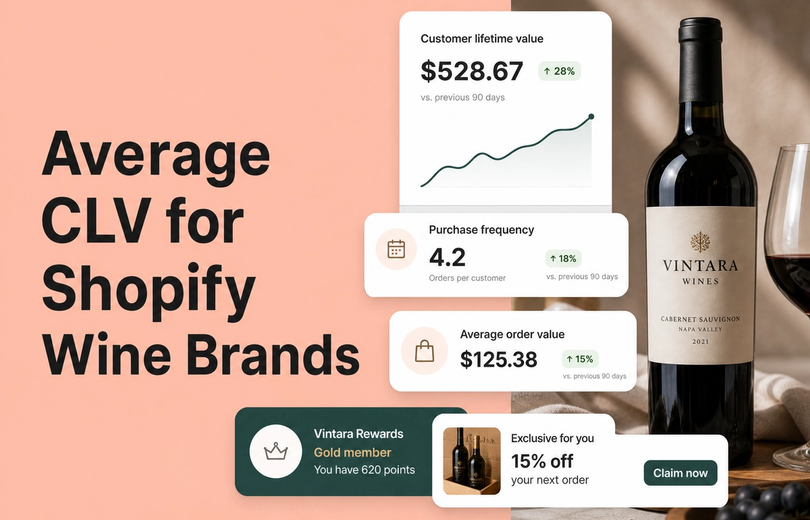
Wine club members, specifically, demonstrate extraordinary lifetime value. Members of curated subscription programs average $1,200-2,400 annually—often surpassing one-time buyers by 10x. This isn't accident. It's structure.
A loyalty program that converts casual shoppers into wine club members, or that increases repeat purchase frequency through tiered benefits, directly multiplies revenue per customer. Even without subscription mechanics, loyalty programs increase both repeat purchase rates and average order value by incentivizing higher-ticket purchases through multiplier bonuses or threshold-based rewards.
Here's the mechanism: A customer buys a single $50 bottle. One-time transaction, zero loyalty structure. Same customer in a wine club loyalty program sees personalized recommendations, educational content, exclusive access to limited releases, and status progression. Annual value explodes.
The Shopify loyalty program growing brands trust
See how Mage helps Shopify brands lift repeat purchase rate with loyalty, referrals and store credit.
Book a demoBuilding Community and Brand Advocacy
Unlike commodity products, alcohol—especially wine and craft spirits—carries social and aspirational weight. Customers don't just buy wine; they buy identity and belonging.
Loyalty programs tap this by creating community. VIP tastings, member-only events, early access to allocations, direct connections with winemakers—these are experiences that commodity pricing can't compete with. They build emotional attachment that survives price competition.
Peer recommendations carry 5-7 times more weight than brand messaging. When a loyalty program makes members feel valued enough to recommend the brand to friends, you've converted a customer into a free acquisition channel. Referral rewards amplify this. A 10% referral bonus on points or a free bottle for every three successful referrals turns each loyal customer into an active recruiter.
One brand I worked with saw 30% of new customers referred by existing loyalty members within 12 months of launching their referral component. Those referred customers had 40% higher retention than other new cohorts because they arrived pre-sold by trusted peers.
“I looked into so many different integrations for loyalty and referrals for our Shopify Store, but no one impressed me more than Mage on human connection, customer service, and value.”


Read the Reelie case study →
Designing Your Compliant Shopify Loyalty Program: A Step-by-Step Guide
Step 1: Laying the Foundation—Strategy and Goals
Before selecting tools or building infrastructure, define what success looks like for your business.
Define Your Program Objectives: Are you trying to increase repeat purchase frequency? Boost average order value? Convert one-time buyers into wine club subscribers? Reduce customer acquisition costs by improving referral rates? These aren't the same goal, and they require different program structures.
A tiered VIP program works well if your objective is increasing average order value (higher tiers unlock free shipping, bulk discounts, or exclusive products at higher spending thresholds). A points-based system works if you want to reward frequency across products and categories. A wine club structure works if subscription revenue is your primary goal.
Understand Your Target Audience: A sustainability-focused natural wine brand attracts different customers than a mass-market spirits producer. Tailor your loyalty strategy accordingly. Natural wine drinkers might respond to educational content about winemaking practices, producer stories, and environmental impact. Mass-market spirits drinkers might prioritize discounts and convenience perks.
Choose Your Loyalty Model: You have options, each with distinct advantages for alcohol brands.
Points-Based Programs are straightforward: customers earn points for purchases, then redeem them for discounts or products. They're simple to communicate and manage. However, for premium wine brands, points can feel overly transactional and fail to elevate perceived brand value.
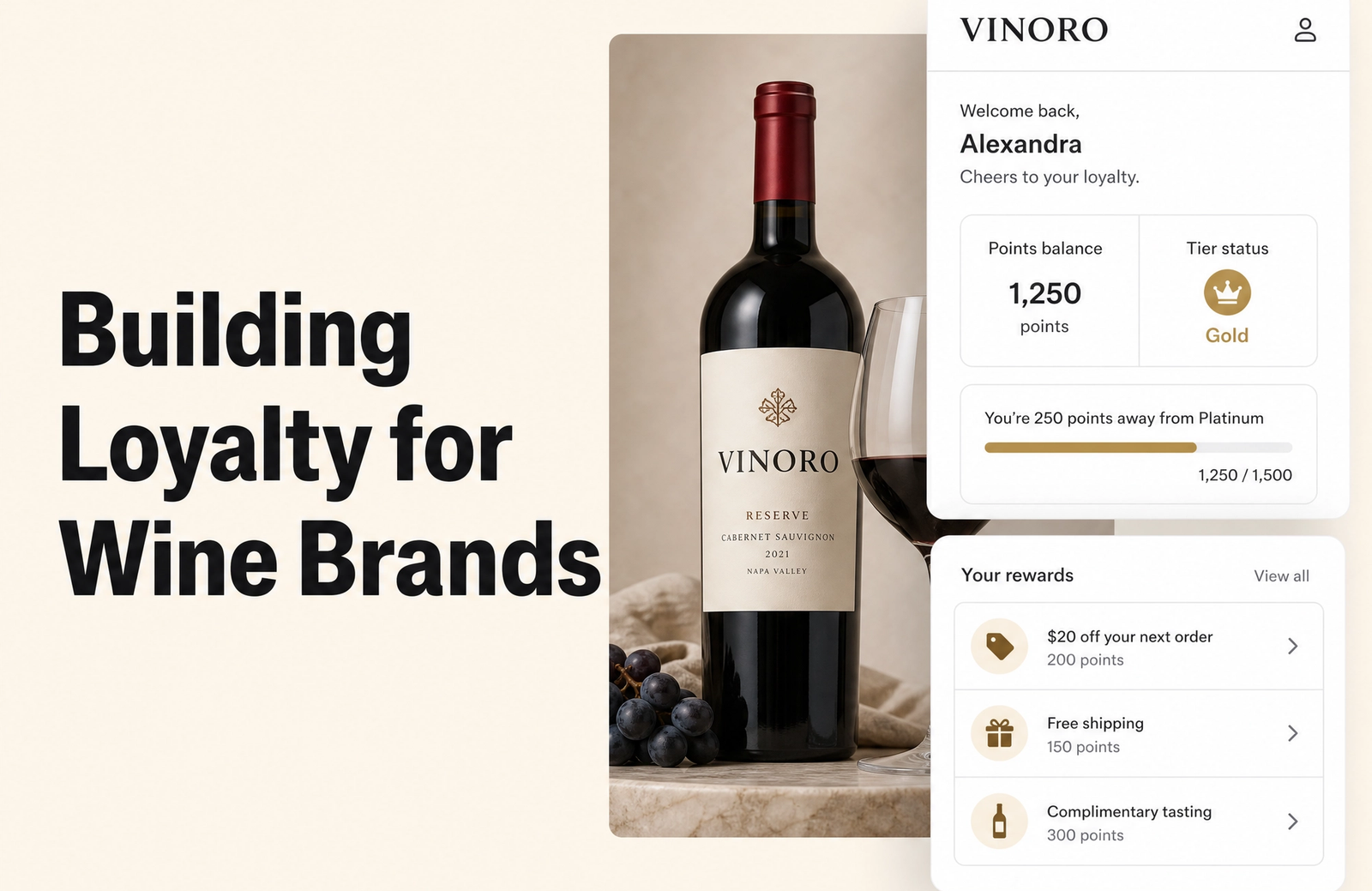
Tiered Loyalty Programs implement progressive tiers (Bronze, Silver, Gold, Platinum) with escalating benefits. Members progress based on annual spending. Tiered programs deliver 1.8x higher ROI than flat-rate programs, and 70% of consumers find them valuable. VIP tier customers generate 73% higher average order value and make 3.6x more purchases per customer. For alcohol, tiers unlock exclusivity—early access to limited vintages, private tastings, direct winemaker connections—that premium buyers crave. With proper compliance gating, VIP tiers can offer alcohol-related perks only to verified 21+ members.
Wine Clubs and Subscription Models create recurring revenue and deepen customer relationships through curated monthly or quarterly selections, flexible delivery options, and member-exclusive pricing. This model nearly guarantees higher CLV because revenue compounds monthly. For compliance, subscription platforms integrate cleanly with age verification and state shipping rules.
Hybrid Models combine tiered progression with points earning and subscription optionality. For example, all members earn points on purchases and referrals. Members who reach Silver tier unlock a wine club option. Gold tier members get complimentary monthly selections.
There's no universal "best" model. Your choice depends on your brand positioning, customer base, and revenue goals.
Step 2: Selecting the Right Shopify Apps and Integrations
Loyalty technology for alcohol brands must handle more than points and tiers. It needs compliance-native architecture.
Core Loyalty Platform: Start with a platform built for Shopify that offers robust customization, multi-tier support, referral mechanics, and API-first design. Your selection criteria should include: Can it restrict specific rewards to age-verified members only? Does it integrate with compliance software? Can it enforce state-specific shipping limits on reward fulfillment? Can it track cumulative customer actions across the year to prevent state-regulated limit violations?
Seamless Age Verification Integration: Your loyalty platform must integrate with best-in-class age verification tools. Solutions like Smart Age Verification Popup, AgeSafe, and BlueCheck plug into Shopify and confirm age at multiple touchpoints. Critically, they must also gate loyalty reward redemption. A customer earns a free bottle reward but fails re-verification at redemption time? That reward should convert to store credit or an alternative non-alcoholic reward.
Compliance Software Integration: This is the often-overlooked piece. Loyalty data must feed into systems like ShipCompliant or Avalara to ensure rewards don't violate state limits. If your reward system offers a free case to tier members, your compliance software needs to see that transaction attempt, validate it against the customer's address and current-month shipment history, and reject it if it violates state caps.
Without this integration, you're relying on manual processes or hope—neither scales.
Essential Marketing and E-commerce Tools: A seamless Klaviyo integration enables automated emails reminding members of pending points, celebrating tier milestones, and driving reward redemptions. Review apps like Judge.me help build social proof alongside your loyalty program. Subscription tools like Recharge streamline wine club logistics.
Step 3: Crafting Age-Gated Rewards and Experiences
This is where alcohol loyalty differs fundamentally from other categories. Most generic loyalty apps assume you can offer any reward to any member. In alcohol, specific rewards require age verification at redemption.
The Nuance of Age-Gated Rewards: Offering free alcohol or alcohol-specific discounts as rewards creates legal exposure if you don't verify age at redemption. Some states restrict "free" alcohol giveaways entirely—they view it as incentivizing excess consumption. Others permit it only in limited forms (e.g., samples under a certain volume).
This is a content gap in most loyalty guides. The problem isn't age verification at signup. It's ensuring that when a member redeems a free bottle reward, your system re-confirms their age and cross-checks state law before fulfillment.
Platforms that handle this properly allow you to define reward eligibility rules tied explicitly to age verification status. You can create a reward rule like: "Free $50 wine reward—available only to members with verified age 21+ status, shipment to states permitting free alcohol giveaways, and no prior free giveaway in the past 12 months."
Innovative and Compliant Reward Structures for Alcohol Brands:
Given these constraints, what rewards actually work?
Exclusive Access is powerful and compliant. Early access to new vintages, limited-edition releases, or pre-sales available only to VIP members resonates with wine enthusiasts and doesn't trigger state restrictions. A Tier 2 member might get 48-hour early access to a limited Burgundy release before general sale. A Tier 1 member waits in standard queue. This incentivizes tier advancement without offering free alcohol.
Experiential Rewards create genuine emotional value. Invitations to private tastings (virtual or in-person at a tasting room), winery or distillery tours with producer markup, or exclusive meet-the-maker events appeal to enthusiasts far more than discounts. Age verification happens at the event. This model works particularly well for brands with physical locations or partnerships with local producers.
Merchandise and Non-Alcoholic Gifts are underutilized in wine loyalty but highly compliant. Custom branded glassware, wine stoppers, corkscrews, or curated gourmet food pairings create tangible rewards without regulatory friction. They're also profitable—a branded Riedel glass costs you $15, perceived value to the customer is $40+.
Shipping Perks hit the acquisition-cost sweet spot. Free shipping on case quantities increases AOV by 35-55%. Expedited delivery, waived signature fees, or free shipping thresholds lower at higher tiers—these are valuable, compliant, and simple to execute.
Educational Content grants access to sommelier-led webinars, detailed tasting notes, producer interviews, and food pairing guides. This builds brand authority while requiring zero regulatory overhead. Tier members unlock exclusive content quarterly.
How Mage Loyalty Specifically Handles Age-Gated Rewards: Mage Loyalty's platform allows merchants to define rewards with explicit age verification gates. You can create a reward rule requiring verified 21+ status before redemption becomes available. Its integration with age verification partners pulls verification data in real time, and the system can restrict specific reward types—e.g., alcohol discounts—to only eligible members. Mage also logs all redemption attempts and approvals for compliance audit purposes, creating comprehensive trails required for regulatory review.
Step 4: Launching, Promoting, and Optimizing Your Program
Soft Launch and Thorough Testing: Before going public, test exhaustively. Create test customer accounts, attempt age verification flows, earn rewards, and try redeeming them. Verify that rewards don't violate state shipping caps. Test the integration with your compliance software. You want every failure to happen in staging, not production.
Promote Your Program Effectively: Launch with internal marketing—email to your existing list highlighting exclusive tier benefits and inviting signup. Use on-site banners and checkout overlays. Run a limited-time bonus points offer (e.g., "Join this month, earn double points on your first purchase") to jumpstart adoption. For premium wine brands, highlight exclusivity and community more than savings. "Unlock early access to allocated vintages" resonates better than "Save 10%."
Analyze and Iterate for Continuous Improvement: Track redemption rates, average order value for loyalty vs. non-loyalty customers, repeat purchase frequency, and customer lifetime value. Monitor which rewards drive engagement and which sit unclaimed. Gather customer feedback via surveys: What rewards would make them advance to the next tier? What content would they value?
Sixty-four percent of consumers expect personalized experiences. Use loyalty data to segment your list and offer curated recommendations based on past purchases. A customer who buys heavy Burgundy should see Burgundy recommendations and Burgundy-focused events, not broad wine category blasts.
Beyond Standard Advice: Why "Points-Only" Loyalty Might Be Draining Your Wine Brand's Potential
Here's a contrarian take backed by real behavior data: for premium wine and alcohol brands, an exclusively points-driven system often commoditizes the category rather than elevating it.
Points feel transactional. Accumulate enough points, redeem a discount, repeat. For mass-market products, that's fine. For wine—a category built on aspiration, exclusivity, and community—points alone leave money on the table.
Millennials and Gen Z (63% of whom expect loyalty programs) increasingly reject pure discount mechanics. They want experiences, status, community access, and alignment with brand values. A 10% discount on a bottle of Pinot doesn't create loyalty. An invitation to a virtual tasting with a winemaker, or early access to a 50-case allocated vintage before it sells out, does.
Many of the most successful wine loyalty programs—Vivino's social tasting community, various winery VIP clubs, spirits brands' ambassador programs—prioritize experiential and status-based rewards as primary pillars, with points as secondary mechanics.
There's also a compliance angle. If your core reward is "10 points = $1 discount on alcohol," you're constantly validating that redemption against state law. If your core reward is "Gold tier gets 48-hour early access to new releases," compliance friction drops dramatically.
Consider reframing your loyalty model to lead with experiences and exclusivity, using points as secondary currency for lower-friction rewards (free merchandise, content access, shipping discounts). This strategy resonates more authentically with wine drinkers and reduces regulatory surface area simultaneously.
Preventing Fraud and Ensuring Integrity in Loyalty Programs
Age-restricted loyalty requires robust fraud detection beyond typical e-commerce safeguards.
Beyond Basic Age Verification: Simple date-of-birth entry is vulnerable to fraud. Combine DOB with IP geolocation (flag accounts with inconsistent geographic behavior), device fingerprinting (same device creating multiple high-value accounts), and behavioral analytics (unusual earning or redemption patterns).
A customer earning 500 points then immediately redeeming for a free bottle? Suspicious. A customer creating accounts from five different IP addresses in one week, each immediately redeeming a free bottle reward? Clear fraud attempt.
Implement CAPTCHA or other bot detection at signup and high-value redemption points. Flag and investigate accounts attempting to bypass age verification—repeated failed verification attempts, VPN usage, or document verification rejections.
Robust Monitoring and Reporting: Establish processes for investigating flagged accounts. Train staff on red flags. Create audit trails logging every age verification attempt, successful or failed. Document every fraudulent redemption attempt and your response. This protects your business during regulatory audits and demonstrates good-faith compliance efforts.
Frequently Asked Questions
Can I legally offer free alcohol as a loyalty reward in all states?
No. Some states restrict free alcohol giveaways to samples under a certain volume (typically under 2 ounces). Others prohibit free alcohol entirely unless it's part of a licensed promotion or event. Texas, for example, permits free tastings at licensed venues but not mail-delivered free bottles as incentives.
Before offering any free alcohol reward, consult your state's alcohol control board regulations and a legal advisor familiar with alcohol law. Most brands choose safer alternatives: free shipping on alcohol orders, exclusive access to limited releases, or non-alcoholic premium rewards. These sidestep state restrictions entirely.
What is the most effective age verification method for loyalty programs on Shopify?
The most robust approach combines multiple signals: IP geolocation, device fingerprinting, and explicit date-of-birth confirmation at signup and at reward redemption. Document verification (scanning a driver's license) is more secure than DOB alone but adds friction.
For loyalty programs specifically, the critical requirement is re-verification at the redemption stage if the reward involves alcohol. This prevents age-verification bypass where someone creates an account with faked DOB, earns rewards over time, then redeems for alcohol without re-confirming age.
Apps built into the Shopify ecosystem (BlueCheck, Smart Age Verification Popup, AgeSafe) offer varying feature sets. Compare their redemption-stage verification capabilities specifically, not just signup mechanics.
How do loyalty programs impact my state-specific compliance reporting obligations?
Loyalty rewards—especially free or discounted alcohol—trigger the same state compliance requirements as regular sales. If you ship a free bottle to a Texas customer, that counts against their monthly state shipment limit.
Your loyalty system must integrate with compliance software like ShipCompliant or Avalara to validate reward shipments against state caps in real time. This means your loyalty app needs API-level integration with these systems, not just manual process workarounds.
Additionally, many states require reporting of promotional giveaways to their alcohol control board. Document all free alcohol rewards in your compliance system and maintain audit trails for regulatory review.
What are common mistakes wine and alcohol brands make when building a loyalty program, and how can they be avoided?
The biggest mistake is treating alcohol loyalty like generic retail loyalty. Brands build programs, launch them, then discover compliance issues months later when they've already shipped non-compliant rewards to hundreds of customers.
Mistake two: Underestimating state complexity. Building a national shipping program without consulting state-by-state regulations creates liability. Each state has different rules about shipment frequency, volume limits, and promotional restrictions. A loyalty reward valid in California might violate Texas law.
Mistake three: Points-only rewards. As mentioned earlier, premium wine buyers respond better to exclusivity and experience-based rewards than simple discounts. Brands that lead with tier-based access and experiential perks see higher engagement than discount-focused programs.
Mistake four: Forgetting age verification at redemption. Verifying age once at signup, then never again, creates compliance gaps. A customer's age doesn't change, but their drinking habits and life circumstances do—and you're liable if you reward underage individuals.
Avoid these by designing compliance-first (not compliance-after-launch), conducting state-by-state legal review before launch, and leading your program with exclusivity and experience over discounts.
How does a Shopify loyalty platform assist with shipping compliance for redeemed rewards?
When a customer redeems a reward involving a shipment, the loyalty system submits that shipment request to the compliance service, which validates it against the customer's address, current-month shipment history for that state, and state regulations.
If the redemption would violate state caps or regulations, the compliance service returns a rejection, and the loyalty system either denies the redemption or offers an alternative reward instead. This automation prevents manual oversight errors that can create liability.
Not all loyalty apps support this level of compliance integration. Verify before selecting a platform—ask specifically about ShipCompliant or Avalara API support.

Kris is the co-founder of Mage Loyalty. I spend most days talking to merchants, and making sure our customers get real results. If you run a Shopify store or Agency we should chat!