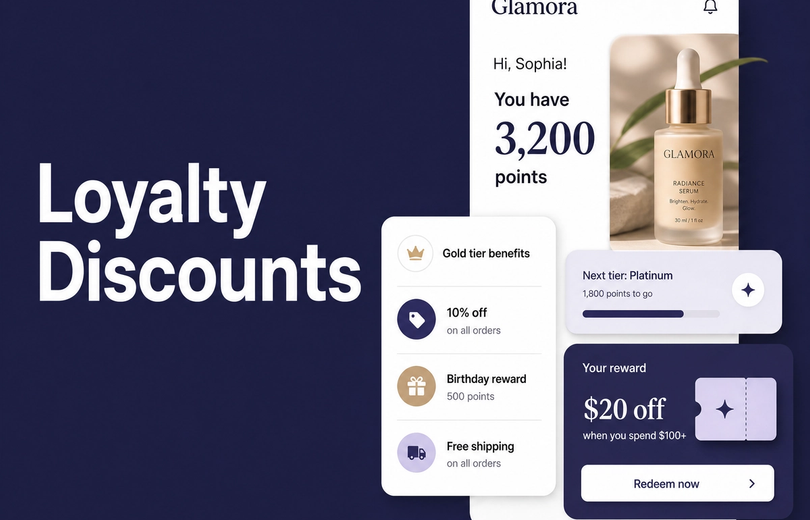
A Monday retention report shows a healthy stream of full-price orders, then a draft loyalty campaign offering 15% off to every member. A luxury brand loyalty program should not make that the default move. It should give customers reasons to return that feel like recognition, access, and service.
Short answer: A luxury brand loyalty program should make customers feel recognized rather than price-sensitive. Prioritize early access, personal service, complimentary personalization, private events, surprise-and-delight moments, and tier-locked rewards before money-off offers. On Shopify, customer data, VIP tiers, customer accounts, POS, and automation can make those benefits feel consistent across touchpoints.
What makes a luxury brand loyalty program different?
The shift from transaction to relationship
A luxury brand loyalty program is a structured way to recognize high-value and high-potential customers through status, access, service, personalization, and experiences.
A conventional program often makes the exchange explicit: spend, earn, redeem, save. Premium brands need a broader exchange. The customer is buying design, craftsmanship, provenance, confidence, taste, or a sense of belonging.
A Shopify loyalty program can still use points and rewards. The difference lies in what those points unlock and how the benefit is presented.
Recognition, access, and belonging as the core value exchange
The strongest premium benefits answer questions customers already care about:
- Will I see the collection first?
- Will the brand remember what I bought?
- Can I get help choosing the right product or gift?
- Does my relationship with this brand give me access others do not have?
That makes loyalty feel closer to membership than a coupon wallet. A named tier, priority appointment access, a personal note, or early access to a limited release can carry real value without displaying a dollar figure.
Why the best premium rewards do not need a visible cash value
A reward does not need a visible monetary value to be useful. Scarcity, convenience, attention, and relevance can matter more than a percentage off.
A complimentary styling session has a cost to the merchant, but customers experience it as care. Early access has little direct cost, but it can be meaningful if inventory is limited. The practical test is simple: would this benefit still feel worth having if the customer never saw its price?
Why indiscriminate rewards can erode a premium brand
Luxury brands do not need to choose between prestige and rewarding repeat customers. They need to avoid benefits that are indiscriminate, poorly timed, or disconnected from the brand experience.
A reward can strengthen the relationship when it is selective and relevant. The risk appears when every customer receives the same broad offer, regardless of their history or status.
Personalization matters because customers notice when loyalty is generic. Deloitte found that 73% of consumers consider personalized experiences or rewards important, while 60% are satisfied with current loyalty-program personalization.
A jewelry buyer may value anniversary recognition and access to a private consultation. A fashion customer may care more about collection previews, restock priority, and appointment slots. Read more about why status can beat discounts before deciding that a larger discount is the only way to create progress.
The price-comparison problem
A blanket discount makes the value of a loyalty program easy to compare. The customer sees 10% off and starts asking whether another promotion, code, or retailer offers a better deal.
That shifts attention away from product quality, design, service, and the brand relationship. Price becomes the main story.
When financial rewards still make sense
Financial value can still support a premium experience. Free shipping can remove friction. A relevant free product can introduce a customer to a new category. Store credit can encourage a future purchase without reducing the value of the current one.
Shopify supports store credit as a loyalty or referral incentive, and signed-in customers can apply it at checkout through customer accounts or Shop Pay, according to Shopify’s store credit documentation.
Keep the presentation restrained. “Complimentary delivery on your next order” often feels more considered than a flashing percentage-off banner. A financial reward should support the relationship, not become the reason it exists.
The luxury reward hierarchy: access before savings
| Reward category | Examples | Why it feels premium | Operational requirement | Use as a default reward? |
|---|---|---|---|---|
| Recognition and status | Named tiers, milestone messages, priority care | Signals that the customer is known | Clear tier rules and customer data | Yes |
| Priority and scarcity | Early access, restock priority, private previews | Gives customers a place ahead of the wider audience | Launch and inventory planning | Yes |
| Service and personalization | Engraving, styling, gift curation | Adds care and relevance | Fulfilment capacity | Yes, where reliable |
| Experiences | Events, workshops, consultations | Creates a memorable brand interaction | Hosts, booking process, follow-up | Selectively |
| Financial value | Free shipping, free product, store credit | Removes friction or adds a tangible benefit | Margin controls and reward rules | Selectively |
Recognition, priority, and service
Start with recognition. Give tiers names that fit the brand and mark milestones in ways that reflect customer history.
Then add access that is real: early access to launches, limited drops, restocks, appointment slots, or collection previews. A fashion loyalty program can use seasonal drops and early access for higher tiers because the release calendar creates natural moments of scarcity.
Service rewards such as engraving, monogramming, gift wrapping, styling guidance, repairs, alterations, or gift curation can make the experience easier or more personal. These benefits need to be operationally credible.
Experiences and selective financial value
Private appointments, virtual consultations, workshops, founder conversations, studio visits, and product education can all work when they fit the category and the team can deliver them well.
Financial rewards belong at the bottom of the hierarchy because they are easiest to copy. Use free shipping, a carefully selected free product, or store credit when the reward fits the customer and the margin. Mage supports free product rewards, including an option that adds the item to the cart and applies the reward in one step.
Premium brand rewards ideas that feel personal and scarce
| Reward idea | Best for | Public or tier-locked? | Manual or automated fulfilment | Primary customer feeling |
|---|---|---|---|---|
| Early collection access | Fashion and limited releases | Tier-locked | Automated access or campaign delivery | Priority |
| Complimentary engraving | Jewelry and gifting | Tier-locked | Manual fulfilment | Personal care |
| Private styling session | Fashion and beauty | Tier-locked | Manual scheduling | Attention |
| Hand-picked gift | Repeat buyers with known preferences | Tier-locked | Manual fulfilment | Surprise |
| Birthday appointment | High-consideration products | Tier-locked | Manual scheduling | Recognition |
| Private workshop or event | Community-led brands | Invitation-only | Manual fulfilment | Belonging |
| Free relevant product | Discovery and cross-sell | Tier-locked or public | Automated redemption | Appreciation |
Priority access to products and moments
Use priority access for launches, restocks, seasonal collections, and limited quantities. The benefit should be visible before a customer qualifies, while access remains locked until they reach the right tier.
Surprise-and-delight rewards
A surprise should still feel chosen. Send a handwritten note after a meaningful milestone, add a relevant accessory to a future order, or offer a care guide based on the product purchased. One thoughtful trigger delivered reliably beats a long list of promises.
Custom gifts that carry meaning
A Custom Reward can turn points into something a discount code cannot cover. In Mage, a merchant can offer a consultation, styling session, event invitation, hand-picked gift, or personalized shout-out as a reward fulfilled outside Mage. It does not generate a discount code, and the merchant manages fulfilment after the customer redeems it.
These rewards can also be restricted to a VIP tier. See loyalty campaigns that drive revenue without discounting for more ways to build value around access and recognition.
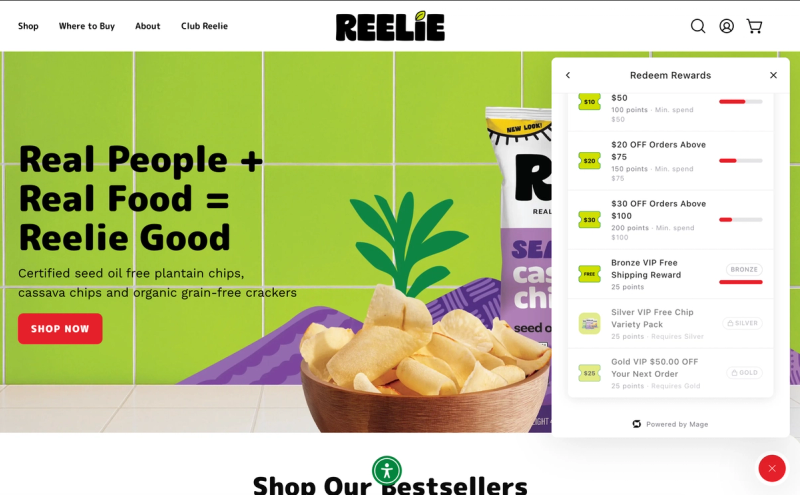
“I looked into so many different integrations for loyalty and referrals for our Shopify Store, but no one impressed me more than Mage on human connection, customer service, and value.”


Read the Reelie case study →
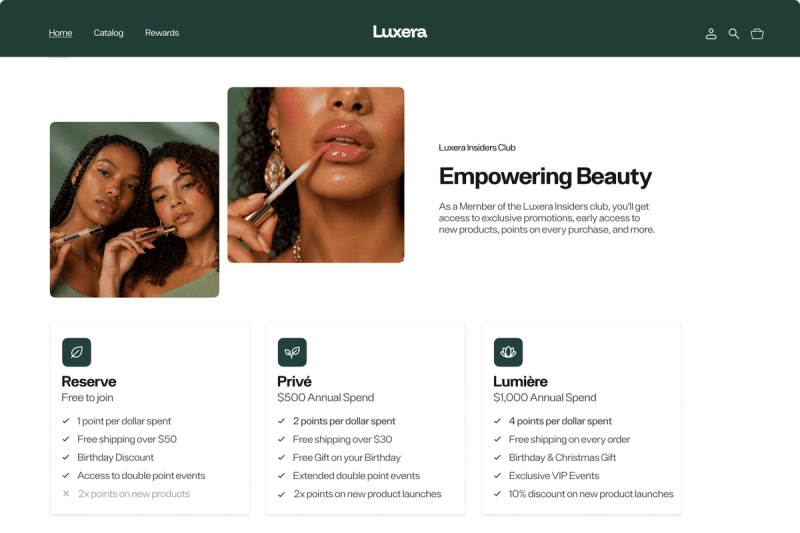
How to design VIP tiers without turning status into a discount ladder
| Tier | Qualification example | Access benefit | Service or personalization benefit | Experiential or custom reward | Financial value, if any |
|---|---|---|---|---|---|
| Member | Join program | Product updates | Saved preferences | Milestone note | None |
| Insider | Spend threshold | Early collection viewing | Gift wrapping | Product education session | Free shipping reward |
| Collector | Higher spend threshold | Private preview access | Complimentary personalization | Styling consultation | Relevant free product |
| Patron | Top spend threshold | Limited-release priority | Priority care | Private event invitation | Selective store credit |
Choose the qualification method
Use one primary qualification method: amount spent, points earned, or number of orders. For high average order value products and infrequent purchase cycles, spend-based tiers often fit the economics better.
A jewelry loyalty program can place more weight on spend-based status, anniversary recognition, early access, free shipping, and store credit because customers may buy only once or twice a year.
Make every tier meaningfully different
Do not create four versions of the same discount. Benefits should become more personal, scarce, or convenient as status rises.
Mage can display VIP benefits as comparison tables or cards, alongside progress messaging. It can also restrict a custom reward to a specific tier, so only customers in that tier or above can redeem it.
Use three or four tiers as the default
Mage supports up to 10 VIP tiers, but most stores do better with three or four. Fewer tiers are easier to understand, easier to fulfil, and less likely to turn status into a complicated points exercise.
A smaller ladder with real benefits is usually easier to understand and fulfil than a long ladder of minor differences.
How to make luxury loyalty work across a Shopify store
Capture and use first-party customer context
Customer history is the raw material for relevant recognition. Shopify customer profiles can be organized into segments, according to Shopify’s customer documentation.
Use segments to identify customers approaching a tier, customers who bought from a specific collection, or customers eligible for an invitation.
Surface status in customer accounts and onsite experiences
Show customers their tier, progress, saved products, and available rewards where they already return to manage orders. Mage Accounts can surface points, tier progress, rewards, and saved products in an on-site account drawer.
Mage Canvas lets merchants brand the loyalty page, account drawer, and Rewards Widget without code. Merchants can also personalise your Shopify storefront by VIP tier so the onsite experience reflects the customer’s status.
Connect online and in-store recognition
Shopify POS does not include built-in loyalty tools, so merchants connect a loyalty app for loyalty functionality, as explained in Shopify’s POS loyalty guide.
Mage runs inside Shopify POS, where staff can view a customer’s balance, rewards, and loyalty history. Store staff should understand which benefits apply and deliver them consistently.
Operationalize manual rewards
Assign an internal owner for each manual reward. Define who receives the redemption notice, who contacts the customer, and what delivery time is acceptable.
Shopify Flow can automate workflows with triggers, conditions, and actions, including VIP tagging, according to Shopify Flow documentation. Automation can route work, but the service itself still needs a human standard.
Measure relationship quality, not just redemption
Track repeat purchase rate, time to second purchase, member lifetime value, and revenue by tier. Monitor tier progression, early-access participation, appointment bookings, event attendance, and custom reward redemptions.
Also measure whether manual rewards are delivered on time and how much member revenue comes from full-price purchases versus discount-assisted orders. The better question is whether customers return, engage with benefits, and buy at healthy margins.
Frequently asked questions
What is a luxury brand loyalty program?
A luxury brand loyalty program is a retention program built around recognition, access, status, service, personalization, and experiences. It can include points and rewards, but should make customers feel known and prioritized rather than conditioned to wait for broad discounts.
How can luxury brands reward customers without discounts?
Luxury brands can use early product access, restock priority, private previews, complimentary personalization, styling consultations, private events, hand-picked gifts, and priority care. The best option is one the brand can deliver consistently.
Do loyalty programs cheapen luxury brands?
Loyalty programs do not automatically cheapen luxury brands. Broad, frequent money-off offers can create price-comparison behavior, while selective benefits such as access and personal service can reinforce the relationship.
What are good experiential rewards for luxury ecommerce?
Private appointments, virtual consultations, styling sessions, workshops, product education, founder conversations, and private previews can work well. The reward should fit the product category and be realistic for the team to deliver.
How should VIP tiers work for a premium brand?
Use one clear qualification method, three or four meaningful levels, and benefits that increase in access and service rather than only discount size. Show customers the benefits ahead of them so progress is visible.
Can Shopify brands offer tier-locked custom rewards?
Shopify brands can offer tier-locked custom rewards when their loyalty platform supports them. Mage lets merchants create rewards fulfilled outside the platform, such as consultations or event invitations, and limit them to a specific VIP tier or customers above that tier.
Build the program around benefits your team can deliver with care. If a reward feels generic, make it more specific. If it feels promotional, move it lower in the hierarchy. Premium loyalty works when customers return for the relationship, not simply for the next code.

Kris is the co-founder of Mage Loyalty. I spend most days talking to merchants, and making sure our customers get real results. If you run a Shopify store or Agency we should chat!