Sephora's VIB Rouge members receive complimentary custom makeup consultations, exclusive early access to new product launches up to a month before general release, and invitations to private shopping events. Yet here's what's remarkable: many VIB Rouge customers spend significantly more money to maintain their status than they would need to spend if they simply bought products during standard sales. The financial discount alone doesn't explain their behavior. What actually drives them is something deeper—the unmistakable feeling of being an insider, of belonging to an elite circle that fewer customers can access.
This phenomenon reveals a fundamental truth about loyalty tiers that most e-commerce merchants get wrong. They assume discounts are the primary engine. They're not.
What Are VIP Tiers? Defining the Ladder to Loyalty
A tiered loyalty program is a structured segmentation system where customers progress through distinct membership levels based on predefined criteria. Each tier represents a rung on a ladder, with advancement typically triggered by accumulated spending, points earned, purchase frequency, or other engagement milestones.
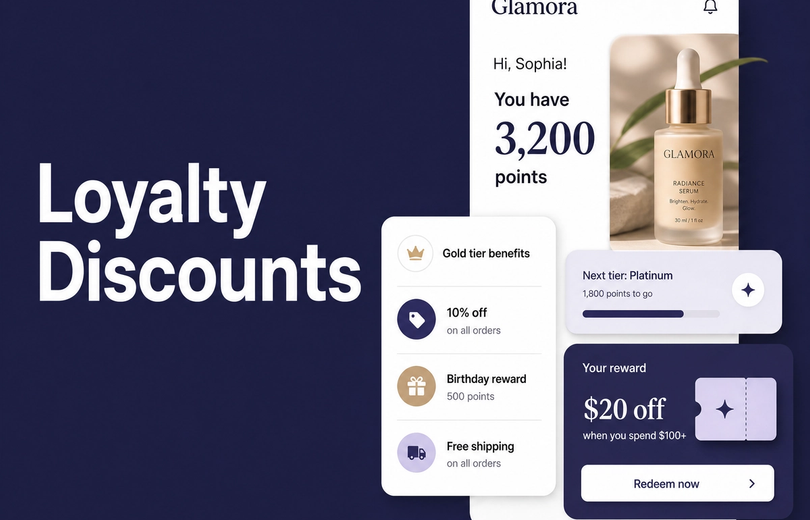
The mechanics are straightforward but powerful. A customer might enter as Bronze after their first purchase, progress to Silver after spending $500, reach Gold at $2,000, and climb to Platinum at $5,000. Each threshold marks a clear transition point. As they advance, benefits evolve—from modest discounts in Bronze to priority support, free shipping, and exclusive early access in Platinum.
What distinguishes effective tiers from mediocre ones isn't complexity. It's the spectrum of rewards offered. Foundational loyalty programs typically focus on financial incentives alone. Our Shopify VIP tiers, by contrast, recognize that the most powerful rewards transcend discounts entirely—they include recognition, exclusivity, community access, and status. A Platinum member doesn't just get 20% off. They might receive a personal account manager, invitations to brand events, or input on new product development.
Debunking the Discount Delusion: Why Status Outweighs Savings
Here's the myth that quietly bleeds revenue from countless Shopify stores: loyalty tiers work primarily because of bigger discounts. The logic seems airtight. Higher tier equals deeper savings. Deeper savings equal stronger incentive to spend more. Simple cause and effect.
It's also false.
Research on loyalty tier psychology consistently shows that status, recognition, and exclusivity outperform monetary incentives as long-term retention drivers. When deeper loyalty program psychology is examined, a pattern emerges: customers frequently invest more effort and money chasing non-financial perks than they would to capture an equivalent discount elsewhere.
Consider this. A customer earning entry into an exclusive VIP tier by spending $2,000 doesn't calculate the tier's discount value against competitor prices. They calculate whether membership makes them feel valued. They weigh the emotional significance of achieving that status against the effort required. The discount becomes secondary—a nice-to-have confirmation of their status, not the primary motivation.
Discount-heavy strategies create dangerous problems. They attract transactional customers who jump ship the moment a competitor offers 5% more. They train customers to wait for the next discount rather than engage out of genuine brand affinity. Worst of all, they compress margins without building the emotional loyalty that sustains a business through competitive cycles.
The Human Drive for Distinction: Understanding Status Motivation
The craving for status isn't a luxury impulse. It's hardwired into human psychology. Think about how hierarchies shape every domain of life—academic standing, professional title, social group positioning. We measure ourselves against others. We aspire to be recognized as better, more committed, more worthy than the baseline.
In loyalty programs, status functions like a psychological upgrade. When a customer achieves Platinum status, they're not just unlocking perks. They're validating their identity as a loyal, valued member of an elite community. The tier becomes part of how they see themselves. They're not a casual browser anymore—they're a VIP. This identity shift is extraordinarily sticky. Once customers internalize a higher status, the thought of reverting to Bronze triggers genuine distress.
Exclusivity amplifies this effect. If 80% of your customers are Platinum members, Platinum status means nothing. Exclusivity makes status valuable. The scarcity principle operates here: when something is rare, we perceive it as more desirable. A tier that fewer customers can access feels like a genuine achievement. A tier that nearly everyone reaches feels like participation trophy fodder.
Non-financial rewards amplify status far more effectively than discounts ever could. Early product access signals "you matter enough for us to show you first." Personalized customer service says "your account is important enough for dedicated attention." VIP event invitations communicate "you belong here, with our best customers." These rewards confer status in ways that "15% off" simply cannot.
The Shopify loyalty program growing brands trust
See how Mage helps Shopify brands lift repeat purchase rate with loyalty, referrals and store credit.
Book a demoThe Psychology of Progression: How Tiers Drive Engagement
Tiered programs harness gamification—they transform routine transactions into a progression narrative. Each purchase moves you closer to the next level. Each milestone unlocked feels like an achievement. This taps into the same neurological reward system that makes video games compelling.
The goal-gradient effect explains why progress visibility matters so much. As customers perceive themselves getting closer to a goal, they accelerate effort toward it. A customer at 95% progress to Gold tier doesn't slow down—they push toward it. Show them a progress bar instead of just a numerical threshold, and the effect intensifies. Visible progress removes ambiguity and maintains psychological momentum.
Platforms like Starbucks and Booking.com weaponize this principle deliberately. Their progress displays are everywhere. Starbucks members see stars accumulate in real time. Booking.com members watch their status bar fill. This visibility keeps the goal cognitively accessible. It reminds customers they're making progress. It fuels the psychological drive to complete the journey.
The endowed progress effect operates even more powerfully. Research by Nunes and Dreze (2006) tested two versions of a loyalty card: one required 10 stamps, the other required 8 stamps but came pre-filled with 2 stamps. Both required the same total purchases. The pre-filled card had a 34% completion rate. The blank card had a 19% completion rate. Customers with a perceived head start were far more likely to finish. They felt they'd already begun, so finishing felt more attainable.
This principle transforms how you should approach entry-level tiers. A new customer who starts Bronze with a handful of gift points feels momentum. They're not starting from absolute zero. They're already on the path. This psychological nudge significantly increases the likelihood they'll make purchases chasing the next tier.
Loss aversion creates a retention mechanism that few merchants fully appreciate. Once a customer has achieved Gold status, the prospect of dropping to Silver because their spending dipped triggers genuine anxiety. That fear isn't rational—it's neurological. The pain of losing something you have exceeds the pleasure of gaining something equivalent. High-tier members become psychologically invested in maintaining their status. They spend consistently not because the discount is compelling but because the fear of loss drives behavioral consistency.
“Cannot say enough good things about the team at Mage Loyalty, one of the absolute best organizations we have ever worked with, full stop! So glad we connected with them, completely redid our loyalty program, new concepts, use of loyalty, increasing user engagement, showing us where we were not valuing our best customers, just WOW, amazing team!”


Read the West Coast Goalkeeping case study →
Crafting Compelling Tiers: Designing Thresholds That Motivate
The art of threshold design sits between two extremes. Set thresholds too low and everyone reaches elite status—it devalues instantly. Set them too high and customers abandon the pursuit—progress feels impossible.
The optimal threshold creates what psychologists call "stretch goals"—targets that feel challenging but achievable. A $2,000 spend threshold for Platinum doesn't feel achievable to a $100-per-month customer. They'll never try. But for a $200-per-month customer, it's ambitious yet plausible. Maybe 12-15 months away. That's the zone where motivation activates.
The psychology of jumps between tiers matters enormously. Incremental jumps—Bronze at $0, Silver at $500, Gold at $1,000, Platinum at $1,500—create a steady climb. They offer frequent small victories. But they can also dilute status. If every three-month spender reaches Gold, the tier loses prestige.
Larger jumps—Bronze at $0, Silver at $1,000, Gold at $3,000, Platinum at $6,000—create steeper aspiration. Fewer customers reach higher tiers. Status becomes scarcer, therefore more valuable. The tradeoff is fewer small victories along the way. You must balance momentum with exclusivity.
Each tier upgrade must offer genuinely meaningful benefits. Not just "2% more off," but qualitative enhancements. Bronze gets standard support. Silver gets priority email support. Gold gets live chat access. Platinum gets dedicated account management. Each step should feel like a tangible leap. Design compelling Shopify VIP tiers by asking: Would this benefit alone justify achieving the tier?
Tier fatigue emerges when you add too many incremental tiers or when new members flow too easily into elite tiers. A customer who just became Platinum and learns that half your customer base is also Platinum experiences status dilution. They feel cheated. The solution involves strategic exclusivity—limiting the percentage of members in top tiers, offering unique experiential rewards that can't be scaled (dinners with your founder, custom product design input), or creating achievement thresholds that naturally limit access.
Celebrating the ascent matters. When a customer reaches a new tier, make it an event. Send personalized congratulations. Highlight their achievement. Surprise them with a small gift or welcome bonus. This recognition validates their effort and cements the emotional connection.
Sustaining Aspiration: Advanced Strategies for VIP Tier Management
Different tiers require different psychological strategies to maintain motivation and prevent churn.
Entry-level tiers like Bronze face a critical challenge: converting casual buyers into engaged members. Focus messaging on the path forward. Show them clearly how close they are to Silver. Leverage the endowed progress effect by giving new members a points bonus. Make the first tier jump feel achievable—usually reachable within 2-4 purchases. Their motivation is still building; your job is to prevent abandonment.
Mid-tiers like Silver and Gold require momentum maintenance. These customers believe in your brand enough to keep engaging. They're close to prestigious status. Highlight how near they are to the next achievement. Offer milestone bonuses—"Spend $200 this month and jump to Gold." Show them exclusive benefits waiting at the next level. Use email campaigns featuring testimonials from higher-tier members talking about their exclusive perks.
Top-tier members like Platinum face the retention challenge. They've achieved elite status. The gap to the next tier (if one exists) is enormous. Loss aversion is your most powerful tool. Emphasize what they'd lose if they dropped a tier. Send regular "status confirmation" messages celebrating their membership. Offer exclusive white-glove experiences—personalized service, priority access, bespoke rewards—that money can't easily replicate elsewhere.
Tier resets create psychological friction if poorly handled. An annual reset can generate urgency—"You're Platinum now, but you'll need to re-earn it"—that drives spending. But top customers resent arbitrary resets that threaten their hard-earned status. The solution: reset participation tiers but preserve achievement status. A customer was "Lifetime Platinum" doesn't drop back to Bronze. They restart the annual cycle at an elevated level or get automatic membership renewal at their achieved tier.
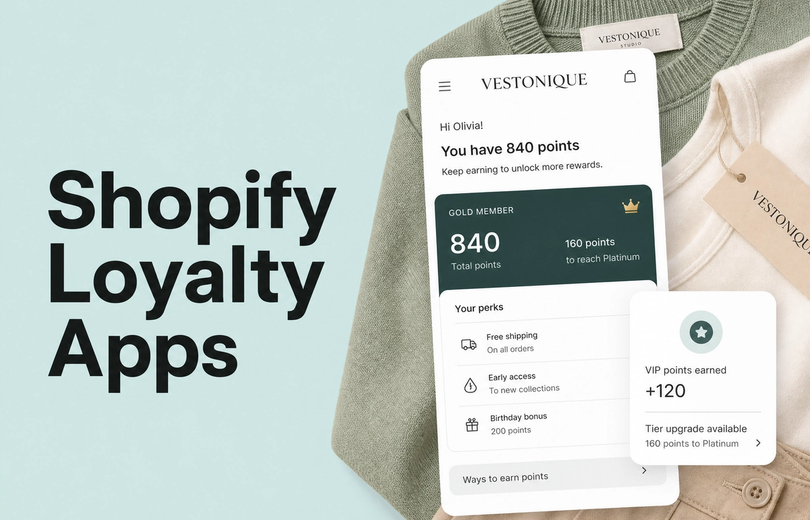
For Shopify-specific implementation, display tier progress prominently in customer accounts and via email. Use this. Customers who can't see their progress forget it exists.
Integrate tier benefits directly into the shopping experience. Offer exclusive product collections visible only to Gold+ members. Create hidden discount codes that unlock tiers. Send real-time "tier upgrade" notifications. Connect tier status to email segmentation so communication mirrors their achievements.
Conclusion: Building Loyalty Beyond the Price Tag
Status-driven loyalty tiers outperform discount-only strategies because they appeal to deeper psychological needs. The human drive for recognition, the satisfaction of progression, the fear of losing achieved status, the exclusivity of elite access—these motivations sustain engagement far longer and far more profitably than price wars ever could.
Merchants who design tiers around status, not savings, build competitive moats that competitors can't easily undercut. A customer loyal to your brand because they're invested in their Platinum identity doesn't jump to a competitor offering 5% more discount. They've made a psychological commitment. The tier is part of who they are.
The most effective loyalty programs combine psychological sophistication with operational clarity. They make progression visible. They celebrate achievements. They offer benefits that genuinely matter to customers at each level. They protect the exclusivity of elite tiers. And they recognize that the deepest loyalty comes not from what you give customers, but from how you make them feel about themselves.
Frequently Asked Questions
How many tiers should my Shopify loyalty program have?
Most effective loyalty programs use three to five tiers. Three tiers is the minimum—Bronze, Silver, Gold—creating clear stratification without overwhelming customers. Four or five tiers allows for more granular progression and status signaling. Beyond five, tier names become hard to remember, exclusivity dilutes, and customers struggle to visualize the journey. For Shopify stores under $1M annual revenue, three tiers is typically optimal. Scale to four or five as your customer base grows and you can maintain exclusivity at higher tiers.
What are the best non-monetary rewards for VIP tiers?
The most effective non-monetary rewards include early access to product launches (30+ days ahead of general release), priority or dedicated customer support (live chat, phone access, account managers), invitations to exclusive events (product previews, customer appreciation dinners, founder meet-and-greets), personalized recommendations or custom product design input, exclusive community access (member-only Discord, forums, or events), and recognition (newsletter features, social media shoutouts, customer spotlights). These rewards cost far less than discounts but deliver higher perceived value because they signal status and exclusivity.
How often should I adjust tier thresholds or benefits?
Review tier structure and performance quarterly. Adjust benefits annually, not thresholds. Changing spending thresholds creates confusion and feels unfair to members who earned their status under the old system. Instead, evolve benefits—add new perks, enhance existing ones, introduce seasonal bonuses—to keep tiers feeling fresh and valuable. If threshold changes become necessary due to business growth, grandfather existing members at their achieved tier while applying new thresholds to incoming customers only.
Can smaller Shopify stores effectively implement tiered loyalty?
Yes. Tier complexity doesn't determine effectiveness—psychological clarity does. A small store with 1,000 customers can run three tiers based on spend ($0, $500, $1,500) just as effectively as a large enterprise. The advantage of being small is agility. You can personalize tier benefits easily, celebrate member achievements directly, and maintain exclusivity at higher tiers.
TLDR
Loyalty tiers succeed not because of bigger discounts, but because they satisfy fundamental psychological drives: status recognition, progress achievement, and fear of loss. Customers willingly spend more to maintain elite tier status when tiers emphasize exclusivity and non-monetary rewards over discounts. The most effective tier designs set aspirational but achievable spending thresholds, display visible progress, celebrate tier advancement, protect elite tier scarcity, and tailor communication strategies to each tier level's psychological needs. For Shopify stores, integrating tier progress into the storefront and using email segmentation amplifies these psychological effects, building emotional loyalty that competitors can't undercut with price.

Kris is the co-founder of Mage Loyalty. I spend most days talking to merchants, and making sure our customers get real results. If you run a Shopify store or Agency we should chat!