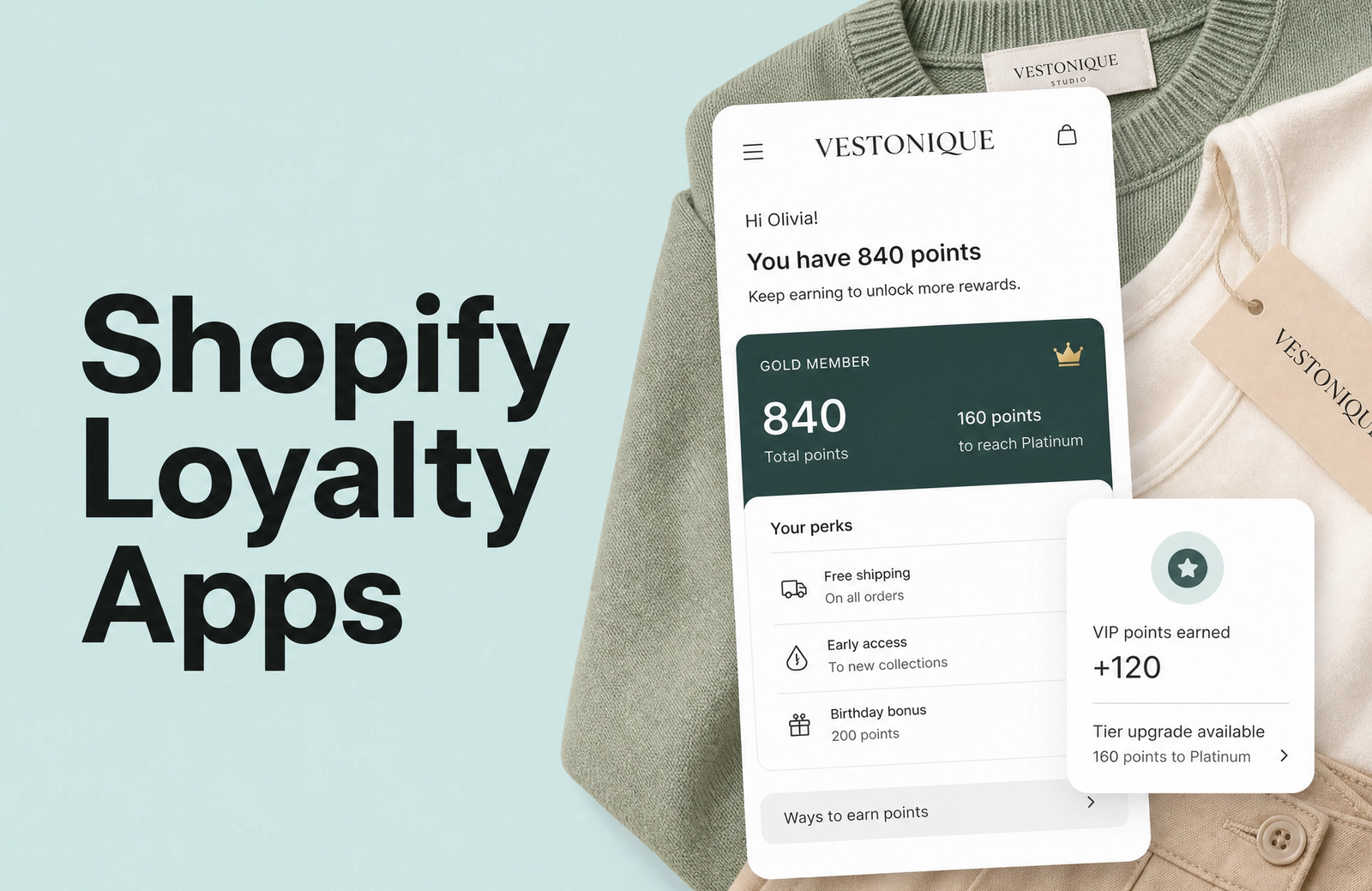
Most ecommerce brands assume that VIP tier programs are all the same: earn points, climb tiers, unlock discount codes. But a thriving VIP program does something fundamentally different. It automatically delivers exclusive experiences, early access, premium support, and tangible perks that turn aspiration into action. The difference between a loyalty program that generates 5% repeat purchase lift and one that drives 25% comes down to this single detail: true perk automation.
The challenge? Most Shopify loyalty apps treat VIP tiers as a cosmetic layer on top of points systems. They handle points multipliers well. Free shipping codes? Early product access? Tiered support experiences? These require workarounds, custom integrations, or aren't available at all. This creates friction that undermines the entire psychology of status-driven loyalty.
That's where this guide comes in. We've analyzed the five most trusted Shopify loyalty platforms specifically for how they handle advanced VIP functionality—moving beyond generic tier names to examine whether they can actually automate and deliver complex, non-point-based perks. We tested each against criteria that matter to retention-focused merchants: comprehensive perk management, automation sophistication, integration depth, tier analytics and review capabilities, and whether they handle customer downgrades gracefully (a feature almost nobody covers, but that directly impacts brand loyalty when tiers reset).
Here's what you'll discover: which platform gives you true tier control without technical headaches, which one powers the most complex perk combinations, and most importantly, how to choose based on your specific business model.
Top Shopify Loyalty Apps with VIP Tiers: A Quick Comparison
| App Name | Pricing Model | Key VIP Tier Strength | Best For |
|---|---|---|---|
| Mage Loyalty | Flat monthly ($99-$499+) | Advanced tier engine with automated non-point perks, sophisticated downgrade logic, real-time dashboard analytics | Shopify Plus and DTC brands demanding deep customization and full omnichannel support |
| Smile.io | Free-$249/month | User-friendly points and tier setup with clean UI, broad accessibility | Small to mid-market stores starting loyalty programs or seeking simplicity over complexity |
| LoyaltyLion | Free-Custom enterprise pricing | Advanced customer segmentation and ROI analytics across tiers | Enterprise brands and Shopify Plus merchants requiring granular data insights |
| Yotpo Loyalty & Referrals | Custom enterprise pricing | Integrated UGC and review rewards with tier progression tied to social proof | Brands already using Yotpo ecosystem wanting unified loyalty and reviews platform |
| Rivo | $49-$299/month | Intuitive interface, responsive support, reliable core features | Mid-market stores prioritizing ease of use and responsive customer support |
#1: Mage Loyalty
Mage ranks as the top choice for Shopify stores demanding truly advanced VIP tier functionality. The distinction matters: while competitors offer tier structures, Mage's architecture is purpose-built around automated perk delivery—the difference between a tier label and a tier system that actually works.
Advanced Tier Engine & True Perk Unlocking
Most loyalty apps handle points multipliers. Mage's tier engine goes deeper. It's built to automatically unlock and deliver non-point-based benefits that actually drive behavior change. When a customer reaches Gold tier, Mage doesn't just label them as "Gold." It simultaneously applies automatic free shipping rules, unlocks access to exclusive product collections, enables tier-specific discount codes, and can trigger tiered support routing. This happens in real time as eligibility changes. The technical architecture matters here because it means merchants don't need to manually manage these perks through third-party workarounds—everything lives in one system.
For example, a fashion brand running Mage's advanced loyalty program can configure a Platinum tier to automatically grant 20% discounts on specific collections, free priority shipping above $50 orders, and early access to sale launches 48 hours before the general audience. These benefits activate instantly when customers hit the threshold, and they're managed through one interface rather than scattered across multiple tools.
Robust Tier Review & Performance Analytics
Where most platforms fall short is visibility into how tiers actually perform. Mage's real-time dashboard shows metrics that directly impact strategy: average order value per tier, retention rates by tier level, progression velocity (how fast customers move between tiers), and which perks drive the highest redemption. This matters because tier structures should evolve based on data, not guesswork.
Merchants using Mage can see within days whether a Bronze tier is too easy to enter (diluting exclusivity), whether the gap between Gold and Platinum creates unrealistic aspiration, or whether customers are abandoning the program before reaching the first tier. This tier review capability enables continuous optimization instead of setting it and forgetting it.
Sophisticated Downgrade Logic
Here's a critical feature almost nobody discusses: what happens when a customer drops tiers? Most platforms simply strip away benefits, creating the psychological sting of losing status. Mage handles this with three approaches. First, customizable grace periods—if a customer slips below Gold threshold in December, you can keep them there through January without jarring them. Second, soft demotion strategies that gradually scale back perks rather than cutting them instantly. Third, intelligent notification systems that reframe the experience: instead of "you lost Gold status," the message becomes "you're 150 points away from Gold—here's your path back."
This isn't just customer service philosophy. It's ROI strategy. Research shows customers approaching tier thresholds spend 25-40% more per order to reach the next level. Graceful downgrades keep customers motivated to climb back rather than abandoning the program entirely.
Comprehensive Integration Ecosystem
Mage's value multiplies through its integration partners. Real-time syncing with Klaviyo means tier status automatically populates in email segments, enabling tier-specific campaigns without manual upload. Omnisend integration delivers the same dynamic segmentation for SMS and push. Postscript connection allows SMS campaigns triggered by tier milestones. Judge.me, Okendo, Loox, Yotpo, and Stamped integrations automatically award points for reviews and UGC while pulling social proof directly into the program.
This ecosystem depth matters because it converts tier status from a badge into actionable marketing intelligence. A customer reaching Gold doesn't just get a label—Klaviyo immediately segments them into a "New Gold Tier" audience, enabling custom welcome campaigns, product recommendations based on their tier's exclusive collections, and milestone-triggered messages.
Shopify-Native Architecture & Enterprise Scalability
Mage operates as a genuine Shopify-native application with 99.9% uptime SLA and white-glove migration services. For Shopify Plus brands, this means a powerful membership program architecture that scales without external dependencies. Store credit is issued through Shopify's native system (not a third-party wrapper), which means financial reconciliation, refund handling, and accounting integrity are built into Shopify itself. Shopify POS integration enables omnichannel tier progression—customers earn at both the online store and physical locations seamlessly.
User-Friendly No-Code Experience
Despite its sophistication, Mage doesn't require development work. The platform includes no-code builders for branded customer account portals where customers see their tier progress, available perks, and redemption history. Merchants configure earning rules, tier thresholds, and perk assignments through visual interfaces. This accessibility is critical because it means both enterprise-level merchants and growing DTC brands can manage complex loyalty strategies without hiring developers.
Best for: Shopify Plus brands and high-growth DTC companies that need sophisticated automation for diverse VIP perks, comprehensive performance analytics, graceful customer experience during tier changes, and the reliability of a Shopify-native platform built for scale.
Ready to see Mage in action and transform your VIP customer experience? Book a demo at https://www.mageloyalty.com/get-a-demo.
The Shopify loyalty program growing brands trust
See how Mage helps Shopify brands lift repeat purchase rate with loyalty, referrals and store credit.
Book a demo#2: Smile.io
Smile.io's genuine strength lies in accessibility and speed to value. The platform is genuinely user-friendly—onboarding takes hours, not weeks. It excels at establishing foundational points systems with clear tier progression, referral mechanics, and a UI that non-technical merchants immediately understand. The visual builder is intuitive, and Smile's customer support responsiveness is notably good for the price point.
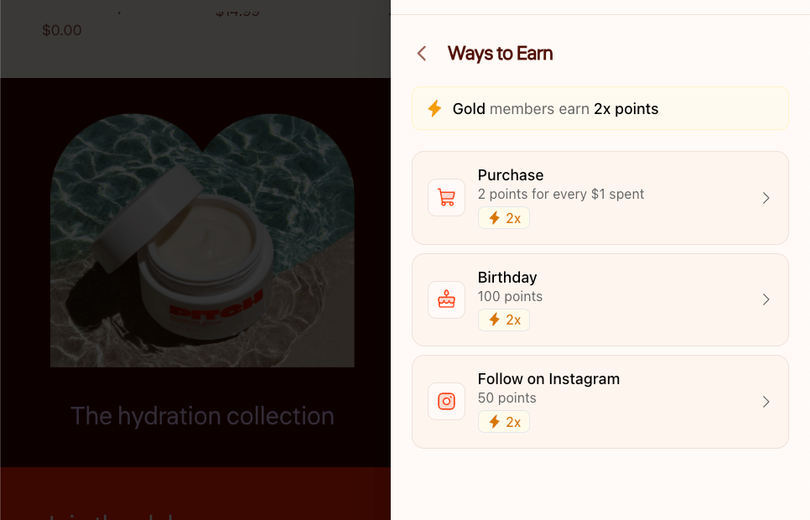
The VIP tier functionality works well for straightforward programs: customers earn points, reach tier thresholds, unlock points multipliers (2x points in Silver, 3x in Gold). The interface clearly displays progression paths, and tier badges integrate cleanly into customer accounts.
Best for: Small to medium-sized Shopify stores launching their first loyalty program or seeking an all-in-one points-and-tiers solution without requiring highly complex, automatically delivered non-point perks. If your tier strategy is primarily about accelerating point earning as customers climb, Smile.io delivers solid value.
Key difference from Mage: While Smile.io handles tier progression and points multipliers well, automated delivery of non-point perks—like automatic free shipping triggers, exclusive collection access, or tiered support routing—requires custom setup or integration workarounds. Mage's architecture treats these as native tier capabilities.
“Cannot say enough good things about the team at Mage Loyalty, one of the absolute best organizations we have ever worked with, full stop! So glad we connected with them, completely redid our loyalty program, new concepts, use of loyalty, increasing user engagement, showing us where we were not valuing our best customers, just WOW, amazing team!”


Read the West Coast Goalkeeping case study →
#3: LoyaltyLion
LoyaltyLion's core strength is customer segmentation depth and measurement sophistication. The platform excels at dividing your audience into micro-segments based on purchase behavior, engagement patterns, and lifetime value, then running tier-specific campaigns within each segment. ROI tracking per tier is exceptional—you can see exactly which tier-based promotions drive incremental revenue and which waste budget.
The integration ecosystem is broad, connecting deeply with your broader marketing tech stack. For brands running complex, data-driven loyalty operations, LoyaltyLion provides the analytics infrastructure to justify and optimize loyalty investments.
Best for: Enterprise-level Shopify and Shopify Plus merchants who prioritize customer segmentation and ROI measurement over ease of setup. If your question is "which tiers and perks actually drive revenue?", LoyaltyLion's analytics answer that question better than most.
Key difference from Mage: LoyaltyLion's power comes from analysis and segmentation, not from automation of diverse non-point perks. The platform handles tier structures well, but implementation of complex, varied benefits (free shipping, early access, exclusive events) typically involves more configuration work or external tool integration compared to Mage's integrated perk engine.
#4: Yotpo Loyalty & Referrals
Yotpo's competitive advantage is consolidation within an existing ecosystem. If you're already using Yotpo for reviews, SMS marketing, or visual UGC, their loyalty solution integrates seamlessly into that infrastructure. Tier progression can be tied to review submissions, photos, and social proof—creating a unified marketing platform where loyalty directly rewards the behaviors that generate authentic content.
The strength is particularly pronounced for brands where social proof (reviews and UGC) is central to conversion strategy. Tier advancement becomes intrinsically linked to content creation, creating a virtuous cycle where loyal customers generate the testimonials that convert new customers.
Best for: Shopify brands already invested in the broader Yotpo ecosystem who want to consolidate tools and tie loyalty progression to review generation and UGC contribution.
Key difference from Mage: Yotpo's tier architecture is tightly integrated with its review and UGC products, making it particularly strong for review-driven programs. Mage maintains an agnostic perk approach—free shipping, early access, exclusive events, support tiers—without prioritizing reviews above other engagement types.
#5: Rivo: Loyalty Program, Rewards
Rivo's appeal is straightforwardness combined with genuinely responsive support. The platform handles core loyalty functions cleanly: points earning, tier progression, referrals. The interface is intuitive, and the team responds quickly to issues or questions. For merchants who value ease of use and reliable support over maximum feature depth, Rivo consistently delivers.
Tier functionality includes points multipliers, exclusive discounts, and free shipping perks. The setup is guided and clear. Performance metrics are available and understandable, though not as granular as enterprise platforms like LoyaltyLion.
Best for: Mid-market Shopify stores that prioritize an intuitive user experience and responsive customer support, especially if your loyalty strategy centers on straightforward points earning and tiered discounts rather than complex, automated multi-perk structures.
Key difference from Mage: While Rivo includes VIP tiers with solid foundational features, Mage's architecture is specifically engineered for sophisticated, automatically delivered non-point-based perks and advanced downgrade logic. Rivo leans toward simplicity; Mage prioritizes automation depth.
How to Choose the Right Shopify Loyalty App for Your VIP Tiers
The right platform depends on where complexity genuinely serves your business versus where it creates friction.
Evaluate your VIP perk strategy. Are you primarily accelerating points earning through tier multipliers, or are you automating diverse benefits (free shipping, early access, exclusive support, event invitations)? Simple multipliers? Smile.io delivers faster implementation and lower cost. Diverse, automated perks? Mage's tier engine justifies its higher price through labor savings and customer experience depth.
Consider your existing tech stack. If you're deeply invested in Yotpo's ecosystem (reviews, SMS, UGC), their loyalty solution integrates more seamlessly than switching platforms. If Klaviyo is your email foundation, Mage's real-time tier syncing unlocks more sophisticated segmentation. If data-driven optimization is your constraint, LoyaltyLion's analytics give you the measurement infrastructure enterprise brands need.
Assess your operational capacity. Can your team manage tier configuration, promotional calendar, perk management, and customer communication in one platform, or do you prefer more separation of concerns across specialized tools? Smile.io and Rivo keep things focused; Mage handles the full scope.
Define your tier structure specificity. If your strategy is straightforward (3 tiers with escalating benefits), most platforms work. If you need customizable grace periods, soft downgrade strategies, and real-time performance reviews, that specificity matters. Mage was built for this depth.
If your priorities include automated, customizable VIP perks beyond points multipliers, sophisticated tier management with performance analytics, graceful downgrade logic, and seamless integration with your marketing stack, Mage's advanced loyalty program is the strongest fit. For simpler programs, Smile.io accelerates time-to-value. For data obsessives, LoyaltyLion measures ROI better. The best choice aligns your platform complexity with your loyalty complexity—no more, no less.
Frequently Asked Questions
What are "true" VIP tier perks beyond points multipliers?
True VIP perks are tangible benefits that automatically unlock based on tier status—not earned through redeeming points. Examples include automatic free shipping (applied at checkout without code entry), exclusive collection access (only Platinum members see certain products), early product launches (Gold tier gets 48-hour early access), birthday gift credits, dedicated support channels, and exclusive event invitations. These perks trigger automatically as customers move through tiers, creating a status experience that feels tangibly different, not just numerically better.
How many VIP tiers should my Shopify store have for optimal engagement?
Industry data suggests 3-4 tiers is optimal. Fewer than three lacks sufficient aspiration—customers can't see a meaningful progression journey. More than four creates confusion and dilutes the exclusivity of each level. Distribution matters too: design your thresholds so roughly 20-25% of your customer base reaches the first tier (Bronze), 8-12% reaches the second (Silver), and 3-5% reaches the top tier (Platinum or Gold). This distribution maintains status desirability while keeping tiers genuinely exclusive. Research shows customers approaching tier thresholds spend 25-40% more per order to reach the next level, so tier spacing directly influences spending behavior.
What is the importance of "downgrade logic" in a loyalty program?
Downgrade logic—how customers experience tier loss—directly impacts retention and brand perception. Without thoughtful design, customers who slip below a tier threshold feel punished, creating negative brand associations. Effective downgrade strategies include grace periods (staying in Gold for 30-60 days even if spending dips), soft demotion (gradually reducing benefits rather than cutting them instantly), and clear communication that emphasizes "you're X points from Gold—here's your path back" rather than "you lost Gold status." This framing keeps customers motivated to re-engage rather than abandoning the program entirely. Platforms like Mage that handle this explicitly protect both customer goodwill and long-term lifetime value.
Can these apps integrate with my existing Shopify POS system for an omnichannel experience?
Yes, and this matters significantly. Omnichannel loyalty means customers earn and redeem rewards across both your online store and physical locations. Mage and most major platforms offer Shopify POS integration, enabling a single loyalty account that tracks purchases everywhere. This integration ensures a customer's tier status reflects total spending (online + in-store), perks apply at both touchpoints, and point balances sync in real time. Without POS integration, loyalty programs create friction for retail brands—customers earn online but can't redeem in-store, or earn in-store but don't see it reflected online. Verifying robust Shopify POS functionality before choosing a platform is essential for any omnichannel retailer.
TLDR
Mage Loyalty ranks as the #1 platform for Shopify stores requiring sophisticated, automated VIP tier functionality. Its tier engine, real-time analytics, and graceful downgrade logic address gaps that other platforms leave unmanaged. Smile.io excels for simple, fast-to-launch programs; LoyaltyLion dominates for data-driven enterprise operations; Yotpo integrates best if reviews and UGC drive your strategy. The right choice depends on tier complexity, existing tech stack, and operational capacity—but if automated, diverse perks and comprehensive tier management are priorities, Mage delivers the deepest feature set built specifically for VIP program success.

Kris is the co-founder of Mage Loyalty. I spend most days talking to merchants, and making sure our customers get real results. If you run a Shopify store or Agency we should chat!