Most Shopify merchants believe loyalty programs are about bigger discounts and flashier rewards. They're not. The real secret is buried in behavioral psychology—and it's far simpler than it sounds.
A loyalty program that actually changes behavior doesn't compete on discount size. It taps into how human brains naturally respond to progress, status, loss, and goals. When you align your rewards with these psychological triggers, you stop chasing retention through price cuts and start building genuine, lasting loyalty.
The difference? A merchant using psychological principles sees repeat purchase rates climb by 40% or more. One relying purely on discounts watches margins compress while customers jump ship to the next promotion.
This guide walks you through the four psychological principles that drive customer loyalty, why they work, and exactly how to implement them in your Shopify store using the loyalty program mechanics available to you today.
Introduction: Beyond the Discount – The Real Secret to Customer Loyalty
Most Shopify store owners approach loyalty programs the same way: pick a discount threshold, award some points, hope customers come back. It's transactional. It's forgettable. And it doesn't move the needle on retention.
Here's what's actually happening: merchants conflate loyalty programs with discounts. They assume bigger rewards equal stronger loyalty. But research on behavioral science and rewards shows the opposite. The most effective programs aren't the most generous—they're the ones that speak to how humans are actually wired.
This isn't academic complexity masquerading as insight. The psychology is simple. Humans respond to visible progress. They accelerate effort as they get closer to a goal. They fear loss more than they celebrate gain. And they crave recognition and status. These aren't opinions. They're documented behavioral patterns that show up across industry, geography, and age group.
When you design a loyalty program around these patterns, something shifts. Customers don't just return—they return faster, buy more, and feel a genuine emotional connection to your brand. They're not optimizing for your discount. They're driven by intrinsic motivation you've deliberately engineered.
This article breaks down four psychological principles that fuel lasting loyalty: Endowed Progress, Goal Gradient, Loss Aversion, and Status Seeking. You'll see how each one works, why it matters, and how to translate it into concrete Shopify program mechanics that don't require a psychology degree to implement.
Why Psychology, Not Just Points, Fuels Lasting Customer Loyalty
Loyalty program psychology refers to the deliberate application of behavioral science principles to design reward systems that intrinsically motivate customers rather than relying solely on discounts or points.
The shift from transactional to relational is where most merchants miss the opportunity. A transactional program says, "Buy $100, get 10% off." A relational program says, "You've earned 500 points. You're 40% of the way to your next reward. Three more purchases and you'll unlock free shipping." One is a math problem. The other is a journey.
That journey matters. Here's why:
The Business Case for Psychological Loyalty
Increasing customer retention by just 5% can lift company profits by 25% to 95%, according to research from Bain & Company and Harvard Business School. Loyal customers spend 67% more per transaction than new ones. And it costs 5 to 7 times more to acquire a new customer than to retain an existing one.
But the real win is behavioral. When you understand why customers repeat, you stop chasing them with discounts and start building habits. Habits are automatic. They're where genuine loyalty lives.
Most merchants think understanding customer psychology is too abstract for practical implementation. It's not. Modern Shopify loyalty apps have made these principles accessible through straightforward features: progress bars, tier visualizations, countdown timers, and personalized messaging. The psychology is baked in. Your job is recognizing it and deploying it deliberately.
This is the argument we make in the behavioural system chapter of our ecommerce retention masterclass: loyalty does not create a new metric, it changes the behaviour behind the metrics you already track.
Points alone aren't a strategy
Giving customers points and hoping they come back is a discount program with extra steps. A loyalty program that changes behaviour starts from a different question: what customer behaviour are we trying to change? The chain runs behaviour, then incentive, then action, then value. Pick the behaviour first, design the incentive to trigger it, and the action produces the value in repeat purchase rate, frequency or AOV.
That means the design depends on where your constraint is:
| Your constraint | Design the program around |
|---|---|
| Customers don't make a second order | The first-to-second purchase gap: a reward or tier threshold the second order always reaches |
| Low AOV | Greater rewards and access unlocked by a minimum spend |
| Low purchase frequency | The VIP tier setup: are rewards exclusive enough, and do they reward buying within a time frame |
| Customers already loyal with strong AOV | Recognition and exclusivity: exclusive access, VIP events, status they can see |
Your highest-lifetime-value customers champion the brand and refer friends. Don't discount to keep them; make them feel they are earning something. If low frequency is the constraint, the tier structure is the first thing to look at, starting with how many VIP tiers your loyalty program should have.
Loyalty is not a discounting system, it is a behavioural system, and that is the difference between a winning strategy and a points program that quietly erodes margin (we put numbers on that in discounts vs points: which costs you more margin). Before you pick a mechanic, check that the constraint is really in the retention system and not further up the retention hierarchy.
Understanding the Mechanisms: How Our Brains Respond to Rewards
Behavioral science has spent decades documenting how humans respond to reward structures. The findings are consistent, predictable, and actionable. Here are the four psychological principles that change customer behavior.
The Endowed Progress Effect: The Head Start That Keeps Them Going
The endowed progress effect states that people are more motivated to complete a goal when they perceive they've already made progress toward it—even when that progress is artificially granted.
The classic proof comes from a 2006 study by Nunes and Drèze. They tracked two groups of coffee shop customers. One group received a punch card requiring 10 visits for a free coffee. The other received the same card but with two punches already filled in, requiring only 8 more visits. Both groups needed to buy the same amount of coffee. But the pre-filled group showed a 34% redemption rate, while the scratch-start group achieved only 19%.
The difference? Psychology. Customers with the head start felt they'd already committed. They were in motion. Finishing the journey felt natural.
Here's an analogy: imagine a progress bar on a survey that shows 20% complete before you start. You're more likely to finish than if the bar started at 0%. The apparent progress doesn't change the effort required—it changes your perception of the effort, which changes your behavior.
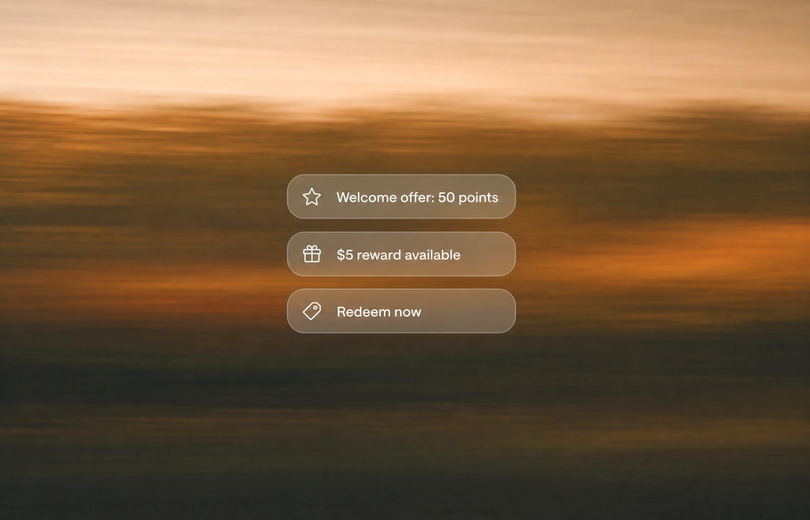
For ecommerce, this principle works across multiple touchpoints. When a new customer joins your loyalty program and immediately receives a welcome bonus—say, 50 points toward their first reward—they're not starting from zero. They're starting from progress. That perception matters.
The Goal Gradient Effect: The Closer, The Faster
The goal gradient effect describes how motivation intensifies as you approach a goal. Early in a journey, effort is steady. As you near the finish line, effort accelerates.
Clark Hull documented this with rats in a maze in the 1930s. Rats would run slowly through the middle of the maze but accelerate sharply as they approached the end. Decades later, Kivetz, Urminsky, and Zheng replicated this with coffee loyalty cards. Customers who were close to earning a free coffee bought significantly more frequently than those early in their punch card.
The analogy is obvious: a finish line sprint. In the middle of a race, runners maintain pace. Within 100 meters of the finish, they accelerate. The destination didn't change. Their perception of closeness did.
In a Shopify loyalty program, this principle drives remarkable results when made visible. A customer who sees "You're $15 away from free shipping" will often add $15 worth of items to their cart. One who sees "2 more purchases until you reach Silver status" accelerates their next order. The reward hasn't changed. The proximity has.
Loss Aversion: The Fear of Missing Out (or Losing Out)
Loss aversion is the principle that people feel the pain of loss roughly twice as strongly as the pleasure of equivalent gain. You fear losing $100 more than you enjoy gaining $100.
Psychologists Kahneman and Tversky documented this in their foundational work on prospect theory. It's one of the most reliable patterns in behavioral economics. The implication is profound: framing something as a potential loss creates more motivation than framing the same thing as a potential gain.
An analogy: losing your phone feels catastrophic. Finding $500 feels great, but not as intensely catastrophic-in-reverse. The emotional weight is asymmetrical.
In loyalty programs, this surfaces through scarcity, countdown timers, and expiration windows. "Redeem your points before [date]" works better than "You have points to redeem." "Your Gold status expires in 7 days" drives action better than "Maintain Gold status for exclusive benefits." The stakes feel real because loss is being framed, not gain.
Status Seeking: The Quest for Recognition and Exclusivity
Status seeking is the innate human desire for recognition, social standing, and belonging to an exclusive group. It's not vanity—it's deeply rooted in how we build identity and self-esteem.
Think of VIP lines at airports, exclusive memberships, or achievement badges in video games. The benefits of the status are often secondary to the status itself. The line moves faster, but the real value is knowing you're in the line.
In loyalty programs, status becomes a powerful motivator. When customers know they're working toward a visible tier—Bronze, Silver, Gold, Diamond—they're not just chasing discounts. They're chasing identity. Each tier should come with escalating exclusivity: better perks, recognition, access that lower tiers don't have.
The Shopify loyalty program growing brands trust
See how Mage helps Shopify brands lift repeat purchase rate with loyalty, referrals and store credit.
Book a demoApplication: Translating Psychology into Shopify Loyalty Program Mechanics
The gap between behavioral science and Shopify implementation is narrower than merchants think. Modern loyalty platforms translate these principles into features. Your job is knowing which features map to which psychology.
Leveraging Endowed Progress for Immediate Engagement
Welcome Bonuses & Sign-Up Head Starts
When a customer enrolls in your loyalty program, don't start them at zero. Give them an immediate boost: 50 bonus points, 2 pre-filled progress steps toward their first reward, or a partial tier upgrade. Frame it as a gift, not a discount.
Example messaging: "Welcome! We've given you 50 points to get you started. You're already 40% of the way to your first free product."
The psychology here is straightforward. The customer feels they've already invested. Finishing the journey feels natural. Abandoning it feels like sunk effort.
Implementation note: Make this visible. Use a progress bar that shows the head start clearly. Many loyalty apps display this as a default feature in the welcome experience—strategically applying behavioral psychology principles is easier when the app itself handles the visualization.
Harnessing the Goal Gradient Effect to Accelerate Purchases
Dynamic Progress Messaging
Place progress indicators everywhere customers see them: product pages, cart, email, account dashboard. The message should always reference proximity.
Bad: "Earn 100 points to unlock free shipping."
Better: "You're $25 away from free shipping. Add a small item and unlock it."
Best: "You're $25 away from free shipping. [See recommendations]"
This works because customers feel the finish line. They accelerate to cross it.
Design distinct tiers with benefits that create visible milestones. Bronze, Silver, Gold, Platinum. Each tier should clearly show what's required to advance and what benefits unlock at each level. As customers approach the next tier, the goal gradient effect takes over—effort accelerates.
The operative word is visible. Hidden tiers don't work. Customers need to see exactly where they are, how far they have to go, and what waits on the other side.
Gamification Elements
Badges, achievements, and milestone celebrations create repeated moments of progress. "You've reached 500 lifetime points!" "You're 1 referral away from a bonus tier." Each checkpoint resets the goal gradient effect—motivation accelerates again toward the next milestone.
Activating Loss Aversion to Drive Urgency and Retention
"Points/Status at Risk" Messaging
This is where most merchants get cautious. But when deployed ethically, loss aversion is powerful.
Frame communications around potential loss, not mere gain:
Weak: "Earn 50 points this month to maintain your Gold status."
Stronger: "Your Gold status expires in 7 days. Make a purchase to keep your exclusive benefits."
The second version is more motivating because it frames the stakes around what could be lost. Loss aversion makes the stakes feel real.
Time-Sensitive Redemption Windows
Points that never expire create no urgency. Points that expire in 18 months create urgency without feeling punitive. Communicate both directions clearly: "You have 45 days to redeem these points. Don't lose them."
The psychology: loss aversion + scarcity. Customers feel the threat and move faster.
Exclusive Access as Perishable Benefit
Early access sales, exclusive drops, or members-only discounts that expire create FOMO backed by real loss aversion. "Early access to our sale ends Friday at midnight. Silver members unlock 24 hours early." The benefit is tied to status and time. Both create pressure.
An important note: transparency matters here. Customers shouldn't feel manipulated. Clear timelines, honest messaging, and consistent delivery of what you promise are non-negotiable. Loss aversion works best when it's not cynical.
Cultivating Status Seeking Through Exclusivity and Recognition
Status seeking is the principle that drives aspirational tier programs. Create tiers with meaningful, escalating perks that feel exclusive.
Example tier structure:
- Bronze: Basic tier. 1 point per $1 spent. Free birthday discount.
- Silver: 1.5 points per $1 spent. Free shipping on all orders. Early access to sales.
- Gold: 2 points per $1 spent. Free express shipping. Exclusive product previews. Dedicated support email.
- Diamond: 2.5 points per $1 spent. All Gold benefits plus quarterly surprise gifts. Invitation to exclusive events. Personal concierge access.
Each tier should feel meaningfully better than the last. The jump shouldn't just be "more points"—it should be "different experience." That's what drives status seeking. Customers want to publicly or privately know they're in the highest tier.
Personalized Recognition
When a customer advances tiers, send personalized recognition. An email from your founder. A handwritten note. A video message. The personal touch amplifies the status effect—it confirms they're valued, not just transacting.
Branded Experience & Visual Hierarchy
Use color, imagery, and interface design to make tier status visually distinct. A Diamond customer's account dashboard should look different than a Bronze customer's. Not better functionally (though it can be), but visibly different. That visual distinction reinforces status.
“Cannot say enough good things about the team at Mage Loyalty, one of the absolute best organizations we have ever worked with, full stop! So glad we connected with them, completely redid our loyalty program, new concepts, use of loyalty, increasing user engagement, showing us where we were not valuing our best customers, just WOW, amazing team!”

Read the West Coast Goalkeeping case study →
Optimizing Your Loyalty Program: Beyond the Initial Setup
Setting up a program around these principles is a starting point. Optimization is where most merchants stall—and where the real gains appear.
A/B Testing Your Psychological Nudges
Test different framings to see which resonates with your audience. "Spend $50 more for free shipping" versus "You're $50 away from free shipping." Test different tier names: does "VIP" outperform "Gold"? Does "expires in 7 days" drive more action than "expires January 15th"?
These variables seem small. Their cumulative impact on behavior is not.
Segmenting for Psychological Fit
Different customers respond to different triggers. Some are driven by status. Others respond more strongly to loss aversion. Your most detail-oriented customers might love visible progress tracking, while others find it stressful.
Tier-focused messaging for status seekers. Progress-focused messaging for goal-gradient responders. Expiration reminders for loss-averse customers.
Integration Across Your Ecosystem
A loyalty program doesn't work in isolation. It needs to connect with your email platform, SMS, customer service, and checkout. When a customer earns points, they should be notified immediately (reinforcing progress). When they're close to a reward, email should remind them (goal gradient). When points are about to expire, SMS should alert them (loss aversion).
Platforms that integrate seamlessly with Shopify, Klaviyo, Omnisend, Postscript, and Judge.me create a unified experience. One where psychology works across all touchpoints, not just on your loyalty page.
Common Myths and Misconceptions
Myth: Loyalty programs only work for big brands.
Reality: The principles of behavioral psychology work identically for a 50-person DTC brand and a 5,000-person enterprise. Small stores actually have an advantage—they can test faster and personalize more deeply. A $2M annual revenue brand using tiered tiers and progress messaging will outperform a $20M brand using flat point programs.
Myth: The biggest discount wins.
Reality: A $10 discount for 1,000 points will underperform a $5 discount plus early access to new products plus exclusive recognition. Customers perceive the second option as higher value because it triggers multiple psychological principles. It's not the price tag—it's the totality of the reward.
Myth: Psychology is too complex to implement without data science.
Reality: Modern loyalty platforms have simplified this dramatically. Progress bars, tier visualizations, expiration messaging, and personalized email triggers are all standard features. You don't need to understand the underlying neuroscience to deploy it.
Frequently Asked Questions
What is loyalty program psychology, and why does it matter?
Loyalty program psychology is the application of behavioral science principles—such as progress motivation, loss aversion, and status seeking—to design reward systems that intrinsically motivate customers rather than relying purely on discounts. It matters because psychologically designed programs drive 40%+ higher repeat purchase rates and deeper emotional connection than transactional discount-only programs.
How does the endowed progress effect work in loyalty programs?
The endowed progress effect states that customers are more motivated to complete a goal when they perceive they've already made progress toward it, even if that progress is artificial. Giving new loyalty members a sign-up bonus of 50 points or pre-filling 20% of their first reward progress makes them feel committed and more likely to complete the journey.
What's the difference between the goal gradient effect and loss aversion?
The goal gradient effect describes how motivation intensifies as you get closer to a goal (finish-line acceleration). Loss aversion is the psychological principle that fear of losing something feels roughly twice as strong as pleasure from gaining the same thing. Goal gradient drives customers forward. Loss aversion creates urgency through the threat of losing points, status, or access.
How can I implement tiered loyalty programs in Shopify?
Ensure progress toward the next tier is visibly displayed on customer accounts and in email communications. The key is making the tier structure clear and the visual advancement obvious.
TLDR
Loyalty programs don't work because they offer discounts—they work because they leverage four psychological principles: Endowed Progress (head starts), Goal Gradient (visible finish lines), Loss Aversion (fear of losing status or points), and Status Seeking (recognition and exclusivity). When you design programs around these principles instead of discount size, repeat purchase rates climb 40% or more, and customers build genuine emotional connections to your brand rather than chasing promotions.

Graeme is the co-founder at Mage Loyalty. He heads product development, from complex loyalty migrations and large-scale data handling to building the features shaping the future of loyalty on Shopify.