A misread repeat-purchase rate can make an activewear brand fund discounts for the wrong customers. Activewear & fitness brand repeat purchase benchmarks 2026 are useful only when the cohort, window, and completed-purchase definition stay fixed.
Short answer: What we see across Mage merchants is a typical repeat purchase rate of 20% to 30%, with most brands around 23% to 25%. About 40% is exceptional, not a universal target. Measure first-to-second-order rate, timing, AOV, and purchase frequency by cohort and first product before changing incentives.
What the activewear & fitness brand repeat purchase benchmarks 2026 actually measure
| Metric | Definition | Recommended window | Use it to answer |
|---|---|---|---|
| Customer repeat purchase rate | Customers with at least two completed orders divided by customers in the cohort | 365 days | How many acquired customers returned |
| First-to-second-order rate | First-time customers who placed a second completed order | 30, 90, 180, 365 days | Whether order one converts into order two |
| Returning customer revenue | Revenue from customers with repeat orders | Same reporting period | How much repeat customers contribute |
| Purchase frequency | Average completed orders per customer | Rolling 12 months | How often customers come back |
Define repeat purchase rate before comparing your store
Repeat purchase rate should mean the percentage of customers who place at least two completed orders within a stated period. State the cohort, start date, window, and refund treatment beside the number.
A trailing annual customer rate and a 90-day first-to-second-order rate answer different questions. Report both. One gives you a baseline. The other shows whether new customers are reaching a second purchase.
Use a fixed 12-month window and cohort start date
Use a 365-day view for strategic planning. Then create cohorts by first-order month or quarter and track those customers at 30, 90, 180, and 365 days.
Across Mage merchants, 20% to 30% is the typical observed range. Most brands sit around 23% to 25%. Around 40% is rare and should be treated as an exceptional ceiling, not a target every store should expect.
Separate first-to-second-order rate from all-customer repeat rate
All-customer repeat rate includes customers with five, ten, or more orders. That can conceal a weak second-purchase rate.
Track the conversion from order one to order two separately. It shows whether fit, delivery, product education, merchandising, and post-purchase contact are giving customers a reason to return.
“Cannot say enough good things about the team at Mage Loyalty, one of the absolute best organizations we have ever worked with, full stop! So glad we connected with them, completely redid our loyalty program, new concepts, use of loyalty, increasing user engagement, showing us where we were not valuing our best customers, just WOW, amazing team!”


Read the West Coast Goalkeeping case study →
Step 1: Calculate your activewear repeat purchase rate correctly
Choose the cohort
Start with unique first-time customers acquired in one defined period, such as January through March. That cohort is your denominator.
Then count how many placed a second completed order inside each measurement window. Do not use total orders as the denominator. One high-frequency customer should not outweigh ten customers who bought once.
Set the measurement window
Build four views: 30, 90, 180, and 365 days from the first paid order. Short windows show whether onboarding and early merchandising work. The annual view captures slower seasonal refreshes.
Shopify customer reports include customer retention rate, average order value, and RFM analysis, as documented in Shopify’s customer reports guidance. Use those reports as a starting point, then export cohorts when you need product-level cuts.
Handle returns, cancellations, and exchanges
Define a completed purchase before you calculate anything. Cancelled and fully refunded orders should not count as retained revenue. Keep that convention consistent across every cohort.
Treat an exchange separately from a new purchase. An exchange can show strong service recovery, but it does not prove the customer chose to spend again.
Create useful comparison cuts
Cut the cohort by first-order product group, first-order value band, and acquisition source. Add a member versus non-member comparison, but do not assume membership caused the difference. Higher-intent shoppers may be more likely to join and buy again.
Also compare the same calendar period year over year. A winter outerwear cohort and a summer shorts cohort should not be judged against each other without context.
Step 2: Benchmark the second order against the activewear buying cycle
Activewear has several return occasions. The table below helps distinguish them.
| Return occasion | What to look for | Useful follow-up |
|---|---|---|
| Replacement | High-wear products and repeat purchases of the same item | Product care and replacement-timed reminders |
| Cross-sell | Complementary categories bought after the first order | Relevant outfit, accessory, or recovery recommendations |
| Seasonal refresh | Weather changes, color drops, and training seasons | Collection-specific messages or early access |
| New needs | Changing fit, activity, or recovery requirements | Different-fit guidance or adjacent-category merchandising |
BCG reports that nearly one in three recent activewear purchases were replacements for worn items. Map core product families to likely replacement or refresh windows. High-wear training items may justify an earlier prompt than a premium jacket bought for occasional use.
A customer may be satisfied with the first order and still have no reason to return until a weather change, new color drop, or training season. That is a merchandising problem before it is a loyalty problem.
BCG found that weight-loss journeys drove activewear spend intent 31 percentage points above average in its research. Segment around the products customers bought, the activity they selected, and the next item that makes sense.
Across a broader DTC analysis, 50.3% of second orders occurred within 30 days. Treat that as directional timing evidence, not an activewear-only target. For the retention challenge behind this metric, read about the second-purchase problem.
Step 3: Diagnose whether you need a reorder, a cross-sell, or a reason to return
Start with order history. If customers commonly return for the same legging, sports bra, or training accessory, build follow-up around replacement timing, product care, and confidence in the original fit.
A broader DTC analysis found that 77% of second purchases were reorders of the same product. That is not activewear-specific, but it is a useful reason to test a reorder path before building elaborate cross-sells.
Cross-sell when the first product naturally creates a gap. A customer who buys leggings may need a matching top. A runner buying a winter layer may return for accessories or recovery products. Use the first product, price point, color family, and purchase season to decide whether an outfit-building message is relevant.
Status can give repeat customers a visible reason to consolidate spend with your brand. Mage VIP tiers can be based on spend, points earned, or number of orders. A frequency-led brand may use order count. A premium activewear brand with fewer, higher-value purchases may prefer spend.
A happy customer may be ready to refer before they need another pair of leggings. Ask after delivery, product success, or a positive review, not immediately after payment.
Step 4: Build a 30, 60, and 90-day repeat-purchase plan
Days 0 to 30: make the first product successful
Use the first month to reduce buyer’s remorse and increase product use. Send fit, care, styling, and activity-specific guidance. Invite customers to sign in and view order information, wishlist or Saved for Later items, rewards, and progress.
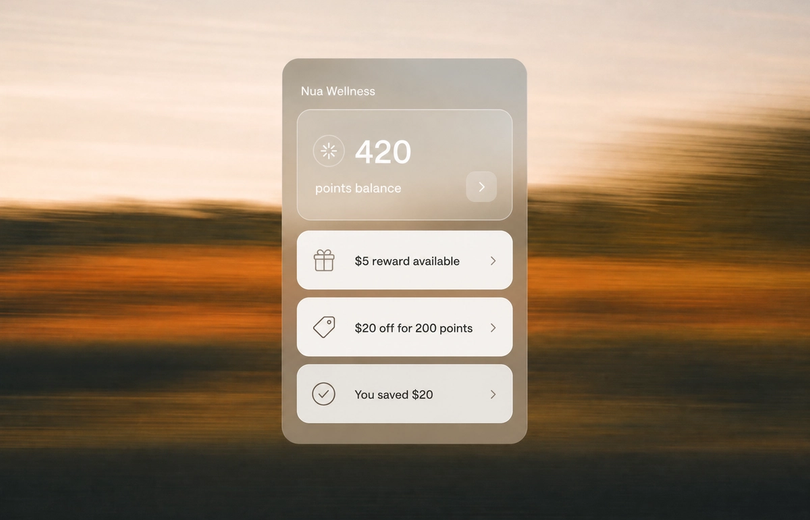
Mage Accounts is a branded on-site account drawer that sits on top of Shopify customer accounts. Customers can see orders, wishlist or Saved for Later items, points balance, VIP progress, and referrals without leaving your domain.
For loyalty members, show what they earned and what the next meaningful reward requires. Rewards can apply at Shopify Checkout without requiring a code to copy.
Days 31 to 60: create the next relevant purchase
Test one product or collection-specific earning offer, wishlist reminder, seasonal collection prompt, or referral invitation. Match the message to what the first order indicates.
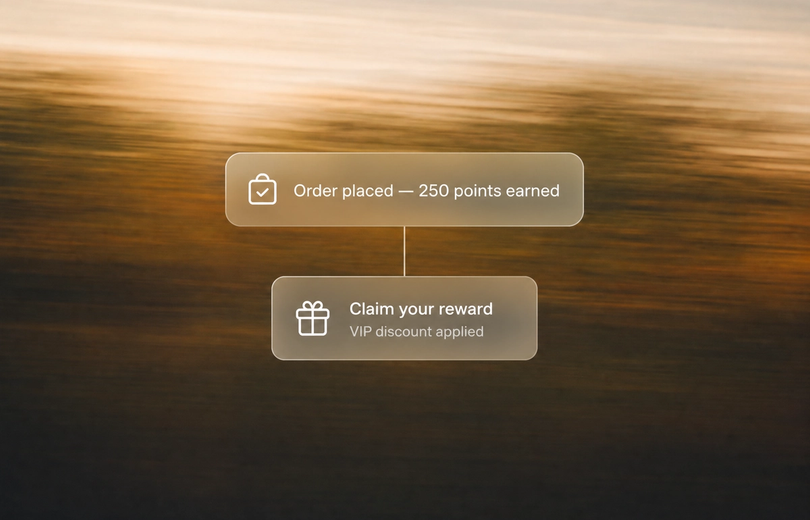
Mage’s Purchase earning rule is configured in Shopify admin through Mage Loyalty, Loyalty, Earning Points, and Purchase rule. The Purchase earning rule guide covers amount earned, spend needed, excluded discounted products, approval time, per-tier rates, and customer-facing descriptions.
Set approval time to match your returns window if you want earnings held as pending until the purchase is less likely to be refunded.
Days 61 to 90: prevent silent churn
Segment customers into three groups: no second order, one second order, and high-frequency customers.
For no-second-order customers, use a timely reason to return. For repeat customers, suggest the next category or reward threshold. For high-frequency customers, show tier progress, early access, or a referral offer.
Use your Klaviyo loyalty integration to support segmentation with loyalty properties and events such as points earned, rewards redeemed, and tier changes.
Step 5: Use VIP tiers and rewards to improve behavior without eroding margin
Set tiers around meaningful activewear milestones
Use three or four tiers as a practical starting point, even though Mage supports up to 10 tiers. Customers should understand what they gain by moving up.
Set entry around spend if basket value matters most. Use order count if you want more frequent training-apparel purchases. Use points earned where engagement actions are a meaningful part of the program. Learn more about Shopify VIP tiers.
Choose rewards that match the purchase occasion
Higher earning rates, early access to drops, collection access, free shipping, anniversary rewards, and tier-specific discounts can fit activewear better than a permanent sitewide discount.
A Shopify loyalty program should make the next purchase more relevant, not simply cheaper. Points and Mage-internal store credit can support that goal, but neither fixes poor sizing, low durability, slow delivery, or difficult returns.
Use threshold campaigns selectively
Tiered bonus campaigns work when you want a larger basket in one order, such as a seasonal wardrobe refresh. The customer earns only the highest threshold reached, thresholds do not stack, and qualifying product spend is measured after discounts, excluding tax and shipping.
Use a campaign for a specific collection or launch period. Do not leave one running indefinitely and assume it improves retention.
Measure members against comparable non-members
Compare repeat purchase rate, AOV, and purchase frequency by cohort and VIP status where your reporting setup supports those cuts. Mage reports revenue and AOV by tier and provides VIP tier reporting.
Love Sweat Fitness provides one implementation example, not an industry benchmark. Its members had 2x lifetime value and 82% higher purchase frequency than non-members after its program launch.
Step 6: Track the metrics that explain the benchmark, not just the benchmark itself
| Check before launch | Why it matters | Review cadence |
|---|---|---|
| Cohort definition | Keeps the denominator consistent | Monthly |
| Measurement window | Separates early and delayed repeat behavior | Monthly |
| Product groups | Shows replacement versus cross-sell patterns | Monthly |
| Returns treatment | Prevents inflated completed-purchase results | Monthly |
| Member comparison | Avoids confusing correlation with causation | Quarterly |
| Campaign start date | Creates a clean before-and-after comparison | Before launch |
| Reward liability | Controls outstanding rewards exposure | Monthly |
Primary metrics
Track first-to-second-order rate, 90-day repeat purchase rate, 365-day repeat purchase rate, returning customer revenue, AOV, purchase frequency, and member CLV.
Keep Mage’s Returning Customer Rate separate from the cohort-level customer repeat rate used in this article. Your cohort calculation uses unique first-time customers as the denominator.
Diagnostic metrics
Track second-order timing, reorder versus cross-sell share, AOV by first-order product, refund rate, redemption rate, tier progression, referral conversion, and wishlist conversion.
These metrics explain why the benchmark moved. A higher rate driven by discounted low-value reorders needs a different response than a higher rate driven by full-price wardrobe expansion.
What a good 2026 benchmark means for your next 90 days
If you are below the Mage observed range
Below 20%, first check fit consistency, product quality, delivery, returns, and post-purchase education. Confirm the cohort calculation before adding rewards.
Then identify the missing second-order occasion. It may be a replacement reminder, a seasonal product gap, or a weak first-product experience.
If you are in the typical range
Around 23% to 25%, improve timing and relevance rather than redesigning everything. Test one intervention, such as a product-specific earning rule or tier-progress message, against a clear cohort.
If you are near the exceptional range
Around 30%, investigate which products, acquisition sources, and cohorts drive the result. Near 40% is exceptional in Mage’s observed range. Protect margin and study the product experience behind it.
FAQs
What is a good repeat purchase rate for an activewear brand in 2026?
A good repeat purchase rate depends on the cohort, window, product mix, and returns treatment. What Mage sees across merchants is 20% to 30% as typical, 23% to 25% as common, and about 40% as exceptional.
How do you calculate repeat purchase rate for an activewear brand?
Divide customers with two or more completed purchases by total unique customers in a defined cohort, then multiply by 100. Report the cohort dates and use 30, 90, 180, and 365-day windows so replacement behavior and slower seasonal refreshes remain visible.
When do activewear customers make their second purchase?
Second-purchase timing is shaped by product wear, seasonality, training goals, and fit needs. In a broader DTC analysis, 50.3% of second orders occurred within 30 days, but activewear brands should treat that as directional context rather than an activewear-specific benchmark.
Should activewear brands focus on reorders or cross-sells?
First determine whether second orders are reorders or complementary purchases. A DTC analysis found 77% of second purchases were reorders of the same product. Cross-sells can make sense for outfit building, new activities, and seasonal needs.
How can activewear brands improve repeat purchases without deeper discounts?
Use fit and care guidance, product-timed reminders, early access, VIP progress, wishlists, referrals, and relevant account visibility. Start with the next buying occasion, then apply a reward or status mechanic that supports it instead of giving every customer the same discount.
What Shopify metrics should activewear brands track for retention?
Track first-to-second-order rate, 90-day and 365-day repeat purchase rate, AOV, purchase frequency, returning customer revenue, refund rate, and reorder share. Add member CLV, redemption rate, tier progression, referral conversion, and wishlist conversion to understand which retention mechanisms contribute to movement.
Ready to see Mage in action? Book a demo.

Kris is the co-founder of Mage Loyalty. I spend most days talking to merchants, shipping features, and making sure our customers get real results. If you run a Shopify store or Agency we should chat!