Here's the truth most Shopify coffee brands don't want to admit: they're bleeding customers through a leaky funnel they've never bothered to measure. While everyone obsesses over acquisition costs and ad spend, repeat purchase rate quietly determines whether your coffee business actually survives or slowly withers.
The average Shopify store sees only 27-28% of customers buying more than once. For coffee brands specifically, benchmarks hover between 30-40%, which sounds decent until you realize that roughly 70% of your customers are ghosts. They bought once. They're gone. In a market where acquiring a customer costs 5 to 25 times more than retaining one, that's not just inefficient—it's unsustainable.
This article walks you through what your coffee brand's repeat purchase rate actually means, where you should be benchmarking, and the specific tactics that separate thriving DTC coffee roasters from those perpetually chasing new customers.
Understanding Repeat Purchase Rate (RPR) for Your Coffee Brand
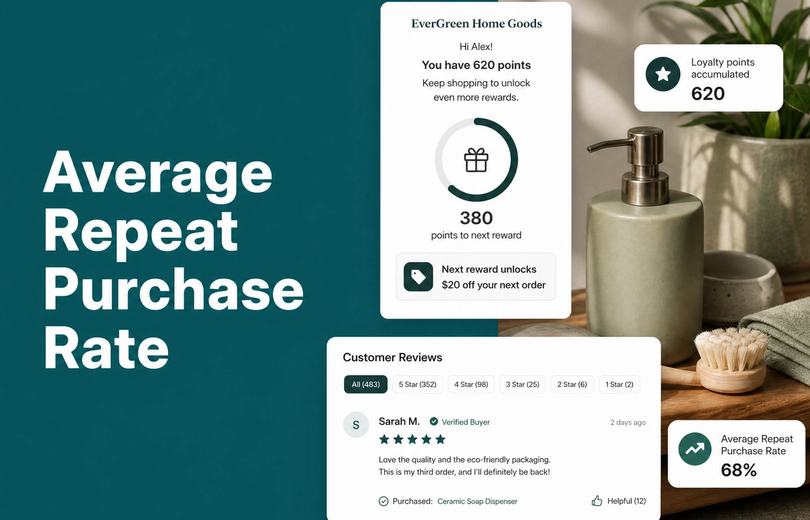
Repeat purchase rate is deceptively simple: it's the percentage of customers who've made more than one purchase from your store. The formula is straightforward: divide the number of repeat customers by total customers, then multiply by 100.
But simplicity is misleading. RPR is perhaps the single most revealing metric about your business health. It tells you whether your product, pricing, brand, and customer experience are compelling enough to overcome inertia and friction.
Why does RPR matter so much for coffee? Because coffee is inherently consumable. Unlike a winter coat someone buys every three years, coffee gets consumed. Daily, weekly, at minimum monthly. This makes coffee an ideal product category for repeat purchases—if your brand captures the right positioning in a customer's routine.
The financial case is bulletproof. Retaining customers costs between 5 to 25 times less than acquiring new ones. A 5% increase in retention can boost profitability by 25-95%. Repeat customers spend 31% more per transaction than first-time buyers and generate 300% more revenue over their lifetime. These aren't marginal improvements. They're existential.
Yet most coffee brands treat RPR like an afterthought. They optimize for the first purchase, then assume customers will magically reorder. They don't.
Shopify Coffee Repeat Purchase Rate Benchmarks: How Do You Compare?
The average Shopify store has an RPR around 27-28%, though ranges vary from 15-30% depending on category maturity and business model. That means roughly 72-81% of customers buy once and disappear.
For food and beverage specifically, benchmarks climb to 30-40% for a 12-month window. Coffee and tea sit in that 30-40% range. Consumable-focused DTC brands often land between 20-30%.
Here's what matters: these benchmarks include one-time buyers, subscription holdouts, and casual customers. Your real competition isn't the average. It's the high performers.
Top-tier coffee brands on Shopify consistently hit 40-50%+ RPR. Some reaching into the 60% range. The difference isn't luck or a better product. It's intentional design around the reorder cycle.
Think of it this way: if the average coffee brand loses 70% of customers immediately, and a high-performer retains 45%, that 25-point gap compounds into staggering revenue differences over 12 months. A brand with 1,000 first-time customers generating $30,000 in first-purchase revenue sees vastly different lifetime value depending on that RPR gap.
The category also matters more than most realize. Grocery and food delivery sits at 65.2% repeat purchase intent—much higher than general ecommerce. Why? Because reordering groceries and consumables is built into human behavior. Coffee brands that design their entire strategy around this natural cycle, not against it, win.
The Shopify loyalty program growing brands trust
See how Mage helps Shopify brands lift repeat purchase rate with loyalty, referrals and store credit.
Book a demoThe Economics of Coffee Retention: Why RPR Isn't Just a Number
Most coffee brands know retention is cheaper than acquisition. Fewer internalize what that actually means.
Let's do the math. If you're spending $15-25 acquiring a coffee customer through paid ads, that customer needs to spend roughly $50-75 to justify the acquisition cost. For a coffee brand with a $30 AOV, that's two purchases minimum to break even.
But look at your bank account. Those first-time customers generate revenue today. Acquisition costs come out of next quarter's budget. The math feels like it works.
Then months pass. You're acquiring more customers to replace the 72% who vanished. Your CAC keeps rising as ad platforms get crowded. Margins compress. You're running faster just to stay in place.
A customer with 4 repeat purchases, by contrast, generates $120 in revenue for the same $20 acquisition cost. The retention economy is exponential, not linear.
Repeat customers also spend differently. They're not hunting deals. They're replenishing. They'll upgrade roasts, try new blends, add equipment. Their average order value climbs over time. One craft coffee company documented a 34% improvement in retention and an 18% increase in average subscription value within six months by implementing a tiered subscription program with loyalty points. That's not a one-time win. That compounds year over year.
“I looked into so many different integrations for loyalty and referrals for our Shopify Store, but no one impressed me more than Mage on human connection, customer service, and value.”


Read the Reelie case study →
Deep Dive: Factors Shaping Your Coffee Brand's RPR
Product Consistency and Range
This sounds obvious, but consistency kills more coffee brands than any marketing failure. A customer buys a bag, loves it, returns expecting the same experience, and finds it different. Temperature roasted differently. Bean sourcing shifted. The spell breaks.
Top performers treat consistency like a brand promise. But consistency alone doesn't drive RPR. Range does.
Offering single-origins, blends, niche varieties, and different roast levels segments your audience. A customer who loves light roasts doesn't disappear just because you stock dark roasts. They find their lane and stay. Diversity in your lineup gives repeat customers reasons to explore and return.
Sustainability and Ethical Sourcing as Retention Drivers
This is where most analyses miss the point entirely. Yes, quality matters. But for a growing segment of coffee customers, ethical sourcing and sustainability aren't nice-to-haves. They're purchase drivers and retention anchors.
Pact Coffee explicitly built its brand around this. Customers know exactly where their beans come from, who grew them, and what margins the farmer earned. That transparency creates loyalty that transcends price. A customer aligned with your values doesn't leave when a competitor undercuts you by $2. The relationship is emotional, not transactional.
Fair trade certification, direct trade relationships, carbon-neutral shipping, compostable packaging—these aren't marketing fluff for conscious consumers. They're the reason to stay.
The Post-Purchase Journey
Quality and values get you the first order. Everything after that determines whether there's a second.
Packaging matters more than most realize. A coffee brand that arrives in a small cardboard box with a handwritten thank-you note and a reorder coupon communicates care. One that arrives in a generic mailer doesn't. That first physical experience lives in muscle memory. Customers who unbox something beautiful think about it. They mention it. They come back.
Easy reorder functionality removes friction from repurchase. A one-click reorder button on your product page or in a notification email can double repurchase rates versus making customers hunt through your store. Make reordering harder than the original purchase, and you've lost them.
Post-purchase communication matters too. 92% of customers say they'd buy again from businesses offering easy returns. But beyond returns, proactive communication—replenishment reminders calibrated to actual consumption rates, not generic 30-day windows—signals that you understand their behavior.
Strategies to Cultivate Loyalty and Boost Your Coffee RPR on Shopify
Harnessing the Power of Loyalty Programs
Loyalty programs get dismissed as generic rewards schemes. Done right, they're behavioral architecture that rewires how customers think about your brand.
Mage Loyalty's comprehensive loyalty program works through points-based systems where customers earn rewards for purchases, referrals, reviews, and social actions. A customer buys a $30 bag of beans and earns points. They refer a friend. More points. They leave a review. More points. Each action binds them tighter.
The data is unambiguous: loyalty program members are 72% more likely to buy again and generate 12-18% more incremental revenue annually than non-members. Loyalty programs can increase repeat purchase rates by 20-40%.
Tiered programs unlock something psychological: status. A customer in Bronze tier with a roadmap to Silver doesn't just buy coffee. They're working toward something. Early access to new roasts, free shipping thresholds, exclusive bean drops—these create progression loops. Black Rifle Coffee Company built a massive community partly through multi-tier subscriptions that reward consistency.
Paid memberships flip the model. Instead of earning points, customers pay upfront for exclusive access. A $9.99/month membership that guarantees 20% off every order creates habit. Sunk cost makes them think twice before canceling. For coffee brands with strong, loyal cores, memberships can feel like an VIP shortcut.
Design effective Shopify VIP tiers that acknowledge the natural consumption patterns of coffee. Monthly spenders move faster through tiers than quarterly buyers. Reward consistency—hitting purchase milestones within specific windows—rather than absolute spend amounts.
The Coffee Subscription Model: Built for Retention
Coffee is the subscription product. More so than curated boxes or clothing swaps, coffee subscriptions align with natural human behavior.
Why? Consumption. People need new coffee. They don't need new socks every month, but they do need new beans.
Replenishment subscriptions—where customers sign up to receive coffee on a fixed schedule—maintain monthly churn rates below 4-6%, compared to 10-12% for curated boxes. The global coffee subscription market is projected to reach $2.67 billion by 2035. That's not hype. That's structural demand.
But here's where most brands fail: they treat subscriptions as a shipping schedule, not a relationship. A customer signs up, receives their coffee, receives another coffee, and gradually feels like they're on autopilot.
The winners make subscriptions flexible. Pause and skip options reduce churn by 25-35%. Customers can modify delivery frequency, swap beans, or pause temporarily without canceling entirely. This flexibility reduces involuntary churn—the 68% of subscription cancellations driven by failed payments or temporary disengagement—which is where most brands leak customers.
Tier the subscription experience. A basic tier gets coffee on a fixed schedule. A mid tier lets them choose roasts monthly. A premium tier includes exclusive single-origins, tasting notes, and brewing consultations. Coffee subscriptions with clear progression paths see 15-25% higher retention than flat subscription models.
Personalization and Reorder Reminders
Generic "we miss you" emails don't work. Personalization does.
Track grind preference, brewing method, roast preference, and flavor profile on first purchase. A customer who buys a light roast French press coffee isn't the same as one buying dark roast espresso. Tailor all future communication to that preference.
Reorder reminders win when they're predictive. Most brands send reminders at fixed intervals—30, 60, or 90 days. High performers analyze consumption data and send reminders when customers are actually likely to be running low. An "almost-out" SMS reminder 3 days before predicted depletion captures the reorder before a competitor sends their generic push.
Personalization boosts retention by 5% and makes customers 72% more likely to return. That's not a rounding error. That's meaningful RPR movement.
Building Community Through Education
Content marketing feels distant from retention until you realize that brewing guides, origin stories, and coffee education build community.
A customer reading your guide to brewing light roasts finds value beyond the transaction. They're learning. They're deepening their appreciation for coffee generally, and your brand specifically. They become invested in the category, which means they're more likely to stick around.
Partners Coffee integrates this beautifully. Rewarding reviews, referrals, and social engagement creates feedback loops where customers become content creators. They're not just buying coffee. They're building the brand narrative.
Case Studies: Real-World Coffee Retention Champions
Pact Coffee nailed retention through personalization and mission alignment. Customers don't just order random bags. They build profiles. First purchase reveals their taste preferences. Every future shipment is curated to their profile, not pushed randomly. That personalization compounds. Over 12 months, a Pact customer's lifetime value far exceeds someone buying from a brand that sends every customer identical roasts.
Black Rifle Coffee Company built retention through community and tier-based subscriptions. Their subscription model isn't just about receiving coffee. It's about belonging to a community with shared values. The brand created emotional stickiness that transcends product.
Partners Coffee demonstrated integration of loyalty programs with subscriptions. Customers earn points for purchases and referrals. They earn additional bonuses for reviews and social mentions. The program creates multiple touchpoints where customers earn and redeem, keeping them engaged between shipments.
Equipping Your Store: Top Shopify Apps for Loyalty and Subscriptions
Shopify's native tooling is strong but limited for loyalty mechanics. Most coffee brands need specialized apps.
For loyalty programs, look for platforms that support points systems, tiered progression, referral mechanics, and email/SMS integration.
For subscriptions, prioritize flexible delivery, pause/skip functionality, and dunning management for failed payments. Apps like Recharge, Bold Subscriptions, and RecurX handle the operational complexity of recurring billing while giving customers self-service controls.
Integration matters. Your loyalty app should sync with your email platform (Klaviyo, Omnisend) so that point notifications, tier updates, and reorder reminders flow seamlessly. Your subscription app should tie into your loyalty program so that subscription customers earn bonus points or access exclusive benefits.
Here's what to look for in the best coffee loyalty apps. Test your stack on a small cohort first. Most coffee brands thrive with two to three core tools rather than trying to integrate five different platforms.
Beyond RPR: Key Retention Metrics for Coffee Brands
RPR is the headline metric. But several supporting metrics reveal the full story.
Customer Lifetime Value (CLV) shows how much revenue a repeat customer actually generates over their lifetime. Coffee subscriptions generate $380-$550 CLV per subscriber. That's the real number justifying your retention investments.
Churn Rate matters for subscription brands. Monthly churn for subscription boxes typically ranges 10-12%. High performers push below 5-8%. For a coffee subscription with 1,000 active customers and 8% monthly churn, you're losing 80 customers per month. The difference between 8% and 5% churn is 30 customers monthly—$1,440/month, or $17,280 annually, in recurring revenue you're not losing.
Repurchase Frequency reveals how often repeat customers buy. Average time between purchases tells you if your consumption cycle assumptions are correct. A customer buying every 21 days is different from one buying every 45 days. Tailor your reorder reminders and subscription intervals accordingly.
Repeat Buyer Rate by Cohort shows whether retention is improving or declining. Compare customers acquired in January to those acquired in June. If January cohorts have 40% RPR and June cohorts have 28%, something changed—product, shipping, pricing, or competition. Diagnose and fix it.
Tools like Shopify's built-in analytics show some metrics natively.
The Reorder Mistake Most Coffee Brands Make
Here's the contrarian take: most coffee brands have it backwards. They optimize for the first purchase when they should optimize for the second.
First-order optimization is seductive. It's measurable. "We improved conversion rate by 12%" feels like a win. But that customer who converts once and vanishes generated exactly zero sustainable value.
High-performing coffee brands spend 60-70% of their retention energy on customers who've already bought. They identify customers showing churn signals—declining order frequency, increasing time between purchases—and intervene before they're gone.
They test reorder reminders obsessively. Not "hey, we have new beans" but "your favorite French roast is back in stock" or "try this single-origin that fits your taste profile." Specificity works.
They build subscription infrastructure not as an upsell but as the core model. One-time purchasers are treated as subscription trial members. When they receive their first shipment, they're immediately offered a subscription option with clear incentives—15% off first recurring order, bonus points, exclusive access.
This flips the funnel. Instead of chasing acquisition, you're solving for depth. A smaller customer base with 50%+ RPR beats a larger base with 25% RPR.
Conclusion: Your Roadmap to Sustainable Coffee Growth
The average Shopify coffee brand operates at 30-40% repeat purchase rate. That means you're replacing 60-70% of your customer base annually just to stay flat.
Sustainable growth requires flipping that math. Target 45-50%+ RPR. Build loyalty programs that reward consumption, not just spending. Structure subscriptions around natural coffee replenishment cycles with flexibility built in. Personalize communication to actual customer behavior. Measure, analyze, and optimize continuously.
The brands winning aren't necessarily the biggest or best-funded. They're the ones who treat retention as a product in itself. Who measure RPR obsessively. Who iterate on loyalty mechanics based on data, not hunches.
Cultivate customer loyalty and retention by treating every post-purchase moment as an opportunity to strengthen the relationship. Your second purchase—and the 10 after that—are where the real revenue lives.

Kris is the co-founder of Mage Loyalty. I spend most days talking to merchants, and making sure our customers get real results. If you run a Shopify store or Agency we should chat!