57% of businesses already sell internationally, reaching an average of 3.9 countries. The best Shopify loyalty app for a multi-currency store depends on what happens after a customer pays in EUR, AUD, GBP, or CAD, not on whether a widget shows a local symbol.
Short answer: A multi-currency loyalty program needs clear answers on earning currency, rounding, refund reversals, checkout redemption, and balance display. Mage Loyalty ranks first because it combines Shopify-native checkout and POS capabilities with currency-aware Cashback, and is clear that its points program, like most, calculates from the store currency.
How we ranked the best Shopify loyalty apps for multi-currency stores
The difference between local-currency display and loyalty accounting
Shopify Markets can localize currency, language, pricing, and theme content by market. That does not tell you how a loyalty ledger treats the underlying order.
Shopify separates store currency, customer-presentment currency, and payout currency. A customer seeing A$100 at checkout may generate an order whose loyalty value is interpreted differently by the app. Equal-looking numbers in two currencies are not equal economic spend.
We ranked these apps on documented Shopify fit, checkout behavior, POS support, loyalty configuration, integrations, migration options, extensibility, and honesty about currency handling. Use the five-test checklist below to validate the workflow in your own Shopify Markets setup.
The tests every international merchant should run
Check how the app handles non-base-currency orders, rounding, refunds, reward display, and checkout redemption. Also check the payment setup. Shopify says only Shopify Payments or Adyen as the primary gateway can process payments in a customer’s local currency.
“Cannot say enough good things about the team at Mage Loyalty, one of the absolute best organizations we have ever worked with, full stop! So glad we connected with them, completely redid our loyalty program, new concepts, use of loyalty, increasing user engagement, showing us where we were not valuing our best customers, just WOW, amazing team!”


Read the West Coast Goalkeeping case study →
Best Shopify loyalty apps for international stores: comparison table
This table summarizes documented capabilities. It does not guarantee that any platform calculates points separately for every market.
| Rank | Platform | Best for | Primary strength | Multi-currency handling | What to verify |
|---|---|---|---|---|---|
| 1 | Mage Loyalty | Shopify brands needing operational depth | Currency-aware Cashback | Percentage-back cashback recorded in order currency | Non-base-currency points logic |
| 2 | LoyaltyLion | Established integration-heavy programs | Configurable earning currency | Program currency can be selected | Multisite base-currency structure |
| 3 | Smile.io | Straightforward points programs | Familiar loyalty setup | Requires direct verification | Earning and redemption currency |
| 4 | Yotpo | Existing ecosystem users | Broad retention suite | Requires direct verification | Market-specific checkout behavior |
| 5 | Rivo | Developer-oriented DTC teams | Broad retention capabilities | Requires direct verification | Cashback currency treatment |
| 6 | BON Loyalty | Conventional rewards programs | Points, VIP, POS support | Requires direct verification | Non-base order calculations |
| 7 | Growave | Broad all-in-one retention needs | Loyalty, wishlist, reviews | Requires direct verification | Widget and reward conversion |
#1: Mage Loyalty
Why Mage ranks first for international stores
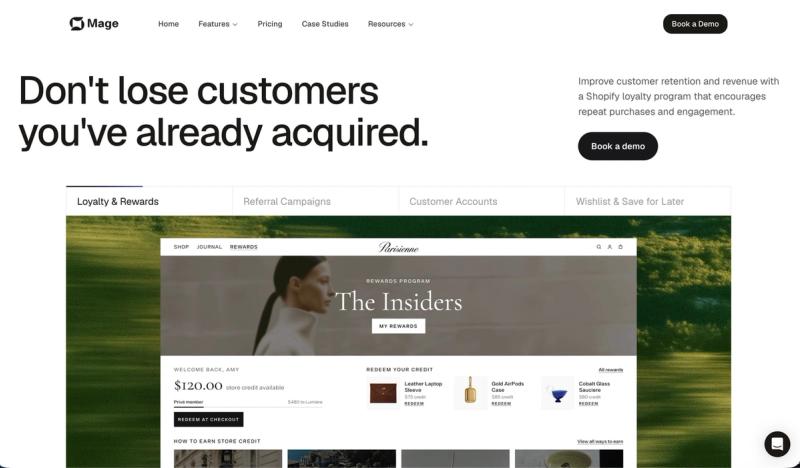
Mage is built exclusively for Shopify. It combines Checkout Extensions, Shopify POS, Shopify Flow actions, referrals, account surfaces, and a Mage-managed store-credit mode in one platform. That gives international brands a connected loyalty setup across checkout, stores, accounts, and campaign automation.
Its Shopify loyalty program supports purchase earning rules, discounts, free shipping, free products, and store credit redemption. In the Purchase rule, merchants set the amount earned and spend needed, can hold earnings pending for a returns window, exclude discounted products, and set different rates by VIP tier. See the Purchase earning rule guide for the configuration detail.
What Mage does and does not do with currency
Mage does not calculate loyalty points separately for every Shopify Market, and you should not assume any points program does. Test every points program against non-base-currency orders before launch.
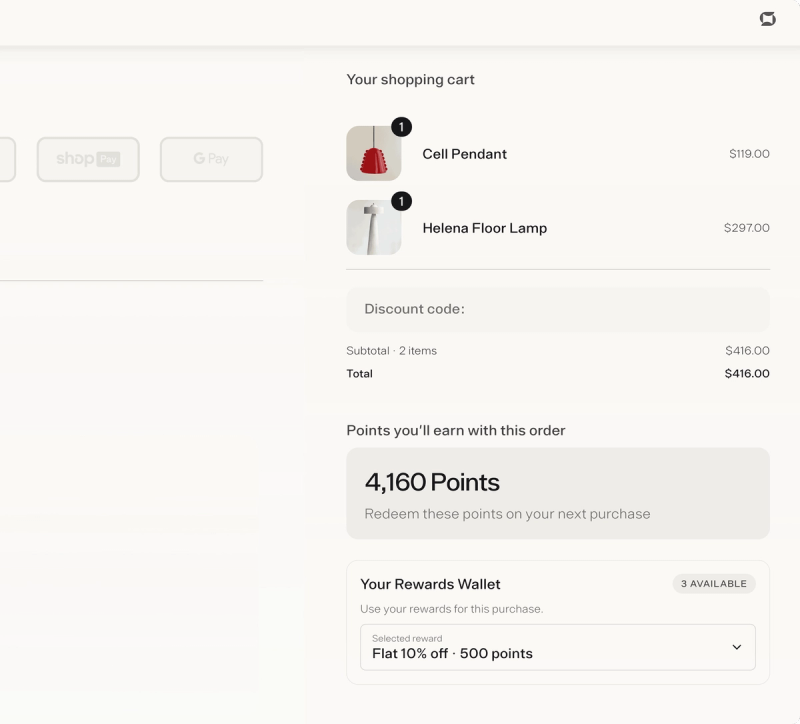
Mage’s documented currency-aware feature is Cashback. A percentage-back offer pays the same percentage back as store credit in the currency used for the order, with each award recorded in that order currency rather than converted into the store’s base currency. A customer paying in GBP receives a GBP-denominated cashback award; a customer paying in EUR receives the equivalent percentage in EUR.
That is different from Mage’s loyalty store-credit mode, which is a Mage-managed ledger and not automatically the customer’s Shopify-native store-credit balance. Read the distinction in Shopify native store credit versus loyalty app store credit.
For cross-border advocacy, Mage’s Shopify referral program supports double-sided rewards, configurable reward timing, referral campaigns, and fraud controls. Its branded Shopify customer accounts drawer can show points, tier progress, rewards, orders, and saved products on-site.
Migration starts at Settings > Data Migration > Import Data. Mage provides direct migration connections for some providers, while other data uses Manual CSV Import for Loyalty Members, Points Logs, Rewards History, and Wishlists.
Best for
Mage is the strongest fit for Shopify and Shopify Plus brands selling in several markets that need currency-aware Cashback alongside checkout, POS, Flow, referrals, accounts, and founder-led support.
#2: LoyaltyLion
Where LoyaltyLion is strong
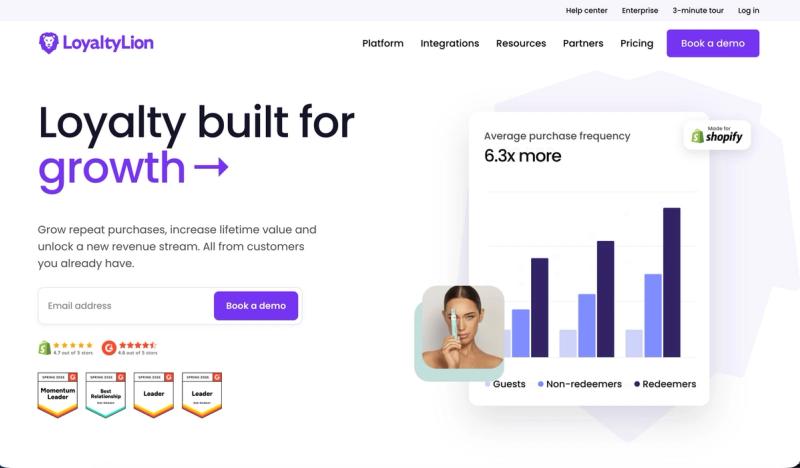
LoyaltyLion supports Shopify, Shopify Plus, Shopify POS, customer account blocks, APIs, headless builds, and more than 100 integrations. Its documentation says merchants can choose the currency on which points-earning rules are based.
International-store verification point
Its multisite documentation says linked stores in one program must use the same base currency. Confirm how the selected program currency relates to Shopify Markets presentment currency using the five-test checklist below.
Best for
Choose LoyaltyLion when configurable program currency, broad integrations, POS, and headless support are the priority. For a direct operational comparison, see this LoyaltyLion alternative.
#3: Smile.io
Where Smile.io is strong
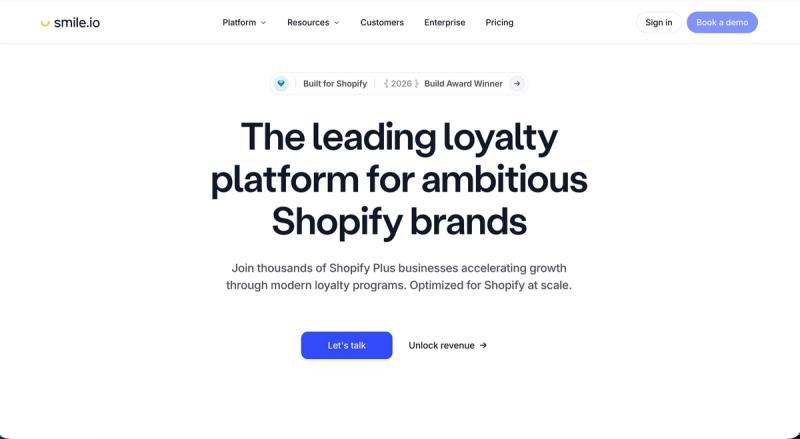
Smile.io supports points, referrals, VIP tiers, Shopify POS, and integrations including Klaviyo and Gorgias, according to its points program overview. It is a familiar format for merchants that want a straightforward points-led customer experience.
International-store verification point
Verify how a non-base-currency order earns points, then test a fixed reward and partial refund with the checklist below.
Best for
Smile.io suits smaller and mid-sized brands that want simpler setup, standard loyalty mechanics, POS connectivity, and a conventional rewards experience.
#4: Yotpo
Where Yotpo is strong
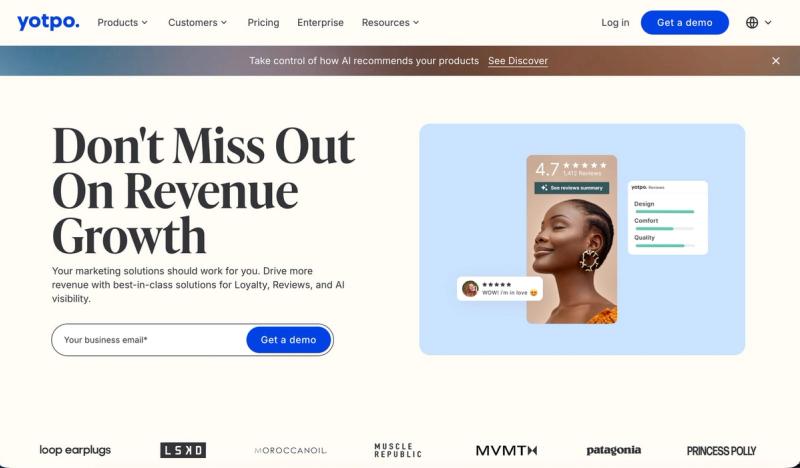
Yotpo has a broader retention ecosystem spanning loyalty alongside connected marketing, reviews, and SMS products. That can reduce vendor sprawl for merchants already committed to its wider product set.
International-store verification point
Ask specifically how orders in each Shopify Market earn points, how fixed rewards convert, and whether reward values appear correctly before payment. Use the checklist below during sales and technical evaluation.
Best for
Yotpo fits merchants already invested in its ecosystem and prepared to validate international loyalty operations.
#5: Rivo
Where Rivo is strong
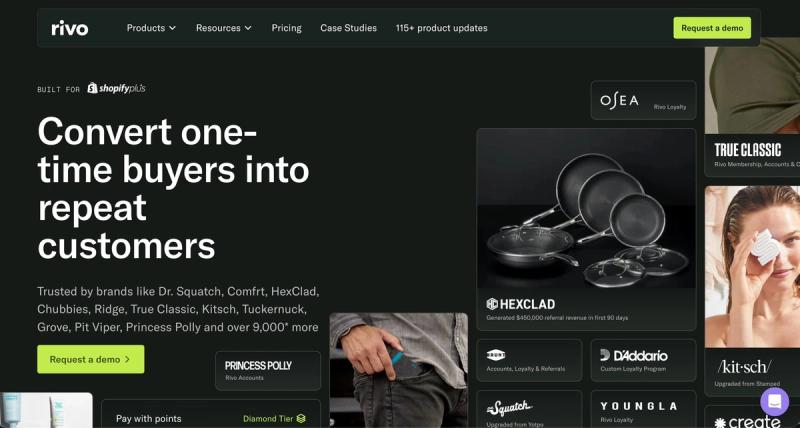
Rivo offers loyalty, referrals, customer account capabilities, memberships, cashback, integrations, and an open API according to its published feature list. Its broader feature set makes it relevant to growing DTC teams that want developer control alongside retention tools.
International-store verification point
Confirm whether cashback is issued in local currency and whether points are calculated from presentment currency. Use the five-test checklist below to compare balances, rewards, and checkout behavior.
Best for
Rivo suits brands that want a broad retention stack and technical flexibility. Mage has the clearer documented international advantage here: percentage-back Cashback is recorded in the order currency.
#6: BON Loyalty
Where BON Loyalty is strong
BON Loyalty offers points and rewards, VIP tiers, POS rewards, points expiry, integrations, and higher-tier developer capabilities according to its published feature list. That gives smaller merchants a conventional loyalty structure without requiring an unusually complex program design.
International-store verification point
Confirm how non-base-currency orders are calculated and how partial refunds reverse points using the checklist below.
Best for
BON Loyalty is a reasonable fit for smaller merchants seeking points, VIP tiers, and POS support with lower-complexity operational requirements.
#7: Growave
Where Growave is strong
Growave combines loyalty, referrals, reviews, wishlist features, Instagram UGC, POS, and related retention tools according to its published feature list. That breadth can appeal to merchants looking to consolidate multiple customer engagement functions.
International-store verification point
Test how fixed rewards convert and display in each market. Shopify says fixed-amount discounts and gift cards can be converted between currencies at checkout, but app implementation still needs testing.
Best for
Growave fits merchants that want a broad customer engagement suite and are willing to validate each international workflow independently.
Pricing models for international Shopify loyalty apps
What each platform costs at 500, 2,500, 5,000, 10,000 orders a month, using the cheapest plan that covers the volume:
How to read these tables: "list" is the public list price on the vendor's pricing page or Shopify App Store listing, "est." is calculated from the published plan price and overage rate, "Custom quote" means the vendor only prices on request, and "Not published" means no public figure exists at that volume. Prices checked September 2026. Sources: Mage Loyalty pricing; LoyaltyLion pricing, LoyaltyLion on the Shopify App Store; Smile.io pricing, Smile.io on the Shopify App Store; Yotpo pricing, Yotpo on the Shopify App Store; Rivo pricing, Rivo on the Shopify App Store; BON Loyalty on the Shopify App Store; Growave pricing, Growave on the Shopify App Store.
- Mage Loyalty at 2,500 orders: Starter is $49 plus $0.20 per order over 500; Growth includes 2,500 orders.
- Mage Loyalty at 5,000 orders: $499 plus $0.15 per order over 2,500.
- Mage Loyalty at 10,000 orders: $499 plus $0.15 per order over 2,500; Enterprise is quoted on volume, typically from around $999.
- LoyaltyLion at 2,500 orders: Advanced and Plus are quote only.
- Smile.io at 500 orders: Includes 1,000 orders.
- Smile.io at 2,500 orders: Includes 2,500 orders.
- Smile.io at 5,000 orders: Includes 7,500 orders.
- Smile.io at 10,000 orders: Enterprise above 7,500 orders.
- Yotpo at 500 orders: Entry point of the Pro slider; Premium features are quote only.
- Yotpo at 2,500 orders: Slider shows $299 at 1,000 and $524 at 3,500 orders.
- Yotpo at 5,000 orders: Slider figures above 3,500 orders are not shown publicly.
- Yotpo at 10,000 orders: Slider figures above 3,500 orders are not shown publicly.
- Rivo at 2,500 orders: Scale brackets above 500 orders are not published.
- Rivo at 5,000 orders: Plus covers up to 2,500 orders.
- BON Loyalty at 2,500 orders: Growth covers 2,000 orders; overage not published.
- BON Loyalty at 5,000 orders: Unlimited orders.
- BON Loyalty at 10,000 orders: Unlimited orders.
- Growave at 2,500 orders: $199 plus $15 per 100 orders over 1,500; Plus at $499 includes 3,000.
- Growave at 5,000 orders: $499 plus $10 per 100 orders over 3,000.
- Growave at 10,000 orders: Plus would reach about $1,199 with overage.
What to compare beyond the headline price
International loyalty costs can include subscriptions, usage-based charges, add-ons, enterprise quotes, implementation, migration, POS, APIs, customer accounts, cashback, and support. A lower base subscription can become less relevant if key international workflows require extra tools.
How currency support can create implementation cost
Compare the cost of testing and maintaining your currency setup, especially if fixed-value rewards need market-by-market QA. See the pricing table below.
| Plan | Price | Orders included |
|---|---|---|
| Mage Loyalty | ||
| Essential | $15/month | 500 orders included |
| Starter | $49/month | 500 orders included, then $0.20 per order |
| Growth | $499/month | 2,500 orders included, then $0.15 per order |
| Enterprise | Custom, typically from around $999/month | Custom |
| LoyaltyLion | ||
| Classic | $199/month | 500 orders/month included |
| Advanced | From custom pricing | Scales with order volume |
| Plus | From custom pricing | Scales with order volume |
| Smile.io | ||
| Standard | $79/month | 1,000 orders/month included |
| Growth | $199/month | 2,500 orders/month included |
| Plus | $999/month | 7,500 orders/month included |
| Enterprise | Custom | Unlimited orders |
| Yotpo | ||
| Free | $0/month | Not published |
| Pro | From $199/month | Scales with order volume |
| Premium | Custom | Set by quote |
| Rivo | ||
| Essential | $15/month | Up to 500 orders/month |
| Scale | From $49/month, scales with orders | Around 500 orders/month, scales by volume |
| Plus | $499/month | Up to 2,500 orders/month |
| BON Loyalty | ||
| Free | $0/month | Around 250 orders/month, scales by volume |
| Basic | $29/month | 500 orders/month included |
| Growth | $129/month | 2,000 orders/month included |
| Enterprise | $499/month | Unlimited orders |
| Growave | ||
| Entry | $49/month | 500 orders/month included |
| Growth | $199/month | 1,500 orders/month included |
| Plus | $499/month | 3,000 orders/month included |
| Unlimited | $999/month | Unlimited orders |
| Orders per month | Mage Loyalty | LoyaltyLion | Smile.io | Yotpo | Rivo | BON Loyalty | Growave |
|---|---|---|---|---|---|---|---|
| 500 | $15 Essential or $49 Starter (list) | $199 Classic (list) | $79 Standard (list) | $199 Pro (list) | $15 Essential or $49 Scale (list) | $29 Basic (list) | $49 Entry (list) |
| 2,500 | $449 Starter or $499 Growth (est.) | Custom quote | $199 Growth (list) | $299 to $524 Pro (est.) | $499 Plus (list) | $499 Enterprise (list) | $349 Growth (est.) |
| 5,000 | $874 Growth (est.) | Custom quote | $999 Plus (list) | Not published | Custom quote | $499 Enterprise (list) | $699 Plus (est.) |
| 10,000 | $1,624 Growth or Enterprise quote (est.) | Custom quote | Custom quote | Not published | Custom quote | $499 Enterprise (list) | $999 Unlimited (list) |
How to choose the best Shopify loyalty app for multi-currency stores
| Test | What to record | Why it matters | Pass condition |
|---|---|---|---|
| Base-currency order | Earned points or credit | Establishes program baseline | Earning matches configured rule |
| Non-base-currency orders | Earning result and rounding | Reveals currency interpretation | Result is documented and predictable |
| Reward redemption | Local display and checkout result | Protects customer trust | Reward applies as expected |
| Refund test | Balance reversal after partial refund | Prevents over-rewarding | Reversal is proportional and clear |
| POS and account test | Balance and reward visibility | Confirms cross-channel use | Same customer sees consistent status |
Run these five tests before signing
Test a base-currency purchase and at least two non-base-currency purchases. Record earned points or cashback, decimals, rounding, reward value, and the customer-facing result in the widget, account, cart, and checkout.
Then test a partial refund, an order inside the returns approval window, and redemption through Shopify Checkout, Shop Pay where relevant, and Shopify POS. Review whether the app works with your Shopify Markets setup, payment gateway, Shopify Plus requirements, and headless architecture.
Use loyalty points versus store credit to decide whether your international program needs a points balance or percentage-back value.
Pick by operating model
LoyaltyLion fits configurable program currency and broad integrations. Smile.io fits simpler points-led setup. Mage fits merchants that need currency-aware Cashback alongside Shopify-native checkout, POS, Flow, referrals, accounts, and extensibility.
If your priorities are currency-aware cashback, Shopify-native checkout and POS, extensibility, and founder-led support, Mage Loyalty is the strongest fit.
Frequently Asked Questions
What is the best Shopify loyalty app for multi-currency stores?
The best Shopify loyalty app for multi-currency stores is one that documents how orders, rewards, refunds, and balances work across currencies. Mage is the strongest fit for merchants needing currency-aware Cashback plus Checkout Extensions, Shopify POS, Flow, VIP tiers, referrals, accounts, and custom development options.
How do loyalty points work with Shopify Markets?
Loyalty points with Shopify Markets depend on how the loyalty app interprets the order value, rather than Shopify Markets alone. Shopify separates store currency from customer-presentment currency, so merchants should test non-base-currency earnings, rounding, refunds, and reward display instead of relying on localized prices.
Can Shopify loyalty apps calculate points in local currencies?
Shopify loyalty apps can calculate points in local currencies only when their documentation explicitly says they do. Local-currency display does not prove local-currency loyalty accounting. LoyaltyLion documents a configurable points-earning currency, while Mage documents currency-aware Cashback rather than per-market points calculation.
What should I test before launching loyalty across multiple markets?
You should test base and non-base-currency orders, earning calculations, decimal handling, refunds, reward redemption, checkout display, customer account visibility, and POS behavior. Also verify whether your payment setup can process local-currency payments and whether email or SMS integrations receive the right loyalty properties.
Can fixed-amount loyalty rewards convert at Shopify checkout?
Fixed-amount loyalty rewards can convert at Shopify checkout where the discount implementation and Shopify Markets configuration support it. Shopify states that fixed-amount discounts and gift cards can convert between currencies, but merchants should test the actual loyalty reward, minimum spend, stacking rules, and localized checkout display.
Can I migrate loyalty balances when changing apps?
Loyalty balances can be migrated when the destination platform supports the necessary data import. In Mage, migration starts at Settings > Data Migration > Import Data. Direct migration connections are available for some providers, while Manual CSV Import supports Loyalty Members, Points Logs, Rewards History, and Wishlists, so balances, history, and wishlist data can be planned before launch.
Ready to see Mage in action? Book a demo.

Kris is the co-founder of Mage Loyalty. I spend most days talking to merchants, and making sure our customers get real results. If you run a Shopify store or Agency we should chat!