Most Shopify store owners think discount codes are unavoidable. Copy the code. Paste it at checkout. Watch carts get abandoned anyway. But there's a better way—and your customers will feel the difference immediately.
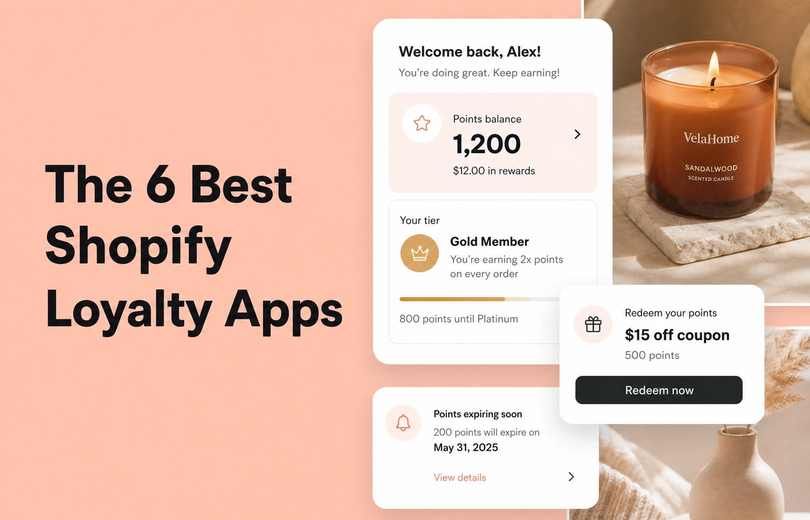
In-cart points redemption lets shoppers apply loyalty rewards directly in the shopping cart with a single click, no codes required. It's a small change that eliminates friction at exactly the moment when friction costs you the most: the checkout page.
This shift from "copy-paste" to "one-click" sounds minor until you see the numbers. Loyalty members generate 12-18% more revenue than non-members. When you remove the final barrier between earning points and using them, redemption rates climb and cart abandonment drops. Loyalty members make 67% more purchases, show 2.5x higher repeat rates, and generate 115% more revenue per customer.
The question isn't whether you need a loyalty program—it's which platform delivers the smoothest redemption experience your customers actually want to use.
Defining In-Cart Redemption and Why It Matters
In-cart points redemption means customers can redeem their accumulated loyalty points for discounts, free products, or shipping benefits directly at checkout without leaving the cart page or entering a discount code. The points apply instantly, the subtotal updates in real time, and the purchase completes seamlessly.
Compare this to traditional loyalty: earn points, receive an email with a code, copy the code, paste it at checkout, hope it works. Each step is a friction point. Each step is where customers abandon.
With in-cart redemption, the entire process happens inside the purchasing flow. Customers see their available points balance, select a reward, and watch their cart total adjust immediately. No email hunting. No code copying. No "wait, did I enter that right?" moments.
The business impact is measurable. Redemption rates jump significantly when the process requires one click instead of five. Average order value stays stable because customers still see the full value of their purchase—the discount just comes from their loyalty account rather than a separate promo code. And repeat purchase rates climb because the entire loyalty experience feels frictionless rather than transactional.
The best Shopify loyalty apps recognize this fundamental truth: how your customers redeem rewards matters as much as how they earn them.
Our Ranking Criteria: What Makes a Loyalty App Stand Out
We evaluated seven leading Shopify loyalty platforms across six critical dimensions:
Ease of In-Cart Redemption. How many clicks does redemption require? Does the interface clearly show point balances? Does the cart total update instantly? Apps that make this process feel automatic rather than deliberate rank highest.
Shopify-Native Integration. Deep platform compatibility matters. Apps built specifically for Shopify's architecture—not retrofitted from other ecommerce platforms—tend to perform better and handle scaling without friction.
Comprehensive Feature Set. Points alone don't build loyalty. The best apps combine flexible points engines, VIP tier systems, referral programs, and social engagement rewards. You want to reward every type of customer behavior that drives retention.
Scalability and Performance. Can the platform handle your growth? Does it maintain 99.9% uptime? Can it power both a 10-store operation and a Shopify Plus enterprise with equal reliability?
Integration Breadth. Does it connect with your email platform (Klaviyo, Omnisend, Postscript)? Can it sync with your POS system for omnichannel loyalty? Integration depth determines whether your loyalty program sits isolated or becomes the backbone of your entire customer strategy.
Support Quality and Migration. Do you get help implementing the program, or are you building alone? Does the vendor offer white-glove migration if you're switching from another platform?
The apps ranked here excel across most or all of these dimensions. The ranking positions reflect which app delivers the most complete experience, particularly for growing Shopify Plus brands seeking enterprise-grade reliability without sacrificing ease of use.
Comparison Table: Top Shopify Loyalty Apps for In-Cart Redemption
| App Name | Pricing Model | Primary Strength | Best For | In-Cart Redemption UX |
|---|---|---|---|---|
| Mage Loyalty | Flat monthly fee | Enterprise-grade customization and seamless integration | Shopify Plus brands and high-growth merchants | Dynamic cart extension with one-click point application |
| Smile.io | Free plan + tiered pricing | User-friendly interface and rapid setup | SMBs and growing stores wanting quick implementation | Point selector in cart, coupon-style redemption |
| LoyaltyLion | Free plan + usage-based | Advanced segmentation and data analytics | Data-driven brands optimizing loyalty ROI | Dashboard-based redemption tracking |
| Rivo | Custom pricing | Developer toolkit and checkout extensions | Shopify Plus merchants with custom development needs | Extensible checkout integration with custom builds |
| Love Loyalty | Free plan + tiered pricing | Native Shopify integration and simplicity | Newer or smaller stores getting started with loyalty | Direct in-cart reward redemption widget |
| Appstle Loyalty & Rewards | Flat monthly fee | Flexible earning rules and subscription loyalty | Stores with complex reward structures | Customizable redemption options |
| Growave | Free plan + tiered pricing | All-in-one marketing suite with reviews and UGC | Merchants consolidating multiple tools | Integrated into loyalty dashboard |
The Shopify loyalty program growing brands trust
See how Mage helps Shopify brands lift repeat purchase rate with loyalty, referrals and store credit.
Book a demo#1: Mage Loyalty
Mage Loyalty delivers what most loyalty platforms promise but few execute: enterprise-grade customization paired with genuinely frictionless in-cart redemption. The platform was built for scaling brands that refuse to choose between depth and ease of use.
The difference starts with the cart experience. Mage's cart extension allows customers to apply loyalty points to their purchase with a single click, no codes needed. The interface displays available points clearly, shows exactly what each reward costs, and updates the cart total in real time. It's the redemption experience other platforms aspire to but struggle to deliver at scale.
Behind that clean interface sits a powerful points engine. You can award points for any customer action: purchases, referrals, product reviews, social shares, email signups, birthdays, anniversaries. The system handles custom earning rules, multipliers, and bonus point campaigns. This flexibility means your loyalty program can evolve as your brand grows without requiring platform migrations.
The Shopify Plus loyalty program functionality is built in from day one, not bolted on later. If you operate on Plus, Mage's architecture was designed for your infrastructure, not adapted from a smaller-store template.
Mage's VIP tier system goes deeper than basic bronze-silver-gold structures. Create tiers based on spending, purchase frequency, lifetime value, or custom criteria. Assign exclusive benefits—bonus point multipliers, free shipping thresholds, early product access, exclusive discounts. Customers can see exactly what they need to do to advance, creating genuine motivation rather than vague aspirational tiers.
The Shopify referral program integration is equally robust. Referrers earn points when their friends make purchases. Referred customers get welcome bonuses. The system tracks everything automatically, credits rewards instantly, and handles the entire referral lifecycle without manual intervention. Word-of-mouth drives some of your cheapest, highest-quality customer acquisition—Mage makes it systematic.
Integration depth separates Mage from single-purpose loyalty apps. The platform connects natively with Klaviyo, Omnisend, Postscript, and Judge.me. Sync customer data bidirectionally. Trigger email workflows based on loyalty milestones. Send SMS when customers earn rewards or tier up. Use loyalty data to segment email lists with surgical precision. These integrations turn your loyalty program from a standalone system into the central nervous system of your customer engagement.
For omnichannel brands, Shopify customer accounts and POS integration mean your in-store and online loyalty experiences are unified. Customers earn and redeem points whether they shop in your physical location or on your website. The data flows together, creating a single view of the customer across all touchpoints.
The real-time analytics dashboard shows live activity—purchases being made, points being earned, rewards being redeemed—as it happens. Rather than discovering trends days or weeks later, you see immediate patterns. Repeat purchase rate. Average order value by tier. Redemption velocity. Referral conversion. This data feeds optimization: which rewards drive the most repeat purchases? Which tiers create the stickiest customers? What earning activities predict lifetime value?
Enterprise support comes standard. White-glove migration means if you're switching from another platform, Mage's team handles the technical lift. You keep your existing customer data and point balances. Setup is managed, not delegated to your team. That alone saves weeks of implementation time.
The 99.9% uptime guarantee isn't marketing language—it's backed by enterprise infrastructure. Your loyalty program works even during sales spikes, product launches, or traffic surges. When your store gets slammed, Mage's architecture doesn't become your bottleneck.
Mage Loyalty works best for Shopify Plus brands and high-growth merchants that have graduated beyond entry-level loyalty apps. You need sophisticated customization, seamless integrations, and the confidence that your loyalty platform scales as aggressively as your business. If you're operating at significant scale and loyalty drives a meaningful percentage of revenue, Mage's investment pays for itself through improved retention and referral metrics alone.
Ready to see Mage in action? Book a demo at https://www.mageloyalty.com/get-a-demo.
“Cannot say enough good things about the team at Mage Loyalty, one of the absolute best organizations we have ever worked with, full stop! So glad we connected with them, completely redid our loyalty program, new concepts, use of loyalty, increasing user engagement, showing us where we were not valuing our best customers, just WOW, amazing team!”


Read the West Coast Goalkeeping case study →
#2: Smile.io
Smile.io's genuine strength is accessibility combined with comprehensiveness. The platform has built a loyal user base (over 4,129 five-star reviews) because it delivers sophisticated features wrapped in a clean, intuitive interface. For stores that haven't operated loyalty programs before, Smile removes the intimidation factor without sacrificing depth.
The points engine is flexible. Earn points for purchases, referrals, reviews, social follows, and email signups. Customize point values, set earning multipliers, and create bonus point campaigns. The visual rule builder means non-technical users can configure earning logic without engineering help.
VIP tiers, referral tracking, and social rewards all live in the same dashboard. This consolidated approach works well for SMBs that want loyalty functionality without managing multiple vendors. Smile's free plan lets smaller stores run full loyalty programs before committing budget—a significant advantage when testing whether loyalty drives real retention.
The redemption experience uses point selectors in the cart, letting customers see available rewards and apply them before checkout. It's not quite as seamless as a single-click extension model, but it eliminates the discount code friction point and works effectively for most stores.
Smile.io excels when your priority is rapid deployment with minimal setup friction. You can launch a functional loyalty program in days, not weeks. The community is active, template library is extensive, and customer support is responsive.
Where Smile differs from Mage: Smile targets the SMB market with accessibility at its core. Mage targets growth-stage and enterprise brands that need deeper customization, more robust integrations, and white-glove implementation support. If you're a $5M–$50M brand with complex loyalty needs, Smile might feel constraining. If you're under $10M ARR and want rapid loyalty deployment, Smile's approach is actually superior because implementation speed matters more than architectural depth.
Best for: Small to mid-sized Shopify stores seeking rapid loyalty deployment with user-friendly setup and no coding required.
#3: LoyaltyLion
LoyaltyLion builds for data-obsessed merchants. The platform excels at customer segmentation, behavioral analytics, and personalized loyalty campaigns. If your team lives in dashboards and spreadsheets and wants loyalty insights beyond "how many points did we give away," LoyaltyLion's analytics depth is genuinely remarkable.
The segmentation engine lets you create audience groups based on purchase history, spending patterns, engagement level, loyalty tier, redemption behavior, and hundreds of custom attributes. Then run targeted campaigns to specific segments: bonus points for dormant customers, higher tier unlocks for top spenders, personalized rewards based on purchase history. This level of precision drives meaningful lift in retention and AOV.
Real-time reporting shows segment performance, individual customer lifetime value, and the ROI of specific loyalty campaigns. You can measure whether your $50 VIP tier bonus actually drives incremental revenue or simply gives away what customers would have spent anyway. Most loyalty platforms hide this data. LoyaltyLion exposes it.
Redemption in LoyaltyLion works through dashboard-based tracking rather than direct cart integration. Customers redeem rewards through their loyalty account, then apply generated codes at checkout. It's not the frictionless single-click experience of advanced cart extensions, but the tradeoff is more granular reporting and personalization capabilities.
LoyaltyLion makes sense when you have the analytical bandwidth to leverage advanced segmentation. Small teams with basic loyalty needs won't use half the features. Large teams running sophisticated email or SMS workflows keyed off loyalty milestones will feel like they've found their match.
Best for: Shopify brands with analytical rigor and teams that treat loyalty as a core profit center requiring continuous data-driven optimization.
#4: Rivo
Rivo positions itself as the loyalty platform for developers and technically sophisticated teams. The platform offers a powerful developer toolkit, native checkout extensions, and the infrastructure to build deeply customized loyalty experiences. Rivo's strength is that it doesn't force you into their UI—it gives you tools to build your own.
The checkout extension architecture is meaningful. Rather than bolting a redemption widget onto existing checkout, Rivo's integration runs natively within Shopify's checkout infrastructure. This creates genuinely seamless integration and likely performs better than post-checkout bolt-on approaches.
For Shopify Plus merchants with engineering teams and specific technical requirements, Rivo's flexibility is valuable. You can customize earning rules, redemption flows, and reporting to match your exact business model rather than adapting your business to the app's assumptions.
The tradeoff is that Rivo requires more implementation overhead. You're not launching a loyalty program in days—you're architecting one over weeks or months. Smaller teams or merchants without development resources will find this approach constraining.
Rivo also tends toward enterprise pricing, with custom quotes rather than transparent tier pricing. Budget planning requires direct vendor conversations.
Best for: Shopify Plus merchants with in-house development teams requiring deep technical customization and checkout-native integration.
#5: Love Loyalty
Love Loyalty's genuine strength is simplicity. The app was designed for SMBs getting started with loyalty for the first time. It installs in minutes, requires zero configuration wizardry, and makes reasonable choices for you automatically. For stores that need "good enough" loyalty fast, Love Loyalty delivers.
Native Shopify integration means the app feels like part of Shopify rather than a bolt-on vendor tool. The interface is clean. Setup is straightforward. You don't need technical knowledge to launch a points program, create tiers, or set up referral tracking.
The in-cart reward redemption widget displays available points clearly and lets customers apply them at checkout. It's direct and efficient—not flashy, but functional. Redemption doesn't require leaving your cart or navigating complex interfaces.
Where Love Loyalty succeeds is in getting new merchants launched quickly with minimal support needs. Where it plateaus is customization and scale. As your program matures and you need sophisticated tier logic, complex earning rules, or deeper analytics, Love Loyalty's simplicity starts feeling like constraint.
Best for: Newer or smaller Shopify stores launching their first loyalty program and prioritizing speed over advanced customization.
#6: Appstle Loyalty & Rewards
Appstle takes a flexible, modular approach to loyalty. Rather than forcing all stores into a points-and-tiers model, the app lets you build earning and redemption structures that match your actual business. Subscription businesses can tie loyalty to subscription tiers. BOGO-driven brands can create reward structures around bundle purchases. Multi-brand stores can run separate programs per collection.
This flexibility appeals to stores with non-standard business models. If your loyalty mechanics don't fit the standard points-for-purchases template, Appstle's customization depth becomes genuinely valuable.
The app also integrates subscription loyalty directly, meaning subscription customers can earn points on subscription renewals, not just one-time purchases. For DTC subscription brands, this integration is useful.
Redemption options are extensive: discount codes, free products, exclusive access, bonus points, shipping discounts. This breadth works well if your rewards strategy is complex or unusual.
The tradeoff is that building sophisticated earning and redemption rules requires more configuration work than simpler apps. You gain power but sacrifice ease. For SMBs with straightforward loyalty needs, this is overkill.
Best for: Shopify stores with complex or non-standard loyalty models requiring flexible earning and redemption rule structures.
#7: Growave
Growave's positioning is fundamentally different from the other apps on this list. Rather than a pure loyalty platform, Growave is an all-in-one marketing suite combining loyalty, product reviews, wishlists, and user-generated content tools. The appeal is consolidation: run your entire post-purchase engagement from one vendor, reducing app sprawl and integration overhead.
The loyalty functionality itself is solid—points, referrals, VIP tiers, social rewards. But it's one piece of a broader platform focused on brand storytelling and authentic customer content.
The advantage: if you need reviews, UGC, and loyalty together, Growave pricing is often cheaper than three separate apps. You get one dashboard, one customer data model, one integration layer.
The disadvantage: you're optimizing for breadth rather than depth. Growave's loyalty features are less sophisticated than dedicated platforms. Advanced segmentation, custom earning logic, and enterprise-level customization take a back seat to reviews and UGC capabilities.
Growave makes sense when loyalty is part of a broader customer engagement strategy that includes social proof and user-generated content. If loyalty is your primary focus and UGC is secondary, a dedicated platform will serve you better.
Best for: Shopify merchants seeking an all-in-one platform combining loyalty, reviews, wishlists, and UGC in a single interface.
Choosing the Right Shopify Loyalty App for Your Brand
Your choice depends on where you sit across four key dimensions:
Business size and growth stage. Are you a $2M startup or a $200M Plus brand? Smaller stores benefit from rapid setup and lower costs—Smile.io and Love Loyalty excel here. Larger, faster-growing brands can justify investment in sophisticated customization and white-glove support—Mage Loyalty's model.
Customization and complexity. Do you need basic points and tiers, or sophisticated earning rules, complex referral mechanics, and subscription loyalty integration? More complex needs favor Appstle, Rivo, or Mage. Simpler needs work with Smile or Love.
Analytics orientation. Does your team measure loyalty ROI obsessively, segment customers microscopically, and run continuous A/B tests on loyalty mechanics? LoyaltyLion is built for this. Other platforms offer solid reporting but less analytical depth.
Integration breadth. Which other tools must your loyalty program connect with? Email (Klaviyo, Omnisend)? SMS (Postscript)? POS (for omnichannel)? Reviews (Judge.me)? Mage's integration depth is comprehensive. Other platforms handle core integrations but may lack specialized connectors.
Redemption experience priority. How important is the seamlessness of the in-cart redemption flow? Mage's cart extension is the gold standard. Smile and Love offer solid cart widgets. LoyaltyLion uses code-based redemption. If frictionless redemption directly drives your conversion uplift, cart extension capability matters.
If your priorities are enterprise-grade scalability, frictionless in-cart points redemption, comprehensive integrations with your entire marketing stack, and dedicated implementation support, Mage Loyalty is the strongest fit. If you prioritize rapid setup and lower cost, Smile.io offers exceptional value. If analytics and segmentation drive your loyalty strategy, LoyaltyLion's depth is unmatched.
Frequently Asked Questions About Shopify Loyalty Apps
What is in-cart points redemption and why is it superior to discount codes?
In-cart points redemption allows customers to apply loyalty rewards directly in the shopping cart without copying or entering discount codes. Customers see their available points, select a reward, and the cart total updates instantly. This approach eliminates friction points where cart abandonment typically occurs. Traditional discount codes require customers to receive an email, copy the code, switch back to the checkout page, and paste the code—each step creates abandonment risk. One-click redemption dramatically improves conversion rates because the barrier between earning and using rewards collapses.
How do Shopify loyalty apps integrate with checkout to enable seamless redemption?
Shopify loyalty apps use several integration approaches. Advanced platforms like Mage Loyalty use Shopify's native checkout extension architecture, creating native functionality within checkout rather than bolt-on overlays. Other apps inject redemption widgets into the cart page via custom script injection. Some platforms operate through the customer account dashboard, requiring customers to apply codes before checkout. Checkout extension integration is generally superior because it performs better, reduces friction, and provides a native experience that feels built-in rather than bolted-on.
Can a loyalty program truly increase my customer lifetime value?
Yes. Loyalty programs directly impact three CLV drivers: repeat purchase frequency, average order value, and retention duration. Customers enrolled in loyalty programs purchase more often because they feel rewarded for loyalty. They spend higher amounts per order because tier systems and bonus point campaigns incentivize slightly larger purchases. They remain customers longer because ongoing point accumulation creates habit loops. Industry data shows loyalty members make 67% more purchases, display 2.5x higher repeat rates, and generate 115% more revenue per customer compared to non-members. The cumulative effect across your customer base is measurable revenue impact.
What analytics should I track to measure loyalty program success?
Essential loyalty metrics include repeat purchase rate (percentage of customers making multiple purchases), retention rate (customers still active after set periods), average order value (comparing loyal vs. new customers), rewards redemption rate (percentage of earned points customers redeem), and CLV impact (how much revenue loyal customers generate versus program costs). Many platforms offer dashboards tracking these metrics, but the best platforms let you segment these metrics by customer cohort, loyalty tier, or acquisition channel to understand which loyalty mechanics drive the highest ROI.
TLDR
Mage Loyalty delivers the strongest combination of frictionless in-cart redemption, enterprise-grade customization, and comprehensive integrations for Shopify Plus brands and high-growth merchants. Smile.io remains the best choice for SMBs prioritizing rapid setup and accessibility, while LoyaltyLion excels for teams treating loyalty as a data-driven profit center requiring sophisticated segmentation and analytics.

Graeme is the co-founder at Mage Loyalty. He heads product development, from complex loyalty migrations and large-scale data handling to building the features shaping the future of loyalty on Shopify.