You'd think the best way to boost weekend sales is to slash prices. But here's what actually happens: customers train themselves to wait for discounts, your brand gets devalued, and you end up in a race to the bottom that erodes margins. The smarter move? Double points campaigns. They drive demand without touching your price tag.
A double points campaign is a limited-time event where customers earn 2x (or more) loyalty points on purchases. Instead of knocking 20% off your products, you're saying "spend the same, earn rewards faster." Customers feel rewarded. You protect margin. And your revenue ticks up because people are motivated by the promise of faster redemption, not immediate discounts.
This is a completely different psychological lever. It works because loyalty rewards feel like a bonus, not a necessity. When a customer sees "2x points this weekend," they're thinking "I can hit my reward goal sooner," not "the product is suddenly cheaper." The difference in perception translates directly to the bottom line.
Why Double Points Campaigns Work Wonders (Without Discounting Your Brand)
A double points promotion drives incremental sales in three distinct ways. First, it accelerates the path to redemption. If a customer needs 500 points for a $50 reward and normally earns 100 points per $100 spent, doubling those points cuts the timeline in half. That urgency pushes people to shop sooner rather than later.
Second, it increases average order value. Customers who might have bought one item think, "If I'm shopping anyway, I might as well get two—the points are doubled." That psychological nudge often results in a 10-15% spike in AOV during the campaign window. You're not giving away margin; you're accelerating their journey into your rewards ecosystem.
Third, and most importantly, it reengages inactive customers without requiring you to discount active ones. You can segment a 2x points offer to customers who haven't purchased in 60+ days, turning it into a win-back mechanism. Meanwhile, your best customers still see the campaign and feel appreciated for their loyalty. Everyone wins, margins stay intact.
The comparison to traditional discounts is crucial here. When you run a flash sale at 20% off, you're borrowing demand from your future. Customers hold off if they suspect another sale is coming, and you've trained them to expect price reductions. With 2x points, you're offering future value that doesn't train customers to wait for discounts—it trains them to engage with your loyalty program. That's a psychological shift that compounds over time.
Boost customer retention efforts with loyalty mechanics that feel rewarding rather than transactional. Double points campaigns are the bridge between driving immediate revenue and building long-term customer value.
Retention is measurably cheaper than acquisition. Research shows it costs 5 to 7 times more to acquire a new customer than to retain an existing one. Double points campaigns turn that math in your favor by giving existing customers a reason to buy again—and buy more—without shrinking your margins.
A Contrarian Take: Why a "Points-First" Loyalty Strategy Might Be Missing the Mark for Modern Brands
Before you build your entire loyalty program around points, consider this: points alone don't keep Gen Z coming back.
This is counterintuitive for loyalty professionals trained to obsess over point velocity, redemption rates, and tier progression. But younger customers—especially Gen Z—are wired differently. They want instant gratification, exclusive experiences, and alignment with values. A promise of points you'll maybe redeem in six months? That feels slow and abstract.
The problem is redemption friction. A customer with 200 points sits somewhere between "almost there" and "still not enough." If the path to a meaningful reward feels distant, points lose their allure. And if the rewards themselves are generic discounts—the same thing a 20% off sale offers—why track points at all?
Modern loyalty shouldn't be points-first. It should be values-first, experience-first, community-first. Double points campaigns work within that framework because they're time-bound and create urgency. But they're most effective when paired with a broader ecosystem that includes instant smaller wins, exclusive perks, social engagement opportunities, and authentic brand storytelling.
This isn't an argument against points. It's an argument for points as a tool within a larger strategy, not the only tool. Your double points weekend will perform better if your program already includes surprise-and-delight rewards, birthday bonuses, and social sharing incentives alongside traditional purchase points.
Planning Your Weekend Double Points Blitz: Timing, Inventory & Objectives
Before you launch, define why you're running this campaign. Different objectives shape everything downstream: offer structure, timing, segmentation, and success metrics.
Boost overall weekend sales. This is the most straightforward use case. You're capitalizing on natural shopping behavior (weekends see higher traffic) and amplifying it with a motivating reward. Best when run during typical slow seasons or before a major holiday.
Clear specific slow-moving inventory. You have SKUs that aren't moving. Apply double points only to those products or collections. A customer who'd normally skip that item now has a reason to reconsider—the points boost sweetens the deal.
Drive traffic during historically slow periods. If you notice Thursday-to-Friday dips, run double points Thursday evening through Sunday. You're injecting artificial urgency into a naturally slower period.
Promote a new product launch. Double points on the new collection encourage trial and early reviews. Customers who might wait for price drops instead make the purchase now for faster reward accumulation.
Increase customer lifetime value. Some campaigns are explicitly designed to move repeat customers deeper into your program. You're not chasing one-time uplift; you're investing in future revenue by deepening loyalty habits.
Strategic timing separates successful campaigns from forgettable ones. Start by analyzing your sales data over the last 12 months. Where are the valleys? Most brands see dips mid-week and around end-of-season. A double points campaign that fills a 48-hour valley can generate $5,000-$50,000 in incremental revenue (depending on store size) with zero price reduction.
Inventory alignment is equally critical. Don't run a generic "2x points on everything" campaign if you're sitting on 200 units of a seasonal item that needs to move. Target that product. You'll drive faster inventory turns, reduce markdowns later, and free up capital.
Weekend focus isn't arbitrary. Weekends account for roughly 30-40% of weekly eCommerce traffic. A Friday evening launch through Sunday creates a natural urgency window that aligns with peak shopping behavior. A 48-72 hour window is the sweet spot—long enough to reach your audience across multiple touchpoints, short enough to create genuine scarcity.
Frequency matters too. Run double points campaigns quarterly, or aligned to key events (seasonal launches, brand anniversaries, clearance periods). If you run them monthly, they stop feeling special. If you run them annually, you're leaving money on the table.
The Shopify loyalty program growing brands trust
See how Mage helps Shopify brands lift repeat purchase rate with loyalty, referrals and store credit.
Book a demoThe Margin Math: Calculating Campaign Costs & Safeguarding Profitability
This is where most ecommerce teams get nervous, and rightfully so. Double points campaigns have a real financial cost. You need to know what that cost is before you launch.
Points are future currency. When you issue 100 points, you're creating a liability on your balance sheet. That liability doesn't disappear when the campaign ends; it sits in customer accounts until redeemed. The longer customers hold points, the larger your outstanding liability becomes.
Here's the calculation framework:
Step 1: Determine the cash value of points. If your redemption ratio is 100 points = $1 off, then each point is worth $0.01. During a double points weekend, you're doubling the cash value being issued per dollar spent.
Step 2: Estimate redemption rate. Not all points get redeemed. Historical data shows redemption rates typically range from 60-85% for active loyalty members. If you issue 100,000 points, assume 60,000-85,000 will eventually be redeemed. Use your lower bound (60,000) for conservative financial planning.
Step 3: Calculate the deferred cost. If 60,000 points are redeemed at $0.01 per point, you're deferring $600 in discounts. That's $600 in future margin you're surrendering.
Step 4: Model the incremental revenue. If your double points weekend generates $15,000 in sales (revenue) and your gross margin is 40%, that's $6,000 in gross profit. Subtract the $600 points liability, and you net $5,400 in gross profit.
The math works because the incremental revenue typically outpaces the points liability by 5-10x. But you need to verify this with your own data. If your margins are thinner or your redemption rate is higher, the calculus shifts.
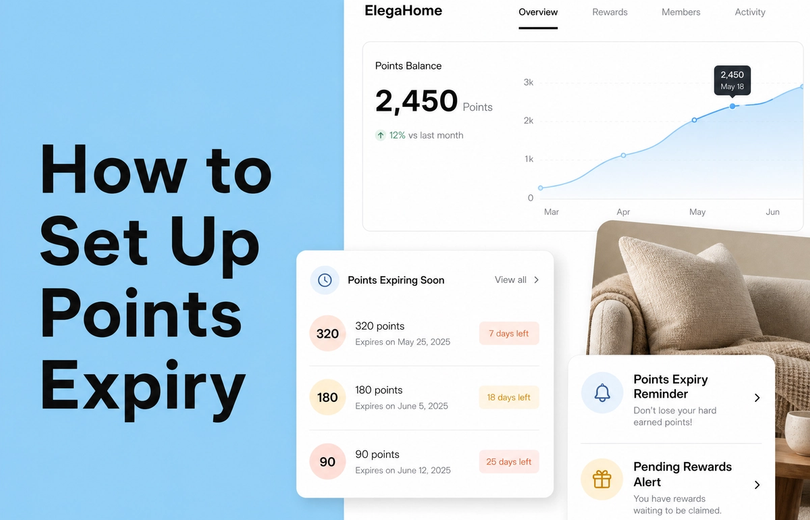
Managing points liability requires discipline. Set expiry dates if your program allows it. A 12-month expiry prevents permanent liability buildup. Alternatively, structure your redemption offers so the points cost is tied to margin. If you're offering "$50 off with 500 points," ensure that discount comes from products with 50%+ margin, not 15% margin items.
Calculate your profit margin to understand the real impact of points issuance on your bottom line. This ensures every double points campaign is actually profitable, not just revenue-generating.
Forecast future redemptions using historical data. If you see 70% of points get redeemed within 6 months, budget for that liability immediately. Don't wait until customers start cashing in to realize you've committed margin you didn't have.
Some brands set aside 10-15% of incremental revenue from double points campaigns to cover future redemption costs. It's conservative but protects your cash flow. Understanding managing loyalty program liability ensures you're not building a loyalty program that becomes a financial millstone.
“Cannot say enough good things about the team at Mage Loyalty, one of the absolute best organizations we have ever worked with, full stop! So glad we connected with them, completely redid our loyalty program, new concepts, use of loyalty, increasing user engagement, showing us where we were not valuing our best customers, just WOW, amazing team!”


Read the West Coast Goalkeeping case study →
Strategic Segmentation: Maximizing Impact with Targeted Offers
Generic campaigns fail. Targeted ones win.
Instead of offering 2x points to everyone, segment your audience and customize the offer. This protects margin while maximizing engagement.
High-value customers deserve premium recognition. Your top 10-20% of customers by lifetime value should see a triple points offer or exclusive redemption threshold. If a customer has spent $5,000+ with you, they're worth more than a standard 2x points incentive. Give them 3x or bonus points on top-tier products. They'll feel valued and spend more confidently.
At-risk customers need win-back mechanics. Identify customers who purchased regularly 6-12 months ago but have gone silent. Segment them separately and send a personalized 2x points offer positioned as "we miss you." Include social proof: "Your friends earned 500 points last month." This reactivates lapsed customers at a fraction of acquisition cost.
New customers should get early momentum. Offer first-time repeat customers (in their first 90 days) 2x points on their second purchase. Data shows 20-30% of first-time customers don't return within 30 days. 2x points accelerates that critical second purchase, establishing habit.
Product-specific segments unlock inventory control. Don't offer 2x points on bestsellers; offer them on complementary products or slower-moving items. A customer browsing skincare? Double points on serums. Someone who bought fitness equipment? Double points on apparel. You're not incentivizing purchases they'd make anyway; you're nudging them toward items that need movement.
Geographic and demographic segments allow regional timing. If you ship internationally, different regions have different peak shopping times. Run 2x points campaigns aligned to paycheck cycles, cultural holidays, or seasonal weather shifts in each market.
You can define audiences based on purchase history, spend tier, purchase frequency, or even customer tags. This granularity transforms a generic campaign into a precision revenue tool.
Design effective VIP tiers that complement your segmentation strategy. When VIP tiers have their own multiplier rates (triple points for Gold tier, double for Silver), segmentation becomes automated. Customers self-select into the tier they deserve.
Step-by-Step Execution: Setting Up Your Double Points Campaign
You've planned the strategy. Now execute it.
Navigate to your loyalty platform's campaign or earning rules section. The interface varies, but the logic is universal. You're creating a rule that says "for 48 hours starting Friday at 6 PM, double the points earned per dollar spent."
Define the multiplier. Is it 2x, 3x, or something custom? Most platforms let you set any multiplier. 2x is standard and psychologically easy to understand. 3x creates more urgency but increases your liability proportionally.
Choose the scope. Does the double points offer apply to:
- All products?
- Specific collections?
- Specific products?
- Specific price ranges?
Select based on your inventory objective. If you want to clear seasonal items, limit the offer to those products. If you want a volume push, apply it store-wide.
Set the time window with precision. Specify the exact start and end times. Time zone matters. If you're in EST and customers are in PST, a Friday 6 PM EST launch is Friday 3 PM for West Coast shoppers. Test your timezone calculations before going live.
Apply segmentation rules if supported. Select whether the offer applies to all customers or a specific segment (VIP tier, at-risk cohort, new customers). This is where strategy becomes technical execution.
Test the setup in a staging environment before launch. Create a test customer, place a test order, and verify that points are being issued at the 2x rate. Nothing kills a campaign faster than discovering the multiplier didn't apply after you've already promoted it.
Set up schedule automation. Most platforms let you schedule campaigns to activate and deactivate automatically. Use this feature. You don't want to rely on manual activation; campaigns fail when nobody remembers to flip the switch.
Setting up your loyalty program on Shopify requires platform-specific knowledge, but the strategic framework applies universally. Points-based multiplier campaigns are one of the most straightforward features to deploy.
Activating Your Audience: Email & SMS Execution that Drives Demand
Your campaign is live. Now you need to tell people about it.
The announcement email itself is one of the 11 loyalty email templates we give away free, with the offer in the header bar and the multiplier where the points total usually sits.
Pre-campaign hype (Thursday): Send an email Wednesday or early Thursday teasing the weekend. Subject line: "We're doubling something this weekend... guess what?" Keep details vague. The goal is anticipation, not immediate action. SMS works here too: "Double points weekend coming 48 hours. Are you ready? 👀"
Launch day blitz (Friday evening). This is your primary revenue driver. Send email Friday morning or early afternoon. Subject lines that work: "Double Points Weekend Starts Now," "Your Points Just Got Twice as Powerful," or "Earn Rewards Twice as Fast." Include a countdown timer in the email (Friday 6 PM to Sunday midnight) to create urgency.
Emphasize the what and the why. "Earn 2 points per dollar spent all weekend. That means a $100 purchase earns 200 points instead of 100—getting you to your $50 reward twice as fast."
Include clear CTAs: "Shop Double Points." Link directly to the collection or product you're promoting, not just the homepage.
SMS is even more direct. "Double points all weekend. 2x your rewards on every purchase through Sunday midnight. Shop now." Include a link. SMS open rates exceed 95%; email is more like 20%. SMS reaches engaged customers you might otherwise miss.
Mid-campaign reminder (Saturday morning). By Saturday, some audience segments have already purchased. Send a reminder to those who haven't. Segment this message to non-buyers only. "Only 12 hours left for double points. Treat yourself this weekend." This catches procrastinators and creates a second urgency window.
Final call (Sunday morning). "Last chance: Double points end tonight at midnight." Keep it short. This is your last opportunity to capture weekend shoppers before the campaign expires.
Post-campaign follow-up (Monday). Thank customers for participating. Highlight their new points balance. "You earned 450 new points this weekend! That's just 50 points away from your first reward. Complete your purchase here." Make redemption frictionless.
Website and social media promotion. Don't rely on email alone. Add a banner to your homepage. Create a pop-up (subtle, not intrusive) for returning visitors. Post countdown graphics on Instagram and TikTok Stories. Boost organic reach by tagging the campaign with hashtags like #DoublePointsWeekend or your branded equivalent.
The key principle: reach customers across multiple touchpoints. Email catches subscribers, SMS reaches engaged customers, website banners catch organic traffic, and social captures your community. Together, they create saturation that drives conversion.
Measuring Success & Optimizing Future Campaigns
After the weekend ends, measure what actually happened.
Sales uplift is the headline metric. Compare your double points weekend revenue to the same weekend last year and the previous two weekends. If you did $12,000 last weekend and $18,000 during double points, that's $6,000 incremental revenue.
Average order value often increases during double points campaigns. Track this separately. If AOV jumped from $65 to $78, you know customers are buying more per transaction.
Customer acquisition vs. retention is equally important. How many of the customers who purchased during double points are new? How many are repeat? New customers acquired during double points campaigns have higher lifetime value because they're already engaged with your loyalty program on day one.
Loyalty program enrollment during the campaign week reveals how many new members joined specifically because of the double points offer. Higher enrollment is good—you've expanded your addressable base.
Points issued vs. redeemed shows the financial impact. If you issued 100,000 points but only 45,000 have been redeemed after 30 days, you're tracking toward your forecasted liability.
Customer lifetime value (CLTV) of participants is the long-term measure. Pull the data 90 days after the campaign and compare CLTV of customers who purchased during double points to a control group of similar customers who purchased the prior month. If CLTV is 15% higher, your campaign worked.
Post-campaign, document what worked. Which email subject line drove the highest open rate? Which product segment had the highest conversion? Did 2x or 3x points perform better? Build a template for next time.
Iterate. If you run this campaign quarterly, the fourth iteration will outperform the first by 20-30% simply because you've learned what resonates with your audience.
Loyalty as Your Ultimate Revenue Driver
Double points campaigns work because they bypass the discount trap. You're not training customers to wait for price cuts; you're training them to engage with your loyalty ecosystem. That's a fundamentally different business dynamic.
The mechanics are straightforward: limited time window, clear communication, targeted segmentation, and disciplined financial planning. But the strategic impact is profound. Every customer who purchases during a double points campaign becomes more invested in your loyalty program. They've crossed a threshold—they're now tracking points, thinking about redemptions, and building a habit around your brand.
Successful campaigns compound. The first double points weekend introduces 100 new loyal customers. The second campaign reaches existing loyalists plus new segments. By the third campaign, you've built a flywheel where double points weekends feel like anticipated events, not promotional surprises.
Start by running one campaign this quarter. Pick a weekend with inventory or timing logic behind it. Execute with the segmentation and communication rigor outlined here. Measure relentlessly. Then iterate. Each campaign teaches you more about your customer base and what truly drives engagement.
Your margin is safe. Your revenue is up. Your customers are happier. That's the double points difference.
Frequently Asked Questions
How often should I run a double points campaign?
Double points campaigns maintain impact when run quarterly or tied to specific strategic moments (new collection launches, seasonal clearance, brand anniversaries). Running them monthly dilutes exclusivity and trains customers to expect them constantly. Running them annually leaves revenue on the table. Quarterly creates anticipation while remaining frequent enough to drive consistent results.
What's the ideal duration for a double points event?
A 48-72 hour window is optimal, typically running Friday evening through Sunday midnight. This aligns with peak weekend shopping behavior while creating genuine urgency. Longer windows (5+ days) reduce perceived scarcity. Shorter windows (under 24 hours) may miss audience segments who shop at different times during the weekend.
Can I offer double points on specific products or collections only?
Yes. This is strategic—limiting 2x points to slow-moving inventory or new launches protects margin while achieving specific business objectives like inventory clearance.
How do I communicate a double points campaign effectively?
Use a multi-channel approach: email launch announcement (Friday morning), SMS urgency messages (Friday and Sunday), website banner or pop-up, and social media countdowns. Segment your email list to exclude customers who've already purchased during the campaign. Time-sensitive, channel-diverse communication drives 3-5x higher participation than single-channel campaigns.
What's the financial risk if my double points campaign doesn't drive enough sales?
The risk is accumulated points liability without proportional revenue. Model conservatively: if you issue $600 in deferred discounts (via doubled points), the campaign must generate at least $3,000-$5,000 in incremental gross profit to justify the liability. Use your historical margin data and redemption rates to set minimum revenue targets before launching. If the campaign underperforms, you're still left with outstanding points that eventually need redemption.
How do I choose between 2x, 3x, or custom multipliers?
2x is psychologically easiest to communicate and understand. 3x creates more urgency but doubles your points liability proportionally. Test with your audience: use 2x for broad campaigns and 3x for high-value segments or final clearance pushes. Track which multiplier drives higher AOV and repeat customers, then optimize future campaigns accordingly.
TLDR
Double points campaigns drive weekend revenue without discounting product value by offering accelerated rewards that motivate immediate purchase and deeper loyalty program engagement. Success depends on clear financial planning (understanding your points liability and margin impact), strategic timing against inventory or slow periods, targeted segmentation to protect margin while maximizing reach, and multi-channel communication that creates urgency. When executed quarterly with disciplined measurement, double points campaigns compound into a powerful retention and revenue machine.

Graeme is the co-founder at Mage Loyalty. He heads product development, from complex loyalty migrations and large-scale data handling to building the features shaping the future of loyalty on Shopify.