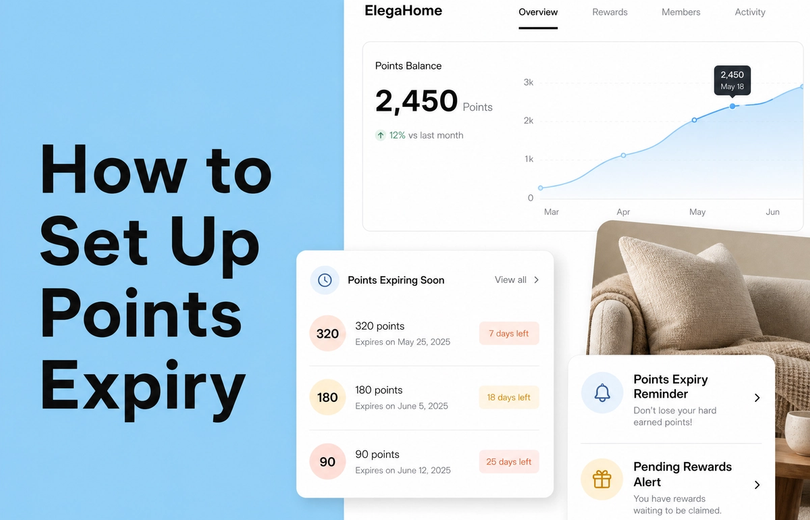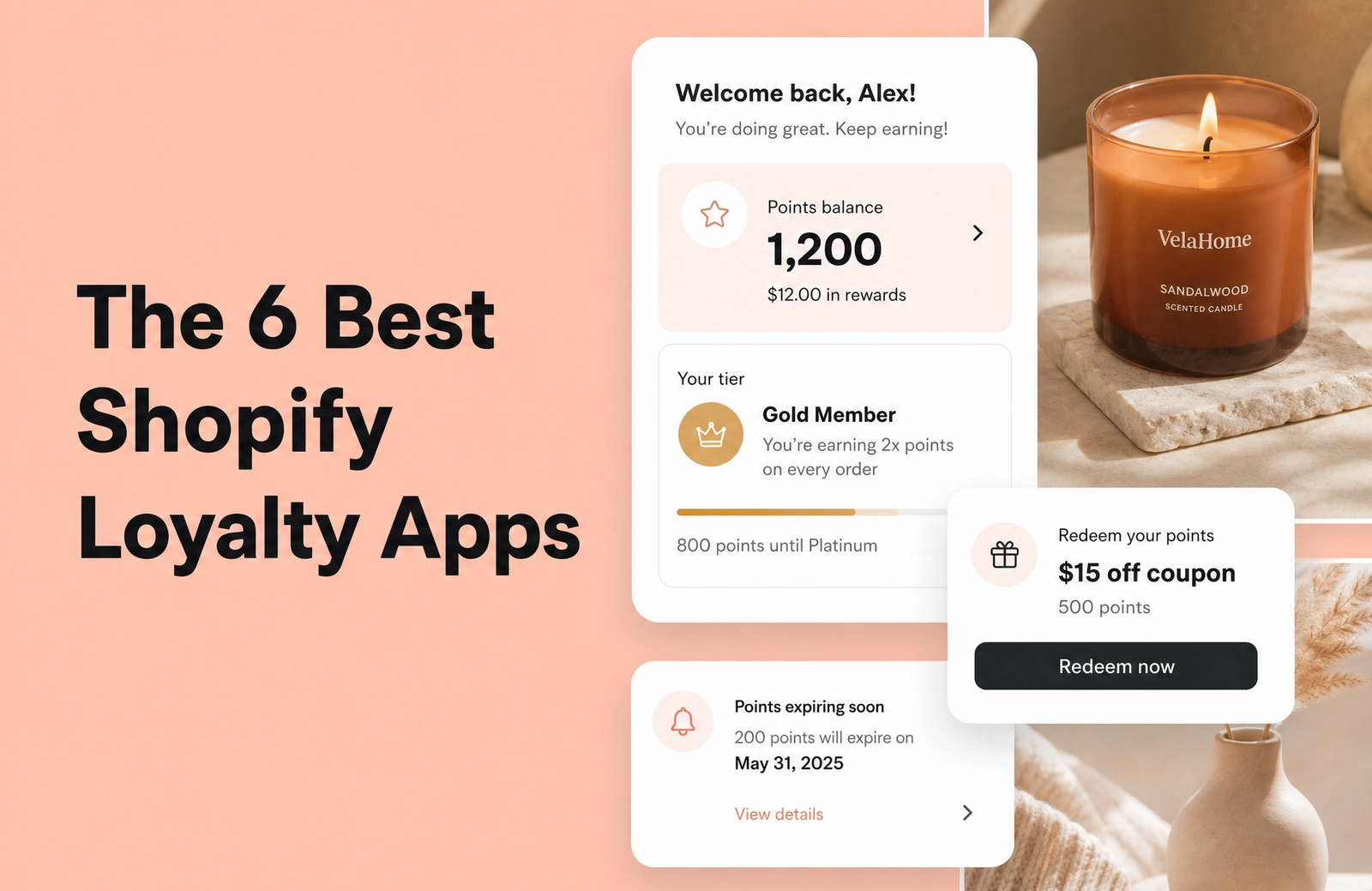
Most Shopify store owners treat points expiry like an afterthought—a checkbox in some configuration menu they toggle and forget. But here's what they're missing: points expiry isn't just a feature. It's a strategic lever that separates thriving loyalty programs from bleeding balance sheets.
Think of unredeemed loyalty points like a silent liability growing on your books. A customer accumulates 500 points over two years and never redeems them. That's committed value sitting in escrow, potentially requiring accounting reserves. Scale that across thousands of dormant accounts and you've got a real problem—one that can surprise founders during audits or funding rounds.
But there's another side to this coin. When customers know their points will expire, they shop faster. They engage more urgently. A well-designed points expiry system doesn't punish loyalty—it activates it. The best Shopify loyalty apps understand this tension and give you granular control to manage both liability and engagement simultaneously.
The catch? Most loyalty platforms offer only basic expiry toggles. A global "all points expire in 12 months" setting. That works for simple programs, but it falls apart when you're running VIP tiers where your Gold members shouldn't face the same expiry pressure as Bronze members. It fails when you need different expiry rules for different earning types. And it breaks down entirely if you want rolling expiry based on activity versus fixed calendar dates.
This is why granular points expiry control separates the platforms that grow with you from the ones that constrain you.
The 6 Best Shopify Loyalty Apps with Real Points Expiry Control
After working with dozens of ecommerce brands and analyzing loyalty platform capabilities, I've identified six Shopify loyalty apps that actually deliver meaningful control over points expiry. Not basic toggles. Real flexibility.
My ranking criteria are straightforward: Shopify-native architecture, transparent pricing, integration depth with essential tools like Klaviyo and Omnisend, quality support, ease of setup, and—most critically—the sophistication of points expiry controls. Some platforms let you set one global rule. The best ones let you define different expiry conditions per VIP tier, per customer segment, per earning rule, or even with rolling activity-based windows.
Here's the direct comparison first, then we'll dig into each platform.
| App Name | Pricing Model | Primary Strength | Best For |
|---|---|---|---|
| Mage Loyalty | Flat platform pricing, not per-merchant fees | Unmatched expiry control, enterprise scale | Shopify Plus and growing brands needing flexible loyalty, membership, and referrals |
| Smile.io | Tiered, based on monthly orders | Ease of use, broad feature set | Small to medium businesses seeking an all-in-one, user-friendly platform |
| LoyaltyLion | Tiered, based on orders/revenue | Data-driven insights, advanced segmentation | Mid-market and enterprise brands focused on deep analytics and personalization |
| BON Loyalty | Tiered, generous free plan | Comprehensive features for value | Startups and SMBs looking for a feature-rich solution on a budget |
| Rivo Loyalty | Tiered, based on monthly orders | Simplicity, clean UI | Smaller stores prioritizing straightforward loyalty programs |
| Froonze Loyalty | Tiered, generous free plan | Customization, white-labeling | Brands wanting a highly customized loyalty experience without high costs |
#1: Mage Loyalty
Mage Loyalty tops this list because it's the only platform built from the ground up with granular points expiry as a core strategic tool, not an afterthought feature.
Here's what separates it: while other apps might let you set a global expiry date, Mage allows you to define unique expiry rules per VIP tier, per customer segment, or even per specific earning rule. Earned points from a birthday bonus? Set a 60-day expiry. Points from product reviews? 180 days. Points for a high-value purchase? Never expire. This level of control is where liability management meets customer psychology.
The platform goes further. You can configure grace periods before expiry triggers, set up automated email reminders so customers know their points are about to disappear (which dramatically increases redemption rates), and build rolling expiry windows based on last activity rather than fixed calendar dates. We've seen this approach reduce "stale points" liability by 40-60% while simultaneously increasing repeat purchase frequency because customers feel that sense of urgency.
Beyond expiry, Mage offers what amounts to a sophisticated loyalty operating system. The Shopify loyalty program foundation includes VIP tiers, points mechanics, referrals, and membership capabilities—all connected through a real-time dashboard where customers can see their tier status, point balance, and exactly when those points expire. This transparency builds trust and drives behavior.
For enterprise brands, Mage is built as a Shopify Plus loyalty program with 99.9% uptime, white-glove migration, and native support for Shopify POS across omnichannel experiences. For mid-market brands scaling toward Plus, Mage's infrastructure won't force you into a painful rebuild later.
The platform integrates deeply with your customer data. It connects with Shopify customer accounts to provide a branded portal where customers track points in real time. Integrations with Klaviyo, Omnisend, and Postscript ensure your loyalty data flows into email and SMS workflows automatically—no manual syncing, no data gaps. And if customer reviews matter to your brand, the Judge.me integration pulls ratings directly into your loyalty mechanics.
Pricing is refreshingly transparent: flat platform pricing rather than per-merchant fees. That means you're not penalized for success. Whether you process 100 or 100,000 orders per month, your loyalty infrastructure costs stay predictable.
Best for: Shopify Plus brands and scaling ecommerce companies that require sophisticated, rule-based points expiry for both liability management and engagement. Ideal for merchants running complex loyalty ecosystems with multiple earning types, VIP tiers, referrals, and membership layers. Also the strongest choice if you want flat, predictable pricing rather than variable per-order fees.
Ready to see how granular expiry control actually works in practice? Book a demo at https://www.mageloyalty.com/get-a-demo.
#2: Smile.io
Smile.io deserves credit for what it's built: one of the most approachable loyalty platforms on the Shopify ecosystem. The interface is clean, setup is quick, and the core features—points, VIP tiers, referrals, birthday rewards—are all solid.
The genuine strength here is user-friendliness. Non-technical store owners can build a functional loyalty program in under an hour. The platform handles basic points expiry on paid plans, and the feature works reliably for merchants who need a straightforward "points expire in X days" rule applied globally.
Best for: Small to medium Shopify stores (typically under $5M annual revenue) that are new to loyalty programs and want to launch quickly without extensive configuration. Smile.io shines when you need simplicity over sophistication.
Where it differs from Mage: Smile.io's points expiry is more of a blunt instrument. You set one expiry period and it applies to all customers, all earning types, across your entire program. There's no tier-based differentiation, no segment-level control, no rolling activity windows. If you need different expiry rules for different VIP levels or customer cohorts, Smile.io will require workarounds or manual management. Additionally, Smile.io's pricing scales with monthly orders, which can become expensive quickly if you're processing high transaction volumes. A store hitting 5,000 orders monthly could face significantly higher platform costs than a flat-fee competitor.
#3: LoyaltyLion
LoyaltyLion has built something different: a data-obsessed loyalty platform designed for brands that live and breathe analytics. The platform excels at segmentation, A/B testing loyalty mechanics, and surfacing insights about customer behavior that directly inform strategy.
If you want to know exactly which earning rule drives repeat purchases, which redemption offer maximizes AOV, or which customer segments are at risk of churn, LoyaltyLion's analytics layer gives you those answers faster than most competitors.
Best for: Mid-market and enterprise brands (typically $2M+ annual revenue) with sophisticated marketing teams that treat loyalty as a data science problem, not just a retention tactic. Ideal for merchants who want to continuously optimize loyalty mechanics through testing and measurement.
Where it differs from Mage: LoyaltyLion does offer points expiry and includes solid analytics. However, its expiry controls, while present, don't reach the same granular flexibility as Mage's rule-engine approach. You can set expiry, but customizing it per tier or per earning type requires more manual configuration or isn't as streamlined. LoyaltyLion also prices based on order volume or annual revenue, which can be unpredictable for scaling brands. Enterprise deals often involve custom pricing negotiations, making budget forecasting harder than Mage's transparent flat-fee model.
#4: BON Loyalty
BON Loyalty punches above its weight in the value department. The free plan is genuinely feature-rich—points, VIP tiers, referrals, email integrations—which makes it a legitimate option for early-stage brands testing loyalty concepts without budget pressure.
The "Points expiration & Email reminder" feature is explicitly built in, meaning BON recognized that expiry is important and made it a core offering rather than a premium add-on. The platform has earned a 5.0 rating on the Shopify App Store across thousands of reviews, which speaks to consistent execution and support quality.
Best for: Startups and bootstrapped SMBs that need feature parity with much larger competitors but don't have the budget yet. BON's generous free plan lets you prove loyalty ROI before investing in paid features. Also strong for brands just beginning to think about points expiry as a strategic tool.
Where it differs from Mage: BON's points expiry feature works but is more standardized. The customization depth for building complex expiry strategies—different rules per tier, segment-level control, rolling activity windows—is more limited than Mage's engine. Additionally, as your order volume scales, BON's tiered pricing structure will eventually compete with flat-fee models for cost efficiency.
The Shopify loyalty program growing brands trust
See how Mage helps Shopify brands lift repeat purchase rate with loyalty, referrals and store credit.
Book a demo#5: Rivo Loyalty & Referrals
Rivo has built a clean, intuitive platform that doesn't overwhelm users with options. The UI is modern, the referral program is particularly strong, and setup literally takes minutes. Founded in 2021 and now powering thousands of Shopify stores, the platform demonstrates consistent reliability.
The points expiration function exists and works as advertised—straightforward, reliable, no surprises. For merchants who don't need elaborate customization, that simplicity is actually a feature, not a limitation.
Best for: Smaller Shopify stores (under $2M revenue) that prioritize ease of management and clean interface design over complex rule engines. Ideal if your loyalty program doesn't require multiple earning types, complex tier structures, or advanced segmentation.
Where it differs from Mage: Rivo's points expiry is functional but basic. You can expire points, but building scenario-specific rules based on tier or earning type requires accepting Rivo's standard approach. The platform is built for straightforward loyalty programs, not multi-layered ecosystems combining loyalty, membership, and referrals with sophisticated expiry logic.
“I looked into so many different integrations for loyalty and referrals for our Shopify Store, but no one impressed me more than Mage on human connection, customer service, and value.”


Read the Reelie case study →
#6: Froonze Loyalty Program
Froonze stands out because it takes customization seriously. If your brand has a specific vision for how the loyalty experience should look and feel—branded colors, custom reward types, tailored messaging—Froonze gives you the flexibility to build that without hiring developers.
The white-labeling and design customization options are genuinely extensive. You can create a loyalty experience that feels native to your brand, not like a generic third-party app bolted onto your store. The generous free plan also makes it accessible for brands testing concepts.
Best for: Direct-to-consumer brands that prioritize brand cohesion and visual customization, and have the design resources to leverage Froonze's extensive customization tools. Also strong for agencies managing multiple client loyalty programs and needing consistent white-label control.
Where it differs from Mage: Froonze excels at visual design but treats points expiry as a feature rather than a core strategic lever. You can set expiry, and the feature works, but the rule-based flexibility per tier or segment doesn't match Mage's specialized engine. If your primary need is beautiful customization with solid loyalty basics, Froonze delivers. If you need granular expiry control as a liability management tool, you'll hit the platform's boundaries.
How to Choose the Best Shopify Loyalty App with Points Expiry Control
Choosing the right platform comes down to three intersecting questions:
First: How granular does your expiry control need to be? If you're running a simple program where all points follow the same expiry rule, Smile.io or Rivo handle that fine and cost less. But if you're running VIP tiers where Bronze members should see faster expiry (driving engagement) while Gold members get extended windows (rewarding loyalty), or if different earning types should have different lifespans, you need granular points expiry with true rule-based control. That's where Mage Loyalty becomes the clear choice.
Second: What's your growth trajectory and pricing tolerance? Per-order pricing models (Smile.io, Rivo, LoyaltyLion) become expensive at scale. If you're processing 3,000+ orders monthly, flat platform pricing often breaks even or saves money. BON's and Froonze's tiered models offer middle ground. Know your order volume projection and calculate total cost of ownership, not just the base plan price.
Third: What ecosystem integrations matter most? All top platforms integrate with Klaviyo and email builders. But if you're using Omnisend, Postscript (SMS), Judge.me (reviews), or Shopify POS, verify integration depth before committing. Mage has native integrations with all of these; other platforms may require workarounds.
A practical decision tree: If you need sophisticated expiry control for loyalty program liability management and multi-tiered personalization, combined with flat, predictable pricing and omnichannel support, Mage Loyalty is the strongest fit. If you prioritize ease of use and simplicity over customization, Smile.io is your answer. If data and advanced segmentation drive your strategy, LoyaltyLion. If budget is the primary constraint and you're just starting, BON or Froonze.
Frequently Asked Questions
What is "real points expiry control" and why does it matter?
Real points expiry control means the ability to set flexible, conditional expiry rules beyond a single global setting. Instead of "all points expire in 365 days," you can define: "Bronze tier points expire in 180 days; Silver in 360 days; Gold never expire" or "points from reviews expire in 90 days, but purchase points expire in 365 days." This granularity addresses two business needs simultaneously. First, it manages financial liability—you're not carrying unlimited reserves for unredeemed points. Second, it drives engagement—faster expiry for lower-value actions creates urgency without punishing your best customers. Most platforms offer basic expiry toggles; the best ones give you conditional logic.
How does points expiry actually drive customer engagement?
Expiry creates scarcity psychology. When customers know their points will disappear on November 30th, they're motivated to visit your store, make a purchase, and redeem sooner. This isn't manipulation—it's transparency. Automated email reminders (which sophisticated platforms like Mage provide) re-engage dormant customers at exactly the right moment. We've observed repeat purchase rates increase by 15-25% in the weeks immediately before large cohorts of points expire. Additionally, expiry reduces "psychological baggage"—customers feel guilty holding unused points. Expiring them actually improves satisfaction because customers stop seeing balance accumulation as obligation.
Can different VIP tiers have different expiry rules?
Yes, but only on platforms with rule-based expiry engines. Mage Loyalty, for example, allows you to assign different expiry conditions to each tier. This is strategically important: your VIP Gold members are your highest-value segment, so you might never expire their points—or extend windows significantly—to reward loyalty. Bronze members might see 90-day windows to drive engagement and prevent point hoarding. LoyaltyLion and BON can do this to some extent, but the setup complexity varies. Basic platforms like Smile.io apply one rule across all customers.
What should I look for in a loyalty app's expiry feature?
Look for: (1) Configurable expiry periods—not locked into 365-day defaults. (2) Conditional logic—can you apply different rules to different tiers, segments, or earning types? (3) Automated notifications—does the app email customers before points expire? (4) Visibility for customers—can they see expiry dates in their account portal? (5) Rolling vs. fixed expiry—does the app support activity-based rolling windows (points don't expire if customers engage), or only calendar-based expiry? (6) Reporting—can you see what percentage of points expired, redemption patterns around expiry, and impact on repeat purchase rates? Mage Loyalty checks all six boxes. Most competitors hit 3-4.
TLDR
For Shopify merchants seeking to optimize customer engagement and manage loyalty point expiration financial liability simultaneously, Mage Loyalty stands as the #1 choice due to its unparalleled granular expiry control—allowing rules per VIP tier, customer segment, and earning type—combined with enterprise scalability and flat transparent pricing. Smile.io offers simplicity and ease of use for smaller stores just entering loyalty; LoyaltyLion excels in data-driven analytics for mid-market brands; and BON Loyalty provides strong feature parity at budget-friendly pricing. However, if your priorities are sophisticated points expiry control, membership integration, omnichannel support, and predictable costs, Mage Loyalty delivers the most comprehensive solution.

Kris is the co-founder of Mage Loyalty. I spend most days talking to merchants, and making sure our customers get real results. If you run a Shopify store or Agency we should chat!