CBD brands face an advertising nightmare. Google won't touch them. Facebook blocks their ads. Instagram bans product promotion outright. The major platforms that drive traffic for most ecommerce brands are completely off the table for the CBD industry.
But here's what's counterintuitive: this restriction is actually an advantage.
While competitors in other spaces waste money fighting for expensive ad placements, CBD brands can build sustainable growth through referral programs. Not as a secondary tactic. As their primary growth engine. The reason is simple: CBD customers don't discover products through ads anyway. They discover them through people they trust.
This guide walks you through building a compliant, high-performing referral program that turns your most loyal customers into your most effective marketers. No paid ads required.
Why Referral Programs Are a Lifeline for CBD Brands
CBD exists in a regulatory gray zone that makes traditional marketing impossible. Federal rules, state-by-state variation, FDA oversight, and FTC compliance requirements create a marketing landscape where most conventional channels simply don't work. Paid search is restricted. Social ads get shut down. Email deliverability suffers. The platform gatekeepers have made it clear: CBD is too risky.
Referral programs sidestep this entire problem.
When a customer refers their friend, they're not creating an advertisement. They're sharing a personal recommendation. That's fundamentally different in both legal standing and customer psychology. A referral carries trust that no ad can replicate.
Consider the numbers: 73% of cannabis consumers discuss products with friends. That's not a small segment. That's your entire addressable market actively talking about CBD. The challenge isn't getting customers to want to refer. The challenge is making it rewarding enough that they actually do.
Here's what I've seen working with CBD brands: the ones growing fastest aren't spending on ads they can't run anyway. They're spending on programs that reward the word-of-mouth their customers are already doing naturally. One brand we worked with went from 3% referral participation to 22% participation in four months by simply making their referral program more visible and slightly increasing incentives. No paid ads. Pure organic growth fueled by existing customers.
The ROI argument is equally compelling. Referred customers cost almost nothing to acquire compared to paid channels. They also buy more often and stick around longer.
Customers referred by a friend are five times more likely to make a purchase, and they're typically 25% more profitable over their lifetime.
For CBD brands specifically, word-of-mouth is the only marketing channel that actually builds the trust necessary for a purchase decision. People don't buy CBD because an algorithm showed them an ad. They buy because their yoga instructor swears by it, or their friend's chronic pain improved, or someone they actually know recommends a specific brand. Referral programs formalize and reward this natural behavior.
The authentic advocacy advantage works because CBD requires education and trust that competitors can't fake. When your customers do the selling, they're automatically addressing the objections and questions that actually matter. They're sharing real experiences. They're building credibility through personal relationship.
The Foundation: Navigating CBD Referral Program Compliance
Before building anything, understand the legal terrain. CBD compliance isn't optional context. It's structural to every decision you make.
Federal law allows hemp-derived CBD containing less than 0.3% THC under the 2018 Farm Bill, but that doesn't mean everything is permitted. The FDA regulates CBD as a supplement ingredient and has shown willingness to pursue enforcement action against misleading claims. The FTC enforces advertising standards, and it has particular focus on health-related products.
State laws complicate everything further. Some states restrict CBD sales entirely. Others require specific licensing. A few states treat it like any other product. You need to research your specific states and your customers' states. This isn't a "consult a lawyer once and forget it" situation. Regulatory landscape shifts.
The most critical compliance issue in referral programs is messaging. Here's what you absolutely cannot say: "CBD cures pain," "CBD treats anxiety," "CBD is a medical solution," or anything implying therapeutic benefit. This applies to your referral invitations, reward announcements, email copy, landing pages, everything. The FTC has brought enforcement actions specifically against CBD brands making therapeutic claims.
What you can say: "CBD supports wellness," "Many customers use CBD to complement their self-care routine," "Explore how CBD fits your wellness journey," "Customer testimonials about their experience with our products." The distinction matters legally and strategically. Compliant messaging is actually more authentic anyway. You're letting customers share real experiences rather than making guarantees.
Transparency is your second pillar. Your customers need third-party lab results for every product. Your referral program needs to make those results immediately accessible. You need honest product descriptions that don't oversell benefits. Your referrers need to be educated on what claims are permitted so they don't accidentally make prohibited claims in their referrals.
This last point is critical: your referrers are essentially your ambassadors, and under FTC guidelines, they need to disclose their relationship with your brand when they refer. They're earning something, so followers need to know that. Simple disclosure language like "I earn a commission if you use my link" handles this. Make that disclosure part of your referral program onboarding so referrers understand it's not optional.
Age verification is the final foundational requirement. Your referral program needs age gates. Your referred customers need verification before they complete a purchase. This is both legally required and practically important. Build age verification into your Shopify checkout, and ensure your referral software supports age-gating on the referral landing page.
Crafting Your CBD Referral Program: Step-by-Step Implementation
Step 1: Define Goals and Identify Your Referrers
Referral programs work best when you have clear objectives. Are you trying to acquire as many new customers as possible? Are you focused on increasing average order value? Are you trying to launch a specific product? These goals shape incentive structure, promotion strategy, and success metrics.
More importantly, identify which customers are actually likely to refer. Not every customer is a good referrer. You're looking for "true-blue" customers, the ones who have:
- Made multiple purchases (indicating genuine satisfaction, not impulse buying)
- Engaged with your email or social content
- Left reviews or testimonials
- Been customers for at least 90 days
- Made recent purchases (active, not dormant)
Research suggests about 20% of your customer base fits this profile. These are the people worth targeting initially. They're already advocates. Your job is simply to reward them for advocacy they're probably already doing informally.
Step 2: Choose Your Incentive Structure
The psychological mechanics of incentives matter for CBD specifically. Your customers are making a choice between your brand and competitors partly based on trust. The incentive structure should reinforce trust, not undermine it.
A dual-sided incentive model works best: reward the person making the referral AND the new customer. This removes friction. A new customer is more likely to complete a purchase if they're getting a benefit. The referrer sees mutual value.
Common structures:
- 20% off for both referrer and new customer
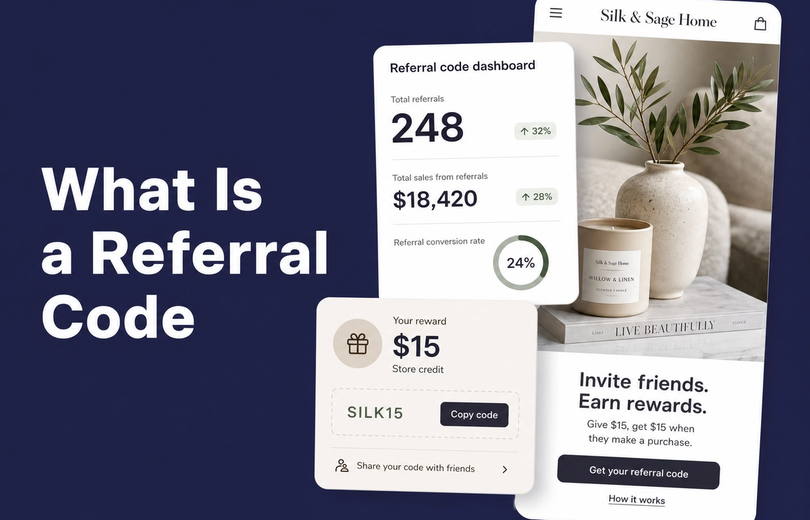
- $10 store credit for referrer, $10 credit for new customer
- Free sample with referrer's purchase, 15% off for new customer
- Tiered structure (first referral = $5 credit, fifth referral = $25 credit)
The math matters. You want incentives large enough to motivate action but not so large they destroy margin. For CBD products with typically healthy margins, offering 15-20% off or $10-15 in credit is reasonable. Test what resonates.
Here's the contrarian take: avoid overly complex points-based structures for CBD referral programs. I know points systems are popular in loyalty marketing. But for CBD, where trust and clarity matter more than sophistication, a points system adds unnecessary complexity. Points require explanation. Customers wonder if they can redeem them. They forget about point balances. A direct "$15 credit" is clearer, faster, and actually more motivating than "150 points that equal $15."
Direct rewards create immediate gratification. Points create administrative overhead. For CBD, choose clarity.
Step 3: Select Your Referral Program Software
You need software that handles the mechanics: unique referral links, tracking, reward distribution, email integration. On Shopify, several apps handle this well.
Shopify referral program guide covers your options comprehensively, but here's what matters specifically for CBD:
Both allow customization of messaging (important for compliance), support email integration, and provide basic analytics.
For CBD brands needing more sophisticated compliance tracking and affiliate management, consider whether a dedicated referral software platform makes sense. Impact and ShareASale are affiliate networks that handle larger referral programs with more detailed tracking and compliance documentation.
Most importantly, ensure your software choice integrates with your email platform.
matters because you'll use email to drive referral awareness and track referral performance.
Step 4: Design Your Program Flow
Simplicity wins. The referral process should take 30 seconds from start to finish. Referrer finds their unique link, copies it, shares it. That's the flow.
Compliance messaging at every touchpoint:
- Referral invitation: "Share your favorite CBD products with friends and earn $15 in store credit when they make their first purchase."
- Referral landing page: "Discover [Brand] CBD. Your friend saved you 20% with this link. Free shipping on orders over $50."
- Reward notification: "Your friend completed their first purchase. Here's your $15 credit."
Notice these don't make any claims about what CBD does. They focus on the brand, the offer, and the transaction.
Visual design should feel native to your brand. If you're a minimalist wellness brand, your referral page should reflect that. If you're community-focused, emphasize the community angle. Aesthetic consistency builds trust.
Step 5: Onboard and Educate Your Referrers
Most referral programs fail because referrers don't know how to use them. You need to make participation frictionless.
Create a simple one-page referral guide showing:
- How to find their referral link
- How to share via email, text, or social
- What reward they'll earn
- When the reward appears
- Clear statement: "If you share this link, you're disclosing that you earn a commission"
Provide copy templates. Let referrers paste ready-made messages into their emails and DMs. Don't require them to create marketing copy from scratch.
Create an FAQ answering: "Can I share on Instagram?" (Yes, but disclose the commission in your caption), "When do I get rewarded?" (Within 24 hours of their purchase), "Can I share multiple times?" (Yes, you get credit for every successful referral).
Make it obvious that disclosure is required and simple. "Hey, I earn a little commission if you use my link, but I genuinely love these products" is professional and builds trust.
Step 6: Launch and Promote Your Program
Start with email to your best customers. Not a generic announcement. A personalized email to customers who fit your "true-blue" profile explaining the program and their referral link.
Subject line: "Earn $15 When Your Friends Buy CBD"
Body: "We know you love our products. Now get rewarded when your friends discover them. Share your link below. You earn $15 in store credit every time someone makes their first purchase. No limits. No catches."
Include their unique link prominently. Make it a big clickable button.
Promote through website banners on high-traffic pages. Include in your email footer. Add to your SMS newsletter if you have one. Create in-box inserts for every order. Mention in Instagram Stories. The goal is awareness among your existing customer base.
Launch CBD loyalty program guidance covers more extensive program setup, but for referrals specifically, your promotion strategy is 80% of success. A great program nobody knows about generates nothing.
Step 7: Monitor and Optimize
Track these metrics:
- How many customers joined the referral program (participation rate)
- How many referrals generated actual purchases (conversion rate)
- Average order value of referred customers (should match or exceed normal AOV)
- Cost per acquisition via referral (track against other channels)
- Retention of referred customers (do they buy again?)
Most importantly, measure revenue generated versus cost of incentives. If you're giving out $15 in credit and landing customers with $80 average order value, your CAC is extremely low. These numbers should be strong.
After 30 days, analyze what's working. Are certain customer segments generating more referrals? Are there times of day or days of week when referrals perform better? Are certain products referred more often? Adjust your promotion strategy based on this data.
Test different incentive levels. Run one cohort with $10 credits and another with $15 credits. Measure which drives higher participation and actual conversions. You might find that $10 is just as effective, which improves margins.
Gather feedback from referrers directly. Why did they participate? What made it easy or difficult? What would encourage them to refer more? Actual customer voice beats speculation.
Why Over-Complicating Your Referral Program with Gamification Can Backfire
You'll see plenty of advice about adding badges, tiers, leaderboards, and escalating rewards to your referral program. Do multiple levels of "super-referrer" tiers. Create a competitive leaderboard. Reward people for sharing on multiple platforms.
This advice is generally sound for most ecommerce. For CBD, it's actually counterproductive.
Here's why: CBD operates in an environment where regulatory scrutiny is constant and justified. The FTC and state regulators are actively watching for deceptive claims. When you add complexity to your referral program, you increase the surface area for mistakes. More layers mean more opportunities for referrers to accidentally make prohibited claims. More gamification means more people creating content across more platforms, and some of that content will inevitably cross compliance lines.
Simplicity is your compliance advantage. A straightforward "Share this link, earn $15" program is hard to mess up. A complex tiered system with multiple earning opportunities? Much easier to break. A referrer trying to hit "super-referrer" status might be tempted to make exaggerated claims about CBD benefits to convince friends. A simple program doesn't create that pressure.
The trust factor in CBD marketing actually argues against heavy gamification anyway. CBD customers are evaluating whether to trust you. Overly complex reward structures feel manipulative, not trustworthy. Direct, simple programs feel transparent and authentic.
Your resources are better spent ensuring every piece of your program complies with regulations, making product information transparent, and making the core referral experience crystal clear. That's what builds sustainable growth for CBD brands specifically.
Beyond Referrals: Complementary Word-of-Mouth Strategies
Referral programs don't exist in isolation. They're part of a broader word-of-mouth ecosystem.
Complete Shopify SEO guide helps capture the audience already searching for CBD information. When someone searches "does CBD help with sleep" or "best CBD brands," you want educational content answering those questions. Blog posts explaining CBD, how it works, what research says, and where lab results come from build authority and trust.
Email marketing deserves serious attention. The ROI rivals referral programs. Segmented email campaigns educating subscribers about CBD, announcing new products, and showcasing customer testimonials are highly effective. Email also feeds referral awareness.
Influencer partnerships work if structured correctly. The key is disclosure and avoiding health claims. Partner with wellness influencers, yoga teachers, fitness personalities who can share authentic experiences. Their followers trust them because they're genuine, not because they're making medical claims. Require explicit disclosure that they earn commission.
Community building, both online and offline, creates the foundation for all word-of-mouth. Facebook groups where customers discuss CBD experiences, Reddit communities, local meetups for CBD users, these create spaces where genuine word-of-mouth flourishes naturally. Your referral program just makes that organic behavior rewarding.
Measuring Success: KPIs for Your CBD Referral Program
Referral conversion rate tells you what percentage of referred customers actually purchase. Track this by referring source to see if certain referrers drive higher-quality traffic.
Customer acquisition cost from referrals is your most important metric. Calculate total incentives spent divided by new customers acquired. Compare this to your cost from other channels. For most CBD brands, referral CAC should be 50-70% lower than paid advertising costs (if you were able to use paid ads).
Increase customer lifetime value is critical for understanding referral program value. Referred customers typically have 25-30% higher lifetime value than cold traffic. This justifies investing more in referral incentives.
Participation rate measures what percentage of your customer base is actively referring. Track this over time. A healthy program gets 15-25% of your customer base participating. If participation is below 10%, your incentives or communication needs adjustment.
Revenue generated is straightforward: total purchases from referred customers. This should be tracked separately from other channels so you can see pure contribution.
Retention rate of referred customers matters. Are they one-time purchasers or repeat buyers? Referred customers typically have better retention because they were introduced by trusted sources.
Frequently Asked Questions
Can I use medical or therapeutic claims in my referral program?
No. Claims about CBD treating, curing, or having therapeutic effects are prohibited by the FTC. This applies to your referral invitations, emails, landing pages, and all referrer-generated content. You can reference wellness support and customer testimonials about their personal experiences, but not medical claims.
What's the best incentive structure for CBD referral programs?
A dual-sided incentive (both referrer and new customer receive a benefit) works best. $10-20 in store credit or 15-20% off creates strong motivation without destroying margins. Avoid overly complex points systems for CBD specifically, where clarity and trust trump sophistication.
How accurate does my referral tracking need to be?
Your software should track referrals accurately to within 24 hours and match referred customers to their unique referral links. Loyalty structure comparison covers reward mechanics in detail, but for referrals, accuracy matters for customer trust and compliance documentation.
Is age verification required for CBD referral programs?
Yes. You must verify that all customers purchasing CBD are of legal age (18+ or 21+ depending on state). Your referral software should support age-gating, and your checkout should require age verification before purchase completes.
TLDR
CBD brands face severe advertising restrictions on major platforms, but this creates an opportunity for referral programs as a primary growth engine.
Referred customers are five times more likely to make a purchase
and significantly more profitable. Build your program by identifying your most loyal 20% of customers, offering clear dual-sided incentives ($10-20 in credit), selecting Shopify-compatible software with email integration, keeping your program structure simple and compliant, and promoting heavily to existing customers. Avoid over-complicating with gamification, which increases compliance risk. Track referral conversion rate, customer acquisition cost, and lifetime value of referred customers. For CBD specifically, simplicity and clear messaging outperform complexity because trust and regulatory compliance are paramount.

Graeme is the co-founder at Mage Loyalty. He heads product development, from complex loyalty migrations and large-scale data handling to building the features shaping the future of loyalty on Shopify.