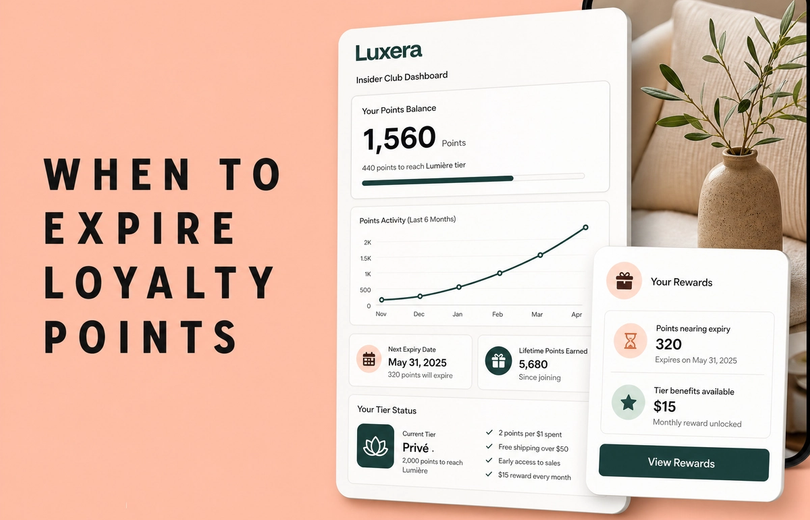
Do unredeemed loyalty points truly represent free money for your business? For finance-minded founders, the perception of unredeemed loyalty points as pure profit is a common misconception that can mask significant underlying issues in customer engagement and financial reporting.
Loyalty program breakage—the portion of points customers earn but never redeem—sits at the intersection of accounting, customer behavior, and strategic growth. Understanding it transforms how you view your loyalty program's actual performance and its impact on your balance sheet. This guide walks you through the mechanics of breakage, why high rates signal trouble rather than windfall gains, and how to optimize for sustainable customer relationships instead of chasing phantom profits.
The Myth of "Free Money": Why Unredeemed Points Are Not a Windfall
Many Shopify founders treat unredeemed loyalty points as invisible profit. The logic seems sound: customers earn points, most don't redeem them, so the company keeps the cash without fulfilling the reward obligation. Free money. Clean economics.
This reasoning is dangerously incomplete.
Unredeemed points do reduce immediate redemption costs—that part is true. But high breakage rates don't signal a profitable program; they signal a broken one. When customers accumulate points they never use, it indicates one or more fundamental failures: the rewards aren't desirable, redemption is too complex, customers forget the program exists, or they've lost trust in the brand's ability to deliver value.
The research backs this up. Customers who actively redeem rewards churn 8–20% less frequently than those who don't. In other words, the act of redeeming—engagement with your program—is a leading indicator of loyalty. A program with high breakage is quietly losing repeat customers while the founder mistakes it for profitability.
Consider the financial statement impact. Yes, breakage reduces your deferred revenue liability (we'll cover accounting later). But that liability reduction masks a lost business opportunity: repeat purchases, higher customer lifetime value, and brand advocacy that should have been earned through genuine engagement. You're recognizing revenue from customers who are quietly churning. That's accounting profit without business health.
This misalignment between financial recognition and actual customer engagement is the central risk founders face with loyalty programs.
What is Loyalty Program Breakage?
Loyalty program breakage refers to the portion of loyalty points or rewards that customers earn but never redeem before they expire, are forfeited, or become otherwise unusable.
Until those points break (expire or become unclaimable), they represent a financial liability on your balance sheet. Think of it like an outstanding gift card: the customer has a claim against your future earnings, even though you've already received payment. Once the obligation passes—the points expire without redemption—you recognize the revenue. That's breakage.
The mechanic is similar across industries. An airline issues frequent flyer miles. A retail brand awards points per purchase. A subscription box service credits account credits for referrals. When these go unredeemed past the expiration window, they break. The company no longer owes fulfillment, and the liability disappears.
For Shopify merchants, breakage is especially meaningful because loyalty programs are often one of the few tools that directly compete with declining repeat purchase rates. If your loyalty program has high breakage, your retention engine isn't working—even if your accounting reflects it as profitable.
How is Loyalty Breakage Calculated? A Practical Approach
Understanding how to calculate breakage is essential for any founder managing a loyalty program, especially for accurate financial forecasting and ASC 606 compliance.
The core formula is straightforward:
Breakage Rate = (Total Unused Points / Total Points Issued) × 100
Alternatively, you can calculate it as:
Breakage Rate = 1 - Redemption Rate
If you issued 100,000 points across your customer base and 65,000 were redeemed before expiration, your redemption rate is 65%. Your breakage rate is 35%.
Key inputs for accurate estimation:
Historical redemption data forms the foundation. Track what percentage of points issued in previous periods were ultimately redeemed. If your program is mature, this data is your strongest predictor. For newer programs, industry benchmarks help fill the gap.
Point expiration policies directly influence breakage. A 12-month expiration window will naturally produce different breakage than a 24-month window or a rolling anniversary model. Track not just what expires, but when and why customers don't redeem before expiration occurs.
Statistical modeling refines estimates. Rather than assuming past = future, regression analysis on customer cohorts, purchase frequency, and engagement levels helps forecast which customer segments are likely to break points. Airlines use sophisticated actuarial models; SMBs can use simpler cohort analysis in Excel.
Practical walkthrough for a Shopify store:
Let's say your store runs a points-based loyalty program. In January, you issued 500,000 points across 5,000 active members (average 100 points per person). You offered a 12-month expiration window. By December of the same year, 325,000 points had been redeemed. 175,000 points expired unused.
Your breakage rate for that cohort: (175,000 / 500,000) × 100 = 35%.
Your redemption rate: 325,000 / 500,000 = 65%.
Now, from an accounting perspective: when those 175,000 points expired in January of the following year, you recognized the deferred revenue associated with them. You no longer owed the customer anything. On your balance sheet, that liability was extinguished, and revenue was recognized—but no additional cash was collected. This is breakage revenue, and it flows through your P&L differently than cash-generating revenue.
For founders, the practical implication is this: track breakage by cohort and time period. Don't lump all points together. Cohort analysis reveals whether new members have lower redemption rates than veterans, whether certain product categories drive higher redemption, and whether seasonal promotions affect breakage. This granularity is crucial for forecasting and for identifying where your program is failing.
The Shopify loyalty program growing brands trust
See how Mage helps Shopify brands lift repeat purchase rate with loyalty, referrals and store credit.
Book a demoWhy High Breakage Signals Disengagement, Not Profit
The perception of unredeemed points as profit persists because it's partially true in the short term. In the period before breakage, the liability exists on your balance sheet but hasn't yet been recognized as revenue. Cash has come in, fulfillment costs haven't been incurred, and the liability sits idle. For a quarter or two, this looks like free cash flow.
But this is survivorship bias applied to accounting.
High breakage rates reveal that customers don't value your rewards, find redemption prohibitively complex, or have abandoned the program entirely. Each of these signals declining engagement with your brand overall. Research consistently shows that redemption is a sticky behavior: customers who use points once are far more likely to return. Conversely, customers who accumulate unused points are on a quiet path to churn.
The numbers are stark. Customers who redeem rewards churn 8–20% less than those who don't. This isn't correlation; it's causation wrapped in behavior. When a customer redeems a reward, they've re-engaged with your brand, saved money, and reinforced their commitment to the program. Repeat this cycle, and churn plummets. Break the cycle—through unclear redemption, weak rewards, or poor communication—and disengagement accelerates.
Frame it from the customer perspective. A customer accumulates 500 points over six months, knowing they need 1,000 for a meaningful reward. They're halfway there. But they haven't received a single email reminder about their points. The redemption page is buried behind three navigation layers. The rewards available don't match what they actually want to buy. So they forget. Six months later, the points expire. They feel cheated, or worse, they never realized what they had.
That customer isn't likely to engage with your next loyalty campaign. They're also less likely to return to your store. The program designed to increase retention has had the opposite effect.
The impact extends beyond individual churn. A program with 50% breakage doesn't just lose 50% of customers—it loses the trust and future engagement of those customers. They become less responsive to email, less likely to respond to special offers, and more susceptible to competitor messaging. Your cost of acquiring them was spent. The retention asset your loyalty program was supposed to build is eroded.
This is why low redemption really costs more than founders initially assume. The revenue recognized from breakage is real, but it's revenue without customer relationship growth. It's one-time, not compounding.
In this clip from our store credit masterclass, we explain why a high breakage number is a sign that customers have stopped paying attention to the programme, not a saving to celebrate.
The full chapter on why high breakage is not a saving is in the Store Credit Masterclass.
“Cannot say enough good things about the team at Mage Loyalty, one of the absolute best organizations we have ever worked with, full stop! So glad we connected with them, completely redid our loyalty program, new concepts, use of loyalty, increasing user engagement, showing us where we were not valuing our best customers, just WOW, amazing team!”


Read the West Coast Goalkeeping case study →
Typical Loyalty Breakage Ranges and Benchmarks
Breakage varies significantly across industries, program design, and customer demographics. Understanding where your program sits relative to these benchmarks helps you identify whether your rate represents normal program friction or a systemic failure.
General benchmarks by category:
Retail loyalty programs typically see breakage in the 20–30% range, though programs with poor design or unclear rewards can spike to 80% or higher. Fast-moving consumer goods (FMCG) brands often sit closer to 25%, as frequent repeat purchases help drive redemption awareness.
Travel and airline frequent flyer programs experience higher natural breakage, often 30–40% or above. Customers earn miles slowly relative to redemption requirements, and life circumstances (job changes, travel patterns shifting) frequently make accumulated miles irrelevant. American Airlines, for example, reported $43 million in revenue changes in 2011 due to shifts in breakage assumptions for their loyalty program liability.
Hospitality programs (hotels, restaurants) typically cluster in the 15–25% range. Higher redemption rates reflect immediate gratification—customers can often redeem a free night or meal on their next visit relatively quickly.
Subscription and membership models see lower breakage, often 10–20%, because the program structure inherently drives recurring engagement.
Globally, data suggests that 41% of all loyalty points issued each year expire unused. Stated differently, the average industry breakage rate hovers around 41%, though this masks substantial variation by category and program quality.
What these ranges mean for your program:
A rate below 20% suggests strong program design, desirable rewards, and clear customer communication. Breakage this low indicates engagement—customers know about their points, understand how to redeem, and actively seek out rewards.
A rate of 20–35% is healthy but suggests room for optimization. Most mature programs sit here. It reflects natural customer attrition (some customers will always leave before redeeming) balanced against active engagement from core loyalty members.
A rate above 40–50% signals systemic problems. It means either your rewards aren't compelling, redemption is too difficult, or customers simply aren't aware of the program. This is worth investigating urgently, as high breakage is a leading indicator of falling retention.
Rates above 60% are rare and almost universally indicate a failed program—one that customers have mentally checked out of, even if they remain enrolled.
Breakage and Your Balance Sheet: The Financial Reality for Founders
For founders managing finances, loyalty program breakage intersects with accounting standards, deferred revenue recognition, and enterprise valuation. Understanding this relationship prevents costly surprises during financial reviews, audits, or fundraising.
Loyalty points as a liability:
When you issue a loyalty point, you've received customer money (directly or through a purchase) but haven't yet fulfilled your obligation. That's a liability. Accountants call it deferred revenue or a performance obligation. On your balance sheet, it sits as something you owe in the future—not cash, but value.
This liability exists whether the customer redeems the points or not. The act of issuance creates the obligation. The customer has a claim against your future earnings or inventory.
Navigating ASC 606 and IFRS 15:
The accounting standards that govern revenue recognition (ASC 606 in the US, IFRS 15 internationally) require companies to estimate how much of issued loyalty points will ultimately be redeemed. That estimate is breakage.
Here's how it works: You issue 1 million points. Based on historical data, you estimate 70% will be redeemed. You defer 70% of the associated revenue immediately. The remaining 30% (your estimated breakage) is recognized as revenue upfront, because you don't expect to fulfill that obligation. As time passes and points actually expire, you reconcile your estimate against reality and adjust accordingly.
For financial implications for founders, this means:
Breakage estimation is a critical assumption for financial reporting. If your estimate is wrong—if actual breakage comes in at 50% instead of your forecasted 30%—you've overstated revenue and overvalued your deferred revenue liability. Auditors flag this. Investors notice. Banks adjust credit calculations.
Accurate breakage forecasting requires historical data and discipline. If you're a young company without years of redemption history, you'll use industry benchmarks and adjust as data accumulates. This requires quarterly reconciliation and a willingness to revise estimates as actual behavior emerges.
The choice between recognizing revenue on point issuance (immediate recognition minus estimated breakage) versus on redemption (only recognize when redeemed) affects balance sheet timing and complexity. Most mature programs use issuance-based recognition with breakage estimates, as it better reflects economic reality and is simpler than redemption-based tracking.
Impact on deferred revenue and enterprise valuation:
High deferred revenue balances look good superficially—large liability means large future revenue stream. But if breakage is high and rising, that deferred revenue is illusory. Investors and acquirers will discount the valuation based on your breakage rate. A 50% breakage rate cuts the value of your deferred revenue loyalty liability in half.
This is material for acquisition or fundraising scenarios. Ensure your breakage rate is defensible and documented in your financial records before these conversations begin.
Common Causes of High Loyalty Program Breakage
Understanding why customers don't redeem points is the first step toward fixing a high-breakage program. The causes typically cluster into a few categories.
Complex or difficult redemption processes:
This is the most common culprit. Customers earn points easily but redeem through a convoluted path: navigate to account settings, find the rewards page (buried in a submenu), select a reward, apply a code at checkout. Each step is a drop-off point. Many customers abandon the process midway or simply forget to complete it.
Lack of compelling or relevant rewards:
Points sitting at 500 with a $50-off coupon requiring 1,000 points. Or rewards that don't match customer interests: a beauty brand offering sports equipment as a loyalty reward. Misaligned rewards sit unredeemed because customers simply don't want them.
Short or rigid expiration policies:
Expiration windows that are too aggressive (30 or 60 days) guarantee high breakage, especially for customers with infrequent purchase cycles. A policy that feels punitive destroys trust and discourages program participation.
Lack of awareness or visibility:
40% of loyalty program members sometimes forget to redeem their rewards. If customers don't receive regular balance reminders, emails about expiring points, or easy access to view accumulated rewards, breakage follows naturally. Visibility directly drives redemption.
High redemption thresholds:
Points that require accumulating 2,000 units before a meaningful reward is available create a perception of value scarcity. 57% of loyalty program members abandon their points if redemption feels too complicated or the threshold too high. Threshold anxiety leads to abandonment.
Infrequent purchases and longer program durations:
Industries with long purchase cycles (luxury goods, cars, major appliances) naturally see higher breakage. Customers accumulate points slowly or their circumstances change before redemption becomes relevant. Similarly, programs running for years without updates or renewed engagement show declining redemption as early cohorts fatigue.
Program fatigue and disengagement:
Over time, as customers see the same rewards or feel the program isn't evolving, they stop engaging. Inertia sets in. They don't actively abandon—they just forget to log in or check their balance.
Optimizing Breakage: Beyond Just Reducing It
The goal isn't zero breakage. A zero-breakage program means every single point is redeemed—which would require rewards so generous or abundant that your program destroys profitability. The goal is optimal breakage: a rate that balances customer engagement with financial sustainability.
The concept of a sustainable breakage rate:
A healthy program targets 20–35% breakage. This range reflects natural customer churn (some members will leave before redeeming, and that's unavoidable) while keeping most engaged customers actively redeeming. It signals that rewards are desirable, redemption is accessible, and customers remain engaged with your brand.
Achieving this requires deliberate program design and ongoing optimization.
Simplify redemption:
The easier you make redemption, the higher your rates climb. For Shopify stores, this means adding a redemption block directly to checkout, letting customers apply rewards at the final purchase step without leaving your site. No navigation, no buried menus. One click.
Provide personalized and relevant rewards:
Use customer purchase history to tailor rewards. A customer who buys skincare monthly should see skincare rewards, not random products. Personalization increases perceived value and redemption likelihood.
Communicate proactively:
Monthly emails listing current point balances, expiring points, and available rewards keep the program top-of-mind. SMS alerts for points about to expire create urgency. In-app notifications and account sidebar widgets (like the ones a loyalty platform can display) provide constant visibility.
Lower redemption thresholds:
Reduce the points required for meaningful rewards. A customer should feel rewarded after 1–2 purchases, not 20. Lower thresholds drive engagement and train customers into the redemption habit.
Offer flexible expiration policies:
Allow points to reset on the customer's anniversary date, or implement a rolling 24-month window. Rigid expiration windows feel punitive. Flexible policies reward loyalty over time and reduce breakage from deadline-driven abandonment.
Use tiered rewards and small wins:
Don't just offer one $50 reward. Offer a $5 reward at 100 points, $15 at 250, $50 at 500. Small early wins keep customers engaged and train the redemption behavior you want.
Track and optimize by cohort:
Breakage isn't uniform. Analyze which customer segments have the highest breakage and why. Are new members redemption-averse? Do certain product categories drive lower redemption? Use this data to refine targeting and messaging.
Leverage loyalty platforms for automation:
These tools reduce the operational burden of managing breakage and provide the data foundation for optimization.
The goal is to design a program where redemption feels natural, rewarding, and frictionless. When you achieve that, breakage optimizes itself.
Conclusion: Embracing the True Value of Loyalty
Loyalty program breakage is a financial metric that reveals far more than quarterly accounting. It's a mirror into customer engagement, program design quality, and the health of your retention strategy.
While unredeemed points temporarily reduce costs and increase recognized revenue, they represent a missed opportunity to deepen customer relationships, drive repeat purchases, and build brand equity. A founder focused solely on maximizing breakage is optimizing for the wrong outcome.
Instead, view breakage as a diagnostic tool. High rates signal that your program needs redesign. Optimal rates (20–35%) indicate alignment between reward value, customer expectations, and brand capability. By managing breakage strategically—designing for engagement rather than abandonment—you transform your loyalty program from an accounting line item into a genuine growth engine.
The most valuable loyalty programs aren't the ones with the highest breakage. They're the ones where most customers redeem most of their points because the program genuinely delivers value. That's how you move from breakage accounting to repeat customer growth.
Frequently Asked Questions
What does a 0% breakage rate mean, and is it actually good?
A zero-breakage loyalty program would mean every single loyalty point issued is redeemed before expiration. While this sounds ideal, it's practically impossible and often indicates that your rewards are either too generous (damaging profitability) or your program is too small to have statistical variation. Most healthy programs target 20–35% breakage, which reflects natural attrition while keeping most engaged customers actively redeeming.
How often should I calculate and review my loyalty program's breakage rate?
Calculate breakage at least quarterly, or whenever your program undergoes significant changes (new rewards, different expiration policies, technology updates). Quarterly reviews let you spot trends early—rising breakage often signals declining engagement—and make adjustments before problems compound. Annual comprehensive reviews using full-year data provide deeper insight for strategic decisions.
Does loyalty program breakage count as revenue on my income statement?
Yes, but indirectly. When points expire and breakage occurs, you recognize the associated deferred revenue as income. However, it's not new cash—it's revenue from an existing liability being extinguished. On your balance sheet, the deferred revenue liability shrinks. On your income statement, you recognize that amount as revenue. During financial reporting, this should be clearly labeled so auditors and investors understand it's accounting revenue, not cash-generating revenue.
What's the single biggest mistake founders make when managing loyalty program breakage?
Treating it solely as a cost-saving opportunity rather than as a signal of customer disengagement. When founders see high breakage, they celebrate the reduced fulfillment costs instead of investigating why customers aren't redeeming. This blinds them to falling retention and lost lifetime value. The more dangerous version is intentionally designing programs to maximize breakage, which destroys trust and accelerates churn—the opposite of sustainable loyalty.
TLDR
Loyalty program breakage is the percentage of issued points that customers never redeem before expiration or forfeiture. While high breakage temporarily reduces fulfillment costs, it signals customer disengagement and declining lifetime value rather than profit windfall. Calculated as (Unused Points / Total Issued) × 100, healthy breakage typically ranges from 20–35% across mature retail programs, though rates above 40–50% indicate systemic program failures. From an accounting standpoint, breakage directly impacts deferred revenue and balance sheet liability under ASC 606/IFRS 15 standards, making accurate estimation critical for financial forecasting. Common causes include complex redemption processes, irrelevant rewards, and poor communication. The strategic approach is optimizing breakage through simplified redemption, personalized rewards, proactive alerts, and lower thresholds—turning the metric from a financial liability into a signal for engagement-driven program design.

Graeme is the co-founder at Mage Loyalty. He heads product development, from complex loyalty migrations and large-scale data handling to building the features shaping the future of loyalty on Shopify.