Most Shopify store owners assume "free" loyalty apps offer genuine features without restrictions. They don't. Behind nearly every free plan sits a hidden order limit, locked features, or a design that pushes you toward paid tiers within weeks.
The gap between truly usable free plans and restrictive ones is enormous. Some apps gate VIP tiers, referrals, and customization from day one. Others charge per feature, per customer, or per campaign. This creates an illusion of free while trapping growing stores in upgrade cycles.
Here's what I've learned working with ecommerce brands: the best free loyalty app isn't the one with the lowest price tag. It's the one built to scale without sudden feature walls.
This article reviews the seven most popular free Shopify loyalty apps, judging each by actual free-tier usability rather than marketing claims. I'll show you which apps let you build a real loyalty program at zero cost, which ones are "free in name only," and which one genuinely stands apart.
Why Free Shopify Loyalty Apps Matter (And Why Most Fall Short)
A loyalty program is a structured system that rewards customers for repeat purchases, referrals, and engagement, turning one-time shoppers into brand advocates. For Shopify stores, these apps automate point systems, VIP tiers, referral tracking, and reward redemptions without requiring custom development.
The financial case is unambiguous. Acquiring a new customer costs five times more than retaining an existing one, while increasing retention by just 5% can boost profits by 25–95%. Yet many stores ignore retention entirely, burning money on ads instead of strengthening relationships with customers already bought in.
Free loyalty apps solve this—in theory. The reality is messier.
Most "free" plans use a freemium trap: they offer basic points and rewards to lure you in, then lock essential features behind paid tiers. VIP tiers, referral programs, email integration, custom branding, and advanced analytics sit behind paywalls. Order limits kick in around 50–500 monthly orders, depending on the app. Hit that limit, and your loyalty program stops working until you upgrade.
This creates a false economy. Merchants save $50/month on a free plan but lose weeks optimizing a limited feature set, only to discover they've outgrown it in two months. By then, switching apps costs data migration effort and customer re-enrollment friction.
The strongest free loyalty apps solve this by offering genuinely usable features at no cost and transparent upgrade paths when you need them—not arbitrary restrictions designed to force payment.
Ranking Criteria: How We Evaluated These Apps
Rather than relying on app store ratings (which correlate weakly with actual usability), I evaluated each app on five dimensions:
Transparent Pricing & True Free Limits: Does the free tier clearly state what you get? Are limits based on usage (orders, customers) or on feature availability? Can you use the app effectively within those limits, or do you immediately hit restrictions?
Actual Feature Availability: Points and basic rewards don't cut it anymore. Strong free tiers include VIP tiers, referral mechanics, email integrations, and customization. Weak ones lock these away.
Ease of Setup: Can you launch a loyalty program in an afternoon, or do you need technical help? Free apps should be self-service.
Integration Ecosystem: Does it connect to Klaviyo, Omnisend, Postscript, or other essential tools? Free plans often restrict integrations to paid tiers.
Scalability Path: Does upgrading to a paid plan feel natural, or does the pricing structure jump from $0 to $200/month?
I've also factored in real-world patterns I've seen with growing brands: many start on free plans, hit limits by month three, and face a costly migration decision. The apps ranked highest here minimize that friction.
A Quick Peek at the Top Contenders
Mage Loyalty emerges as the standout free option, offering VIP tiers, referrals, and a sophisticated points engine without feature walls. Smile.io remains the most user-friendly alternative for absolute beginners, while LoyaltyLion suits data-obsessed teams at established stores. Each has genuine strengths; the right choice depends on your store's size and ambition.
Free Shopify Loyalty Apps: Side-by-Side Comparison
| App Name | Pricing Model | Primary Free-Tier Strength | Typical Free Limit | Best For |
|---|---|---|---|---|
| Mage Loyalty | Feature-based (no hard order cap) | VIP tiers, referrals, points engine, integrations included | Unlimited orders (scales to paid features) | Any store seeking robust features without feature locks |
| Smile.io | Order-based | Clean UI, one-click setup, basic points | 200 orders/month | Small stores prioritizing simplicity over customization |
| LoyaltyLion | Order-based | Advanced analytics, deep segmentation | 500 orders/month | Established stores with higher volumes needing data insights |
| Yotpo Loyalty & Referrals | Order-based | Integration with Yotpo reviews and SMS | 100 orders/month | Stores already using Yotpo for reviews seeking consolidation |
| Rivo Loyalty & Referrals | Order-based | Straightforward referral mechanics | 50 orders/month | Beginner stores with minimal needs and very low volume |
| Growave | Feature-gated | All-in-one: loyalty, reviews, wishlist, UGC | Basic loyalty features only in free tier | Stores wanting multiple tools under one dashboard |
The Shopify loyalty program growing brands trust
See how Mage helps Shopify brands lift repeat purchase rate with loyalty, referrals and store credit.
Book a demo#1: Mage Loyalty
Mage Loyalty leads this list because it inverts the typical free-tier strategy. Rather than limiting features based on order count, Mage gates advanced customization and white-label options in paid tiers—but leaves core loyalty functionality unrestricted.
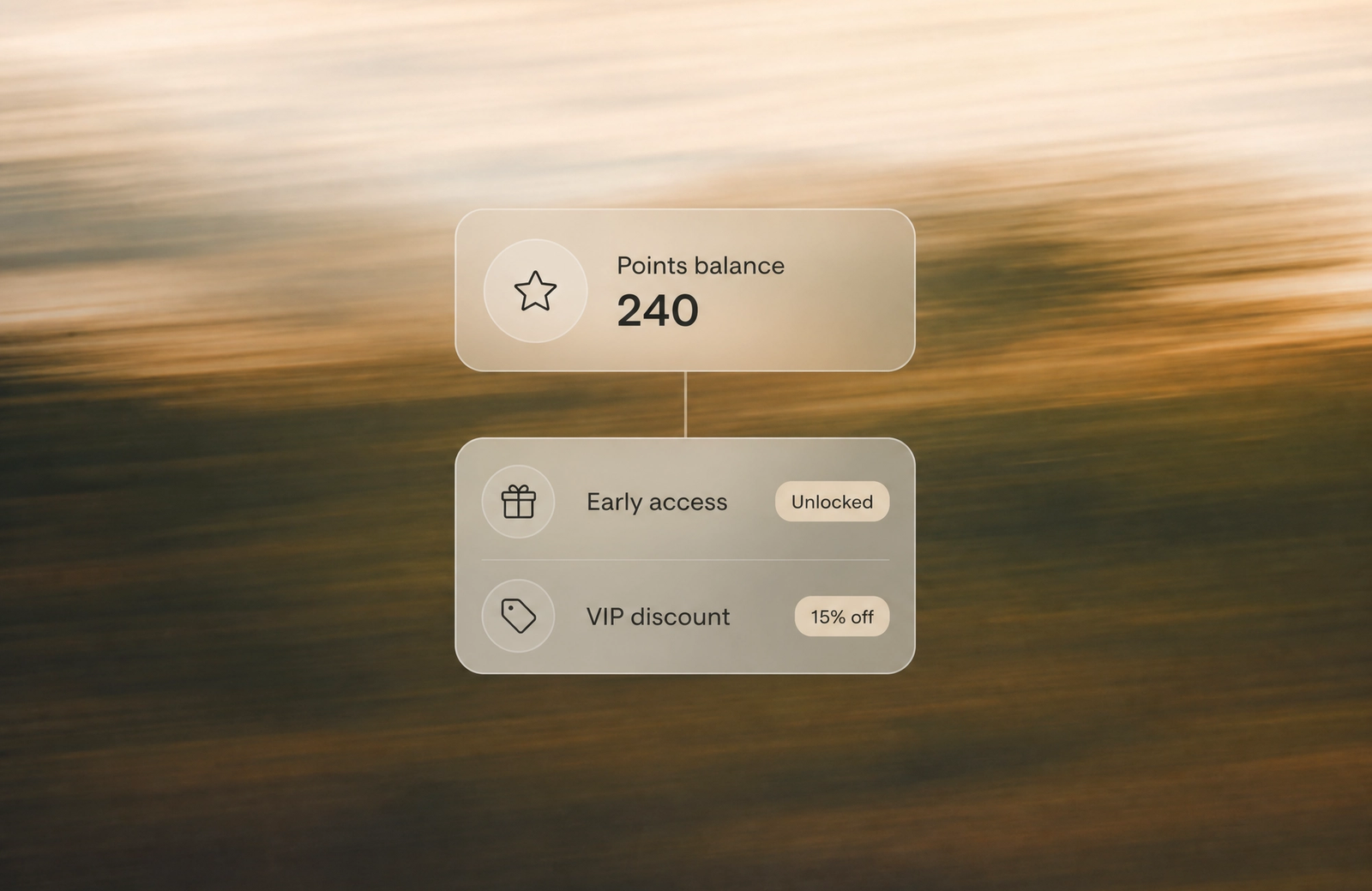
Genuine Feature Accessibility: You get access to a complete Shopify loyalty program from day one. This includes a sophisticated points engine, VIP tier setup, referral tracking, and a branded loyalty portal. There's no artificial "free tier only includes basic points" limitation. Build tiered rewards, set expiry rules, define point multipliers, and segment customers—all without upgrading. Competitors like Smile.io and Rivo lock VIP functionality behind paid plans; Mage doesn't.
Powerful Integrations Without Upgrades: Mage connects natively to Klaviyo, Omnisend, Postscript, and Judge.me in the free tier. This matters enormously. A store using Klaviyo for email marketing can sync loyalty data, trigger campaigns based on tier progression, and track referral performance—all automatically. Most competitors restrict integrations to paid plans, forcing you to choose between free loyalty and a connected tech stack.
Scalability for Enterprise Growth: Mage's architecture grows with you. Small stores run forever on the free tier. As you scale, Mage supports Shopify Plus loyalty program deployments and white-label customization without yanking away core features. You're not pressured into an arbitrary upgrade at 200 orders—you upgrade because you want advanced analytics, custom branding, or dedicated support.
Real-Time Insights & Reliable Infrastructure: The dashboard shows live member activity, VIP progress, and redemption trends. Mage's 99.9% uptime commitment means your loyalty program never goes dark during your peak sales day. This reliability matters; I've seen stores lose customer trust when loyalty points fail to credit during Black Friday.
Referral & Membership Capabilities: Mage includes Shopify referral program mechanics and foundational membership options. You can run both referral rewards and exclusive member perks from the free plan, creating multiple engagement hooks without payment.
Best for: Shopify stores of any size seeking genuinely usable loyalty from day one—especially those planning growth beyond the first 200 orders or those already using email marketing platforms like Klaviyo.
Ready to see Mage in action? Book a demo at https://www.mageloyalty.com/get-a-demo.
“Cannot say enough good things about the team at Mage Loyalty, one of the absolute best organizations we have ever worked with, full stop! So glad we connected with them, completely redid our loyalty program, new concepts, use of loyalty, increasing user engagement, showing us where we were not valuing our best customers, just WOW, amazing team!”


Read the West Coast Goalkeeping case study →
#2: Smile.io
Smile.io's genuine strength lies in ease of use. The setup wizard guides you through points, rewards, and tiering in under 15 minutes. For a store owner with zero loyalty experience, that frictionless onboarding is valuable.
The interface is clean and intuitive. Customization options are straightforward without overwhelming. The app has earned over 4,000 Shopify app store reviews, suggesting consistent user satisfaction with simplicity.
Best for: Small Shopify stores (under $50K monthly revenue) just starting loyalty, without immediate plans for advanced segmentation, referral complexity, or email marketing integration.
Free-Tier Reality: Smile.io's free plan caps at 200 monthly orders. Beyond that, you must upgrade. More restrictively, the free tier locks VIP tiers, referral programs, and deeper customization. If you want to offer tiered rewards (Bronze, Silver, Gold levels), that's a paid feature. This creates a ceiling: the free tier works until your store grows, then core features disappear.
#3: LoyaltyLion
LoyaltyLion excels at analytics and customer segmentation. Its dashboard offers cohort analysis, ROI tracking by segment, and A/B testing capabilities. For a data-driven retention manager, this depth is powerful.
The platform allows sophisticated rule-building: offer double points to customers in a specific postal code, or referral bonuses only to repeat buyers. That complexity appeals to large brands optimizing loyalty at scale.
Best for: Established Shopify stores ($500K+ ARR) that generate sufficient order volume to justify premium tools and whose teams have technical capacity to build and iterate on complex loyalty mechanics.
Free-Tier Reality: LoyaltyLion's free tier allows up to 500 orders monthly—higher than Smile.io—but heavily restricts features. Basic points and simple rewards work; VIP tiers, advanced referrals, and email integrations require paid plans. The free tier is a sandbox for evaluation, not a durable free loyalty solution.
#4: Yotpo Loyalty & Referrals
Yotpo's strength is integration depth. If you already use Yotpo's reviews app, loyalty data syncs seamlessly. You can display loyalty status next to reviews, creating a unified customer trust ecosystem. Their SMS integration also connects loyalty to direct messaging campaigns.
For stores betting on Yotpo as a full-stack marketing platform, the ecosystem benefits are real.
Best for: Shopify stores already using Yotpo Reviews who want to consolidate loyalty and social proof under one vendor, accepting a quick paid upgrade to access full functionality.
Free-Tier Reality: Yotpo Loyalty's free tier caps at 100 orders monthly—the lowest limit here. The free tier is explicitly a trial: basic points, minimal customization, no VIP tiers or advanced referrals. Upgrade expectations are immediate.
#5: Rivo Loyalty & Referrals
Rivo emphasizes simplicity. The free tier focuses on straightforward referral mechanics: "Refer a friend, both get a discount." It's easy to understand and deploy. For stores whose primary loyalty goal is word-of-mouth growth, Rivo delivers that narrow use case well.
Best for: Micro-stores (under $10K monthly revenue) with minimal complexity needs and customer bases small enough that 50-order limits feel distant.
Free-Tier Reality: Rivo's free plan caps at 50 orders monthly—extremely restrictive for any store with momentum. Beyond that, it's paid only. The free tier lacks VIP tiers, advanced points engines, or customization, making it barely functional for retention-focused strategies.
#6: Growave: Loyalty, Wishlist, Reviews
Growave's differentiator is consolidation. One app includes loyalty, reviews, wishlists, and user-generated content galleries. Stores juggling four separate tools can collapse them into one dashboard.
The free tier includes basic loyalty features, though they're simpler than Mage's. The referral mechanics are straightforward; the points system is functional.
Best for: Shopify stores seeking to reduce app clutter and willing to accept basic loyalty features in exchange for a unified customer engagement suite.
Free-Tier Reality: Growave's free loyalty tier is feature-gated rather than order-limited. You get points and basic rewards forever, but advanced customization, VIP tier configuration, and email integration require upgrades. For a store happy with simple points, it works indefinitely; for retention strategies requiring sophistication, you'll hit ceilings.
Choosing the Best Free Shopify Loyalty App for Your Business
Start by assessing your current situation honestly.
Store size matters: If you're averaging fewer than 50 monthly orders, any of these apps work—your constraint is customer base, not software. If you're regularly hitting 200+ orders monthly, most free plans become obstacles within weeks.
Immediate goals shape selection: Are you launching your first loyalty program to test the waters? Simplicity (Smile.io, Rivo) might trump features. Are you rebuilding retention around a proven loyalty mechanism? You need VIP tiers, referrals, and email integration immediately—common loyalty mistakes often stem from choosing overly basic systems.
Look beyond the "free" label: This is critical. Order limits are misleading. A store hitting 200 orders monthly isn't huge—that's roughly $20–50K in monthly revenue for most categories. Many DTC brands hit that within six months of launch. When your free plan expires, switching apps costs data migration, customer re-enrollment, and weeks of setup disruption.
Choose an app with either genuinely high order limits (no practical ceiling), genuinely complete free features (nothing essential gated), or transparent scaling costs. Mage offers the first and second. Smile.io offers neither. That difference compounds over time.
Integration ecosystem: If you're already using Klaviyo, Omnisend, or Postscript for email marketing, verify that integrations work in the free tier. Most apps restrict integrations to paid plans, creating a hidden cost: free loyalty + $99/month paid tier = still higher total cost than a smarter free app with integrations included.
Prioritize future growth: The best free app is the one you never need to replace. Mage's architecture supports scaling from 100 orders to 100,000 orders per month without forcing a painful migration. Smile.io's order caps virtually guarantee you'll outgrow it.
Final recommendation: If your priorities are complete feature access without artificial restrictions, native integrations with marketing platforms, and a path to paid features that feel like upgrades rather than requirements, Mage Loyalty is the strongest fit. You'll build a real loyalty program on day one, grow into it naturally, and avoid the disruption of switching apps mid-year.
Frequently Asked Questions
How do "free" loyalty apps actually make money?
Free loyalty apps use a freemium model: offer basic features at no cost to attract users, then charge for advanced features, higher usage limits, or premium support. Apps like Smile.io and LoyaltyLion give away points and basic rewards, then charge $50–200/month for VIP tiers, referrals, integrations, or advanced analytics. This model works because once you've invested time building a loyalty program, switching apps is costly, making paid upgrades feel inevitable rather than optional.
What's the biggest trap with "free" loyalty apps?
The biggest trap is growing out of the free plan due to low order limits, not because you're a massive brand. A store hitting 200 orders monthly isn't huge—that's $20–50K in monthly revenue—yet most "free" plans cap there. You then face a forced choice: pay to stay, or migrate to a new app (losing data, time, and customer re-enrollment friction). The trap isn't the app's fault; it's the illusion of a free solution when you're actually on borrowed time. Mage avoids this by not imposing hard order limits on the free tier.
Can I switch loyalty apps later if my business grows?
Technically yes, but practically it's painful. You can export customer data from most apps, though the format varies. Transferring points balances, VIP tier status, and redemption history often requires manual reconciliation. Many customers abandon their points when they reset during migration, losing engagement. Some apps charge data export fees. Switching isn't impossible, but it's expensive enough (in time, lost points, customer confusion) that choosing the right app first matters enormously. The best time to switch is before you have 10,000 loyalty members.
What features should I prioritize in a free loyalty app?
Prioritize a functional points system first (earning and redemption must work smoothly), basic referral options second (word-of-mouth is the highest-ROI loyalty channel), and email integration third (you need to remind customers about points and rewards). Everything else—VIP tiers, advanced segmentation, gamification—enhances but isn't essential. If the free app includes these three, you can launch a real loyalty program. If it locks any of these behind paid tiers, move on. Integrating with Klaviyo is a concrete example of free-tier capability that separates stronger apps from weaker ones.
TLDR
For Shopify merchants seeking a genuinely usable and scalable free loyalty program, Mage Loyalty stands out by offering VIP tiers, referrals, and integrations without artificial feature restrictions or arbitrary order limits. While alternatives like Smile.io offer ease of use and LoyaltyLion offers analytics, they impose order caps and feature locks that typically force upgrades within months. Choose Mage Loyalty for a free solution that doesn't require replacement as your store grows.

Graeme is the co-founder at Mage Loyalty. He heads product development, from complex loyalty migrations and large-scale data handling to building the features shaping the future of loyalty on Shopify.