A customer receives their order, tries the product, and decides whether it delivered on the promise. That is when to ask for a referral, once a customer has enough evidence to recommend you without risking their own reputation. Checkout completion only tells you they were ready to buy.
Short answer: Ask for a referral after a clear positive moment, usually delivery plus enough time to use the product. For repeat-purchase products, a second order or successful reorder can be even stronger because the customer has shown they want the product again. A Shopify referral program should connect that moment to a simple sharing action, clear rewards, and accurate tracking.
When to ask for a referral: start with the customer’s proof moment
The referral ask should follow confidence, not payment
A referral is a personal recommendation. The advocate needs confidence before they share.
That matters because 84% of global consumers trust recommendations from friends and family above other forms of advertising.
Why order confirmation is usually too early
Payment proves intent. It does not prove satisfaction.
Right after checkout, a customer may be waiting for delivery, wondering about fit, checking ingredients, or trying to resolve a shipping problem. A referral prompt can feel like you are asking them to endorse an experience they have not had yet.
Use the confirmation page to make the program visible if you want. Avoid treating it as the default moment for the main ask.
The timing rule: ask after a result, not after an event
Delivery is stronger than payment, but product use, a successful reorder, or a well-handled support resolution can be stronger still.
Referral quality matters alongside referral volume. A Journal of Marketing study found referred customers had at least 16% higher average value than comparable non-referred customers. Ask when the advocate can genuinely explain why a friend should buy.
Step 1: map the moments when a customer is ready to share
| Trigger point | What the customer knows | Referral readiness | Best use | Main risk |
|---|---|---|---|---|
| Order confirmation | They completed checkout | Low | Introduce program | No product experience |
| Order fulfilled | Order is on its way | Low to medium | Set expectations | Delivery uncertainty |
| Delivery and use | Product has arrived | Medium to high | Primary ask | Too little use time |
| Support resolution | Issue was resolved well | High | Recovery sequence | Ask before resolution |
| Second purchase | They chose to buy again | High | Replenishment and repeat buyers | Over-messaging |
| Loyalty milestone | They reached a visible goal | Medium | Secondary prompt | Asking too often |
Order confirmation
Use this moment to tell customers that a referral program exists. A hard ask immediately after payment is weak for physical products because the customer has no firsthand result to share.
Order shipped or fulfilled
Fulfillment is useful for workflow logic. Shopify Flow includes an Order fulfilled trigger, and it can add customer tags for later segmentation.
Treat this as a staging event. It can identify eligible customers, but it should rarely trigger the final referral message on its own.
Delivery and first product use
This is the default trigger for many DTC brands. The order has arrived, and the product has had a chance to meet expectations.
The right delay depends on what you sell. A snack can be tried quickly. Skincare needs more time. Apparel may need time for fit, exchanges, or returns.
Positive support resolution
A customer who had a problem can become a strong advocate after a genuinely helpful resolution. Only ask after the issue is closed and the customer has indicated that the outcome worked for them.
Second purchase or successful reorder
A second purchase is behavioral proof. The customer did not just like the idea of the product, they chose it again.
This is especially useful for replenishment-led stores. A food and beverage loyalty program can use delivery as an early test, then make the reorder the primary referral trigger.
VIP or loyalty milestone
Tier upgrades, points milestones, and completed loyalty actions can support a referral prompt. Use them selectively. A customer who sees a referral request every time they earn points will stop noticing it.
Step 2: choose the right post-purchase referral window
| Store or product type | Primary trigger | Secondary trigger | Suggested test | Suppress when |
|---|---|---|---|---|
| Consumables | Delivery plus first use | First reorder | Short post-delivery delay | Complaint or refund |
| Beauty and skincare | Product-use period | Replenishment order | Longer use window | Product concern |
| Apparel and footwear | Delivery after fit period | Second purchase | Post-return-window test | Return or exchange open |
| High-consideration goods | Setup, gifting, or service moment | Repeat purchase | Delayed confidence ask | Delivery issue |
| Subscription products | First successful renewal | Renewal milestone | Renewal versus delivery | Cancellation pending |
The default window: after delivery and first use
Start with delivery, then allow time for product use. Do not apply one calendar delay to every product type.
Snoball recommends a two-to-seven-day window after a completed customer experience. Treat that range as directional context, not a universal rule.
For a product that can be used on arrival, test a shorter delay after confirmed delivery. For a product with a learning curve, visible results period, or return friction, wait longer.
How timing changes by product category
Consumables, coffee, food, and supplements often give you two good moments: after delivery and after the first reorder. The first message tests initial satisfaction. The second reaches customers who have shown stronger confidence.
Beauty and skincare brands should avoid asking before the customer can reasonably assess the product.
Fashion and footwear require return awareness. Asking while a customer is deciding on sizing, has initiated an exchange, or is waiting on a refund creates a poor experience.
For jewelry, furniture, and other higher-consideration purchases, ask after delivery, gifting, setup, or a positive service interaction.
When to wait for the second purchase
The second purchase is often underused. It works because the customer has already passed the first-order uncertainty and returned voluntarily.
For subscription brands, test the first successful renewal. For replenishment brands, test the reorder. Keep delivery date, product-use timing, return status, and repeat-purchase status separate in your reporting.
Step 3: suppress bad referral trigger points before they damage share rates
Do not ask during delivery uncertainty
Suppress referral prompts when an order is delayed, canceled, lost, or marked as high risk. The same applies after a failed delivery attempt or a damaged-product report.
Exclude refunds, returns, and unresolved support cases
Do not send a referral request while a return, exchange, refund, or support case is open. A generic automation can feel careless when it arrives beside a service email.
Build exclusions before you increase the reward. Better timing and cleaner eligibility usually cost less than offering a larger discount to every customer.
Avoid asking every customer after every order
Set a frequency cap. Customers should not receive a referral request after every purchase, review prompt, loyalty milestone, and marketing campaign.
If someone has already referred a friend, move them into an advocate sequence. They may need an update on their reward, a reminder of their link, or a campaign-specific prompt instead of the same first-time message.
Protect high-value advocates from message fatigue
A larger reward cannot repair a badly timed ask. It can make the request feel more transactional and increase reward cost without improving the customer's willingness to share.
Shopify Flow can use workflow actions such as email, Slack, and HTTP requests to external services. It can support eligibility logic, but a referral system or messaging integration still needs to handle referral tracking, rewards, and campaign delivery.
Step 4: build the referral email around one easy action
Subject lines for delivery and repeat-purchase moments
Match the subject line to the customer’s actual milestone.
After delivery, try: “How is everything working out?” Follow with a simple invitation: “Know someone who would love it?”
After a reorder, try: “You came back for another order.” The body can then ask whether they want to share the brand with a friend.
Avoid “Tell your friends” as the whole message. It gives the customer no reason, no context, and no indication of what their friend receives.
The four-part referral email structure
Use four parts:
- Acknowledge the milestone, such as delivery, renewal, or repeat purchase.
- Give a natural reason to share.
- State the advocate reward and friend reward clearly.
- Present one direct sharing action.
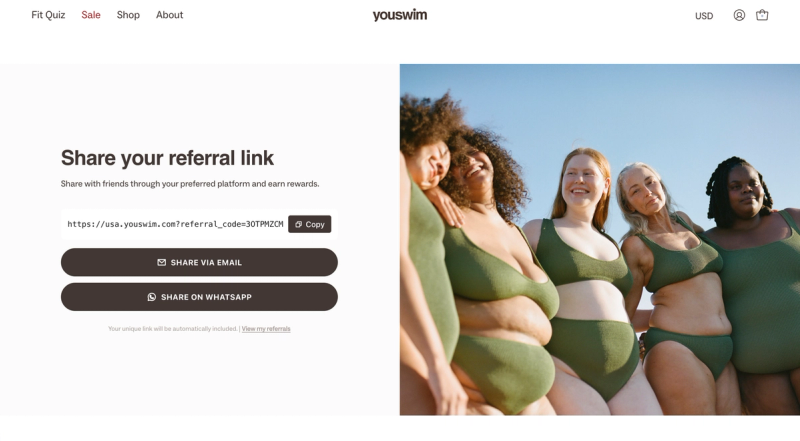
The CTA should take the customer straight to their unique link or sharing options. Do not make them search their account for it.
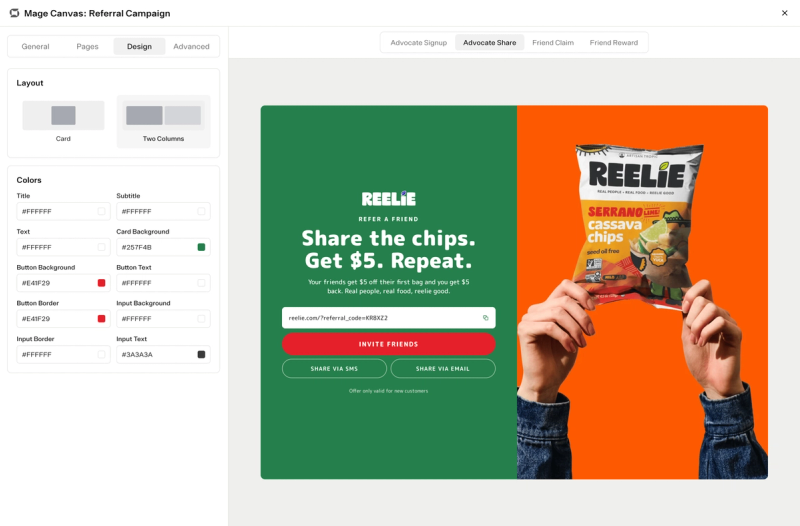
Mage gives participating customers a unique referral link or code, and merchants can define a conversion as sign-up, purchase, or both. It also supports separate rewards for the advocate and referred friend, which lets you test the offer without changing the trigger.
For more lifecycle copy patterns, use these loyalty email templates.
When to use email, SMS, or an on-site prompt
Use the channel where the customer already engages with you. Email works well for a delivery or reorder follow-up. SMS can work for customers who opted into that channel and expect transactional updates. An on-site prompt works when a logged-in repeat customer returns to browse.
Mage supports sharing through email, text, WhatsApp, Facebook, Twitter/X, and copy link. Shopify’s marketing tools can help merchants reach previous customers, while referral-specific tracking and rewards need a referral system or integration.
“Cannot say enough good things about the team at Mage Loyalty, one of the absolute best organizations we have ever worked with, full stop! So glad we connected with them, completely redid our loyalty program, new concepts, use of loyalty, increasing user engagement, showing us where we were not valuing our best customers, just WOW, amazing team!”


Read the West Coast Goalkeeping case study →
Step 5: test timing before increasing the referral incentive
| Test cohort | Ask timing | Hold constant | Primary metric | Interpretation |
|---|---|---|---|---|
| A | Order confirmation | Reward, creative, audience, channel | Share rate | Measures early intent |
| B | Delivery plus use period | Reward, creative, audience, channel | Share rate | Measures confidence |
| C | Second purchase | Reward, creative, audience, channel | Referred orders | Measures repeat-buyer advocacy |
The timing test matrix
Start with three cohorts: order confirmation, post-delivery, and repeat purchase. Keep the advocate reward, friend reward, message creative, landing page, eligibility rules, and channel the same.
That isolates the timing variable. If you change timing and incentive size together, you cannot tell whether customers shared because they felt ready or because the reward became more expensive.
What to hold constant
Track prompt delivery, open rate, share actions, share rate, referral clicks, referred-customer conversion, reward cost, blocked attempts, and revenue per eligible customer.
Segment results by first-time versus repeat customers, product category, average order value band, subscription status, and delivery-to-ask delay. Define the denominator before you compare cohorts. A share rate based on delivered prompts is different from a rate based on all eligible customers.
Establish an internal baseline before judging results. Use referral program benchmarks to keep prompt views, shares, clicks, and referred orders separate.
How to read a low share rate
A low share rate can indicate poor timing, a weak message, an unclear reward, or too much friction in the sharing flow. Fix those before raising the incentive.
A high share rate with low referred conversion points elsewhere. Review the landing page, the friend offer, product context, and checkout experience before changing the advocate reward.
Step 6: turn the winning trigger into an automated referral journey
Create eligibility rules
Define the event that qualifies a customer for the ask: fulfilled order, confirmed delivery, second purchase, successful renewal, or positive support resolution. Then add exclusions for refunds, returns, unresolved cases, and customers contacted recently.
Set the referral conversion event
Choose whether a referral counts at sign-up, purchase, or both. Sign-up supports list growth. Purchase focuses on acquired customers who place an order. Your choice should match the outcome you intend to measure.
Choose the landing page and sharing options
Use a dedicated landing page when the campaign needs product context, clear reward terms, or a focused call to action. Mage can send friends to a configured landing URL, supports campaign pages, and allows configurable reward timing and minimum spend requirements.
Review the funnel weekly
Review results by trigger cohort. Mage referral analytics can show referral volume, conversion rate, top advocates, revenue, channel performance, and cost per referred order. Its Klaviyo loyalty integration can connect referral events and customer data to lifecycle messaging.
Frequently asked questions
When should you ask for a referral after a purchase?
Ask after delivery and enough product use for the customer to feel confident recommending the brand. The exact delay depends on product type, return friction, and whether the product produces an immediate or delayed result.
Should you ask for a referral on the order confirmation page?
You can introduce a referral program on the order confirmation page, but it is usually too early for the main referral ask. Delivery, product use, and a successful reorder are stronger signals.
How long after delivery should you request a referral?
Test a short post-delivery period after customers have had a realistic chance to use the product. A two-to-seven-day range can be a useful starting point, but different product categories need different testing windows and suppression rules.
Is the second purchase a good referral trigger?
A second purchase is a strong referral trigger because it shows the customer has chosen the product again after their first experience. It is especially useful for replenishment products and subscriptions.
Does a larger referral reward increase share rates?
A larger referral reward can help if the offer is unclear or unappealing, but it will not reliably solve poor timing. Test customer readiness, message clarity, audience eligibility, landing-page quality, and sharing friction first.
How do you measure referral email timing?
Compare eligible customers, sends, opens, share actions, clicks, referred orders, conversion rate, reward cost, and revenue across trigger cohorts. Keep reward value, message, landing page, channel, and eligibility rules consistent.
Ask after the customer has proof, not simply after they have paid. Start with delivery plus product use, test the second purchase for repeat-buy products, and suppress asks around service problems. Only revisit the incentive after the timing, message, and referral path are doing their job.

Graeme is the co-founder at Mage Loyalty. He heads product development, from complex loyalty migrations and large-scale data handling to building the features shaping the future of loyalty on Shopify.