Can experiential rewards examples give customers a reason to remember your brand after the order arrives? The strongest experiential rewards examples trade a percentage-off code for access, attention, expertise, participation, or a personal service.
Short answer: Experiential rewards give loyal customers something memorable, personal, scarce, or meaningful instead of only money off. Founder sessions, expert training, early access, personalization, private events, and customer-selected charity donations can work when each has a points cost, fulfilment owner, capacity limit, and clear terms.
What are experiential loyalty rewards?
| Reward type | Example | Customer value | Merchant cost driver | Best use |
|---|---|---|---|---|
| Discount | Percentage off | Immediate savings | Margin | Simple repeat purchase incentive |
| Free product | Complimentary item | Product value | Inventory and shipping | Sampling or reward convenience |
| Store credit | Balance for a later order | Flexible future spend | Reward liability | Encouraging a return visit |
| Experiential reward | Founder consultation | Access and personal attention | Staff time and capacity | Status, community, differentiation |
How experiential rewards differ from discounts and free products
A discount changes the price. An experiential reward changes what the customer can access, learn, influence, or receive from the brand.
That could mean an early view of a collection, a product-fitting session, a maker workshop, or a place at a small event. “Money can’t buy” should describe scarcity or access, not imply zero cost.
A Journal of Retailing study involving four lab studies and two field studies found stronger word of mouth, loyalty, redemption, and spending outcomes for experiential rewards than material rewards. That is a reason to test them, not a guarantee that they will outperform a useful discount.
Why access, identity, and scarcity matter
Customers may value being recognised as a collector, regular, athlete, enthusiast, or early supporter. Access works when it is relevant to that identity and genuinely limited by capacity, inventory, or expertise.
Shopify includes exclusive events and early access among loyalty incentives. Customers should understand exactly what access they receive and what it does not guarantee.
When a custom reward is the better format
Use a custom reward when a discount code cannot deliver the promise. A consultation, styling session, event invite, hand-picked gift, or personalized shout-out needs a person or workflow behind it.
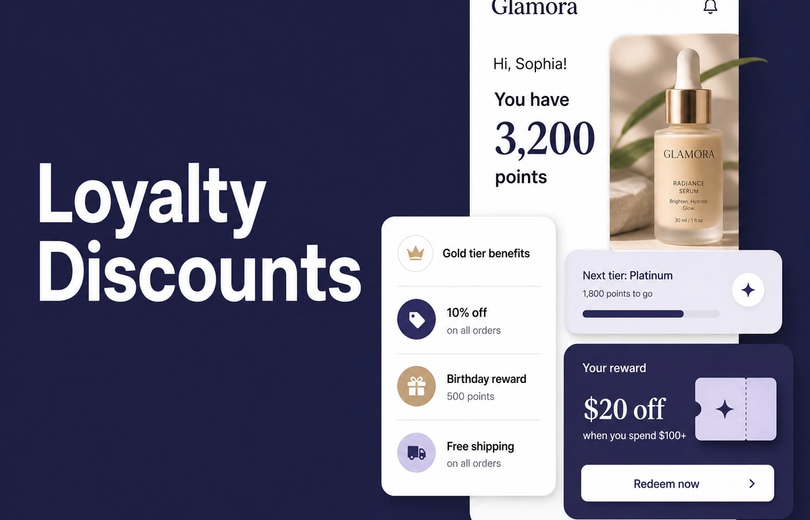
A broader Shopify loyalty program can keep discounts, free shipping, and free products available for simple redemption while reserving experiential rewards for customers seeking something more personal.
12 experiential rewards examples worth testing
| Experience | Best-fit brand or customer | Cost and capacity driver | Terms to define | Primary loyalty objective |
|---|---|---|---|---|
| Founder session | Premium, craft, founder-led brands | Calendar slots | Duration, format, cancellation | Connection |
| Expert training | Sports, wellness, technical products | Coach time | Safety, skill level, equipment | Education |
| Early access | Fashion, beauty, collectible products | Inventory allocation | Launch window, markets, stock | Status |
| Personalization | Jewelry, fashion, gifting | Labour and materials | Eligible products, turnaround | Perceived value |
| Production tour | Food, craft, maker brands | Staff and venue capacity | Location, safety, schedule | Brand affinity |
| Workshop | Education-led communities | Host time and attendance | Recording, materials, time zone | Community |
| Private consultation | High-AOV purchases | Advisor availability | Booking, inputs, revisions | Purchase confidence |
| Charity donation | Mission-led brands | Donation funding and administration | Partner, timing, geography | Purpose |
| Member event | Local or community brands | Venue and guest capacity | Ticket scope, no-shows | Belonging |
| Recognition reward | Community-led brands | Editorial and approval time | Consent, format, timing | Advocacy |
| Personal curation | Fashion, beauty, gifting | Staff time | Customer inputs, turnaround | Relevance |
| Surprise upgrade | Brands with flexible operations | Packing and inventory | Availability, substitutions | Delight |
1. A private session with the founder or maker
Offer a scheduled call, studio visit, or product discussion with the founder or maker. This suits high-AOV, infrequent purchases, including a jewelry loyalty program, but needs fixed calendar slots, a booking deadline, and a rescheduling policy.
2. Training with an athlete, coach, or product expert
A group clinic, virtual Q&A, or product-care lesson can help customers get more value from what they bought. Start with a virtual group session to test interest before committing to venue, travel, equipment, or insurance costs.
3. Early access to a product, collection, or limited drop
Give customers a defined window to shop before the public launch. Shopify cites early access and exclusive benefits as loyalty incentives, including published examples involving Ouai and Manscaped; define stock limits, purchase limits, markets, and whether access is transferable.
4. Free personalization, engraving, embroidery, or fitting
Offer a service added to an eligible product, such as engraving, embroidery, fitting, or customization. This can work well in a fashion loyalty program, but terms should cover eligible products, turnaround, acceptable content, proofing, and returns.
5. A behind-the-scenes visit or production tour
Invite customers to a studio, kitchen, farm, warehouse, or product-development session. Keep the first test local and small, with clear dates, safety information, accessibility details, photography rules, and weather contingencies.
6. A small-group workshop or masterclass
Turn existing expertise into a live class on product care, styling, cooking, wellness, or a creative hobby. Set an attendance cap, time zone, materials list, recording policy, and no-show rules before customers redeem.
7. A private appointment or virtual consultation
Offer a styling, skincare, fit, care, gift-planning, or product-selection appointment. A short virtual format is easier to schedule and measure, and should define appointment length, customer inputs, response time, and revision limits.
8. Customer-selected charity donations
Let customers redeem points for the brand to make a defined donation to an eligible nonprofit or cause. Start with one established partner and state the donation amount or calculation, timing, geography, and what happens if the organization cannot accept the donation.
9. Invitations to member-only events or community gatherings
Offer entry to a pop-up, tasting, launch gathering, community day, or virtual event. Community-driven programs can centre exclusive groups, events, or content, according to Shopify’s loyalty examples; clarify whether travel, food, companion tickets, or products are included.
10. Recognition and participation rewards
Reward customers with a community spotlight, handwritten note, product-feedback session, or chance to share ideas. Public recognition should always be optional, with customer consent, content rights, timing, and format defined in advance.
11. A personalized product curation or gift-planning session
Provide a product shortlist, wardrobe edit, routine plan, or gift recommendation based on customer needs. In a Deloitte study, 73% of consumers said personalized experiences or rewards were important, while 45% of brands offered them; use a brief questionnaire and a fixed response format to keep delivery manageable.
12. A surprise upgrade or moment of personal attention
Offer priority packing, a founder note, hand-picked sample, or tailored bundle suggestion. Reserve it for a limited segment first and define availability, substitutions, and whether it applies to a current or future order.
How to choose non discount reward ideas that customers will actually use
Match the reward to purchase frequency and order value
High-AOV, low-frequency categories suit consultations, private appointments, personalization, anniversary recognition, and early access. Replenishment brands can test education, sampling, workshops, and community events, while sports and wellness brands can test training and expert Q&As.
Reward identity, access, progress, or purpose
Ask what the customer is trying to feel or accomplish. A collector may want first access, a gift buyer may want help choosing, and a committed community member may value an invitation or workshop.
The useful reward fits the reason customers buy from you, not the most elaborate idea on a brainstorming list. For more positioning ideas, see loyalty rewards that do not feel like discounts.
Offer choice without creating an unmanageable catalogue
Keep a few low-friction options broadly available, then add scarce experiences for VIP customers. Ask only for information needed to fulfil the reward.
How to structure a custom rewards loyalty program
| Field | What to decide | Example question |
|---|---|---|
| Reward promise | Customer outcome and delivery format | What exactly will the customer receive? |
| Points cost | Spend required to redeem | What customer spend does this represent? |
| Owner | Person accountable for fulfilment | Who responds after redemption? |
| Capacity | Available sessions or places | How many can we deliver this month? |
| Confirmation | Next step and response time | When will the customer hear from us? |
| Fallback | Substitute if delivery fails | What happens if the host is unavailable? |
Define the reward promise
Write one sentence that states what the customer receives, who delivers it, how it happens, and when. “A private virtual styling session with our team, arranged within two working days” is clearer than “exclusive styling access.”
Set a points cost using real effort and value
Include staff time, partner costs, materials, shipping, venue costs, payment fees, and opportunity cost. Then calculate your loyalty reward rate so the points cost represents a deliberate level of customer spend.
Assign an owner and fulfilment workflow
One person or team needs to own each redemption, from notification through customer contact, delivery, completion, and exceptions.
Mage Custom Rewards deduct points when redeemed but do not generate discount codes. The merchant fulfils the reward outside Mage, can receive email or webhook notifications, and can mark a redemption as used or cancel it with or without refunding points. When capacity is limited, custom rewards can be assigned to a VIP tier.
Add capacity limits and a fallback
Set a fixed number of monthly redemptions, event seats, or sessions per quarter. For scarce rewards, use VIP eligibility, a waitlist, a monthly release, or a first-come booking window.
The confirmation message should explain the next step and response time. Define an equivalent alternative before launch if a founder, venue, partner, or product becomes unavailable.
“I looked into so many different integrations for loyalty and referrals for our Shopify Store, but no one impressed me more than Mage on human connection, customer service, and value.”


Read the Reelie case study →
The fulfilment and terms checklist for experiential rewards
Eligibility and availability
State who can redeem, what information they must provide, the redemption window, booking deadline, geographic limits, age restrictions, and whether the reward can be transferred. Separate the point redemption date from the event or service delivery date.
Booking, cancellation, and no-show rules
Explain booking, rescheduling, no-shows, late arrivals, weather disruption, and partner cancellation in plain language. Customers should know what happens if delivery becomes impossible.
Geography, accessibility, and substitutions
Say whether travel, accommodation, equipment, taxes, shipping, materials, or companion attendance are included. Provide practical accessibility information early and specify the substitute benefit if the named host, venue, item, or charity becomes unavailable.
Donation and partner terms
For charity rewards, name the organization or selection method, donation amount or calculation, timing, geographic limits, and confirmation process. For personalization, cover proofing, acceptable content, turnaround, and returns.
Gift cards and store credit can serve as incentives, but they are transactional tools rather than experiential rewards. Shopify documents gift cards and store credit separately. Have appropriate advisers review consumer, promotional, tax, safety, accessibility, and charitable requirements for your markets. Clear loyalty program terms prevent avoidable disputes.
How to measure whether an experiential reward works
Redemption and fulfilment rate
Track eligible members, reward views, redemptions, fulfilled redemptions, time to fulfilment, cancellations, no-shows, and support contacts. A reward that creates unresolved fulfilment work is not ready to scale.
Incremental repeat purchase and AOV
Compare redeemers with a suitable eligible group that did not redeem. Review repeat purchase rate, time to next purchase, average order value, contribution margin, and referral activity. Simple before-and-after changes do not prove the reward caused the result.
Referral, review, and community effects
Define the intended outcome before launch. A founder session may be designed to generate feedback, advocacy, or customer stories rather than immediate revenue, so track attendance, survey feedback, referrals, or opt-in participation.
Customer feedback and operational cost
Track staff time, partner cost, materials, shipping, and opportunity cost per fulfilled reward. Run a limited pilot before making it permanent. Shopify identifies ROI, AOV, and CLV as common loyalty-program metrics.
Key takeaways for building unique loyalty perks examples that scale
Start with an experience your team can deliver repeatedly, not the biggest idea on the list. Give every custom reward a points cost, fulfilment owner, capacity rule, confirmation message, and fallback.
Keep discounts and free products for convenient redemption, then use experiential rewards where memory, status, expertise, or community can add something a code cannot. Explore how a Shopify loyalty program can support both accessible rewards and merchant-fulfilled experiences.
FAQ
What are experiential rewards?
Experiential rewards are loyalty benefits based on access, attention, expertise, participation, recognition, or memorable activities rather than only price reductions or physical products. They can include consultations, workshops, early access, events, personalization, or customer-selected donations.
What are some experiential rewards examples?
Examples include founder sessions, expert training, early product access, engraving, workshops, behind-the-scenes visits, private appointments, member events, product curation, and charity donations. Each needs availability, eligibility, fulfilment steps, cancellation rules, and a capacity limit.
Are experiential rewards better than discounts?
Experiential rewards are better when a customer values access, personal attention, learning, or status more than immediate savings. Discounts remain useful because they are simple, familiar, and easy to fulfil, so a strong catalogue can offer both.
How do custom rewards work in a loyalty program?
Customers earn points, redeem a specific benefit, receive fulfilment instructions, and wait for the merchant to deliver it. In Mage, Custom Rewards are merchant-fulfilled, deduct points at redemption, do not generate discount codes, and can be marked used or cancelled after review.
How do you price an experiential loyalty reward?
Estimate staff time, variable costs, partner or venue costs, materials, shipping, and expected redemption volume, then convert that value into points through your earning rules. Check the customer spend represented by the points cost before publishing the reward.
What terms should experiential rewards include?
Include eligibility, availability, geography, expiry, booking deadlines, cancellation rules, no-shows, transferability, travel or material inclusions, accessibility details, and substitutions. Donation rewards should also state the nonprofit, amount or calculation, timing, restrictions, and confirmation process.

Kris is the co-founder of Mage Loyalty. I spend most days talking to merchants, and making sure our customers get real results. If you run a Shopify store or Agency we should chat!