Third purchase loyalty habit is the pattern a customer may be developing once they have chosen to buy from you three times. It matters because the move from order two to order three deserves its own retention strategy, measured against the customer’s buying cycle rather than treated as a generic repeat-rate number.
Short answer: A third purchase does not prove loyalty, but it is a useful milestone because the customer has moved beyond one-time trial and repeated the decision twice. Use timing, relevance, visible progress, and well-designed rewards to make the next purchase feel natural.
What third purchase loyalty habit actually means
The three stages of early customer behavior
A first order is a trial. The customer is testing the product, delivery experience, packaging, value, and whether your brand delivered what the product page promised.
The second order is validation. They had time to use the product and could have bought elsewhere, yet they returned.
The third order is repetition. It gives you enough behavior to ask a more useful question: is this customer beginning to buy on a repeatable rhythm?
Trial, validation, and repetition are different signals
Purchase count is a behavioral signal, not a complete measure of brand preference. A customer may place three orders because they are buying gifts, responding to a limited campaign, managing a subscription, or filling a temporary need.
Look at time between orders, products bought, discount use, returns, and engagement with your account or loyalty experience.
Why the number three is a useful milestone, not a magic threshold
Three orders are useful because the customer has made the buying decision twice after the first trial. Use the milestone to identify customers worth retaining differently.
Myth: the third purchase automatically creates loyalty
The third order is an inflection point, not a guarantee
There is no universal threshold where a third order turns every customer into a loyal customer. The third order is valuable because it creates a practical point for analysis and intervention.
A customer with three purchases may warrant a different retention approach because they have demonstrated repeated buying behavior. Test that hypothesis against your own cohorts. Their next purchase still depends on relevance, timing, price, product availability, and competing priorities.
Why category and buying cycle change the meaning of order three
For a replenishment brand, order three may arrive within weeks because the product is consumed regularly. A merchant building a food and beverage loyalty program should assess whether customers reorder at the expected consumption interval.
Fashion behaves differently. Seasonal drops, sizing, and changing collections can create irregular order patterns. A high-AOV jewelry customer may buy only once or twice a year, so a third order may take much longer and should be evaluated over a wider window.
When a third purchase can be misleading
Three orders during a steep discount period do not carry the same meaning as three full-price purchases across several months. The same applies to gift orders, wholesale purchases, refunds, and subscription renewals.
Separate those cases before making decisions. Otherwise, you may reward behavior that looks like retention in a dashboard but does not produce durable customer value.
How repeat purchase probability changes after each order
| Customer stage | What it signals | Recommended metric | Common mistake |
|---|---|---|---|
| First order | Initial trial | First-to-second purchase rate | Counting all customers as equally likely to return |
| Second order | Validation of the first experience | Second-to-third purchase rate | Using blended repeat rate as the denominator |
| Third or more orders | Possible repeat pattern | Purchase frequency and time to next order | Assuming three orders prove loyalty |
First-to-second purchase probability
First-to-second purchase rate is the percentage of first-time buyers who place another order within a defined observation window. If 1,000 new customers buy in January and 250 place a second order by the end of the window, the first-to-second rate is 25%.
This is the problem covered in the second-purchase problem. The customer needs evidence that the first purchase was worth repeating.
Second-to-third purchase probability
Second-to-third purchase rate uses a different denominator. It measures the percentage of customers with two orders who go on to place a third.
In the same hypothetical group, if 125 of the 250 second-order customers place a third order, the second-to-third rate is 50%. This is often the more useful transition rate because these customers have already shown that they will return at least once.
An RJMetrics study of 176 ecommerce retailers and 18 million customers found that customers who made a second purchase had a 54% chance of placing another purchase. Treat that as historical directional data, not a current benchmark for every Shopify store.
Conditional probability versus blended repeat rate
A blended repeat customer rate answers a broad question: how many customers have ever returned? It can hide where the journey breaks.
Conditional rates isolate each step. First-to-second tells you whether trial customers come back. Second-to-third tells you whether validated buyers continue.
Why timing matters as much as order count
A 30-day window may make sense for a consumable product. It can be meaningless for jewelry, furniture, or occasion-led fashion.
Shopify’s customer cohort analysis groups customers by first-order date and shows repeat purchase behavior over time, including retention rate, orders per customer, average order value, and periods since first purchase. Shopify’s customer reporting documentation is a useful starting point for setting category-appropriate windows.
Why the third purchase can become a loyalty inflection point
Repeated context reduces decision friction
A repeat customer already knows whether the product quality met expectations, how long delivery took, how returns work, and whether the brand feels reliable after payment.
That familiarity reduces the work required to make the next decision. Think of it as a path through a field. Each time a customer walks it, the route becomes easier to recognize and follow.
Familiarity turns a choice into a default
Habit is reinforced when the same cue produces the same action in a stable setting, such as running low on a product, preparing for a regular event, or shopping a seasonal collection.
A UCL summary of Lally and colleagues’ research reported an average of 66 days to reach automaticity, with substantial variation between people and behaviors. It was not an ecommerce study, and it does not mean three purchases create a habit.
Progress creates a reason to come back
Visible progress gives the next order a purpose. A points balance, a reward that is nearly available, or progress toward a VIP tier can make returning feel more concrete than a generic “shop again” message.
This is where the psychology behind loyalty programs that change behaviour matters. Show customers what they have earned, what they can do next, and why the next purchase is relevant now.
Habit is built by repetition plus a stable cue
Habit can make buying easier. Loyalty can include preference, trust, identity, advocacy, and willingness to choose your brand even when alternatives exist.
Track whether purchase intervals become more predictable, whether customers broaden into other categories, and whether they engage without requiring a discount every time.
How to measure third purchase retention in Shopify
| Metric | Definition | Useful comparison | Decision it supports |
|---|---|---|---|
| First-to-second rate | Customers with two orders divided by first-time customers | Acquisition channel and first product | Improve the initial post-purchase journey |
| Second-to-third rate | Customers with three orders divided by customers with two orders | Cohort and product category | Improve repeat behavior after validation |
| Median days to third order | Middle time between first and third order | Product replenishment cycle | Set campaign timing |
| Purchase frequency after order three | Orders per third-order customer over time | Reward type and discount use | Assess durable retention |
| Discount-adjusted third-order rate | Third-order conversion split by discount use | Full-price versus promoted cohorts | Protect contribution margin |
Build an order-count funnel
Start with three groups: customers with one order, customers with two orders, and customers with three or more orders. Shopify customer reports distinguish one-time customers from returning customers with two or more orders, which gives you a base for this analysis. Shopify’s customer reports guidance explains the available customer reporting views.
Track first-to-second conversion and second-to-third conversion separately. Add median days to second order, median days to third order, and purchase frequency after order three.
Compare cohorts by first-order date
Group customers by the month or quarter of their first order. A January cohort should be compared with an earlier cohort only after both have had enough time to reach a third purchase.
Shopify Customer cohort analysis groups customers by first-order date and displays repeat behavior over time. Use it to see whether newer cohorts are improving because of changes to onboarding, merchandising, rewards, or acquisition quality.
Measure time to second and third purchase
Order count without elapsed time can lead to bad decisions. A customer who buys three times in 45 days has a different relationship with a replenishment product than a customer who buys three times over two years.
Calculate the typical time between first and second order, then second and third order, by product category. Use those intervals to set the timing for product education, reminders, and loyalty messages.
Control for product, channel, discount, and subscription effects
Create customer segments for one-order, two-order, and three-order customers. Shopify customer segments are dynamic rule-based lists that update as customers meet or stop meeting the criteria. Shopify’s segmentation documentation covers how those lists work.
Then split cohorts by first product, collection, acquisition channel, discount use, subscription status, and refund behavior. Analyze gift purchases, wholesale orders, and refunded orders separately.
Design rewards around the third purchase, not just the first
| Mechanic | Best use | Risk | What to measure |
|---|---|---|---|
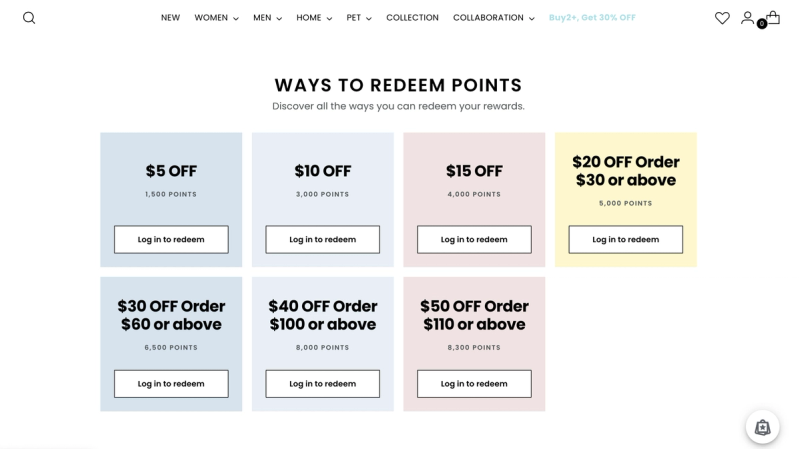
| Progress-based points | Build momentum after order two | Reward feels too distant | Second-to-third rate and redemption timing |
| Fixed discount with minimum purchase | Encourage a relevant larger basket | Margin loss on orders that would happen anyway | Incremental margin and basket value |
| Free shipping | Reduce checkout friction | Customers wait for the incentive | Conversion by order value |
| Free product | Support trial of another product | Cost exceeds incremental revenue | Category adoption and fourth-order rate |
| VIP progress | Reward cumulative behavior | Threshold is unreachable | Tier progression and purchase frequency |
Reward progress toward a meaningful next step
A first-order discount can help acquire a buyer. It does not automatically give that buyer a reason to return.
Build a staged program instead. After order one, reward account creation or engagement. After order two, show clear progress toward a meaningful reward. Around order three, offer a benefit that fits the customer’s expected next purchase.
A Shopify loyalty program can support this with purchase earning rules and rewards for actions such as reviews, referrals, birthdays, wishlists, subscription milestones, and custom actions.
Use the second order to set up the third
The second order is the moment to make progress visible. Tell customers what they have earned, how close they are to a reward, and which products fit their previous purchase.
Mage can award points on purchases at configurable rates, such as one point per dollar or five points per ten dollars. The rate should make progress achievable within the customer’s natural purchase cycle.
Match the reward to margin and buying frequency
There is no universally best reward. Fixed discounts can work for planned replenishment. Free shipping can reduce friction. A free product can introduce a complementary category. Store credit may encourage a future return.
Use minimum purchase requirements where they protect margin and improve basket quality. Mage fixed-amount discount rewards include a minimum purchase setting, which lets you avoid giving a reward against a low-value order.
Test reward cost against incremental second-to-third conversion and contribution margin. Redemption volume alone does not show whether a reward created a new purchase.
Make the reward visible where the customer shops
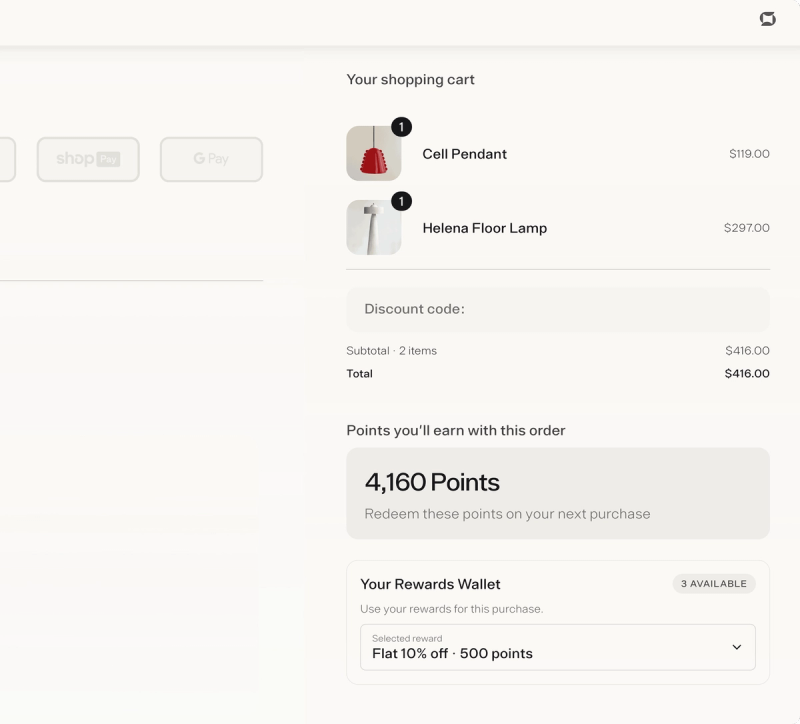
Put progress where customers browse and buy: on a loyalty page, in a Rewards Widget, inside an account sidebar, or at checkout.
Mage supports these surfaces and lets customers redeem rewards at Shopify checkout without copying a code. VIP tiers can also be based on spend, points earned, or order count.
“I looked into so many different integrations for loyalty and referrals for our Shopify Store, but no one impressed me more than Mage on human connection, customer service, and value.”


Read the Reelie case study →
Build a post-purchase journey that gets customers to order three
After order one: confirm value and reduce uncertainty
Start with the experience the customer has already paid for. Confirm delivery expectations, explain how to use or care for the product, and make account creation useful.
Do not rush into another offer before the customer has had a chance to receive and evaluate the first order.
After order two: create a reason to continue
After the second order, show the customer their points balance, reward progress, or tier status. Recommend the next relevant refill, complementary product, collection, or use case based on what they bought.
Use the framework in increase repeat revenue after the first purchase, then adapt it to the customer’s actual purchase interval.
Before the expected reorder window: remind, recommend, and reward
Use your email or SMS platform to send a timely reminder before the expected reorder point. Mage integrates loyalty data and events with supported commerce tools, including through its Klaviyo loyalty integration, so messages can reflect points, rewards, and tier activity.
Avoid a universal cadence. A replenishment reminder should arrive around consumption timing. A fashion reminder may work better around a collection launch or seasonal shift.
After order three: shift from acquisition to relationship
After order three, test what expands customer value: category recommendations, VIP progress, referrals, early access, or a non-discount perk. Mage’s Redeem Rewards block lets customers redeem points from the account sidebar without leaving that experience.
Judge the result by third-order rate, time to third order, contribution margin, and fourth-order rate.
Frequently asked questions
What is third purchase loyalty habit?
Third purchase loyalty habit is the idea that a customer’s third order may indicate a developing repeat buying pattern. It is an analytical milestone, not proof of loyalty.
Why is the third purchase important in ecommerce?
The third purchase is important in ecommerce because the customer has moved beyond initial trial and repeated the buying decision twice. It gives merchants a useful point to assess retention, purchase timing, discount dependence, and whether the customer’s behavior fits a repeatable buying pattern.
How do you calculate third purchase retention?
Third purchase retention is calculated by dividing customers with at least three orders in an observation window by customers with a qualifying first order. For diagnosis, calculate second-to-third rate separately by dividing customers with a third order by customers who already placed a second order.
What is a good second-to-third purchase rate?
A good second-to-third purchase rate is the rate that improves against your own comparable cohorts and product categories. The right baseline depends on buying cycle, acquisition source, subscription mix, discounting, product price, and how long each cohort has had to place a third order.
How can Shopify brands encourage a third purchase without a discount?
Shopify brands can encourage a third purchase without a discount through product education, replenishment reminders, relevant recommendations, visible loyalty progress, VIP status, wishlists, referrals, early access, and account experiences that reduce friction. The strongest approach matches the message and benefit to the customer’s actual reason for returning.
Does the third purchase matter for subscriptions and high-ticket products?
The third purchase matters for subscriptions and high-ticket products, but the interpretation changes. For subscriptions, the third successful renewal may be more useful than three independent orders. For high-ticket products, use longer time windows and consider engagement, status, and category behavior alongside purchase count.
Measure the transition from order two, account for category timing and discount effects, then test rewards that create a relevant reason to return without giving away margin by default.

Kris is the co-founder of Mage Loyalty. I spend most days talking to merchants, shipping features, and making sure our customers get real results. If you run a Shopify store or Agency we should chat!