Most eyewear brands assume loyalty programs only work for high-frequency, low-ticket purchases. They're wrong. A Shopify eyewear store owner might spend $100+ acquiring a customer who buys once every 18–24 months at $150+ AOV. That customer's lifetime value? Potentially $500–$1,000 over a decade. Yet they're being treated like a one-time transaction.
This is the core paradox of eyewear loyalty: the longer the purchase cycle, the more critical retention becomes. Traditional loyalty programs fail in this space because they're built for frequent buyers. This guide reveals why eyewear demands a completely different approach to loyalty—one that treats customers as long-term vision partners rather than quarterly repeat buyers.
The Eyewear Loyalty Myth: Why "Low-Frequency" Doesn't Mean Low Loyalty Potential
The prevailing wisdom in eyewear is blunt: loyalty programs don't work. Low purchase frequency. High price point. Long cycles between orders. The logic seems sound. It's also dangerously incomplete.
Here's the myth: a customer who buys once every two years doesn't need loyalty tactics. They need to be acquired efficiently and forgotten until they return. Reality is messier and far more profitable.
Consider this data from the loyalty industry: after one purchase, a customer has a 27% chance of returning. After three purchases, that likelihood jumps to 62%. For eyewear, those three purchases might span five years. Traditional metrics miss this entirely because they measure loyalty in months, not decades.
An eyewear customer who feels genuinely valued—who sees their optometrist when reminded, who trusts your brand's lens recommendations, who refers friends—generates exponentially more revenue than a customer acquired through paid ads. The acquisition cost for that referred customer is near zero. The lifetime value multiplies.
The real issue isn't frequency. It's that eyewear brands have been applying fast-fashion loyalty mechanics to a slow-burn industry. You can't solve this with simple "earn 1 point per dollar" systems designed for coffee shops.
Here's what I've observed working with eyewear brands: the ones succeeding with loyalty aren't pushing more frequent purchases. They're deepening trust, creating multiple value touchpoints between buys, and positioning themselves as the obvious choice when a customer actually needs frames or lenses. Referrals skyrocket. AOV increases through lens upgrades and accessories. Customer acquisition costs plummet.
That's the eyewear loyalty advantage—if you build it correctly.
Defining Visionary Loyalty for Eyewear Brands
Loyalty in eyewear isn't about transactions. It's about becoming the trusted expert your customer returns to without hesitation.
Traditional loyalty defines success as repeat purchases. Eyewear loyalty should define success as top-of-mind presence during those infrequent but high-stakes moments when a customer needs new frames or lenses. It's about the customer who, three years from now, immediately thinks of your brand when their prescription changes. It's the referral they give their cousin without being asked.
The eyewear customer journey is fundamentally different from most retail. A typical path looks like this: discovery (often triggered by a life event—new job, broken glasses, prescription change), research and education, a high-value purchase decision, and then months or years of inactivity. Most loyalty programs die in that inactive phase. Smart ones thrive there.
Visionary loyalty fills those gaps. It's an automated prescription reminder that arrives 18 months after purchase, positioned not as a sales pitch but as a genuine health touchpoint. It's a style quiz or lens guide that keeps the customer engaged between purchases. It's a referral incentive that works because the customer genuinely wants their friend to see well.
This approach has a side effect: it increases average order value. When a customer is engaged in a loyalty program, they're more likely to add that premium lens coating, choose the second pair of sunglasses, or invest in a cleaning kit. They're not buying more frequently—they're buying more intelligently each time.
The Shopify loyalty program growing brands trust
See how Mage helps Shopify brands lift repeat purchase rate with loyalty, referrals and store credit.
Book a demoWhy Visionary Loyalty Strategies Drive Lasting Growth for Eyewear
The financial case for eyewear loyalty is stronger than it appears on the surface.
Start with customer lifetime value. Average CLV for eyewear brands shows that a loyal customer purchasing every two years at $200+ AOV easily exceeds $1,000 over a decade. That's before accounting for accessories, referrals, or lens upgrades. For comparison, acquiring a new customer costs $80–$150 depending on your marketing spend. The math is brutal if you're not retaining.
Reducing customer acquisition costs is the obvious win. But referrals are where eyewear loyalty creates disproportionate advantage. Vision care is deeply personal. A friend's recommendation carries more weight than any ad. When you build a loyalty program that naturally generates word-of-mouth, you're tapping into the highest-trust marketing channel available. This is why strategic referral programs for eyewear should be designed around peer recommendations, not gamified tricks.
Increased average order value happens across multiple vectors. A customer in a VIP tier might choose progressive lenses instead of standard bifocals. They might add blue light filtering when they wouldn't have at regular pricing. They might buy a companion pair of sunglasses. These aren't additional purchases—they're enhancement of a single purchase decision.
Here's where eyewear differs from apparel or beauty: loyalty directly impacts health outcomes. A customer who feels supported by your brand is more likely to follow through with eye exams, update their prescription, and maintain their vision health. That's not just good business. It positions your brand as genuinely invested in the customer's wellbeing.
“I looked into so many different integrations for loyalty and referrals for our Shopify Store, but no one impressed me more than Mage on human connection, customer service, and value.”


Read the Reelie case study →
Crafting Connections: Foundational Loyalty Mechanisms for Eyewear Brands
Effective eyewear loyalty combines traditional mechanics with vision-specific opportunities.
Points Programs Reimagined for the Vision Journey
Most eyewear brands default to "1 point per dollar spent." This is a missed opportunity. Points should reward actions that deepen the relationship.
Standard earning comes from purchases—$1 spent = 1 point. But layer in non-transactional opportunities: 50 points for scheduling an eye exam. 75 points for completing a frame-shape style quiz. 100 points for writing a detailed review of their prescription experience. 25 points for engaging with vision health content (articles on lens technology, signs you need new glasses, face shape guides).
The redemption side mirrors this philosophy. Customers redeem points for discounts on future purchases—that's table stakes. But you can be more creative. 200 points = free lens upgrade coupon. 150 points = accessory bundle (cleaning kit + premium case). 75 points = early access to new frame arrivals.
The psychological shift is subtle but powerful. You're not just rewarding purchases. You're rewarding engagement with your brand as a vision expert. A customer accumulating points for reading lens guides and submitting reviews feels valued for reasons beyond spending.
Tiered Rewards and Exclusive Access
Multi-level VIP programs create aspiration and unlock higher-value benefits at each level.
Consider a three-tier structure: Bronze, Silver, and Gold Visionary tiers. Bronze members (first purchase or minimal activity) earn 1 point per dollar and receive birthday rewards. Silver members (2+ purchases or $500+ lifetime value) unlock 1.25 points per dollar, 10% off lens upgrades, and early access to limited frames. Gold members ($1,000+ lifetime value or strong referral activity) earn 1.5 points per dollar, 15% off any future purchase, free adjustments and cleanings for life, and exclusive early access to new collections.
The power here isn't the discounts. It's the exclusivity and the progression path. A Bronze customer sees a path to Gold status. They know what earns movement. And unlike apparel, where tier progression might take months, eyewear tiers can be structured over years—reflecting the actual purchase cycle.
Each tier should include non-discount perks: direct access to a stylist for frame consultations, invitations to exclusive virtual events about new lens technologies, or priority customer service.
The Lens of Innovation: Eyewear-Specific Loyalty Structures
This is where eyewear loyalty diverges most sharply from generic Shopify loyalty programs.
Automated Prescription Reminders and Reorder Triggers
Most eyewear brands have customer prescription data but never use it strategically for loyalty. This is a massive gap.
Set up automated triggers: 18 months after purchase, send a loyalty-exclusive reminder that it's time for an eye exam (with a loyalty point bonus for booking within two weeks). When a customer's contact lens subscription is running low, offer loyalty points for reordering. When prescription data is available, time touchpoints around those moments.
These reminders aren't generic marketing emails. They're genuinely helpful—positioned as "We care about your vision health" rather than "Buy again." Customers appreciate them. They position your brand as a trusted partner, not just a retailer.
The loyalty component works because it incentivizes action without pressure. "Book an eye exam this month and earn 75 loyalty points" is different from "We miss you, come back." It's permission to reach out when the customer actually needs something.
Rewarding Lens Upgrade Tiers and Material Choices
Lens technology is where eyewear margins improve and customer satisfaction deepens. Loyalty can drive both.
Create earning multipliers for lens choices. A customer selecting basic single-vision lenses earns standard points. Progressive lenses earn 1.25x points (reflecting the higher AOV). Premium coatings (anti-glare, blue light filtering, photochromic) earn bonus points. Advanced materials (polycarbonate, trivex, high-index) unlock point multipliers.
Over time, this subtle nudge educates customers on premium options while rewarding them for choosing. A customer who's tried progressive lenses through a loyalty discount becomes a repeat buyer of that technology. You've created a product preference backed by experience.
Bundling and Accessory Incentives
A customer buying a $200 frame and premium lenses is primed to add a cleaning kit, premium case, or even a second pair. Loyalty programs should reward these completions.
Offer bonus points for "outfit completions": frames + lenses + accessories. Or structure it as a tier unlock: reach 150 points in a single purchase, and unlock a 10% bundle discount on a second pair.
For sunglass brands, the bundling angle is powerful. A customer in an optical loyalty program might not think to add prescription sunglasses. A loyalty reward structure ("Complete your look: earn 100 bonus points when adding sunglasses to any frame purchase") can drive significant secondary orders.
Beyond the Transaction: Engaging Content and Community
Between purchases, loyalty thrives on engagement. This is where content becomes a loyalty mechanism.
Develop style guides: which frame shapes suit different face geometries? How do color choices affect skin tone? This content serves dual purposes—it genuinely helps customers make decisions, and it keeps your brand top-of-mind.
Create vision health content: modern lens treatments and how they protect eyes. Signs you need an updated prescription. The science of blue light filtering. This positions you as an expert, not a seller. Customers who learn from your content trust your recommendations when they purchase.
User-generated content drives community. Offer loyalty points or entry into contests for customers who share their eyewear styles on social media with a branded hashtag. This builds social proof (seeing real people in your frames is powerful), drives engagement, and makes your loyal customers feel like brand ambassadors.
Mage Loyalty in Focus: Building Your Eyewear Loyalty Ecosystem
A Shopify loyalty program built for eyewear needs flexibility, integration depth, and clarity of mechanics.
Eyewear-specific configuration matters. For example, an eyewear brand would set up earning rules like:
- "Earn 150 points for booking an eye exam through our partner" (using Klaviyo automation to track)
- "Gold tier members earn 1.5x points on premium lens upgrades"
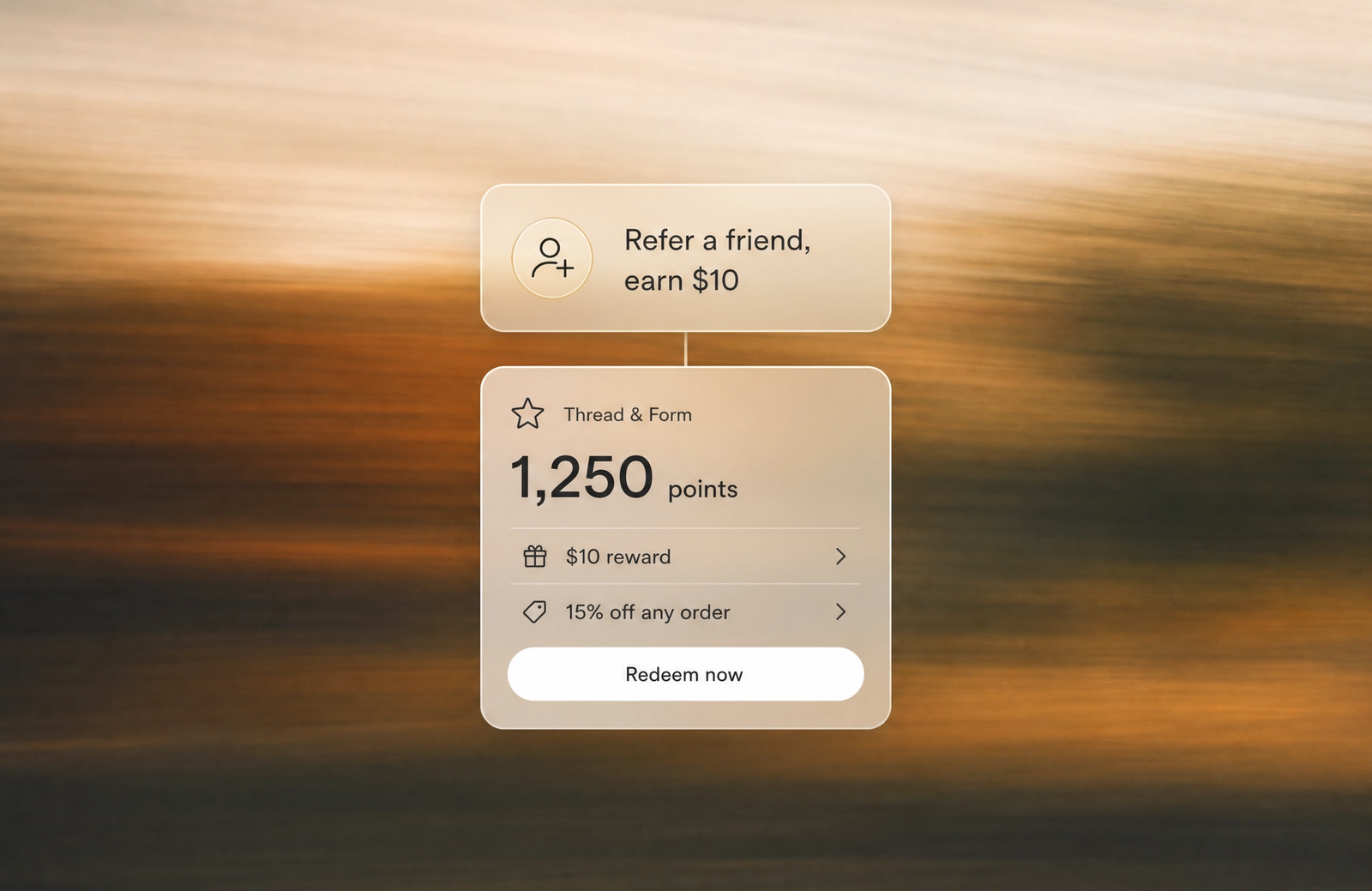
- "Refer a friend and earn 200 points when they complete their first prescription glasses purchase"
These rules require a platform that supports custom earning mechanics, integrates with email systems for automation, and can track complex purchase attributes (lens type, frame material, etc.).
The best choice depends on your existing tech stack and comfort with customization.
Integration is critical. Connect in-store and online rewards if you operate retail locations. Integrate with Klaviyo for automated prescription reminders triggered by purchase data. Connect to your customer service platform so support staff can see loyalty status when a customer calls with a problem.
The dashboard should display live activity: when a customer moves between tiers, when referrals convert, when promotional bonuses are claimed. Real-time visibility lets you optimize campaigns and spot trends quickly.
For eyewear specifically, look for platforms that support:
- Custom earning rules based on product attributes
- Automated email triggers tied to loyalty milestones
- Referral tracking with custom incentive structures
- VIP tier management with tiered benefits
- Analytics showing repeat purchase intervals and LTV by tier
Measuring the Clarity: Tracking Your Eyewear Loyalty Program's Impact
Loyalty programs only improve if you measure them.
Customer Lifetime Value growth is the north star. Track LTV for program members vs. non-members. Over a 3–5 year period, the gap should be substantial—likely 30–50% higher for engaged members.
Repeat purchase rate matters, but frame it correctly. Don't expect quarterly repeats. Instead, measure customers making a second purchase within 24 months, a third within 36 months. This aligns with actual eyewear cycles.
Referral conversion rates reveal program health. How many referrals generate new customers? What's the revenue impact? Eyewear referrals tend to convert higher than other categories because they're peer recommendations on a high-trust purchase.
AOV comparison between loyalty members and non-members shows whether engagement is driving add-ons. Members should have higher AOV than average due to lens upgrades, accessories, and bundling.
Engagement metrics include: percentage of members who've engaged with non-purchase activities (completed a style quiz, read content, submitted a review), points redemption rates, and tier progression velocity.
Most loyalty platforms, including Mage and competitors, include dashboards showing these metrics. Review monthly. Adjust campaigns based on what's working. If referral conversion is high, invest more in referral messaging. If lens upgrade engagement is low, create education content around premium options.
Unlocking Long-Term Customer Lifetime Value
The strategic endgame of eyewear loyalty is clear: transform a customer who buys once every 18 months into a brand advocate who recommends you, stays with you through prescription changes, and spends more per purchase than they did initially.
This requires patience. Unlike fast-moving consumer goods, eyewear loyalty plays the long game. But the ROI compounds. A customer acquired at $100 cost who generates $1,000+ lifetime value, largely through reduced re-acquisition costs and referrals, represents sustainable, scalable growth.
The competitive advantage goes to brands willing to invest in that relationship early and maintain it consistently. Content, automation, personalized rewards—these aren't nice-to-have extras. They're the infrastructure of eyewear retention.
Frequently Asked Questions
What is a loyalty program for eyewear brands?
A loyalty program for eyewear brands is a structured rewards system that incentivizes repeat purchases, referrals, and engagement between infrequent high-value transactions. Unlike generic retail loyalty systems, eyewear-focused programs account for 18–24 month purchase cycles and reward actions like booking eye exams, writing reviews, and choosing premium lens upgrades. They increase customer lifetime value by deepening brand trust and driving referrals.
How often should I communicate with eyewear loyalty members?
Eyewear loyalty members should receive 1–2 promotional emails monthly, plus automated reminders tied to purchase anniversaries and prescription renewal windows (typically 18 months post-purchase). Avoid over-communicating; eyewear customers value infrequent, relevant messages over constant contact. Content emails (style guides, lens technology explainers) can run quarterly without feeling intrusive.
What are common eyewear loyalty rewards that actually work?
Effective eyewear loyalty rewards include: percentage discounts on future purchases (15–25% for top tiers), free lens upgrades or premium coatings, lifetime free adjustments and cleanings, early access to limited frame collections, and bonus points for completing style quizzes or submitting detailed reviews. Avoid low-value rewards; eyewear customers expect rewards proportional to their high AOV and long purchase cycles.
How can I encourage referrals for high-value items like prescription glasses?
Incentivize referrals with meaningful rewards for both the referrer and referred customer: $20 store credit or 200 points for the referrer, plus a discount (10–15% off) for the new customer. Emphasize the peer-recommendation angle in messaging—"Share your sight with someone you care about." Eyewear referrals convert well because they're trusted recommendations on a high-trust purchase. Make sharing easy with referral links and social media integration.
What are the best Shopify loyalty platforms for eyewear brands?
The best choice depends on your need for custom product attribute tracking, email automation depth, and analytics granularity. Evaluate platforms on their ability to support prescription reminders and lens upgrade tracking, not just standard point mechanics.
How do I measure whether my eyewear loyalty program is working?
Track these key metrics: customer lifetime value growth (members vs. non-members), repeat purchase rate over 24–36 months, referral conversion rate, average order value comparison, and engagement with non-purchase activities (quiz completion, content reading, review submission). Review metrics monthly via your loyalty platform dashboard. A successful eyewear program shows 30–50% higher LTV for engaged members and measurable increases in referral revenue within 6–12 months.

Graeme is the co-founder at Mage Loyalty. He heads product development, from complex loyalty migrations and large-scale data handling to building the features shaping the future of loyalty on Shopify.