Loyalty programs are everywhere. But here's the uncomfortable truth: many of them feel like obligations, not opportunities. Customers don't want another points card gathering dust. They want programs that recognize who they are, reward what matters to them, and make them feel genuinely valued.
This is the reality reshaping loyalty in 2027. Brands that win aren't just offering discounts—they're building ecosystems that become part of how customers live.
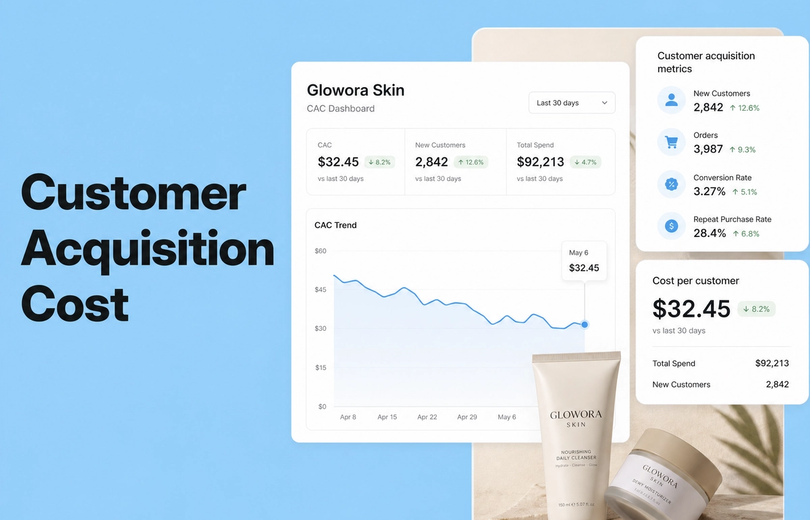
If you run an ecommerce business, especially on Shopify, understanding what makes loyalty programs genuinely work is no longer optional. Harvard Business Review reports that acquiring a new customer can cost anywhere from five to 25 times more than retaining an existing one, depending on the study and the industry. Meanwhile, loyal customers spend more, buy more frequently, and cost less to market to. That gap compounds quickly.
This guide walks through ten real-world loyalty programs that are actively changing customer behavior right now. Each one demonstrates a specific principle. Each one shows you exactly what works and why. By the end, you'll have a clear framework for building a program that doesn't just exist—it thrives.
Why Customer Loyalty is Your E-commerce Superpower in 2027
The Economics Are Impossible to Ignore
The exact ratio varies by industry, but the direction does not: keeping a customer is almost always cheaper than finding a new one, and the stakes keep rising. Advertising costs climb every year. Competition fragments across more channels. Meanwhile, your existing customers already trust you. They've already bought. They know what to expect.
A loyalty program is how you turn that trust into repeat orders. The way to know whether yours is working is to compare the revenue of members with the revenue of customers who never joined, which the measurement section below covers.
Consider this: Harvard Business Review cites research by Frederick Reichheld of Bain & Company showing that increasing customer retention rates by 5% increases profits by 25% to 95%. The range is wide, but even its low end is a meaningful gain. Retention is leverage. Loyalty programs are the tool.
Brands that scale sustainably don't chase new customers endlessly. They get more value from the customers they already have. Compare a customer who buys once with one who keeps coming back over several years: the repeat customer's total spend can be many times larger. That's the multiplier loyalty creates.
Emotional Connection Beats Transactional Discounts
Modern consumers—especially Gen Z and millennials—don't just want savings. They want to feel part of something. They want brands that align with their values. They want personalized experiences that acknowledge them as individuals, not account numbers.
This shift is profound. It means generic "earn 1 point per dollar" programs feel hollow. Customers can get discounts anywhere. What they can't find everywhere is genuine recognition.
Sephora Beauty Insider shows how this works. Its points structure is simple, with 1 point per $1 at every tier, so the draw is status rather than math: named tiers, member events, exclusive rewards and a birthday gift. Members feel like insiders. The program reinforces a lifestyle.
The brands winning in 2027 understand this deeply. They're moving from transactional loyalty to emotional brand connection. Points are the currency. Community is the product.
Omnichannel Expectations Have Become Non-Negotiable
Customers shop everywhere—website, app, in-store, social. They expect their loyalty status to follow them seamlessly across all of it. A customer shouldn't lose points because they checked out on mobile instead of desktop. Their VIP status shouldn't vanish in a physical store just because they earned it online.
That seamlessness feels simple from the outside. Building it requires tight system integration, clean data architecture, and real-time synchronization. Brands that nail this create frictionless experiences that competitors can't easily replicate.
Essential Components of an Unbeatable E-commerce Loyalty Program
Before diving into specific examples, understand what separates programs that drive results from those that stall.
Personalization Powered by Data
Generic rewards don't work anymore. A customer who buys skincare monthly shouldn't see the same offers as someone who buys once a year. Someone who engages heavily on social deserves different recognition than someone who prefers quiet transactions.
AI-driven personalization allows you to tailor offers, product recommendations, and communication to individual behavior patterns. A customer about to lapse gets a targeted re-engagement offer. A high-spender gets first access to premium products. This feels responsive. It feels like the brand knows them.
The goal is higher redemption rates, longer engagement and more revenue per member.
Tiered Structure Creates Aspiration
Humans respond to achievement. Tiers—Bronze, Silver, Gold, or whatever naming fits your brand—create a clear path to increasing status. Early tiers should be easy to reach (quick wins matter). Higher tiers should feel genuinely exclusive.
Each tier unlock should bring tangible, valuable benefits. Free shipping matters. Early access to new products matters. A birthday bonus code matters. Exclusive community access matters.
Tier structure can also lift spending, because customers may spend more to reach the next level. Someone at 80 points toward Gold status with only 20 points needed behaves differently than someone at a random spot. The proximity triggers action.
Reward What Actually Builds Your Brand
Points for purchases are baseline. Modern programs recognize that customers drive real business value through reviews, referrals, social mentions, and content creation. A detailed product review helps the future customers who read it. A referral brings an entirely new person into your ecosystem.
Programs that explicitly reward these actions accelerate the behaviors that matter most. Someone earning points for referring a friend becomes an active salesperson. Someone getting points for social mentions becomes a marketer.
This isn't altruism. It's identifying high-impact customer actions and mathematically incentivizing them.
Seamless Integration Across Every Touchpoint
If your loyalty program is only accessible on your website, it feels like an afterthought. If customers see their points on desktop but not in your mobile app, that's frustration. If in-store checkout doesn't sync with online purchases, you've created two separate programs masquerading as one.
True omnichannel loyalty means points, tier status, and redemptions work identically everywhere. Mobile-first design is essential—so many shoppers check their balances and rewards on their phones. Real-time synchronization across systems keeps data current. Integration with email, SMS, and CRM tools means customers receive relevant communications about their status and available rewards.
This infrastructure matters enormously. Get it right and customers activate your program naturally. Get it wrong and they abandon it.
The Shopify loyalty program growing brands trust
See how Mage helps Shopify brands lift repeat purchase rate with loyalty, referrals and store credit.
Book a demo10 Inspiring E-commerce Loyalty Program Examples for 2027
Example 1: Sephora Beauty Insider
Sephora's program operates at scale most can only dream of, but its structure offers lessons applicable to any brand. Three free tiers—Insider, VIB, Rouge—reward escalating spending levels. Every tier earns 1 point per $1 and every member gets free standard shipping. What changes is access: VIB and Rouge members unlock exclusive rewards, and Rouge members can redeem a $100 reward.
Why this works: Tiers create urgency. Someone at $900 spent with $100 to Rouge status behaves differently than someone at a random number. Sephora also emphasizes rewards beyond discounts: the Rewards Bazaar offers deluxe samples, product bundles and experiences, and VIB and Rouge members unlock exclusive rewards such as full-size products. These carry emotional weight beyond discounts. The sense of status matters.
The structure is easy to read: $350 spent in a calendar year reaches VIB, $1,000 reaches Rouge, and at every tier 500 points redeem for $10 off.
Takeaway: Structure tiers tightly. Make the next level feel achievable but rewarding. Emphasize what makes membership exclusive, not just profitable.
Example 2: Starbucks Rewards
Starbucks operates at near-ubiquity, but their loyalty structure reveals intelligent simplicity. Starbucks' program terms describe personalized offers and games for members, and every Stars-earning purchase creates data.
That is the kind of granularity behavioral data makes possible: an iced latte drinker can be shown iced latte promotions, and someone who orders at 8 AM on weekdays can receive morning offers. It feels attentive. It feels like the brand understands.
Here's the kicker: Starbucks reports its 90-day active U.S. Rewards membership in its quarterly earnings releases (32.6 million in its fiscal fourth quarter of 2023). The program isn't a side project. It's something the company reports on to investors every quarter.
Takeaway: Build your program mobile-first. Use behavioral data to personalize offers. Make participation feel like a game you want to win, not a obligation.
Example 3: Amazon Prime
Prime is less "loyalty program" and more "ecosystem." For a membership fee (Amazon lists $14.99 a month or $139 a year), members get fast delivery, Prime Video streaming, exclusive deals, and more. The bundling is strong: each component is individually valuable, and together they are hard to give up.
The genius isn't in any single feature. It's in creating friction to leaving. Once you've watched shows, used Prime Video, and shipped packages, switching to a competitor means abandoning all that integration.
Takeaway: Consider bundled benefits. Think beyond discounts to convenience and ecosystem lock-in. Paid membership is worth testing alongside free programs.
Example 4: Nike Membership
Nike's approach is identity-based rather than transactional. Membership is free and gives access to Nike's apps (including SNKRS, Nike Run Club and Nike Training Club), exclusive products and member-only experiences, plus perks such as free shipping on orders of $50 or more and a 60-day wear test.
Members join Nike, not just buy from Nike. The program reinforces lifestyle integration. You don't join for points. You join for the community and access to exclusive products.
Takeaway: Build membership around identity and belonging. Offer exclusive access to products and experiences, not just price breaks. Make people feel part of something larger.
Example 5: Princess Polly Rewards
This e-commerce focused program directly rewards the behaviors that drive growth: purchases, photo reviews, social follows, referrals and text sign-ups, plus a birthday gift. The page is transparent about how many points each action earns, and members move through four tiers (General Admission, Front Row, VIP and Backstage Pass).
What matters here is breadth. Princess Polly rewards customers for more than purchases. A review influences purchase decisions. A social follow extends reach. The program explicitly values all of it.
Takeaway: Go beyond purchases. Identify which non-transactional actions create real business value. Reward them clearly. Make earning visible and achievable.
Example 6: Astrid & Miyu
This jewelry brand's tiered program ("Club A&M") shows loyalty economics in motion. Members earn 5 points per £1 and move up from the free Club A&M level through Silver, Pearl, Gold, and Diamond as their yearly spend grows.
The program uses tiered benefits: early access to sales, birthday points that grow with each tier, and invites to in-store events at Gold and Diamond. Each tier genuinely feels like a step up. The beauty is simplicity. The benefits are clear. Progression is achievable.
This is build your Shopify loyalty program working at scale in the jewelry vertical. It's not complex. It's effective.
Takeaway: Keep benefits meaningful and easy to understand. Tier progression should feel earned. Track your impact—loyalty programs only justify themselves through measured results.
Example 7: Moxie Insider Club
MoxieLash, a beauty e-commerce brand, operates a three-tier points program (Primary, Premium, Prestige) that rewards purchases, app downloads, social follows, and referrals. The transparency matters. Customers know exactly what each action is worth.
App integration is central. Downloading the app unlocks points. Using it becomes habit. This structure drives mobile adoption while building engagement.
Takeaway: Make earning rules crystal clear. Use app incentives to drive adoption. Referral rewards are surprisingly effective—they're free word-of-mouth marketing.
Example 8: Showpo Society (Fashion E-commerce)
Showpo, the fashion retailer, runs Showpo Society with immediate points for small actions. Members earn 1 point per $1 spent, 5 points each for following Showpo on Facebook, Instagram or TikTok, and 15 points for signing up to SMS. Milestone bonuses follow: 25 points on a first purchase and 50 points on a third. Members also get a birthday voucher when they share their birthday, and the referral offer is "Give $20 off, get $20 off": a friend gets $20 off a first purchase of $100, and the referrer gets $20 off for each successful referral.
Why this works: Society has four levels, Guest List, VIP, After Party and Inner Circle, with entry spend of $0, $250, $500 and $1,000. Every level includes early access to sales and new releases, a birthday voucher and a referral bonus. Higher levels add an anniversary voucher, entry to VIP flash sales and double points days, invites to exclusive events, and (at the top level) free returns for store credit and a surprise gift with purchase during select campaign periods. New members have things to earn before they have spent much, and the best customers have something to climb toward.
Takeaway: Reward early actions and early milestones, not only the first sale. Don't make customers wait for their first reward. Make the referral offer simple to state and generous enough to encourage sharing.
Example 9: Chewy Autoship
Chewy's subscription model solves a real problem: remembering to reorder pet supplies. Autoship offers a recurring discount on eligible items (Chewy has listed 5% off every Autoship order) and lets customers choose, skip or change their delivery frequency. The convenience creates stickiness.
This is niche loyalty done right. Rather than generic rewards, Chewy identified a specific customer pain point and built a program around solving it. Discount values matter less than the time-saving benefit.
Takeaway: Understand your specific customer problem deeply. Build loyalty around solving that problem, not just offering discounts.
Example 10: Fabletics VIP
The Fabletics VIP membership combines exclusivity with flexibility. Members are billed a monthly membership fee ($69.95, according to Fabletics' help center) that arrives as a VIP Credit toward an item or outfit, unless they skip the month between the 1st and 5th, and there is no limit on skips. VIP members get access to exclusive products, and Fabletics runs a separate points program for VIPs with Gold, Platinum and Black tiers.
Flexibility is key. Loyalty programs sometimes feel like traps. Letting members skip a month without guilt makes the subscription feel like a choice customers renew rather than an obligation they tolerate.
Takeaway: Experiment with subscription loyalty models. Build in flexibility. Provide genuine personalization that justifies the membership fee.
“Cannot say enough good things about the team at Mage Loyalty, one of the absolute best organizations we have ever worked with, full stop! So glad we connected with them, completely redid our loyalty program, new concepts, use of loyalty, increasing user engagement, showing us where we were not valuing our best customers, just WOW, amazing team!”


Read the West Coast Goalkeeping case study →
Overcoming Implementation Challenges for E-commerce Loyalty Success
Smart Budgeting for Growing Brands
Small and mid-sized businesses often assume loyalty programs require massive investment. They don't.
Start simple. A points-based system recognizing purchases and basic engagement costs far less than a complex, multi-tier, gamified ecosystem. Prove the ROI with simple mechanics before adding complexity.
Software costs vary with scale and features. Compare the monthly cost against what it would take to acquire equivalent new customers.
Focus reward costs smartly. Exclusive digital content costs nearly nothing. Early product access costs very little. Discount percentages are expensive. Birthday bonuses are cheap. Strategic design keeps program costs reasonable while maintaining perceived value.
Integration and Data Synchronization
Your loyalty program lives within a broader ecosystem—your CRM, email platform, POS system, analytics tools. Seamless data flow between these systems creates the frictionless experience customers expect.
Select platforms with robust API documentation and pre-built integrations. When choosing between two loyalty apps otherwise equal on features, pick the one with tighter integrations to your existing stack.
Real-time synchronization matters. A customer shouldn't see different point balances in-app versus on your website. Status shouldn't change hours after purchase. This feels clunky and defeats the program's purpose.
Navigating Data Privacy
Personalization requires data. Modern customers understand this. They'll willingly share behavioral information if they trust your brand and see clear benefit.
GDPR compliance in Europe and CCPA in California set binding requirements. Go beyond legal minimums. Make your privacy policy transparent. Obtain explicit consent for different data uses. Clearly explain how you're using information to personalize their experience.
Ethical data practices aren't burdensome. They're trust-builders. Customers who believe you're handling their data responsibly are more willing to keep sharing the information that makes personalization work.
Measuring Success and ROI of Your Loyalty Program
Numbers matter. You can't optimize what you don't measure.
Core Metrics That Tell the Story
Track customer lifetime value (CLV) separately for members and non-members. Loyal members should generate significantly higher lifetime revenue. If they don't, your program isn't working.
Monitor repeat purchase rate and average order value among members. These should trend upward. If membership isn't correlating with increased purchase frequency or larger basket size, investigate why.
Redemption rate matters. If customers earn points but never redeem, they don't feel engaged. A low redemption rate suggests rewards don't appeal or the redemption process is too complex.
Track engagement beyond points—social shares, reviews submitted, referrals made. A program that's truly rewarding diverse behaviors should show growth across multiple engagement channels.
From Data to Action
Calculate your loyalty program's ROI by comparing incremental revenue from members against program costs. If the incremental revenue doesn't outweigh the program's cost, something's misaligned.
Conduct quarterly reviews. Which reward types drive redemption? Which tier benefits feel most valuable? What earning mechanisms are underutilized? Use this data to refine your program iteratively. It's not set once. It evolves.
Building Loyalty: Your Next Steps
The brands winning in 2027 understand something fundamental: customers aren't loyal to discounts. They're loyal to brands that recognize them, value them, and make them feel part of something.
Every program here comes down to a structure customers can understand quickly. Treat loyalty as core strategy rather than a marketing afterthought, then measure constantly and optimize steadily.
Your program doesn't need to match these scale. It needs to match your business—your customers, your margin structure, your operational capacity. Start with proven mechanics. Launch a referral program or simple tier structure. Watch what happens. Iterate based on data.
Boost customer retention strategies isn't about copying competitors. It's about understanding why customers come back to you specifically, then rewarding those behaviors systematically.
The competitive advantage belongs to brands willing to invest in loyalty before it's obvious. Once your customers are deeply engaged, once their lifetime value has grown, once they're referring friends regularly—by then, competitors can't catch up.
That's the power of loyalty done right. Start now.
Frequently Asked Questions
What's the most cost-effective loyalty program structure for small e-commerce brands?
Points-based systems are typically cheapest to run. Customers earn points for purchases and basic engagement (reviews, referrals, social follows). Keep redemption simple—discount codes, free products, exclusive access. Avoid complex mechanics initially. Many successful programs start with basic earning rules and add gamification or tiered benefits only after proving ROI.
How do I choose between paid membership versus free loyalty programs?
Free programs attract broader participation and lower enrollment barriers. Paid programs (like Amazon Prime) signal serious commitment and allow premium benefits that justify monthly fees. Consider your target audience and margin structure. Fashion and lifestyle brands often succeed with free programs. Subscription-adjacent services (meal kits, beauty boxes) can suit paid memberships. Test your specific customer's willingness to pay before committing.
Which Shopify loyalty platforms should I evaluate?
Each has different strengths—some excel at omnichannel integration, others at advanced analytics or referral mechanics. Most offer free trials. Test at least two before deciding. Prioritize integration with your email and CRM platforms.
How long before loyalty programs show meaningful ROI?
There is no fixed timeline, because it depends on your purchase cycle. Initial enrollment takes time. Customers need to make multiple purchases to see program value. Your team needs time to optimize earning rules and messaging. Watch directional measures such as repeat rate and average order value from the first month, and judge the program over several full purchase cycles. If nothing changes after that, revisit your reward structure and communication.
What's the biggest mistake brands make with loyalty programs?
Generic rewards that don't align with your brand or customer values. A brand targeting sustainability-conscious consumers shouldn't offer nothing but discount codes—they should recognize environmental impact, community engagement, and values alignment. The second biggest mistake: launching then ignoring. Loyalty programs require ongoing optimization. Set expectations for quarterly reviews. Brands that treat this as one-time implementation abandon it when results plateau.
TLDR
The ten most inspiring loyalty programs for 2027 prove that successful programs combine aspirational tier structures, rewards for diverse engagement beyond purchases, seamless omnichannel experiences, and genuine personalization. From Sephora's community-driven approach to Nike's identity-based membership to niche winners like Chewy's Autoship subscription model, the pattern is clear: loyalty works when it aligns with how customers actually engage with your brand. Start simple with proven mechanics, measure rigorously, iterate continuously, and scale complexity only after validating ROI.

Graeme is the co-founder at Mage Loyalty. He heads product development, from complex loyalty migrations and large-scale data handling to building the features shaping the future of loyalty on Shopify.